
Trane and Carrier are two of the most trusted names in air conditioning. Both offer high-efficiency models with reliable performance, but they differ in pricing, features, and long-term value. Choosing between them depends on your budget, climate needs, and preference for innovation versus proven reliability.
Key Takeaways
- Brand Heritage: Trane (American-owned) and Carrier (global leader since 1904) both have deep roots in HVAC innovation.
- Efficiency Ratings: Top-tier Trane models reach up to 26 SEER, while Carrier offers competitive 22–24 SEER options.
- Warranty Coverage: Both offer strong warranties—Trane provides a 10-year compressor warranty standard; Carrier includes a 10-year parts warranty with registration.
- Pricing & Value: Trane tends to be more expensive upfront but often delivers better long-term savings; Carrier balances cost and performance well.
- Smart Technology: Carrier integrates better with smart home systems like Google Assistant and Amazon Alexa out of the box.
- Customer Support: Both brands have nationwide service networks, but local contractor quality varies by region.
- Sustainability: Carrier leads in eco-friendly refrigerants and energy-efficient designs; Trane focuses on durability over green tech.
📑 Table of Contents
- Which Is Better: Trane or Carrier Air Conditioners?
- Brand Background: A Look at Two HVAC Giants
- Efficiency and Energy Performance
- Build Quality and Durability
- Warranty Comparison
- Pricing and Value
- Smart Home Integration
- Environmental Impact and Sustainability
- Customer Reviews and Reliability
- Installation and Service Network
- Making Your Decision: Trane vs Carrier
- Final Thoughts
Which Is Better: Trane or Carrier Air Conditioners?
If you’re shopping for a new central air conditioner, chances are you’ve seen Trane and Carrier listed among the top HVAC brands. These two companies have dominated the residential cooling market for decades, each building a reputation for quality, innovation, and dependable performance. But when it comes down to choosing between them, how do you decide? Is one clearly superior, or does it come down to personal preference, budget, and specific home needs?
This article breaks down everything you need to know about Trane vs Carrier air conditioners—comparing their efficiency ratings, build quality, smart features, warranties, pricing, and more. Whether you’re replacing an old unit, upgrading for energy savings, or just curious about brand differences, we’ll help you make an informed decision that fits your lifestyle and climate.
Brand Background: A Look at Two HVAC Giants
The Legacy of Carrier
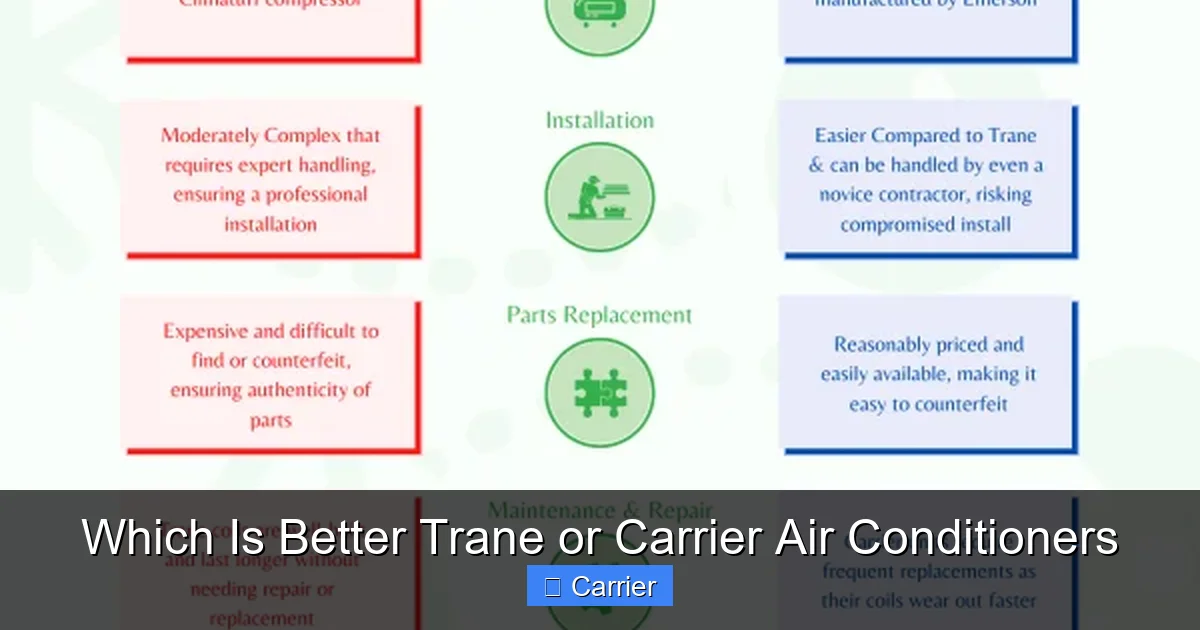
Founded in 1904 by Willis Haviland Carrier, Carrier is widely credited as the inventor of modern air conditioning. That’s right—the person who first designed a practical refrigeration system started this company! Over more than a century, Carrier has become a global powerhouse in HVAC technology, serving everything from homes to hospitals, data centers to stadiums.
Visual guide about Which Is Better Trane or Carrier Air Conditioners
Image source: i0.wp.com
Today, Carrier operates under United Technologies Corporation (UTC), which was acquired by Raytheon Technologies in 2020. Despite corporate changes, Carrier continues to prioritize research and development, especially in energy efficiency and sustainable cooling solutions. Their focus on innovation means many newer Carrier units come with advanced features like variable-speed compressors, smart thermostats, and eco-friendly R-454B refrigerant.
The Story Behind Trane
Trane traces its origins back to 1885 when it was founded in La Crosse, Wisconsin. Originally named after founder Reuben Trane, the company began as a manufacturer of steam radiators and heating systems before expanding into air conditioning during the mid-20th century.
In 1984, Trane was purchased by American Standard, another major HVAC brand known for bathroom fixtures and heating products. Later, Trane became part of Ingersoll Rand—a conglomerate focused on climate control and industrial equipment. While Trane still maintains strong engineering standards, its recent innovations lean heavily toward durability and long-term performance rather than cutting-edge smart integrations.
Efficiency and Energy Performance
SEER Ratings Compared
When evaluating air conditioners, one of the first numbers you’ll see is the Seasonal Energy Efficiency Ratio (SEER). The higher the SEER rating, the more efficiently your AC uses electricity—and the lower your utility bills will be.
Visual guide about Which Is Better Trane or Carrier Air Conditioners
Image source: 120th.hunau.edu.cn
Both Trane and Carrier offer high-efficiency models, but there are some differences worth noting:
- Trane: Some of their premium lines, like the XR17, achieve up to 26 SEER, making them among the most efficient residential units available today.
- Carrier: Their Infinity series tops out around 22–24 SEER depending on the model, though their heat pumps can sometimes exceed 25 SEER.
That said, achieving maximum SEER often requires pairing the outdoor unit with a compatible indoor coil and blower motor—something both brands emphasize in their marketing. So even if you buy a Trane or Carrier AC alone, installation matters just as much as the brand name.
Variable-Speed Technology
One area where both brands shine is variable-speed compressors and fans. Instead of running at full blast all day (which wastes energy), these systems adjust output based on demand. This leads to:
- More consistent indoor temperatures
- Reduced humidity levels
- Longer equipment life
- Quieter operation
Most high-end Trane and Carrier units include this feature, but Trane tends to integrate it more seamlessly across all tiers of their product line. Carrier, meanwhile, often reserves variable-speed tech for their top-of-the-line Infinity models.
Build Quality and Durability
Materials and Construction
Durability is a big reason people choose premium HVAC brands like Trane and Carrier. Let’s compare what goes into building their outdoor units:
| Feature | Trane | Carrier |
|---|---|---|
| Compressor Type | Two-stage or variable-speed scroll compressor | Two-stage scroll compressor (variable-speed optional) |
| Outdoor Unit Shell | Galvanized steel with powder coat finish | Heavy-gauge aluminum with protective coating |
| Fan Motor | ECM (electronically commutated motor) | ECM or PSC (permanent split capacitor) |
| Refrigerant Line Protection | Thick insulation + corrosion-resistant tubing | Similar protection with added drainage channels |
Overall, both brands use robust materials designed to withstand harsh weather. However, Trane’s emphasis on heavy-duty construction gives it a slight edge in longevity—especially in coastal areas with salt exposure or regions prone to hailstorms.
Noise Levels
Nobody wants a loud air conditioner buzzing outside their bedroom window. Fortunately, both Trane and Carrier have made strides in reducing operational noise.
Trane typically advertises their units as “whisper-quiet,” with decibel levels as low as 58 dB—about as loud as normal conversation indoors. Carrier also keeps noise under 60 dB on most models, though their larger capacity units may run slightly louder due to higher airflow demands.
Warranty Comparison
Standard Warranties
Warranties matter because HVAC systems last 10–15 years, so you want protection against early failures. Here’s how Trane and Carrier stack up:
- Trane: Offers a standard 10-year limited warranty on compressors and 10-year on parts (if registered within 60 days of installation).
- Carrier: Provides a 10-year limited warranty on parts and compressor (also requires prompt registration).
In practice, both warranties are quite similar. However, Trane includes additional coverage for labor costs during the first year in some regions, while Carrier relies more heavily on local dealer agreements for service support.
Extended Warranty Options
For homeowners who want extra peace of mind, both brands offer extended warranty programs:
- Trane ComfortCare: Up to 15 years of coverage with maintenance reminders and priority service.
- Carrier Protection Plus: Extends warranty to 15 years and adds diagnostic tools and replacement parts coverage.
These plans usually require annual maintenance and upfront payment, but they can save money if your unit fails near the end of its lifespan.
Pricing and Value
Upfront Cost Differences
When comparing Trane vs Carrier, price is often the deciding factor. On average:
- Mid-range AC units: Carrier models tend to be $200–$500 cheaper than comparable Trane units.
- High-end systems: Trane’s top-tier offerings can cost $1,000+ more than Carrier equivalents.
Why the gap? Partly due to brand positioning—Trane markets itself as a luxury option favored by contractors and builders, while Carrier aims for broad accessibility without sacrificing quality.
Long-Term Savings
While Trane may cost more initially, its higher SEER ratings and superior build quality can lead to greater energy savings over time. For example, a 26 SEER Trane unit might reduce cooling costs by 10–15% compared to a 20 SEER system—even if the difference in upfront price is significant.
To maximize ROI, consider these tips:
- Pair your new AC with a programmable or smart thermostat
- Ensure proper ductwork sealing and insulation
- Schedule annual maintenance to keep efficiency high
Smart Home Integration
Compatibility with Thermostats
Modern air conditioners work best when paired with intelligent controls. Here’s how Trane and Carrier handle connectivity:
- Trane: Works well with Nest, Ecobee, and Honeywell thermostats, but doesn’t include built-in Wi-Fi or voice control.
- Carrier: Comes with optional Wi-Fi modules and integrates natively with Google Assistant and Amazon Alexa. Their ComfortNet thermostats are designed specifically for seamless carrier system control.
If you already own a smart speaker or use voice commands to manage your home, Carrier’s ecosystem may feel more intuitive right out of the box.
Remote Monitoring and Alerts
Both brands allow remote monitoring via mobile apps, but Carrier’s interface is generally rated as more user-friendly. You can receive alerts about filter changes, unusual noises, or temperature fluctuations—helpful for catching issues before they become costly repairs.
Environmental Impact and Sustainability
Refrigerant Choices
As governments phase out ozone-depleting chemicals, HVAC manufacturers must adopt cleaner alternatives. Both Trane and Carrier now use R-454B or R-32 refrigerants—but Carrier has been more vocal about phasing out older HFCs entirely.
R-454B is considered safer than R-22 and less harmful to the environment, though it has a slightly higher global warming potential than R-32. Still, both options represent major improvements over legacy refrigerants.
Energy Star Certification
All high-efficiency Trane and Carrier units qualify for ENERGY STAR certification, meaning they meet strict EPA guidelines for energy use and environmental impact. Look for this label when shopping to ensure you’re getting a genuinely eco-conscious appliance.
Customer Reviews and Reliability
What Homeowners Say
Across online review platforms like Consumer Reports, Angie’s List, and Reddit HVAC forums, opinions are mixed but generally positive for both brands. Common themes include:
- Trane users praise quiet operation and consistent cooling, especially in hot climates.
- Carrier owners appreciate ease of integration with existing smart home setups.
- Some report longer wait times for service appointments with both brands, depending on location.
One recurring complaint about Trane is occasional delays in shipping or availability—common among niche luxury brands. Carrier, being mass-market oriented, usually stocks inventory at more dealers nationwide.
Installation and Service Network
Dealer Availability
Because neither Trane nor Carrier manufactures every component themselves (they rely on third-party suppliers), installation quality depends largely on your local contractor. That said:
- Trane: Has fewer certified installers overall but prioritizes training and support for those partners.
- Carrier: Works with a broader network of independent HVAC specialists, increasing convenience for DIY-minded homeowners.
Always ask for multiple quotes and verify technician certifications before signing a contract. A poorly installed AC—no matter the brand—can waste energy and void warranties.
Making Your Decision: Trane vs Carrier
So, which should you choose? There’s no one-size-fits-all answer, but here’s how to think about it:
- Choose Trane if you want maximum efficiency, quiet operation, and are willing to pay a premium for long-term reliability.
- Choose Carrier if you value smart home compatibility, affordability, and broad installer availability.
Also consider your local climate: Trane performs exceptionally well in extreme heat, while Carrier’s heat pump options are ideal for milder winters.
Final Thoughts
Both Trane and Carrier deliver excellent air conditioning systems backed by solid warranties and strong reputations. The real difference lies in nuances—like how much you value cutting-edge tech versus pure performance, or whether upfront cost trumps long-term savings.
Before buying, get professional advice from an HVAC contractor who knows your home’s layout and cooling needs. They can recommend the best model within your budget—and help you avoid common pitfalls like mismatched components or improper sizing.
Ultimately, whether you go with Trane or Carrier, you’re choosing a brand with decades of experience and a commitment to keeping homes cool and comfortable. Just remember: the best air conditioner isn’t always the most expensive—it’s the one that fits your lifestyle, climate, and wallet perfectly.
Frequently Asked Questions
Is Trane better than Carrier for energy efficiency?
Trane generally offers higher SEER ratings (up to 26) compared to Carrier (up to 24), giving it an edge in energy efficiency. However, actual savings depend on proper installation and compatible indoor components.
Do Trane and Carrier use the same refrigerant?
Both brands now use modern, environmentally friendly refrigerants like R-454B or R-32. Carrier has been quicker to adopt newer eco-options, but both meet current EPA standards.
Which brand has better customer service?
Service quality varies by region and installer. Both brands have nationwide networks, but Carrier’s larger dealer base often means shorter wait times for repairs.
Can I mix Trane and Carrier parts in my system?
It’s not recommended. HVAC systems require matched components for optimal performance and warranty validity. Always consult a licensed technician before combining brands.
Are Trane air conditioners quieter than Carrier?
Trane typically advertises lower decibel levels (as low as 58 dB), making its units slightly quieter than most Carrier models, which usually run between 59–62 dB.
Should I choose Trane or Carrier based on price alone?
Not necessarily. While Carrier is often cheaper upfront, Trane’s higher efficiency and durability may yield greater long-term value—especially in hot climates or with high electricity rates.

