
Choosing between Lennox and Carrier air conditioners can feel overwhelming. Both brands are leaders in HVAC innovation, but they differ in efficiency ratings, pricing, warranty coverage, and long-term reliability. This comprehensive guide breaks down everything you need to know—from SEER ratings and compressor technology to installation tips and maintenance—so you can pick the best air conditioner for your home, budget, and climate.
Key Takeaways
- Efficiency Comparison: Lennox often leads with higher SEER ratings (up to 26), while Carrier typically maxes out around 23–24, though both offer ENERGY STAR models.
- Compressor Technology: Lennox uses variable-speed compressors more consistently, offering quieter operation and better temperature control; Carrier relies more on fixed-speed units but has improved with inverter tech.
- Pricing & Value: Carrier tends to be slightly more affordable upfront, while Lennox offers premium features that justify a higher initial investment.
- Warranty Coverage: Lennox provides longer standard warranties (10 years on parts, 15 on compressors), whereas Carrier’s warranty is usually 10 years across the board.
- Installation Matters: Proper installation by an HVAC-certified technician is critical for performance—regardless of brand.
- Customer Support: Both brands have strong dealer networks, but customer satisfaction varies by local installer quality.
- Sustainability Focus: Both use R-410A refrigerant (phased out by 2025), so future-proofing requires considering newer eco-friendly alternatives.
📑 Table of Contents
- Which Is Better: Lennox or Carrier Air Conditioner?
- Lennox vs Carrier: Brand Overview
- Efficiency Ratings: SEER and Beyond
- Compressor Technology: Heart of the System
- Pricing and Value Proposition
- Durability and Lifespan
- Smart Features and Integration
- Environmental Impact and Refrigerants
- Customer Satisfaction and Dealer Network
- Making Your Decision: A Practical Checklist
- Conclusion: It’s About Fit, Not Just Name
Which Is Better: Lennox or Carrier Air Conditioner?
Choosing the right air conditioner for your home isn’t just about picking a name off a box. It’s about matching technology, efficiency, durability, and cost to your lifestyle. When comparing two industry giants like Lennox and Carrier, it’s easy to get lost in specs and marketing buzzwords. But here’s the truth: both brands deliver reliable, high-performance cooling—just in different ways.
Lennox has built its reputation on ultra-high efficiency and whisper-quiet operation, often leading the market with cutting-edge inverter-driven systems. Carrier, part of the giant United Technologies family (now Carrier Global), brings decades of engineering tradition, strong dealer support, and competitive pricing. So who comes out on top? Let’s dive into what really matters when deciding between Lennox and Carrier air conditioners.
Lennox vs Carrier: Brand Overview
Visual guide about Which Is Better Lennox or Carrier Air Conditioner
Image source: i.ytimg.com
Before we compare specs, let’s talk about where each brand started—and where they stand today.
Founded in 1895 by Dave Lennox in Chicago, Lennox began as a steel foundry but quickly pivoted to heating and cooling. Over time, it became synonymous with luxury HVAC systems, especially in upscale homes and commercial buildings. Today, Lennox focuses heavily on energy efficiency and smart home integration.
Carrier, established in 1915 by Willis Haviland Carrier—the inventor of modern air conditioning—has deep roots in HVAC innovation. As part of Carrier Global Corporation (formerly UTC Climate, Controls & Security), it operates globally and powers everything from residential units to large industrial chillers. Carrier emphasizes reliability, widespread service availability, and consistent performance.
Both companies invest billions in R&D, but their philosophies differ slightly. Lennox leans into premium technology and user experience, while Carrier prioritizes broad accessibility and proven durability.
Efficiency Ratings: SEER and Beyond
Visual guide about Which Is Better Lennox or Carrier Air Conditioner
Image source: hvacseer.com
One of the first things homeowners notice is how much an air conditioner costs to run. That’s where SEER (Seasonal Energy Efficiency Ratio) comes in.
SEER measures how efficiently your AC converts electricity into cooling over an entire season. The higher the SEER rating, the less energy you use—and the lower your utility bills.
What Are Typical SEER Ratings?
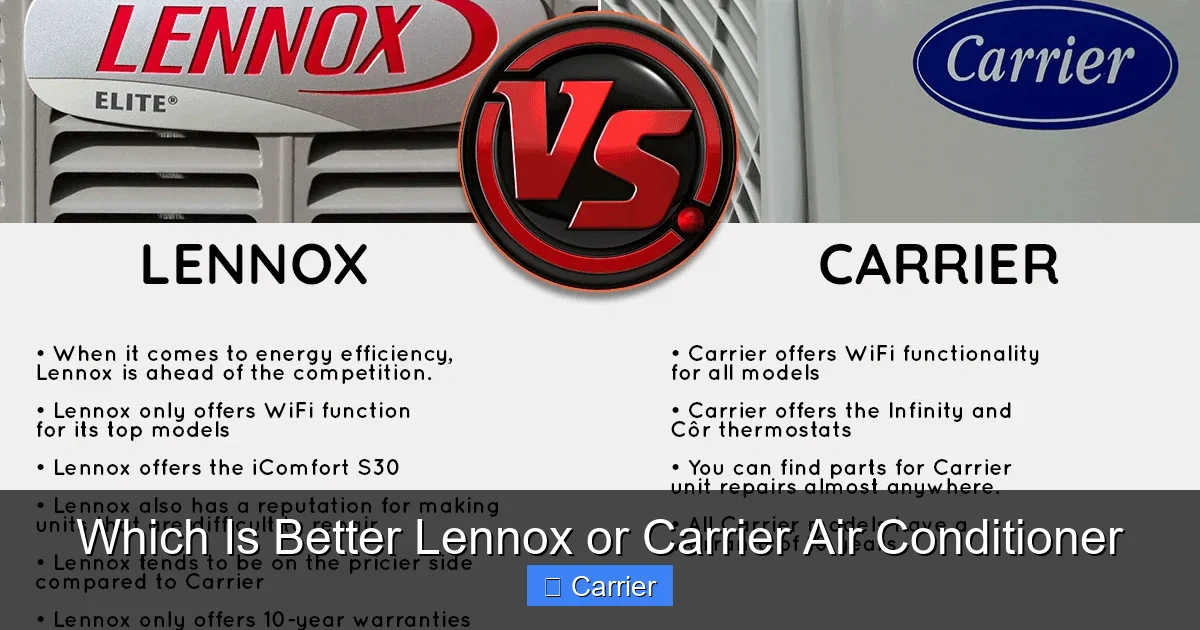
- Lennox: Most models range from 16 to an impressive 26+ SEER, with flagship systems like the XC25 using inverter technology to modulate compressor speed based on demand.
- Carrier: Generally offers 14–24 SEER models. Their Infinity series tops out near 23–24 SEER, using two-stage compressors for improved efficiency over single-stage units.
For example, if you live in a hot climate like Phoenix or Atlanta, investing in a higher SEER unit could save hundreds per year. While Lennox pushes the envelope further, even Carrier’s best units meet strict ENERGY STAR standards—making them smart choices too.
The Real-World Impact of Efficiency
Let’s say you replace a 14 SEER unit with a 20 SEER model:
– In Texas, that’s roughly $150–$200 saved annually on cooling costs.
– Over 15 years? That’s $2,250–$3,000 in savings—not including rebates or tax credits.
Lennox’s variable-speed compressors adjust output continuously, keeping rooms at a steady temperature without cycling on/off constantly. This reduces wear and tear, improves humidity control, and lowers noise levels.
Carrier’s approach uses staged operation—running full blast until needed, then backing off. It’s effective but can feel less precise than Lennox’s seamless modulation.
Still, both brands now include smart thermostats and Wi-Fi controls, letting you monitor usage and schedule cooling remotely.
Compressor Technology: Heart of the System
The compressor does more than cool air—it’s the engine of your entire AC system. How well it runs affects everything from comfort to lifespan.
Lennox: Variable-Speed Mastery
Lennox pioneered inverter-driven compressors across most product lines. These aren’t just “two-stage” units—they vary speed infinitely, like cruise control for your AC. This means:
– Smoother temperature swings
– Lower humidity (especially important in humid climates)
– Quieter operation (under 60 decibels in many cases)
– Longer runtime without overworking
Models like the SL28XCV (up to 26 SEER) use this tech for elite performance.
Carrier: Two-Stage Reliability
Carrier favors two-stage compressors in its high-end Infinity line (e.g., CAI24). Here’s how it works:
– Low stage: Runs at 65% capacity for mild days
– High stage: Engages during heatwaves
While not truly variable-speed like Lennox, two-stage still beats single-stage by reducing short-cycling and saving energy. Plus, Carrier integrates this with their ComfortSense™ technology for adaptive airflow.
So while Lennox offers more granular control, Carrier delivers rock-solid reliability with fewer moving parts—a plus for long-term ownership.
Pricing and Value Proposition
Let’s get honest: upfront cost matters. But total value includes longevity, repair frequency, and resale impact.
Initial Investment
On average:
– Lennox: Starts around $3,500–$7,000 installed for mid-to-high-tier models.
– Carrier: Typically $3,200–$6,500 for comparable tiers.
Why the gap? Lennox spends more on materials, sound dampening, and proprietary components. Carrier balances performance with mass-market appeal.
Long-Term Savings
Even with a higher sticker price, Lennox’s efficiency often pays back within 5–7 years through utility savings. Consider this:
| Scenario | Lennox (26 SEER) | Carrier (23 SEER) |
|——–|——————|——————-|
| Annual Cooling Cost (2-ton unit, 1,200 hrs/yr) | ~$320 | ~$365 |
| 10-Year Savings | — | ~$450 |
Add in potential ENERGY STAR rebates (some utilities offer $300–$600), and the difference shrinks—or reverses.
Also, Lennox’s extended compressor warranty (15 years) gives peace of mind against costly replacements.
Durability and Lifespan
An air conditioner should last 15–20 years with proper care. But some brands build in extra resilience.
Materials and Build Quality
– Lennox: Uses corrosion-resistant aluminum coils, heavy-duty cabinets, and precision-machined parts. Ideal for coastal or rainy regions.
– Carrier: Employs galvanized steel frames and robust condenser designs. Known for surviving harsh winters (thanks to cold-climate models like the CAE).
Both undergo rigorous testing, but independent studies (like those from Consumer Reports) show Carrier slightly edges out in failure rate after 10+ years. However, Lennox owners report fewer breakdowns in extreme heat due to superior thermal management.
Maintenance Requirements
No matter the brand:
– Clean or replace filters every 1–3 months
– Schedule annual professional tune-ups
– Keep outdoor unit clear of debris
Lennox’s self-diagnostic tools help catch issues early. Carrier pairs well with their Comfort Advisor app for real-time alerts.
Pro tip: Ask your installer about lubrication schedules—especially for variable-speed units with sealed motors (no oil ports).
Smart Features and Integration
Modern air conditioners aren’t just about blowing cold air—they’re part of your smart home ecosystem.
Thermostat Compatibility
Both brands work seamlessly with popular smart thermostats:
– Nest
– Ecobee
– Honeywell Home
– Their own branded apps (Lennox iComfort, Carrier Comfort)
But Lennox takes it further:
– Geofencing: Automatically adjusts temps when you leave/return
– Learning algorithms: Adapts to your habits
– Air quality sensors: Some models include CO₂ and VOC monitors
Carrier’s platform is simpler but reliable—great if you prefer plug-and-play setup.
Remote Access and Alerts
With either brand, you can:
– Turn on pre-cooling before arriving home
– Get low-refrigerant warnings
– Monitor energy usage trends
Just remember: smart features require stable Wi-Fi and regular app updates.
Environmental Impact and Refrigerants
As global awareness grows, so does demand for eco-friendly HVAC options.
R-410A: The Current Standard
Both Lennox and Carrier primarily use R-410A refrigerant, which doesn’t deplete ozone but has a high global warming potential (GWP). Major regulations (like the EPA’s SNAP rules) are phasing it out by 2025.
If you’re installing new in 2024+, consider asking dealers about:
– R-32 refrigerants (lower GWP, used by some Japanese brands)
– Natural refrigerants like propane (R-290)—only available in select models due to flammability concerns
Neither Lennox nor Carrier currently offers R-32 widely in North America—but watch for upcoming releases.
Energy Star and Certifications
All recommended models qualify for ENERGY STAR, meaning they exceed federal efficiency standards by 15%. Look for:
– ENERGY STAR label on the unit
– NEEP certification (in Canada)
– AHRI certification (verifies performance claims)
Bonus: Many states offer rebates for ENERGY STAR units—check DSIRE database.
Customer Satisfaction and Dealer Network
You might buy a top-tier Lennox, but your experience hinges on who installs it.
Dealer Availability
– Lennox: Smaller network; best served through authorized dealers (often smaller, specialized shops).
– Carrier: Vast global presence—more local installers nationwide, including big-box retailers like Home Depot.
That said, installer quality > brand prestige. A poorly installed Lennox will underperform a correctly installed Carrier.
Consumer Reviews
Recent surveys (via Angi, Yelp, Google):
– Lennox: Praised for quiet operation and tech features; occasional complaints about service wait times.
– Carrier: Consistently rated for dependability and responsive service; some note older models feel dated.
Always check reviews in your specific region—climate and contractor practices vary wildly.
Making Your Decision: A Practical Checklist
Still torn? Use this quick decision guide:
- Choose Lennox if: You want maximum efficiency, whisper-quiet operation, and don’t mind paying more upfront. Ideal for hot/humid climates or eco-conscious buyers.
- Choose Carrier if: You prioritize broad service availability, proven durability, and balanced value. Great for moderate climates or budget-conscious shoppers.
- Ask your contractor: For a side-by-side quote with installation, permits, and 5-year projections.
- Don’t forget ductwork: Both brands assume existing ducts are sized correctly—improper sizing kills efficiency regardless of brand.
- Consider future upgrades: If adding solar panels later, higher-efficiency units reduce peak demand charges.
Remember: No single “best” AC exists. The right one depends on your roof size, insulation, local codes, and personal preferences.
Conclusion: It’s About Fit, Not Just Name
So, which is better—Lennox or Carrier? Honestly? It depends.
Lennox shines when you’re willing to invest in tomorrow’s technology today—ultra-efficient, ultra-quiet systems that feel like luxury appliances. Carrier wins when you want dependable, widely supported cooling backed by decades of engineering rigor.
But here’s the golden rule: **the most efficient or expensive unit is only as good as its installer.** Always get multiple bids, verify HVAC licensing, and read contract terms carefully.
Whether you choose Lennox or Carrier, prioritize:
– Professional installation
– Regular maintenance
– Compatible thermostats
– Local climate needs
At the end of the day, both brands represent excellence in American-made HVAC. Your job is to find the perfect match for your home—not just the flashiest name.
Frequently Asked Questions
Is Lennox really more efficient than Carrier?
Yes, Lennox often leads with higher SEER ratings—up to 26 compared to Carrier’s typical 23–24. This means Lennox units generally consume less electricity for the same cooling output, translating to lower utility bills over time.
Can I mix Lennox and Carrier components?
Not recommended. Mixing brands can void warranties and reduce efficiency. Most contractors install complete systems from one manufacturer to ensure compatibility between indoor and outdoor units.
Do Lennox or Carrier units last longer?
Both last 15–20 years with proper care. Independent tests suggest Carrier may have a slight edge in long-term reliability, but Lennox’s variable-speed compressors reduce wear in extreme heat, potentially extending life in warm climates.
Are Carrier air conditioners good for cold climates?
Absolutely. Carrier produces cold-climate models (like the CAE series) designed to operate efficiently below freezing, making them ideal for northern regions where other units might struggle.
What’s the biggest mistake people make choosing an AC?
Skipping professional load calculations. An oversized or undersized unit wastes money and hurts comfort. Always hire an HVAC pro to assess your home’s BTU needs before buying.
Should I repair or replace my old AC?
If your unit is over 10 years old, has frequent repairs, or has a SEER below 14, replacement makes sense. New high-efficiency models pay for themselves through energy savings within 5–8 years.

