
Choosing between Carrier and Rheem air conditioners can feel overwhelming. Both brands are leaders in HVAC, but they differ in pricing, efficiency, and long-term reliability. This article breaks down everything you need to know to pick the right one for your home.
Key Takeaways
- Brand Heritage: Carrier is a 100+ year-old industry leader known for innovation; Rheem has decades of experience with a focus on affordability and reliability.
- Energy Efficiency: Carrier often offers higher SEER ratings and inverter technology, leading to greater long-term energy savings.
- Warranty Coverage: Rheem typically provides more comprehensive standard warranties, while Carrier’s extended protection requires additional cost.
- Installation & Service: Carrier has broader service networks but may be pricier; Rheem is easier to find locally with solid regional support.
- Noise Levels: Carrier models tend to run quieter due to advanced compressor tech and sound-dampening features.
- Smart Features: Both offer smart thermostats and app control, but Carrier integrates better with premium ecosystems like Google Assistant and Alexa.
- Best For: Choose Carrier for high-end performance and efficiency; choose Rheem for budget-conscious buyers who still want dependable cooling.
📑 Table of Contents
- Which Air Conditioner Is Better: Carrier or Rheem?
- Understanding Carrier: The Legacy of Innovation
- Exploring Rheem: Reliability Meets Value
- Performance Comparison: Carrier vs Rheem in Real-World Use
- Warranty and Long-Term Value
- Installation, Service, and Availability
- Smart Features and Home Integration
- Customer Reviews and Reputation
- Environmental Impact and Sustainability
- Which Should You Choose? Making Your Decision
- Final Thoughts: Not Just Brands—It’s About Your Needs
Which Air Conditioner Is Better: Carrier or Rheem?
If you’re shopping for a new central air conditioner, you’ve likely come across two names that keep showing up at the top of every list: Carrier and Rheem. Both are household names in heating, ventilation, and air conditioning (HVAC), and both offer reliable, efficient systems. But when it comes down to choosing between them, how do you decide? Is Carrier worth the extra cost? Or does Rheem deliver just as much bang for your buck?
In this deep dive, we’ll compare Carrier and Rheem head-to-head across key factors like efficiency, durability, warranty, installation, noise levels, smart features, and overall value. By the end, you’ll have a clear picture of which air conditioner fits your home, budget, and lifestyle best. Whether you’re replacing an old unit or building a new system from scratch, this guide will help you make an informed decision.
Understanding Carrier: The Legacy of Innovation
A Century of Leadership in HVAC
Carrier was founded in 1915 by Willis Haviland Carrier, who invented modern air conditioning. That makes Carrier one of the oldest and most respected names in the industry. Over the years, the company has pioneered breakthroughs like variable-speed compressors, smart thermostats, and eco-friendly refrigerants. Today, Carrier operates under the United Technologies umbrella (now part of Carrier Global Corporation), giving it massive R&D resources and global reach.
Strengths of Carrier Systems
- High Efficiency Ratings: Most Carrier units boast SEER ratings between 16 and 24, with some premium models reaching 26+. This means lower electricity bills over time.
- Inverter-Driven Compressors: These adjust cooling output based on demand, reducing energy use and improving comfort during mild weather.
- Quiet Operation: Advanced sound-dampening materials and dual-stage compressors help Carrier units operate below 50 decibels—about as loud as a soft whisper.
- Durability: Built with commercial-grade components, Carrier systems are designed to last 15–20 years with proper maintenance.
For example, the Carrier Infinity Series uses Puron (R-410A) refrigerant and includes a two-stage compressor that ramps up only when needed. This not only saves energy but also maintains consistent indoor humidity levels—ideal for humid climates.
Considerations with Carrier
- Higher Upfront Cost: You’ll pay more for a Carrier unit compared to many competitors, including Rheem.
- Complex Installation: Inverter and multi-stage systems require precise setup by certified technicians.
- Warranty Limitations: Standard warranties are shorter unless you purchase extended coverage.
Still, for homeowners prioritizing long-term savings, quiet operation, and cutting-edge tech, Carrier remains a top-tier choice.
Exploring Rheem: Reliability Meets Value
The Rheem Story: From Plumbing to Powerful Cooling
Rheem began in 1925 as a plumbing supply company and later expanded into water heaters before launching its first air conditioning line in the 1980s. Unlike Carrier, Rheem focuses on making quality HVAC systems accessible without sacrificing performance. It’s especially popular among contractors and homeowners looking for dependable, mid-range options.
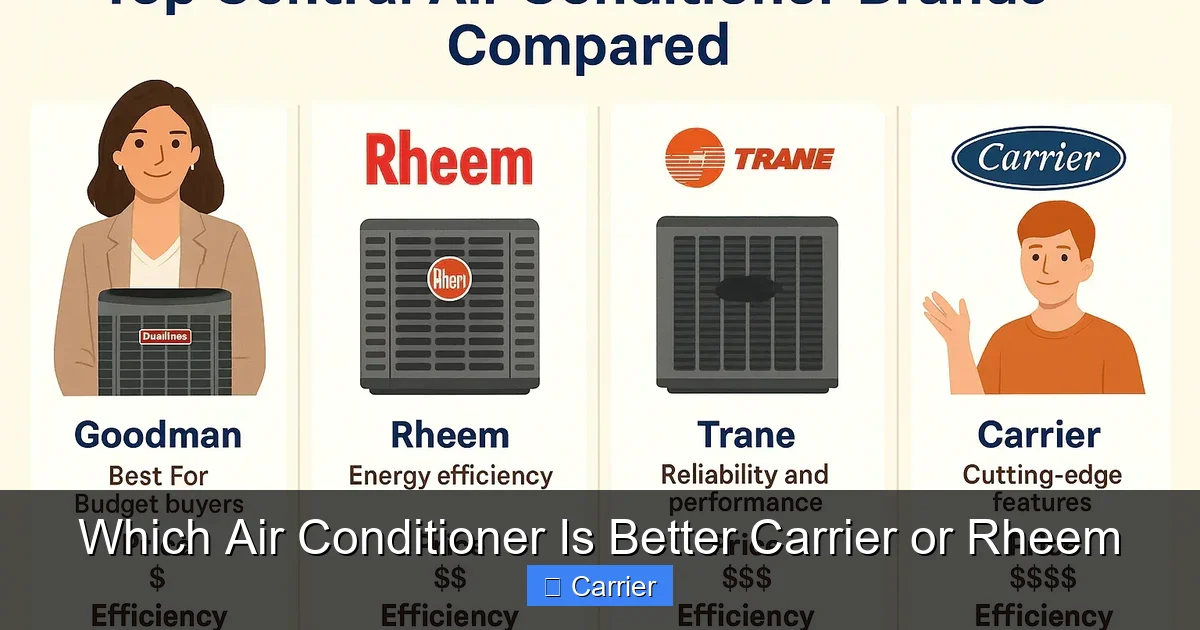
Visual guide about Which Air Conditioner Is Better Carrier or Rheem
Image source: thefurnaceoutlet.com
What Makes Rheem Stand Out?
- Affordable Entry Point: Rheem offers competitive pricing, often 10–20% less than Carrier for similar tonnage and features.
- Comprehensive Warranties: Many Rheem units come with 10-year parts warranties standard—some even include lifetime heat exchanger coverage.
- Ease of Maintenance: Simpler designs mean fewer components to go wrong, making repairs more straightforward.
- Strong Regional Support: Rheem has extensive dealer networks across North America, so finding a local installer is rarely an issue.
Take the Rheem Classic Series: it delivers solid cooling with a single-stage compressor and a SEER rating around 14–16. While not as efficient as Carrier’s inverter models, it’s perfect for moderate climates or homes where full-time AC isn’t used heavily.
Where Rheem Falls Short
- Lower Max Efficiency: Rarely exceeds 18 SEER, meaning higher utility bills in extreme heat.
- Louder Operation: Single-stage compressors tend to cycle on/off frequently, creating noticeable noise spikes.
- Limited Smart Integration: While compatible with Wi-Fi thermostats, Rheem lacks native app controls found in Carrier’s Total Home Comfort platform.
That said, Rheem excels in regions with mild summers or among budget-savvy buyers who want peace of mind without overspending.
Performance Comparison: Carrier vs Rheem in Real-World Use
Cooling Capacity and Consistency
Both brands deliver excellent airflow and temperature control, but Carrier edges ahead in consistency. Its two-stage compressors maintain steady temperatures by modulating output instead of turning fully on and off. In contrast, Rheem’s single-stage units can cause short cycles—especially in hot, humid days—leading to temperature swings and higher humidity.
Practical Tip: If you live in Phoenix or Miami, where summer temps exceed 95°F, Carrier’s variable-speed technology helps keep your home consistently cool without overworking the system.
Energy Efficiency Deep Dive
SEER (Seasonal Energy Efficiency Ratio) measures how efficiently an AC converts electricity into cooling. Higher SEER = lower bills. Here’s a quick comparison:
- Carrier: 16–24 SEER (Infinity models hit 26)
- Rheem: 14–18 SEER (Premium lines approach 19)
Over 10 years, upgrading from a 14 SEER to a 20 SEER unit can save $300–$500 annually on electricity. Carrier’s higher efficiency pays for itself faster, despite the steeper initial investment.
Noise Level Test
At full capacity, a Rheem unit might register 75 dB—comparable to heavy traffic. A Carrier two-stage model stays under 60 dB, even during peak cooling. For bedrooms near the condenser, this difference matters.
Warranty and Long-Term Value
Standard Warranty Breakdown
| Brand | Parts Warranty | Heat Exchanger | Labor Coverage |
|---|---|---|---|
| Carrier | 5–10 years | 10 years (some models) | Not included (must add separately) |
| Rheem | 10 years | Lifetime | Available via contractor |
Rheem’s lifetime heat exchanger warranty is a major perk—it covers the metal coil that transfers heat, which often fails first due to corrosion. Carrier offers this too, but only if you register online within 90 days and pay for an extended plan.
Total Cost of Ownership
While Rheem costs less upfront, Carrier’s energy savings and longer lifespan often balance the equation over time. Add in quieter operation and fewer repairs, and Carrier becomes the smarter long-term bet for serious AC users.
Installation, Service, and Availability
Finding a Qualified Installer
Both brands rely on independent contractors, but Carrier-certified dealers must pass rigorous training. This ensures better installation quality but can limit availability in rural areas. Rheem installers are more widely distributed, making scheduling easier nationwide.
DIY vs Professional Setup
Never attempt DIY AC installation! Improper refrigerant handling or electrical connections can void warranties and create safety hazards. Always hire a licensed HVAC technician familiar with your chosen brand.
Smart Features and Home Integration
Carrier’s Connected Ecosystem
Carrier’s Total Home Comfort app lets you monitor energy use, set schedules, and receive maintenance alerts. It pairs seamlessly with Google Nest, Amazon Alexa, and Apple HomeKit. Remote diagnostics can detect issues before they escalate—great for vacation homes.
Rheem’s Smart Capabilities
Rheem supports Wi-Fi thermostats like Ecobee and Honeywell, but lacks native app functionality. You’ll manage settings through third-party platforms, which works fine but feels less integrated.
Voice Control Example
“Hey Google, set living room AC to 72 degrees” works instantly with Carrier systems. With Rheem, you’d need to say, “Hey Google, tell Ecobee to adjust the thermostat,” adding an extra step.
Customer Reviews and Reputation
What Users Say About Carrier
Reviewers praise Carrier for “quiet nights” and “no temperature swings.” Some note high prices, but many agree the performance justifies the cost. One Florida homeowner wrote: “Even on 100-degree days, my house stays at 74. No drafts, no noise—worth every penny.”
What Users Say About Rheem
Rheem gets high marks for “reliability” and “good warranty.” Customers in Texas appreciate the durability in harsh conditions. However, several mention “loud startup” and “higher bills” in summer months.
Professional HVAC Opinions
Many contractors prefer Carrier for complex jobs but recommend Rheem for basic replacements due to simplicity and parts availability. “If you’re not maxing out your usage, Rheem gives great value,” says Mike Torres, a licensed HVAC tech in Arizona.
Environmental Impact and Sustainability
Refrigerant Choices
Both brands now use R-410A (Puron), a hydrofluorocarbon (HFC) with zero ozone depletion potential but high global warming potential. Neither offers R-32 yet, unlike newer Japanese brands—but this may change soon.
Energy Star Certification
All Carrier and Rheem units meet Energy Star standards when equipped with 14+ SEER components. Look for the label to confirm eligibility for rebates.
Recycling and Disposal
Old AC units contain recyclable metals and recoverable refrigerants. Never dump AC waste in landfills—contact local recyclers or ask your installer to handle disposal.
Which Should You Choose? Making Your Decision
If You Want Premium Performance…
Go with Carrier. Ideal for large homes, extreme climates, or anyone wanting whisper-quiet, energy-smart cooling. The upfront cost is higher, but long-term savings and comfort justify it.
If You Want Great Value…
Choose Rheem. Perfect for moderate climates, smaller budgets, or first-time AC owners. Solid performance, strong warranty, and easy service access make it a favorite among contractors.
Hybrid Approach?
Some installers pair a Carrier air handler with a Rheem condensing unit—combining Carrier’s indoor quietness with Rheem’s outdoor reliability. Ask your contractor about mixed-brand setups.
Final Thoughts: Not Just Brands—It’s About Your Needs
There’s no universal “better” air conditioner—only the right one for your situation. Carrier shines in performance and innovation; Rheem wins on affordability and simplicity. Consider your climate, home size, usage patterns, and budget. And remember: even the best brand falls apart if poorly installed. Always get multiple quotes from licensed professionals.
Whichever you pick, investing in a quality AC today means cooler days tomorrow—and lower stress all summer long.
Frequently Asked Questions
Is Carrier more expensive than Rheem?
Yes, Carrier typically costs 15–25% more than Rheem for comparable tonnage and features. This reflects advanced tech like inverter compressors and quieter operation, but comes with a higher price tag.
Can I mix Carrier and Rheem parts in one system?
Not recommended. Mixing brands can void warranties and cause compatibility issues. Stick to same-brand components unless advised by a certified HVAC pro.
Do Rheem units work well in hot climates?
Rheem performs adequately in mild to moderate heat, but may struggle in extreme temperatures above 100°F due to lower SEER ratings and single-stage compressors.
Are Carrier warranties transferable?
Standard Carrier warranties aren’t automatically transferable, but extended plans may allow ownership changes. Check terms with your installer or dealer.
How often should I replace my air conditioner?
Most ACs last 12–15 years. Signs it’s time: frequent breakdowns, rising bills, or age beyond 15 years. Regular maintenance extends life.
Should I buy during summer or winter for best deals?
Buy in spring or fall. Contractors have more availability, and retailers offer discounts to clear inventory before peak season.

