Finding the filter on a Carrier air conditioner is easier than you think! Most models hide the filter behind a simple front panel or grille, often near the return air duct. Regularly cleaning or replacing this filter ensures better airflow, improved efficiency, and cleaner indoor air—keeping your system running smoothly all season long.
Finding the filter on your Carrier air conditioner doesn’t have to be confusing. Whether you’re troubleshooting poor airflow, noticing higher-than-usual energy costs, or just doing routine maintenance, knowing where to look makes all the difference. Carrier has been a trusted name in HVAC since 1902, and while their systems are built to last, proper upkeep—especially around the air filter—is essential for peak performance. The good news? In most cases, locating the filter is straightforward once you know what to expect.
Carrier offers a wide range of residential and commercial cooling solutions, from central air conditioners to portable and window units. Each model may place the filter in a slightly different spot, but there are common patterns across many designs. This guide walks you through everything you need to know about finding, accessing, and maintaining your Carrier air conditioner’s filter so your home stays cool, clean, and efficient.
Key Takeaways
- Filter Location Varies by Model: On most Carrier units, the filter is either behind the front panel or inside the return air duct—check your manual for exact placement.
- Front Panel Access Is Common: Many Carrier systems have a removable front cover that swings down to reveal the filter easily.
- Top-Mounted Filters Exist Too: Some wall-mounted and window models pull the filter straight out from the top.
- Cleaning vs. Replacement Matters: Reusable filters can be washed; disposable ones must be replaced every 1–3 months depending on usage.
- Ignoring the Filter Reduces Efficiency: A clogged filter restricts airflow, forcing your AC to work harder and increasing energy bills.
- DIY Access Doesn’t Require Tools: Most filters are designed for quick hand removal—no screwdrivers needed.
- Always Turn Off Power First: For safety, disconnect power before handling any internal components of your Carrier unit.
📑 Table of Contents
- Understanding Why the Air Filter Matters
- Common Locations for Carrier Air Conditioner Filters
- Step-by-Step Guide to Finding & Accessing Your Filter
- How Often Should You Clean or Replace the Filter?
- Troubleshooting Tips When the Filter Seems Missing or Hard to Find
- Proper Maintenance Beyond the Filter
- Why Choose Carrier for Reliable Cooling?
Understanding Why the Air Filter Matters
Before diving into where to find the filter, let’s talk about why it even exists. Your Carrier air conditioner pulls warm indoor air through the return ducts, passes it over cold evaporator coils to remove humidity, then blows cooled air back into your living space. But along the way, dust, pet dander, pollen, and other airborne particles get trapped.
That’s exactly what the air filter is for. It acts as the first line of defense, catching contaminants before they circulate throughout your home—or worse, clog delicate internal components like the evaporator coil. Over time, a dirty filter restricts airflow, making your system run longer and consume more energy. Studies show that a clean filter can improve indoor air quality by up to 80%, reduce allergens, and extend the life of your HVAC system by preventing strain-related wear.
For homeowners with allergies or respiratory sensitivities, a properly maintained filter isn’t optional—it’s a health necessity. And for anyone who wants lower utility bills and fewer repair calls, keeping that filter clean is one of the easiest wins you can make.
Common Locations for Carrier Air Conditioner Filters

Visual guide about Where Is Filter on Carrier Air Conditioner
Image source: 64.media.tumblr.com
One of the biggest questions people ask is: *Where is the filter on my Carrier air conditioner?* The answer depends on whether you have a central split-system unit, a window model, a portable air conditioner, or a heat pump setup. Let’s break them down.
Central Split-System Units (Most Common Residential Setup)
If you have a traditional Carrier central air conditioner with an outdoor compressor and indoor air handler (usually in the attic or basement), the filter is typically located inside the air handler cabinet. You’ll want to look at the side or front of the unit where air enters from your home’s return ducts.
Most Carrier air handlers feature a large front panel that opens like a door. This panel is secured with clips or latches and may require gentle pulling to release. Once opened, you’ll see a rectangular slot holding the filter. It usually sits vertically and slides in and out like a drawer. Some models even include a small handle or tab for easy removal.
In rare cases, especially older installations, the filter might be tucked behind a smaller access door near the bottom of the unit. Always consult your owner’s manual if you’re unsure—but rest assured, it won’t be buried deep inside wiring or refrigerant lines.
Window Air Conditioners
Window-mounted Carrier units are popular for single rooms and apartments. These models often place the filter at the top rear of the unit, just behind a removable plastic cover. To access it:
– Look for a small latch or slider near the upper edge.
– Gently slide or lift the cover upward.
– The filter will appear as a thin pleated rectangle that pulls straight out.
Some newer window units also feature front-accessible filters—similar to central systems—where you can pop open the front grille to reach it. Either way, no tools are required, and the whole process takes under 60 seconds.
Portable Air Conditioners
Portable Carrier air conditioners usually come with a filter located behind a small door on the front or side of the unit. This is part of the exhaust/air intake design. Simply locate the label indicating “Filter” or look for a recessed button or lever that releases the panel.
Once opened, the filter is exposed and ready for inspection. Because portable units move around, many manufacturers prioritize easy access—so don’t worry if it feels obvious once you know what to look for.
Ductless Mini-Split Systems
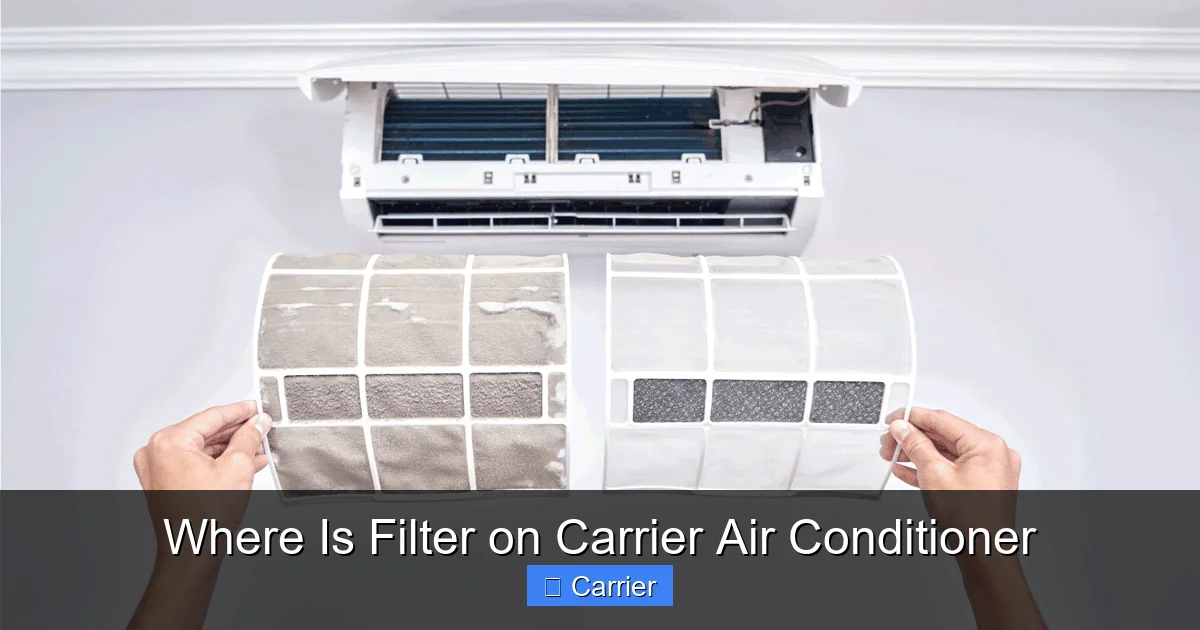
For homes using Carrier ductless mini-splits (also called multi-split or VRV systems), the filter is found in the indoor head unit—not the outdoor compressor. Each head (typically mounted high on a wall) has a front cover that lifts off to reveal the filter inside.
This is especially handy because it means you can clean the filter without touching any electrical components or refrigerant tubing. Just lift the cover, remove the filter, rinse it (if reusable), and slide it back in.
Step-by-Step Guide to Finding & Accessing Your Filter
Visual guide about Where Is Filter on Carrier Air Conditioner
Image source: hvacseer.com
Even if you know your system type, here’s a practical walkthrough to help you locate the filter quickly and safely:
1. **Turn Off the System**: Before opening anything, switch off your Carrier unit at the thermostat and unplug it (for portable or window models) or shut off the circuit breaker labeled “HVAC” or “AC.” Safety first!
2. **Locate the Return Air Grille**: Trace the path of your home’s return air—usually marked by a large vent near the floor or lower wall. The filter is almost always close to this area.
3. **Look for a Front Panel or Cover**: On central systems, check the front or side of the air handler. On windows or portables, examine the top or front for a removable plastic piece.
4. **Release Latches or Sliders**: Most covers use simple mechanical fasteners—just press gently or slide to unlock. Avoid prying with sharp objects.
5. **Pull Out the Filter**: Once the cover is off, the filter should slide out freely. Note its orientation so you can reinstall it correctly.
6. **Inspect and Clean or Replace**: If it’s a reusable mesh filter, rinse it under lukewarm water and let it dry completely before putting it back. Disposable fiberglass or HEPA-style filters should be replaced every 1–3 months.
If you’re still having trouble, take a photo of your unit and compare it to images in your Carrier owner’s manual (available online at carrier.com/support). Many models share visual similarities, so cross-referencing can save time.
How Often Should You Clean or Replace the Filter?
This is one of the most frequently asked questions: How often should I change my Carrier air conditioner filter? The short answer: It depends.
– **Pet owners or smokers**: Clean/replace every 1 month.
– **Normal household (no pets/smokers)**: Every 2–3 months.
– **High-traffic homes or allergy sufferers**: Every 3–4 weeks.
– **Commercial or industrial settings**: Weekly checks may be necessary.
During peak summer months when your AC runs constantly, err on the side of caution. A visibly dusty or warped filter is a sign it’s time to act. Don’t wait until performance drops or strange noises start—routine maintenance prevents bigger problems.
Remember: Even if the filter looks clean, microscopic particles accumulate over time. That’s why experts recommend checking it monthly during heavy use seasons.
Troubleshooting Tips When the Filter Seems Missing or Hard to Find
Sometimes, despite following all steps, the filter isn’t immediately visible. Here’s what to do:
– **Check the Manual Again**: Confirm your exact model number. Some Carrier units use universal filter sizes (e.g., 16x25x1), but placement varies.
– **Inspect Near the Evaporator Coil**: In rare cases, especially after renovations, the filter might have been relocated or blocked by insulation.
– **Look Behind Furniture or Panels**: If recent remodeling occurred, a temporary panel might cover the access point.
– **Contact Carrier Support**: If you’ve exhausted options, call 1-800-CARRIER (1-800-227-7437) or visit their website. Their customer service team can provide model-specific diagrams.
Also, note that some Carrier systems use washable electrostatic filters instead of disposable ones. These sit deeper inside and may require a slight tilt to extract fully. Always follow manufacturer instructions for these specialized filters.
Proper Maintenance Beyond the Filter
While the air filter is the most critical component for DIY maintenance, don’t overlook other simple tasks:
– **Vacuum Around Vents**: Dust buildup around return grilles reduces airflow efficiency.
– **Check Drain Line**: Clogged condensate drains cause leaks and mold growth—flush with vinegar annually.
– **Keep Outdoor Unit Clear**: Trim grass, leaves, and debris around the condenser coil.
– **Schedule Professional Tune-Ups**: Twice per year keeps everything calibrated and safe.
These small efforts compound into significant savings over time. Plus, a well-maintained Carrier system retains its resale value and warranty eligibility.
Why Choose Carrier for Reliable Cooling?
Carrier isn’t just a brand—it’s synonymous with innovation, durability, and customer support. From the iconic blue logo to advanced features like ComfortSense® technology and Wi-Fi-enabled thermostats, Carrier continues to lead the industry. Their commitment to energy efficiency (many models meet ENERGY STAR® standards) and quiet operation makes them a top choice for discerning homeowners.
And while technology evolves, one thing stays constant: the importance of a clean air filter. No matter how sophisticated your Carrier system gets, it can’t perform well without proper airflow. So whether you’re upgrading soon or simply doing today’s chores, remember: a little attention to the filter goes a long way.
Frequently Asked Questions
Where is the filter located on a Carrier central air conditioner?
On most Carrier central systems, the filter is inside the air handler cabinet, accessible via a front or side panel near the return air duct. Simply release the latch, open the cover, and pull out the filter like a drawer.
Can I access the filter without tools?
Yes! Most Carrier models are designed for tool-free access. Front panels use clips or sliders, and filters slide in and out by hand—no screwdrivers or wrenches required.
How do I know if my filter is reusable or disposable?
Reusable filters are usually made of washable mesh or foam and may have a smooth texture. Disposable filters are thicker, pleated paper or synthetic material, and often come in packs of multiple replacements.
What happens if I ignore the filter for too long?
A clogged filter restricts airflow, causing your AC to work harder, raise energy bills, reduce cooling efficiency, and potentially damage internal components like the compressor or blower motor.
Where can I buy replacement filters for my Carrier unit?
Replacement filters are available at hardware stores (Home Depot, Lowe’s), online retailers (Amazon, eBay), or directly from Carrier through their official website. Always match the dimensions listed in your manual.
Is it safe to clean the filter myself?
Absolutely—most filters are designed for homeowner maintenance. Just ensure the unit is powered off, rinse reusable filters with water, let them dry completely, and avoid bending pleats on disposable ones.