
Carrier air conditioners are manufactured in state-of-the-art facilities across the U.S., China, Mexico, and India. The company combines global production with strict quality control to deliver reliable, energy-efficient cooling solutions trusted by homeowners and businesses alike.
When it comes to staying cool during scorching summer months, few brands command as much trust and recognition as Carrier. Known for innovation, reliability, and energy efficiency, Carrier has been a leader in the HVAC industry for over a century. But have you ever wondered where these trusted air conditioners are actually made? It’s a question many homeowners and business operators ask—especially when considering the quality, origin, and sustainability of the products they install in their homes and offices.
Carrier air conditioners are not manufactured in just one location. Instead, the company operates a global network of production facilities strategically positioned to serve regional markets while maintaining high standards of quality and efficiency. From the United States to China, Mexico to India, Carrier leverages local expertise, supply chains, and labor markets to deliver consistent performance across its product lines. This decentralized approach allows the brand to respond quickly to demand fluctuations, reduce shipping costs, and support local economies—all while upholding the engineering excellence the brand is known for.
Understanding where Carrier air conditioners are manufactured isn’t just about geography—it’s about transparency, quality assurance, and peace of mind. Whether you’re installing a new central air system in your suburban home or outfitting a commercial building with high-capacity units, knowing the origin of your equipment can influence your decision. In this article, we’ll take a deep dive into Carrier’s global manufacturing footprint, explore the key production sites, examine quality control measures, and discuss how the brand balances global reach with local relevance.
Key Takeaways
- Global Manufacturing Network: Carrier operates production facilities in multiple countries, including the United States, China, Mexico, and India, to meet worldwide demand efficiently.
- U.S. Production Hubs: Key American manufacturing sites are located in Indiana, Tennessee, and Florida, supporting both residential and commercial HVAC systems.
- Quality Control Standards: All Carrier plants follow rigorous testing and quality assurance protocols, regardless of location, ensuring consistent performance and durability.
- Sustainability Focus: Carrier integrates eco-friendly practices in its manufacturing processes, including energy-efficient production and reduced emissions.
- Local Assembly vs. Full Production: Some units are fully manufactured in one country, while others are assembled from globally sourced components to optimize cost and logistics.
- Brand Heritage and Innovation: As the inventor of modern air conditioning, Carrier maintains a strong R&D presence in the U.S., influencing design and engineering across all production sites.
- Warranty and Support: Regardless of where a unit is made, Carrier offers standardized warranties and customer support through a global service network.
📑 Table of Contents
Carrier’s Global Manufacturing Strategy
Carrier’s approach to manufacturing is rooted in a philosophy of global integration and local responsiveness. Rather than centralizing all production in one country, the company has developed a diversified network of factories that serve different regions based on market demand, labor costs, and logistical efficiency. This strategy allows Carrier to remain competitive in a rapidly evolving HVAC market while maintaining control over product quality and innovation.
One of the primary reasons Carrier operates in multiple countries is to reduce dependency on any single supply chain. Global events—such as trade disputes, pandemics, or natural disasters—can disrupt production in one region, but Carrier’s distributed model helps mitigate these risks. For example, if a factory in China faces temporary shutdowns due to regulatory changes, production can be shifted or supplemented by facilities in the U.S. or Mexico. This flexibility ensures that customers continue to receive products on time, even during uncertain times.
Another key aspect of Carrier’s global strategy is cost optimization. Manufacturing in countries with lower labor and operational costs—such as China and India—allows the company to produce more affordable units without sacrificing quality. These savings can then be passed on to consumers in the form of competitive pricing, especially for entry-level and mid-range models. At the same time, high-end and commercial systems are often produced in the U.S. and other developed markets, where advanced automation and skilled labor support precision engineering.
Regional Production Hubs
Carrier’s manufacturing footprint spans several continents, with major production hubs in North America, Asia, and beyond. Each region plays a unique role in the company’s overall supply chain. In North America, the focus is on serving the U.S., Canadian, and Mexican markets with a mix of residential and commercial units. In Asia, particularly China and India, production is scaled to meet the growing demand for air conditioning in rapidly urbanizing populations.
For instance, Carrier’s facility in Suzhou, China, is one of the largest HVAC manufacturing plants in the world. It produces a wide range of air conditioners, from window units to large commercial chillers, primarily for the Asian market but also for export to other regions. Similarly, the company’s plant in Chennai, India, serves both domestic demand and international exports, leveraging India’s growing manufacturing capabilities and skilled workforce.
In Mexico, Carrier operates facilities that support North American distribution, taking advantage of proximity to the U.S. market and favorable trade agreements like the USMCA (United States-Mexico-Canada Agreement). These plants often assemble units using components sourced from various global suppliers, allowing for efficient customization based on regional needs.
Balancing Cost, Quality, and Speed
A common concern among consumers is whether manufacturing in different countries affects product quality. Carrier addresses this by implementing uniform quality standards across all facilities. Every plant, regardless of location, must adhere to the company’s global quality management system, which includes regular audits, performance testing, and compliance with international certifications such as ISO 9001.
Moreover, Carrier invests heavily in automation and digital monitoring to ensure consistency. Robotics and AI-driven quality checks are used in many factories to detect defects early in the production process. This reduces human error and ensures that every unit meets the same high standards, whether it’s made in Indiana or India.
Speed to market is another advantage of Carrier’s global model. By producing units closer to the end consumer, the company reduces shipping times and carbon emissions associated with long-distance transportation. For example, a homeowner in Texas is more likely to receive an air conditioner manufactured in Mexico or the southern U.S., while someone in Mumbai will get a unit produced locally in India. This regional approach not only improves delivery times but also supports local job creation and economic development.
U.S. Manufacturing Facilities
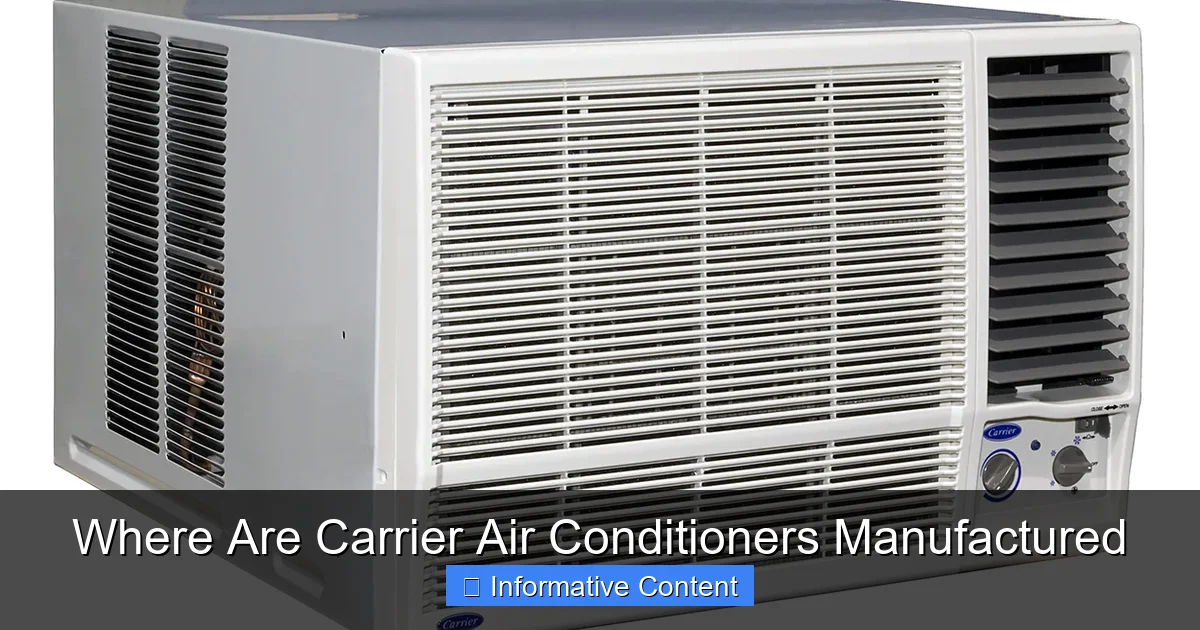
Visual guide about Where Are Carrier Air Conditioners Manufactured
Image source: images.carriercms.com
Despite its global presence, Carrier maintains a strong manufacturing base in the United States, reflecting its American heritage and commitment to domestic production. The company was founded in 1915 by Willis Haviland Carrier, the inventor of modern air conditioning, and its U.S. roots remain a core part of its identity. Today, several key facilities across the country continue to produce a significant portion of Carrier’s residential and commercial HVAC systems.
One of the most important U.S. manufacturing sites is located in Indianapolis, Indiana. This facility specializes in the production of residential air conditioners and heat pumps, including popular models like the Carrier Infinity and Performance series. The plant employs advanced manufacturing techniques, including lean production and just-in-time inventory systems, to maximize efficiency and minimize waste. It also serves as a hub for research and development, where engineers work on next-generation technologies such as smart thermostats and variable-speed compressors.
Another major site is in Collierville, Tennessee, which focuses on commercial HVAC systems. This facility produces large rooftop units, chillers, and air handlers used in office buildings, schools, hospitals, and retail centers. The Collierville plant is equipped with state-of-the-art testing labs where units undergo rigorous performance evaluations under simulated real-world conditions. This ensures that commercial customers receive reliable, high-capacity systems capable of handling demanding environments.
Florida and the Southeast Market
Carrier also operates a significant manufacturing presence in Florida, particularly in the city of Jacksonville. This facility plays a crucial role in serving the southeastern U.S., a region known for its hot, humid climate and high demand for air conditioning. The Jacksonville plant produces a range of residential units, including ductless mini-splits and central air systems, tailored to the specific needs of southern homeowners.
One advantage of producing units in Florida is the ability to test them in real-world conditions. Engineers can evaluate how systems perform in high humidity and extreme heat, making adjustments to improve efficiency and durability. This localized testing gives Carrier a competitive edge in a market where performance under stress is critical.
Additionally, the Florida facility supports Carrier’s sustainability goals by incorporating energy-efficient manufacturing practices. The plant uses solar panels to offset electricity consumption, recycles water used in production, and minimizes packaging waste. These efforts align with Carrier’s broader commitment to environmental responsibility, as outlined in its “Carrier 2030 Goals” for reducing carbon emissions and promoting circular economy principles.
Supporting American Jobs and Innovation
Manufacturing in the U.S. also allows Carrier to support American jobs and contribute to the national economy. The company employs thousands of workers across its domestic facilities, from assembly line technicians to engineers and quality control specialists. These jobs often require specialized training, and Carrier invests in workforce development programs to ensure employees have the skills needed to operate advanced machinery and maintain high production standards.
Moreover, U.S.-based production fosters innovation. Being close to research institutions, universities, and technology hubs enables Carrier to collaborate on cutting-edge projects. For example, the company has partnered with universities in Indiana and Tennessee to develop next-generation refrigerants with lower global warming potential (GWP). These innovations are often first tested and implemented in U.S. factories before being rolled out globally.
International Production: China, India, and Mexico
While the U.S. remains a cornerstone of Carrier’s manufacturing strategy, international facilities play an equally important role in meeting global demand. China, India, and Mexico are among the most significant production hubs outside North America, each serving distinct markets and contributing to Carrier’s global supply chain.
China: Scaling for the Asian Market
China is one of the world’s largest markets for air conditioning, driven by rapid urbanization, rising incomes, and extreme summer temperatures. Carrier’s presence in China dates back several decades, and the company has established multiple manufacturing sites to serve both domestic and export needs.
The Suzhou facility, located near Shanghai, is a flagship plant that produces millions of units annually. It manufactures everything from compact window units to large commercial systems, using a combination of local labor and imported high-tech components. The plant is ISO-certified and follows strict environmental regulations, including energy-efficient lighting and waste reduction programs.
One unique aspect of Carrier’s China operations is its focus on smart technology. Many units produced in Suzhou are equipped with Wi-Fi connectivity, voice control compatibility, and integration with mobile apps—features that are especially popular in tech-savvy Asian markets. The facility also collaborates with local universities on research into AI-driven climate control and energy optimization.
India: Meeting Growing Demand
India represents one of the fastest-growing HVAC markets in the world. With a population of over 1.4 billion and increasing urbanization, the demand for air conditioning is skyrocketing—especially in cities like Delhi, Mumbai, and Chennai. Carrier has responded by expanding its manufacturing capacity in India, with a major plant in Chennai serving as the regional hub.
The Chennai facility produces a wide range of products, from affordable window units for middle-class households to high-efficiency inverter ACs for premium markets. The plant emphasizes localization, sourcing many components from Indian suppliers to reduce costs and support the “Make in India” initiative. It also employs a diverse workforce, including many women in technical roles, reflecting Carrier’s commitment to diversity and inclusion.
One challenge in India is the variability in power supply and voltage fluctuations. Carrier addresses this by designing units with built-in voltage stabilizers and surge protection, ensuring reliable performance even in areas with unstable electricity. These adaptations demonstrate how global brands can tailor products to local conditions without compromising on quality.
Mexico: Bridging North America
Mexico plays a strategic role in Carrier’s North American operations. The country’s proximity to the U.S., favorable trade agreements, and competitive labor costs make it an ideal location for manufacturing and assembly. Carrier operates several facilities in Mexico, particularly in the northern states near the U.S. border.
These plants often focus on final assembly, using components sourced from the U.S., China, and other countries. For example, a residential air conditioner might have a compressor made in the U.S., a fan motor from China, and a control board from Mexico—all assembled into a finished unit in a Mexican factory. This modular approach allows for flexibility and cost savings while maintaining quality.
Mexican facilities also benefit from streamlined logistics. Finished units can be shipped across the border in a matter of hours, reducing inventory costs and enabling faster delivery to U.S. customers. This is especially important during peak summer months when demand surges and timely installation is critical.
Quality Control and Consistency Across Borders
One of the biggest concerns consumers have about globally manufactured products is consistency. How can a unit made in China perform as well as one made in the U.S.? Carrier tackles this challenge through a comprehensive quality control system that spans all production sites.
Global Quality Standards
Every Carrier manufacturing facility, regardless of location, must comply with the company’s global quality management system. This includes adherence to ISO 9001 standards, regular third-party audits, and mandatory performance testing. Units are subjected to stress tests, including extreme temperature cycling, humidity exposure, and long-duration operation, to ensure they meet durability and efficiency benchmarks.
Carrier also uses a centralized digital platform to monitor production data in real time. Sensors in factories track everything from component tolerances to energy consumption, allowing engineers to identify and correct issues before they affect product quality. This level of oversight ensures that a Carrier air conditioner made in India performs just as reliably as one made in Indiana.
Testing and Certification
Before any unit leaves the factory, it undergoes a series of tests to verify performance and safety. These include:
– Cooling Capacity Test: Measures how effectively the unit cools a space under standard conditions.
– Energy Efficiency Rating (EER/SEER): Confirms the unit meets advertised efficiency levels.
– Noise Level Test: Ensures the unit operates quietly, especially important for residential use.
– Electrical Safety Test: Verifies compliance with national and international safety standards.
In addition, Carrier units are certified by independent organizations such as AHRI (Air-Conditioning, Heating, and Refrigeration Institute) and ETL (Intertek). These certifications provide third-party validation of performance and safety, giving customers confidence in their purchase.
Warranty and Support
Regardless of where a Carrier air conditioner is manufactured, it comes with a standardized warranty and access to a global support network. Most residential units include a 10-year compressor warranty and a 5-year parts warranty, while commercial systems often have extended coverage. Customers can register their units online and receive service from authorized dealers worldwide.
This consistency in warranty and support reinforces Carrier’s commitment to customer satisfaction. Whether your unit was made in the U.S., China, or Mexico, you can expect the same level of service and reliability.
Sustainability and Environmental Responsibility
As climate change becomes an increasingly pressing issue, consumers are paying more attention to the environmental impact of the products they buy. Carrier recognizes this and has made sustainability a core part of its manufacturing philosophy.
Eco-Friendly Production Practices
Carrier’s factories are designed with sustainability in mind. Many facilities use renewable energy sources, such as solar panels, to power operations. Water recycling systems reduce consumption, and waste is minimized through lean manufacturing techniques. The company also prioritizes the use of recyclable materials in packaging and product design.
In 2020, Carrier announced its “Carrier 2030 Goals,” which include achieving carbon neutrality across all operations and reducing the carbon footprint of its products by 50%. These goals are being implemented through investments in clean energy, energy-efficient machinery, and sustainable supply chains.
Next-Generation Refrigerants
One of the biggest environmental challenges in the HVAC industry is the use of refrigerants with high global warming potential (GWP). Carrier is actively transitioning to low-GWP alternatives, such as R-32 and R-454B, which are more environmentally friendly than traditional refrigerants like R-410A.
These new refrigerants are being rolled out across all manufacturing sites, ensuring that units produced in any country meet the latest environmental standards. Carrier also offers retrofit services to help customers upgrade older systems to more sustainable options.
Conclusion
So, where are Carrier air conditioners manufactured? The answer is: all over the world. From the U.S. to China, India to Mexico, Carrier leverages a global network of state-of-the-art facilities to deliver reliable, energy-efficient cooling solutions to homes and businesses everywhere. This decentralized approach allows the company to balance cost, quality, and speed while supporting local economies and reducing environmental impact.
What sets Carrier apart is not just where its units are made, but how they are made. Rigorous quality control, consistent testing, and a commitment to innovation ensure that every air conditioner—no matter its origin—meets the high standards the brand is known for. Whether you’re buying a compact window unit or a commercial chiller, you can trust that it was engineered with care and built to last.
As the world continues to warm and the demand for air conditioning grows, Carrier’s global manufacturing strategy positions it to meet future challenges head-on. By combining American innovation with international expertise, the company remains a leader in the HVAC industry—keeping people cool, comfortable, and confident in their choice of brand.
Frequently Asked Questions
Where are Carrier air conditioners manufactured?
Carrier air conditioners are manufactured in multiple countries, including the United States, China, India, and Mexico. The company operates a global network of facilities to serve regional markets efficiently while maintaining high quality standards.
Are Carrier units made in the USA reliable?
Yes, Carrier units made in the USA are highly reliable. U.S. facilities follow the same strict quality control and testing protocols as international plants, ensuring consistent performance and durability.
Does the manufacturing location affect warranty coverage?
No, warranty coverage is standardized across all Carrier units, regardless of where they are manufactured. Most residential models come with a 10-year compressor warranty and 5-year parts coverage.
Are Carrier air conditioners made in China lower quality?
No, Carrier units made in China meet the same global quality standards as those produced elsewhere. The company uses uniform testing, automation, and certification processes to ensure consistency.
Does Carrier use sustainable manufacturing practices?
Yes, Carrier integrates sustainability into its manufacturing, using renewable energy, water recycling, and low-GWP refrigerants. The company aims to achieve carbon neutrality by 2030.
Can I find out where my specific Carrier unit was made?
Yes, you can often determine the manufacturing origin by checking the unit’s serial number or product label. Contact Carrier customer support for detailed information about your specific model.