
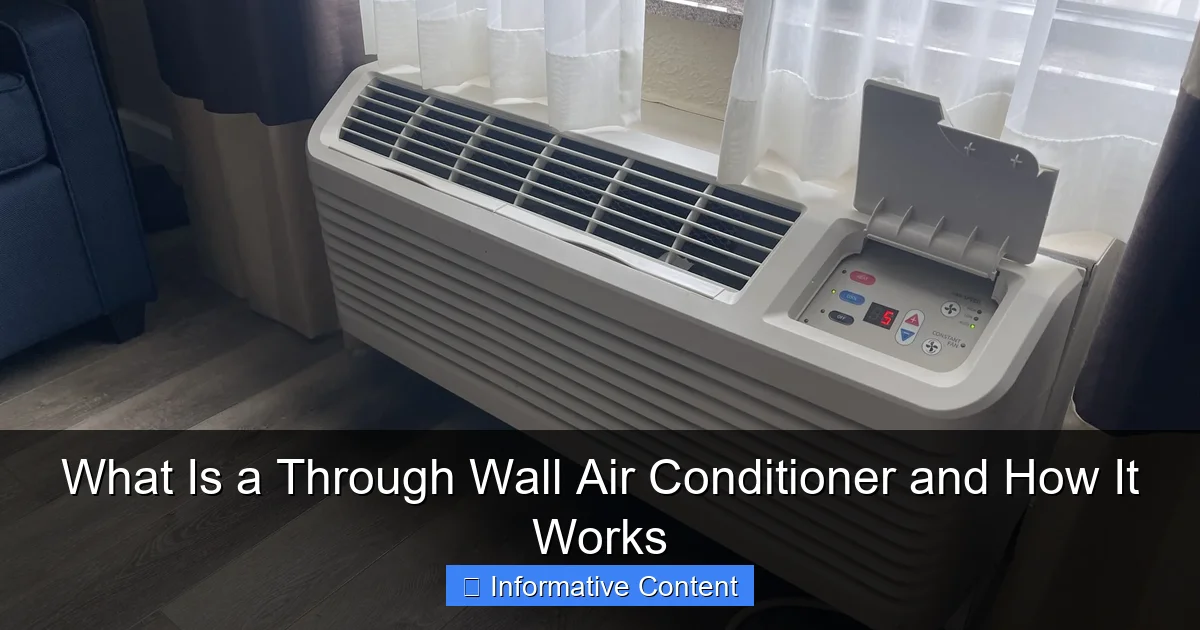
Featured image for what is a through wall air conditioner
Image source: ptac4less.com
A through wall air conditioner is a self-contained cooling unit installed directly into an exterior wall, offering an efficient, permanent solution for cooling single rooms without relying on window space. Unlike portable or window units, it vents hot air directly outside through the wall, providing quieter operation and improved energy efficiency ideal for apartments, offices, or homes with strict window regulations.
Key Takeaways
- Through-wall ACs are permanent cooling units installed directly into exterior walls.
- No window space needed—ideal for rooms without accessible windows or strict building codes.
- Sealed design prevents air leaks, improving energy efficiency over window units.
- Professional installation required for proper fit, insulation, and weatherproofing.
- Higher upfront cost but better long-term performance and home aesthetics.
- Not portable—choose location carefully before installation.
📑 Table of Contents
- What Is a Through Wall Air Conditioner and How It Works
- Understanding the Basics: What Exactly Is a Through Wall Air Conditioner?
- How Does a Through Wall Air Conditioner Work?
- Installation: What You Need to Know
- Pros and Cons: Is a Through Wall AC Right for You?
- Maintenance and Care Tips for Long-Lasting Performance
- Conclusion: Is a Through Wall Air Conditioner Worth It?
What Is a Through Wall Air Conditioner and How It Works
Imagine this: it’s the middle of July, the sun is blazing, and your apartment feels more like an oven than a home. You’ve tried fans, but they just circulate hot air. Central AC? Not an option—your building doesn’t have it, and installing ductwork isn’t in the budget. Then you hear about something called a through wall air conditioner—a compact cooling solution that fits right into your wall. Sounds promising, right?
You’re not alone in wondering what exactly this device is and whether it’s the right fit for your space. Whether you live in a rental, a small apartment, or an older home without central air, a through wall AC might be the answer you’ve been looking for. Unlike window units that stick out and block light, or portable ACs that take up floor space and require constant venting, through wall units are sleek, permanent, and built directly into your wall. They’re quiet, efficient, and designed to cool one room effectively—without the hassle.
Understanding the Basics: What Exactly Is a Through Wall Air Conditioner?
A through wall air conditioner is a self-contained cooling unit installed directly into an exterior wall of your home or apartment. Unlike window air conditioners that sit in a window frame, these units are mounted flush with the wall, with the front inside your room and the back protruding slightly outside. They’re designed to cool a single room or small space and are especially popular in buildings where window units aren’t allowed or where aesthetics matter.

Visual guide about what is a through wall air conditioner
Image source: homezephyr.com
These units are often confused with window ACs, but the key difference lies in installation and design. While both are single-room cooling solutions, a through wall unit is built to be semi-permanent, offering better insulation, reduced noise, and a cleaner look. They’re ideal for people who want reliable cooling without sacrificing window access or natural light.
How It Differs from Other Air Conditioners
Let’s break it down. If you’ve ever used a window AC, you know it can be loud, block your view, and sometimes even fall out if not secured properly. Portable ACs, on the other hand, require a hose to vent hot air outside and often leave puddles of condensation. Central air conditioning is powerful but expensive and impractical for renters or small spaces.
A through wall air conditioner sits neatly in the wall, with the condenser and exhaust fan on the outside and the cooling unit and controls inside. This separation reduces indoor noise and improves efficiency. Plus, because it’s built into the wall, it doesn’t obstruct your window or take up floor space. It’s a middle ground between the convenience of a window unit and the power of central air—without the installation headaches.
Who Should Consider a Through Wall AC?
These units are perfect for:
- Apartment dwellers in buildings that don’t allow window units
- Renters who want a more permanent cooling solution without major renovations
- Homeowners with rooms that don’t get enough airflow from central AC
- People in older homes without ductwork
- Those who value quiet operation and don’t want a noisy unit in their window
For example, Sarah, a graphic designer living in a 600-square-foot Brooklyn apartment, couldn’t install a window AC because her building had strict rules. After researching, she opted for a through wall unit in her bedroom. “It’s quiet, doesn’t block my view, and keeps my room cool even on 90-degree days,” she says. “Plus, I can still open my window for fresh air when I want.”
How Does a Through Wall Air Conditioner Work?
At its core, a through wall air conditioner works on the same principle as any other air conditioner: it removes heat and moisture from indoor air and releases it outside. But the way it’s engineered makes it uniquely suited for wall installation.
The unit contains four main components: a compressor, condenser, evaporator, and expansion valve—all housed in a single cabinet. When you turn it on, the compressor pressurizes refrigerant gas, which then flows to the condenser (located on the outdoor side of the unit). Here, the hot gas releases heat to the outside air and condenses into a liquid. This liquid then moves to the evaporator (inside your room), where it expands and cools, absorbing heat from the indoor air. A fan blows this cooled air back into the room, while the warm refrigerant returns to the compressor to start the cycle again.
The Role of the Wall Sleeve
One of the most important parts of a through wall AC installation is the wall sleeve—a metal frame that fits into the hole in your wall and holds the unit securely in place. This sleeve is usually installed during construction or renovation, but it can also be added later with the help of a contractor.
The sleeve not only supports the weight of the unit but also helps with insulation and weatherproofing. It often includes a back cover or grille on the outside to prevent rain, debris, and pests from entering. Some models come with a built-in sleeve, while others require a separate purchase. Always check compatibility before buying.
Ventilation and Airflow
Proper airflow is crucial for efficiency. The outdoor side of the unit has vents that allow hot air to escape, while the indoor side has louvers or vents that distribute cool air. Most models include adjustable louvers so you can direct airflow where you need it most—like toward your bed or workspace.
Some advanced units also feature multi-speed fans and thermostatic controls, allowing you to fine-tune cooling and save energy. For instance, on a mild day, you might set the fan to low and let the unit run quietly in the background. On scorching days, crank it up to high for maximum cooling.
Energy Efficiency and BTUs
Like all air conditioners, through wall units are rated by their cooling capacity in British Thermal Units (BTUs). The higher the BTU rating, the larger the space it can cool. But bigger isn’t always better—an oversized unit will cycle on and off too frequently, wasting energy and failing to dehumidify properly.
Here’s a quick guide to help you choose the right size:
| Room Size (sq. ft.) | Recommended BTU Range |
|---|---|
| 100–150 | 5,000–6,000 |
| 150–250 | 6,000–8,000 |
| 250–350 | 8,000–10,000 |
| 350–450 | 10,000–12,000 |
| 450–550 | 12,000–14,000 |
For example, a 7,000 BTU unit is ideal for a 200-square-foot bedroom, while a 12,000 BTU model might be better for a large living room. Always measure your space and consider factors like ceiling height, sun exposure, and insulation.
Installation: What You Need to Know
Installing a through wall air conditioner isn’t as simple as sliding a window unit into place. It requires cutting a hole in your exterior wall, securing a sleeve, and ensuring proper insulation and weatherproofing. That said, with the right tools and guidance, it’s doable—especially if you’re handy or working with a professional.
Step-by-Step Installation Overview
Here’s what the process typically looks like:
- Choose the location: Pick an exterior wall that’s close to an electrical outlet and away from direct sunlight or sources of heat. Avoid areas near doors, windows, or vents that could interfere with airflow.
- Measure and mark: Use the manufacturer’s template to mark the size and position of the hole. Double-check dimensions—most units require a hole around 26” wide by 16” high, but sizes vary.
- Cut the hole: Use a reciprocating saw or hole saw to cut through drywall, insulation, and siding. Be careful not to damage electrical wires or plumbing.
- Install the sleeve: Slide the metal sleeve into the hole and secure it with screws. Apply caulk or foam insulation around the edges to prevent air leaks.
- Mount the unit: Carefully slide the AC into the sleeve from the inside. Most models have brackets or clips to hold them in place.
- Connect power: Plug the unit into a dedicated 220-volt outlet. Never use an extension cord—these units draw a lot of power.
- Test and seal: Turn on the unit and check for proper operation. Seal any gaps with weatherstripping or foam to improve efficiency.
DIY vs. Professional Installation
While some homeowners tackle installation themselves, it’s often wise to hire a professional—especially if you’re not experienced with electrical work or wall modifications. A licensed contractor can ensure the hole is the right size, the sleeve is properly sealed, and the electrical connection is safe.
For example, Mike, a DIY enthusiast in Chicago, tried installing his through wall AC himself. “I thought it would be easy,” he says, “but I ended up cracking the siding and had to call a handyman to fix it.” He now recommends budgeting for professional help—especially in older homes with tricky wall structures.
Permits and Building Codes
Before you start cutting, check with your local building department. Some cities require permits for wall modifications, especially in multi-unit buildings or historic districts. Your landlord or HOA may also have rules about exterior changes. It’s better to ask first than face fines or forced removal later.
Pros and Cons: Is a Through Wall AC Right for You?
Like any appliance, a through wall air conditioner has its strengths and weaknesses. Let’s break them down so you can make an informed decision.
Advantages
- Space-saving design: Doesn’t block windows or take up floor space.
- Quieter operation: The compressor and fan are outside, reducing indoor noise.
- Better insulation: Properly installed units minimize air leaks and improve energy efficiency.
- Aesthetic appeal: Looks cleaner and more integrated than a window unit.
- Improved security: Harder to remove from the outside, reducing theft risk.
- Year-round use: Some models include heating functions for colder months.
Disadvantages
- Higher upfront cost: More expensive than window units due to installation complexity.
- Permanent installation: Not ideal if you plan to move soon.
- Wall damage: Requires cutting a hole, which may affect resale value or require repairs.
- Limited mobility: Can’t be moved from room to room like a portable AC.
- Maintenance access: Cleaning filters and servicing may be harder than with window units.
For instance, Lisa, a teacher in Portland, loves her through wall AC for its quiet performance and clean look. “I barely notice it’s there,” she says. “But I do wish I could move it to the living room in the winter.” That’s a common trade-off—convenience for permanence.
Maintenance and Care Tips for Long-Lasting Performance
To keep your through wall air conditioner running smoothly, regular maintenance is key. A well-maintained unit lasts longer, uses less energy, and cools more effectively.
Monthly Tasks
- Clean the air filter: Remove and wash the filter every 30 days (or more often if you have pets or allergies). A dirty filter restricts airflow and reduces efficiency.
- Check the outdoor grille: Make sure it’s free of leaves, dirt, and debris. Use a garden hose to gently rinse it off.
- Inspect seals and insulation: Look for gaps around the sleeve and reapply caulk or foam if needed.
Seasonal Maintenance
- Before summer: Test the unit, clean the coils, and ensure the thermostat is working.
- After summer: Cover the outdoor side with a protective cover to prevent winter damage.
- Professional servicing: Consider having a technician inspect the refrigerant levels and electrical connections once a year.
Troubleshooting Common Issues
If your unit isn’t cooling properly, here are a few things to check:
- Not cold enough? Clean the filter, check for blocked vents, and ensure the thermostat is set correctly.
- Leaking water? The drain line might be clogged. Use a wet/dry vacuum to clear it.
- Making strange noises? Loose parts or debris in the fan could be the culprit. Turn off the unit and inspect.
- Won’t turn on? Check the power supply, circuit breaker, and remote batteries.
Regular care can prevent most problems and extend the life of your unit—often 10 to 15 years with proper maintenance.
Conclusion: Is a Through Wall Air Conditioner Worth It?
So, is a through wall air conditioner the right choice for you? If you’re looking for a quiet, efficient, and space-saving cooling solution for a single room—and you’re okay with a semi-permanent installation—then absolutely. It’s a smart upgrade over window units, especially in rentals or buildings with strict rules.
Yes, the upfront cost and installation effort are higher, but the long-term benefits—better performance, lower noise, and improved aesthetics—often outweigh the drawbacks. Whether you’re cooling a bedroom, home office, or studio apartment, a through wall AC can make hot days far more bearable.
Just remember to choose the right size, follow proper installation guidelines, and maintain it regularly. With a little planning and care, your through wall air conditioner can keep you cool and comfortable for years to come. So next time the heat hits, you’ll be ready—without sacrificing your view, your floor space, or your peace and quiet.
Frequently Asked Questions
What is a through wall air conditioner?
A through wall air conditioner is a self-contained cooling unit installed directly into an exterior wall, combining the compressor, condenser, and evaporator in one compact system. Unlike window units, they offer a more permanent, space-saving solution with better insulation.
How does a through wall air conditioner work?
The unit draws in warm indoor air, cools it using refrigerant and a compressor, then expels heat outdoors through the rear vents. A built-in thermostat regulates temperature, making it efficient for single-room cooling.
What are the benefits of a through wall air conditioner vs. a window unit?
Through wall ACs provide quieter operation, improved weather sealing, and a cleaner interior appearance since they don’t block windows. They’re also ideal for rooms where window installations aren’t feasible.
Can I install a through wall air conditioner myself?
While DIY installation is possible, hiring a professional is recommended due to the need for precise wall cutting, electrical wiring, and weatherproofing. Improper installation can lead to leaks or energy inefficiency.
Are through wall air conditioners energy efficient?
Yes, many models feature high EER (Energy Efficiency Ratio) ratings and inverter technology, which adjust cooling output to save energy. Look for ENERGY STAR® certified units for optimal efficiency.
What rooms are best suited for a through wall air conditioner?
These units work well in apartments, basements, sunrooms, or home additions where central AC isn’t available. Their compact design makes them perfect for cooling single rooms without ductwork.