
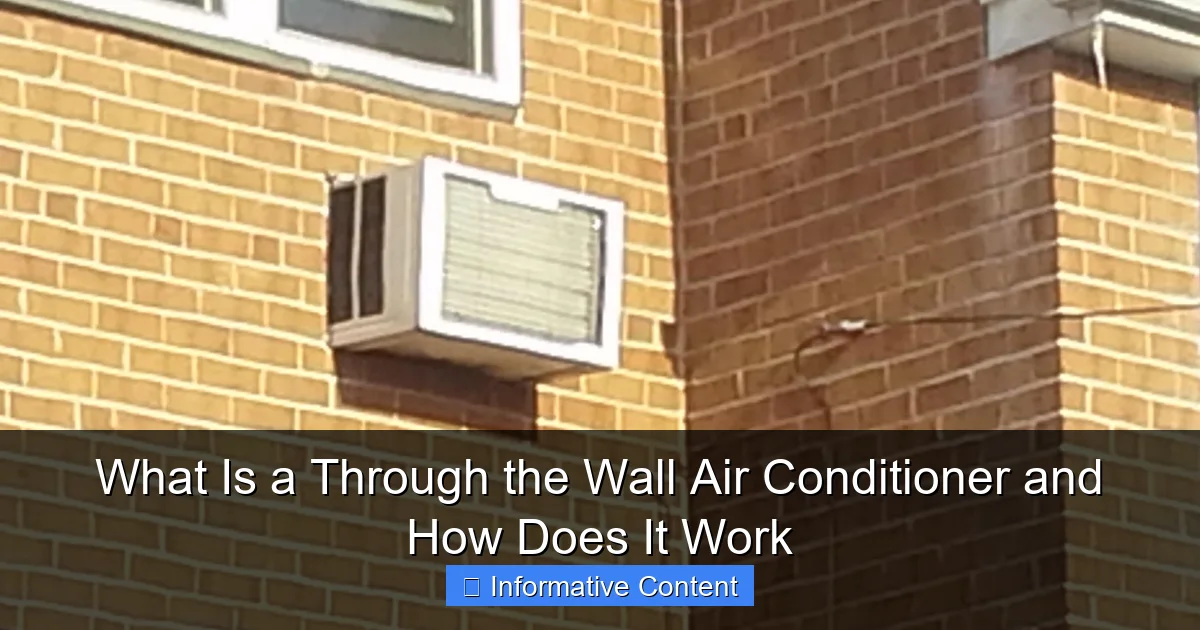
Featured image for what is a through the wall air conditioner
Image source: ablegroup.net
A through the wall air conditioner is a permanent cooling solution installed directly into an exterior wall, offering efficient, space-saving climate control without obstructing windows. Unlike portable or window units, it vents hot air outside through a sealed wall sleeve, delivering quieter operation and improved energy efficiency for long-term comfort.
Key Takeaways
- Through-the-wall ACs are self-contained units installed in exterior walls for permanent cooling.
- Ideal for rooms without windows, they offer efficient cooling without sacrificing window access.
- Require professional installation to ensure proper sealing, support, and electrical connections.
- Provide consistent cooling with built-in thermostats and adjustable settings for comfort control.
- More energy-efficient than window units when properly sized and installed for the space.
- Need regular maintenance like filter cleaning to maintain performance and air quality.
📑 Table of Contents
- What Is a Through the Wall Air Conditioner and How Does It Work
- Understanding Through the Wall Air Conditioners: The Basics
- How Does a Through the Wall Air Conditioner Work?
- Installation: What You Need to Know
- Pros and Cons: Is a Through the Wall AC Right for You?
- Choosing the Right Through the Wall Air Conditioner
- Maintenance and Care Tips
- Conclusion
What Is a Through the Wall Air Conditioner and How Does It Work
Imagine this: It’s the middle of July, and the temperature outside has climbed past 90°F. You’re sweating through your shirt, your ceiling fan is doing little more than pushing hot air around, and you’re dreaming of cool, crisp relief. You’ve considered a window AC unit, but your windows are oddly shaped or you live in an apartment where window units aren’t allowed. Or maybe you’ve thought about a central air system, but the cost and installation are just too much for your current setup. That’s when you start hearing about through the wall air conditioners—and you wonder, “What exactly is that, and could it be the answer to my summer woes?”
You’re not alone. Many homeowners and renters face this exact dilemma every summer. Through the wall air conditioners are a practical, often overlooked solution that combines the efficiency of central air with the convenience of a self-contained unit. They’re perfect for rooms that need dedicated cooling, like a home office, a sunroom, or a bedroom in a house without ductwork. Unlike window units that stick out and block light, or portable ACs that take up floor space and require constant drainage, through the wall units are sleek, permanent, and built right into your wall. But how do they actually work? What makes them different? And are they really worth the investment? Let’s dive in and unpack everything you need to know about through the wall air conditioners—from how they function to where they fit best in your home.
Understanding Through the Wall Air Conditioners: The Basics
At its core, a through the wall air conditioner is a self-contained cooling unit designed to be installed directly into an exterior wall of your home. Unlike window units that sit in a window frame, these units are mounted flush with the wall, with the front facing inside your room and the back extending outside. This design allows them to draw in warm indoor air, cool it using a refrigeration cycle, and expel heat and moisture outside—all without taking up window space or floor area.
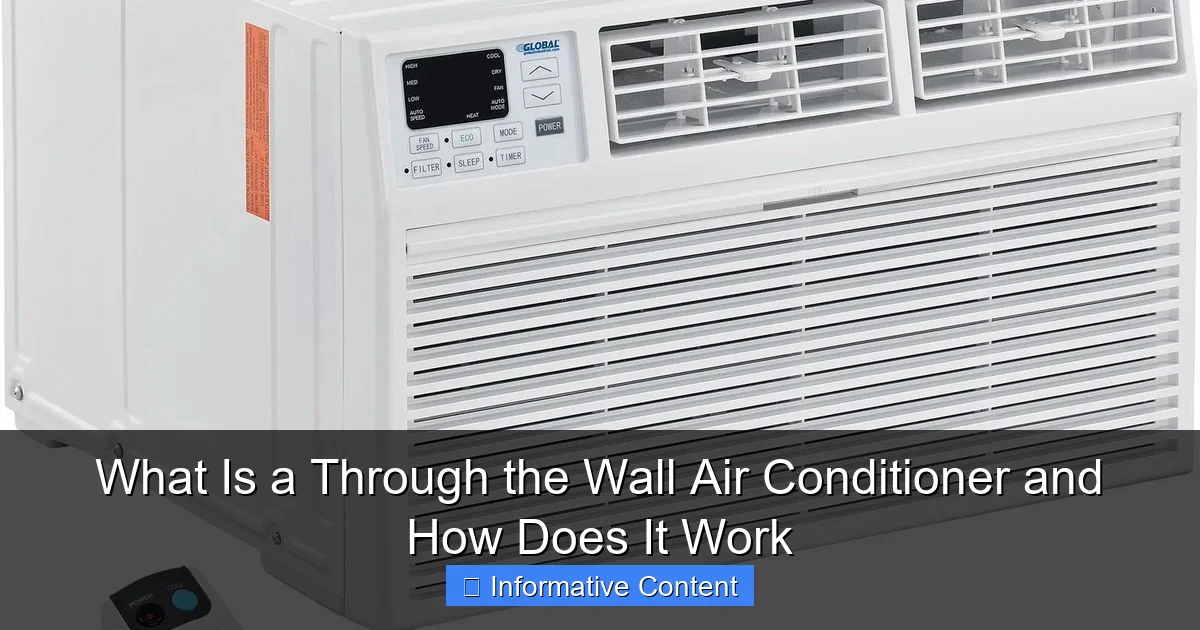
Visual guide about what is a through the wall air conditioner
Image source: i5.walmartimages.com
How It’s Different from Other AC Units
To truly appreciate what a through the wall AC offers, it helps to compare it to other common types of air conditioners. Window units are the most familiar—they’re affordable and easy to install, but they block natural light, can be noisy, and often don’t seal well, letting in drafts. Portable air conditioners are flexible and don’t require permanent installation, but they’re bulky, require venting through a window or wall, and are generally less efficient. Central air systems are powerful and cool entire homes, but they’re expensive to install and maintain, especially in older homes without existing ductwork.
Through the wall units strike a balance. They’re more permanent than window or portable units but far less invasive than central air. They’re ideal for cooling specific rooms or zones in your home, especially in spaces where window units aren’t practical. They also tend to be quieter than window units because the compressor—the noisiest part—is located outside the living space.
Key Components of a Through the Wall AC
Every through the wall air conditioner contains several essential components that work together to cool your space:
- Compressor: This is the heart of the system. It pressurizes the refrigerant, turning it from a low-pressure gas into a high-pressure gas, which is essential for the heat exchange process.
- Condenser Coil: Located on the outside portion of the unit, the condenser coil releases heat from the refrigerant into the outdoor air.
- Evaporator Coil: Inside your room, the evaporator coil absorbs heat from the indoor air, cooling it down.
- Fan: Two fans are typically used—one to blow air over the evaporator coil inside, and another to pull air across the condenser coil outside.
- Refrigerant: This chemical circulates through the system, absorbing and releasing heat as it changes between liquid and gas states.
- Thermostat: Allows you to set and maintain your desired room temperature.
- Air Filter: Captures dust, pollen, and other particles to improve indoor air quality.
All these parts are housed in a single, compact cabinet that fits snugly into a wall sleeve—a metal frame that’s installed during construction or retrofitted into an existing wall.
How Does a Through the Wall Air Conditioner Work?
Now that we know what’s inside, let’s break down how a through the wall air conditioner actually cools your room. The process is based on the principles of thermodynamics and the refrigeration cycle—a system that moves heat from one place to another.
The Refrigeration Cycle Explained
Here’s a simplified step-by-step breakdown of how cooling happens:
- Warm air is drawn in: The indoor fan pulls warm air from your room through the front grille of the unit.
- Air passes over the evaporator coil: This coil contains cold refrigerant. As the warm air flows over it, heat is transferred from the air to the refrigerant, cooling the air down.
- Cool air is blown back into the room: The now-cooled air is pushed back into your living space by the indoor fan.
- Refrigerant carries heat outside: The refrigerant, now warmed by absorbing indoor heat, travels to the compressor, where it’s pressurized and becomes even hotter.
- Heat is released outdoors: The hot refrigerant flows to the condenser coil on the outside of the unit. The outdoor fan blows air across this coil, releasing the heat into the atmosphere.
- Refrigerant cools and cycles back: The refrigerant cools down, turns back into a liquid, and returns to the evaporator coil to repeat the process.
This cycle continues until the thermostat detects that the room has reached the desired temperature, at which point the compressor and fans may shut off or cycle down to save energy.
Moisture Removal and Dehumidification
One of the most underrated benefits of a through the wall air conditioner is its ability to remove moisture from the air. As warm, humid air passes over the cold evaporator coil, water vapor condenses into liquid droplets—just like how dew forms on a cold drink. This moisture collects in a drain pan and is typically expelled outside through a small drain hose or simply drips out the back of the unit.
This dehumidification process not only makes the air feel cooler and more comfortable but also helps prevent mold and mildew growth, especially in humid climates. It’s one reason why people often say a room feels “crisp” when the AC is running—it’s not just cooler, it’s drier too.
Energy Efficiency and Temperature Control
Modern through the wall air conditioners come with advanced features that improve efficiency and comfort. Many include electronic thermostats with digital displays, allowing you to set precise temperatures. Some models even have programmable timers, so you can schedule the unit to turn on before you get home or shut off during the night.
Energy efficiency is measured by the Energy Efficiency Ratio (EER), which is the cooling output (in BTUs) divided by the power input (in watts). A higher EER means the unit uses less electricity to produce the same amount of cooling. Look for units with an EER of 10 or higher for optimal efficiency. Some newer models also feature inverter technology, which adjusts the compressor speed based on cooling demand—similar to how a car’s cruise control works—resulting in smoother operation and lower energy bills.
Installation: What You Need to Know
One of the biggest advantages of a through the wall air conditioner is that it’s a permanent, built-in solution—but that also means installation requires some planning and effort. Unlike a window unit you can plug in and go, a through the wall AC needs a properly sized opening in an exterior wall and a secure mounting system.
Choosing the Right Location
Not every wall is suitable for a through the wall AC. Here are some key factors to consider:
- Exterior wall: The unit must be installed in an exterior wall so the back can extend outside and expel heat.
- Structural integrity: Avoid walls with plumbing, electrical wiring, or load-bearing beams. A structural engineer may be needed for older homes.
- Accessibility: The location should allow for easy access to the front for maintenance and filter changes.
- Sun exposure: South- or west-facing walls get more sun, which can increase cooling load. Consider shading or a slightly larger unit.
- Noise considerations: Since the compressor is outside, noise is less of an issue, but you still want to avoid placing it near bedrooms or quiet areas if possible.
The Installation Process
Installing a through the wall air conditioner typically involves these steps:
- Measure and plan: Determine the correct size of the wall opening based on the unit’s specifications. Most units require a sleeve or frame that’s 24 to 28 inches wide and 14 to 18 inches tall.
- Cut the opening: Using a reciprocating saw or wall saw, carefully cut through the wall from the inside or outside. Be sure to wear safety gear and protect the interior from debris.
- Install the wall sleeve: A metal sleeve (often included with the unit) is inserted into the opening and secured with screws or brackets. It must be level and properly sealed to prevent air leaks.
- Seal and insulate: Use expanding foam or weatherstripping around the sleeve to seal gaps. This prevents drafts, moisture intrusion, and energy loss.
- Mount the unit: Slide the air conditioner into the sleeve from the inside and secure it according to the manufacturer’s instructions. Most units have brackets or locking mechanisms.
- Electrical connection: The unit must be wired to a dedicated electrical circuit. This is not a DIY job for most people—hire a licensed electrician to ensure safety and code compliance.
- Test and adjust: Turn on the unit, check for proper operation, and make sure there are no leaks or unusual noises.
DIY vs. Professional Installation
While some handy homeowners may be able to handle the cutting and mounting, electrical work and structural modifications should always be done by professionals. Improper installation can lead to air leaks, water damage, electrical hazards, or even collapse in extreme cases. Plus, many manufacturers require professional installation to maintain the warranty.
If you’re renting, check with your landlord or property manager before making any modifications. Some buildings have specific rules about wall penetrations, and you may need approval before proceeding.
Pros and Cons: Is a Through the Wall AC Right for You?
Like any home appliance, through the wall air conditioners come with their own set of advantages and drawbacks. Understanding these can help you decide if this type of unit is the best fit for your needs.
Advantages of Through the Wall Air Conditioners
- Permanent and space-saving: Once installed, the unit is out of the way, freeing up window space and floor area. No more tripping over hoses or blocking natural light.
- Quieter operation: With the compressor outside, indoor noise is significantly reduced compared to window or portable units.
- Better aesthetics: The unit blends into the wall, giving a cleaner, more integrated look than a bulky window AC.
- Efficient cooling for single rooms: Ideal for cooling specific zones, especially in homes without central air.
- Improved air quality: Built-in filters help reduce allergens and dust, and the dehumidification feature prevents mold growth.
- Energy-efficient options available: Many models are ENERGY STAR certified, offering lower operating costs over time.
Disadvantages and Limitations
- Higher upfront cost: The unit itself is often more expensive than window models, and installation can add hundreds of dollars.
- Permanent installation: Once it’s in, it’s not easy to remove. This can be a problem if you move or change your cooling needs.
- Wall modification required: Cutting into an exterior wall isn’t something to take lightly. It can affect insulation, structural integrity, and resale value.
- Not ideal for renters: Most landlords won’t allow permanent modifications, making this a poor choice for apartment dwellers.
- Limited flexibility: You can’t easily move the unit to another room, unlike portable or window ACs.
- Potential for air leaks: If not properly sealed, the installation can lead to drafts and energy loss.
Who Should Consider a Through the Wall AC?
A through the wall air conditioner is a great choice if:
- You own your home and plan to stay for several years.
- You need to cool a specific room that doesn’t have a window suitable for a window unit.
- You want a quiet, unobtrusive cooling solution.
- You’re building a new home or doing a major renovation and can plan for the installation upfront.
- You live in a hot, humid climate and want efficient dehumidification.
On the other hand, if you’re renting, on a tight budget, or only need temporary cooling, a window or portable unit might be a better fit.
Choosing the Right Through the Wall Air Conditioner
With so many models on the market, selecting the right through the wall air conditioner can feel overwhelming. Here’s what to look for to ensure you get the best performance and value.
Size and Cooling Capacity
The most important factor is choosing the right size. Too small, and the unit will struggle to cool the room. Too large, and it will cycle on and off too frequently, wasting energy and failing to dehumidify properly.
Cooling capacity is measured in BTUs (British Thermal Units) per hour. As a general rule:
| Room Size (sq. ft.) | Recommended BTU Range |
|---|---|
| 100–150 | 5,000–6,000 |
| 150–250 | 6,000–8,000 |
| 250–350 | 8,000–10,000 |
| 350–450 | 10,000–12,000 |
| 450–550 | 12,000–14,000 |
These are estimates—factors like ceiling height, insulation, number of windows, and sun exposure can affect the actual need. When in doubt, consult an HVAC professional or use an online BTU calculator.
Energy Efficiency and Certifications
Look for units with a high EER rating—10 or above is ideal. ENERGY STAR certified models meet strict efficiency guidelines set by the U.S. Environmental Protection Agency and can save you up to 30% on cooling costs compared to standard models.
Features to Consider
- Remote control: Allows you to adjust settings from across the room.
- Programmable timer: Set the unit to turn on or off at specific times.
- Multiple fan speeds: Gives you more control over airflow and noise.
- Auto-restart: Resumes operation after a power outage.
- Washable filter: Easy to clean and reuse, reducing maintenance costs.
- Heat pump option: Some models offer heating in addition to cooling, making them useful year-round.
Brand and Warranty
Stick with reputable brands like Frigidaire, LG, GE, or Friedrich, which offer reliable performance and good customer support. Check the warranty—most units come with a 1-year parts and labor warranty, but some offer extended coverage on the compressor.
Maintenance and Care Tips
To keep your through the wall air conditioner running efficiently and extend its lifespan, regular maintenance is essential. The good news? It’s not complicated.
Monthly Tasks
- Clean or replace the air filter: A dirty filter restricts airflow, reduces efficiency, and can lead to ice buildup. Wash reusable filters with mild soap and water, or replace disposable ones every 1–3 months.
- Check the front grille: Wipe it down with a damp cloth to remove dust and debris.
Seasonal Maintenance
- Inspect the outdoor section: Make sure the condenser coil and fan are free of leaves, dirt, and obstructions.
- Check the drain pan: Ensure it’s not clogged and that water can drain properly.
- Seal any gaps: Reapply weatherstripping or foam if you notice drafts around the sleeve.
Annual Professional Service
Once a year, consider hiring an HVAC technician to inspect the refrigerant levels, check electrical connections, and clean internal components. This can prevent costly repairs and ensure optimal performance.
Conclusion
A through the wall air conditioner is more than just a cooling device—it’s a smart, long-term solution for targeted comfort in your home. By understanding how it works, where it fits, and what to look for, you can make an informed decision that keeps you cool, saves energy, and enhances your living space. Whether you’re cooling a home office, a sunroom, or a bedroom in a house without central air, this type of unit offers a quiet, efficient, and aesthetically pleasing alternative to window or portable models.
Yes, the installation requires effort and investment, but for homeowners who value permanence, performance, and peace and quiet, the benefits far outweigh the drawbacks. With proper sizing, professional installation, and regular maintenance, a through the wall air conditioner can serve you reliably for many summers to come. So the next time the heatwave hits, you’ll be ready—cool, comfortable, and in control.
Frequently Asked Questions
What is a through the wall air conditioner?
A through the wall air conditioner is a self-contained cooling unit installed directly into a wall or sleeve, providing efficient temperature control for single rooms. Unlike window units, they are built for permanent or semi-permanent installation and often offer higher cooling capacity. These units vent hot air directly outside while circulating cool air indoors.
How does a through the wall AC unit work?
Through the wall air conditioners work by pulling in warm indoor air, cooling it via a refrigerant system, and exhausting hot air outside through the rear of the unit. They use a built-in thermostat to maintain set temperatures and often include features like multiple fan speeds and energy-saving modes for efficient operation.
What are the benefits of a through the wall air conditioner compared to window units?
Through the wall air conditioners offer better insulation, reduced outdoor noise, and a more secure fit than window units, making them ideal for long-term use. They also free up window space and typically provide stronger cooling performance for larger rooms due to their higher BTU ratings.
Can I install a through the wall air conditioner myself?
While DIY installation is possible, it requires basic carpentry and electrical skills to cut a wall opening, secure the sleeve, and ensure proper electrical connections. For safety and optimal performance, hiring a professional is recommended, especially for handling wiring and wall modifications.
Are through the wall air conditioners energy efficient?
Yes, many modern through the wall air conditioners are ENERGY STAR® certified and feature programmable thermostats, sleep modes, and inverter technology to reduce energy consumption. Their sealed design also prevents air leakage, improving overall efficiency compared to older or poorly sealed units.
What size through the wall air conditioner do I need?
The right size depends on room square footage, insulation, and climate—typically, 5,000–8,000 BTUs suit rooms up to 350 sq. ft. Larger spaces may need 10,000+ BTUs; always check the manufacturer’s sizing guide to match your room’s cooling needs accurately.