Carrying a window air conditioner sounds simple, but doing it wrong can lead to serious injury, property damage, or even void your warranty. Moving an AC unit improperly risks dropping heavy equipment, damaging fragile components, and exposing yourself to electrical hazards. Always use the right tools, get help when needed, and follow manufacturer guidelines—your safety and appliance depend on it.
Have you ever wondered what happens if you carry a window air conditioner? Maybe you’re moving into a new apartment, upgrading your cooling system, or just tired of that clunky old unit blocking your view. It seems straightforward: grab the handle, lift, and go. But here’s the truth—carrying a window air conditioner isn’t as simple as it looks. These machines are heavy, fragile, and packed with sensitive components that can break easily if mishandled.
In this article, we’ll walk through exactly what happens if you carry a window air conditioner the wrong way—and how to avoid disaster. You’ll learn about physical dangers, mechanical vulnerabilities, legal considerations like warranties, and practical tips from experts who’ve moved dozens of units safely. Whether you’re a renter, landlord, or DIY enthusiast, understanding the risks and best practices will save you time, money, and potential injuries.
Let’s dive in and explore why this seemingly minor task carries so much weight—both literally and figuratively.
Key Takeaways
- Safety First: Window air conditioners are heavy (50–100+ lbs) and contain delicate internal parts. Carrying them without support can strain your back or drop the unit, causing injury or damage.
- Risk of Damage: Improper handling may crack coils, bend frames, or dislodge refrigerant lines—leading to costly repairs or complete unit failure.
- Warranty Voidance: Most manufacturers require professional installation or certified handling. DIY moving might void your warranty if damage occurs during transport.
- Electrical Hazards: Even off, units retain power in capacitors. Touching exposed wiring while carrying can result in electric shock.
- Proper Lifting Technique: Bend your knees, keep the unit close to your body, and use a dolly or partner. Never lift alone if the unit exceeds 75 pounds.
- Use the Right Tools: Invest in AC-specific dollies, straps, and protective gloves. These reduce risk and make the job easier.
- Plan Ahead: Measure doorways, hallways, and windows before moving. Clear paths and have a second person ready to assist.
📑 Table of Contents
- Why Window Air Conditioners Are Harder to Move Than You Think
- The Physical Risks of Improper Handling
- Mechanical Damage: What Breaks When You Carry an AC Wrong?
- Legal and Warranty Implications
- Practical Tips for Safe Window AC Transport
- Alternatives to DIY Moving: When to Call a Pro
- Environmental and Energy Considerations
- Conclusion: Respect the Machine—And Your Safety
Why Window Air Conditioners Are Harder to Move Than You Think
Window air conditioners aren’t just heavy—they’re complex pieces of engineering designed to fit snugly into a specific opening. Unlike portable coolers or fans, they contain compressors, coils, motors, and refrigerant lines all working together. Every part has a precise location, and moving the unit roughly can shift these components out of alignment.
Most residential window units weigh between 60 and 130 pounds, depending on size and model. That’s equivalent to lifting a full-sized suitcase plus a backpack full of books—on one hand, while balancing on uneven ground. Now imagine doing that while squeezing through a narrow doorway or up a flight of stairs.
But weight isn’t the only challenge. The exterior casing is often made of thin metal or plastic that can dent easily. The front grille hides delicate aluminum fins that regulate airflow; bend those, and your AC won’t cool efficiently. Inside, refrigerant lines run between the indoor and outdoor sections—if they get kinked or cracked during transport, refrigerant leaks can occur, making the unit inoperable.
Even the electrical cord is at risk. Pulling too hard on the plug while carrying the unit can strip wires or damage the connection panel inside. And let’s not forget the filter compartment—often located near the top—which can pop open mid-lift if not secured properly.
So yes, carrying a window air conditioner is possible—but only if you understand its design limitations and take precautions seriously.
The Physical Risks of Improper Handling

Visual guide about What Happens If You Carry a Window Air Conditioner
Image source: m.media-amazon.com
When people think about what happens if you carry a window air conditioner, they often focus on breaking the machine. But the bigger concern? Your own safety. Lifting heavy objects incorrectly leads to strains, sprains, and long-term musculoskeletal issues—especially in the lower back, shoulders, and wrists.
According to OSHA guidelines, workers should never lift more than 50 pounds alone unless using mechanical aids. Yet many homeowners attempt to move a 90-pound AC unit solo, twisting their spine while leaning forward awkwardly. This common mistake increases the risk of herniated discs or chronic pain.
Another overlooked danger is tripping or dropping the unit. Picture this: you’ve just cleared the last step, arms stretched out, eyes fixed ahead—suddenly, your foot catches on a rug. The AC slips from your grasp, crashing onto concrete. Not only does the machine shatter, but debris could fly toward bystanders, pets, or children.
Even indoors, falling units can puncture walls, crack drywall, or damage flooring. In apartments, neighbors below might hear the crash—or worse, get hit by flying glass or metal shards.
To minimize risk, always:
– Wear non-slip shoes with good traction
– Keep both hands on the unit at all times
– Avoid sudden movements or jerks
– Use spotters when navigating tight corners
If you must move it alone, consider renting a two-wheeled dolly rated for at least 150 pounds. It turns a dangerous lift into a controlled roll—giving you stability and reducing strain.
Mechanical Damage: What Breaks When You Carry an AC Wrong?
Visual guide about What Happens If You Carry a Window Air Conditioner
Image source: res.cloudinary.com
Now let’s talk about what happens inside the unit when you carry a window air conditioner carelessly. Many people assume that as long as the outside shell looks intact, everything’s fine. But internal components are far more fragile than they appear.
One of the most vulnerable parts is the **condenser coil**—a series of tightly packed fins behind the rear panel. These fins direct heat away from the refrigerant. If you drop the unit or tilt it sideways during transport, the coils can warp or collapse. Once bent, they restrict airflow, reduce cooling capacity, and force the compressor to work harder—leading to premature burnout.
The **compressor**, often called the “heart” of the AC, sits deep within the unit. It’s mounted on rubber gaskets to absorb vibration. If the entire unit gets jostled violently (like tossing it into a truck bed), the compressor can shift or detach from its moorings. Without proper alignment, the motor won’t spin smoothly, creating loud noises and wasting energy.
Refrigerant lines—those copper tubes connecting the indoor and outdoor sections—are another weak point. They’re flexible but not indestructible. Bending them beyond their tolerance during movement can cause micro-fractures. Over time, these cracks allow refrigerant to escape, lowering pressure and eliminating cooling power. Repairing leaks requires certified technicians and specialized equipment—not something you can fix with duct tape.
Additionally, the **control board** and wiring harnesses inside the unit are sensitive to static discharge and physical shock. Dropping the AC from waist height onto carpeted flooring can send enough jolt through the circuits to fry electronic components. Suddenly, your unit powers on… but doesn’t cool.
Finally, the **drain pan**—a shallow tray under the evaporator coil—can crack if dropped. Water collects here during operation; a cracked pan leads to leaks, mold growth, and water damage inside your wall or ceiling.
All of these issues mean that even if the AC looks fine after a rough move, performance may degrade over weeks or months. You’d notice reduced airflow, higher bills, or strange sounds—long after the incident occurred.
Legal and Warranty Implications
Beyond physical harm and repair costs, there’s another consequence of improper AC handling: **warranty invalidation**. Almost every major brand—Carrier, LG, Frigidaire, Honeywell—specifies in its user manual that the unit must be installed by a qualified technician or handled according to strict guidelines. Attempting to move or install it yourself may void coverage immediately.
Here’s how it typically works: You buy a new window AC from Home Depot. It comes with a one-year parts-and-labor warranty. Later, you decide to relocate it to a different room. Instead of calling a pro, you drag it across the yard, drop it twice, and finally jam it into the new window. Three months later, the compressor fails. You call customer service, describe the incident, and—bam—they deny your claim because self-installation voids the warranty.
Some brands go further. LG states explicitly: “Damage resulting from improper handling, including transportation without proper packaging or lifting techniques, is not covered.” Carrier warns that “any modification or installation not performed by a licensed HVAC contractor renders the warranty null and void.”
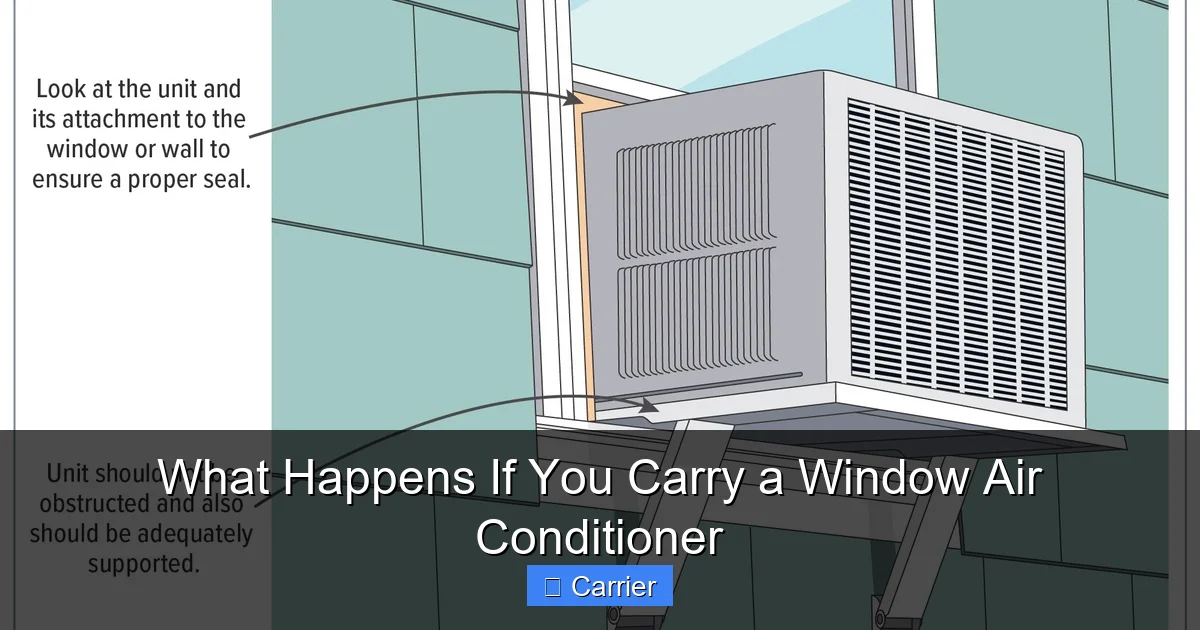
Even if you don’t break anything, improper installation itself can trigger denial. For example, leaving the unit unplugged for more than 48 hours after moving can cause capacitor failure—yet many users don’t realize this. Manufacturers expect you to follow setup instructions precisely: level the unit, seal gaps with foam weatherstripping, and ensure the cord isn’t pinched under the sill.
Bottom line? If you value your warranty, read the fine print. When in doubt, hire a professional. Yes, it costs extra—but compare that to paying $800 for a new compressor or losing your protection altogether.
Practical Tips for Safe Window AC Transport
So how do you avoid all these pitfalls? Follow this step-by-step guide based on recommendations from HVAC experts and consumer safety organizations.
Step 1: Prepare Before You Lift
Remove any external accessories—remote controls, extra filters, or decorative covers—before moving. These add unnecessary weight and can get lost or damaged.
Check the unit’s status: Is it powered off? Unplug it from the outlet. Wait 10 minutes for residual electricity in capacitors to dissipate. Never touch internal parts assuming it’s safe—even unplugged units can deliver shocks.
Step 2: Use Proper Lifting Technique
Stand close to the unit. Squat down by bending your knees—never your waist. Tuck the AC against your chest with both hands gripping the handles securely. Keep your back straight, core engaged, and lift with your legs, not your spine.
If the unit feels imbalanced (some models have heavier sides due to fan placement), adjust your grip or ask someone to help stabilize it.
Step 3: Choose the Right Equipment
Avoid rolling the AC on its side unless the manufacturer approves it—most do not. Instead, use a **window AC dolly** with non-marking wheels and adjustable straps. These cost around $50–$100 but prevent tipping and reduce shoulder strain.
For very heavy units (>100 lbs), enlist two people. One takes the front, the other the rear. Communicate clearly before moving: “Left foot forward!” or “Watch the corner!”
Step 4: Navigate Obstacles Carefully
Measure doorframes, hallways, and stairwells beforehand. Remove rugs, furniture, or cords blocking the path. Tilt the unit slightly upward when going down stairs—never backward—to maintain control.
If you’re moving it outdoors, cover it with a tarp to protect from rain or dirt during transit.
Step 5: Install Correctly After Moving
Once in place, double-check that the unit is level (use a bubble level). Reinstall weatherstripping and insulation strips around the window frame to prevent air leaks. Plug it in and test all functions: fan speed, cooling mode, drain hose flow.
Wait at least 24 hours before running it continuously—this allows oil to settle back into the compressor after displacement.
By following these steps, you dramatically reduce the chances of injury, damage, or warranty issues.
Alternatives to DIY Moving: When to Call a Pro
Sometimes, despite your best efforts, moving a window air conditioner is better left to professionals. Here’s when you should seriously consider hiring help:
– **Unit weight exceeds 100 pounds**: Beyond human lifting limits.
– **You live in a multi-story building**: Staircases increase fall risks.
– **The unit has sentimental or high-value replacement parts**: Antique models or custom installations.
– **You lack proper tools**: No dolly, no helper, no space to maneuver.
– **You’re relocating internationally or across states**: Shipping requires specialized crating and handling.
HVAC technicians charge $75–$200 per job, depending on region and complexity. While it’s an added expense, it’s often cheaper than replacing a damaged compressor or dealing with water leaks from a cracked drain pan.
Many local utility companies also offer free or low-cost appliance-moving services for seniors or low-income households—check your city’s website.
Remember: A few hundred dollars now prevents thousands in future repairs—and keeps you out of the hospital.
Environmental and Energy Considerations
Beyond safety and cost, improper handling affects your energy bill and the environment. When a window AC is misaligned or damaged after being carried roughly, it runs less efficiently. Warped coils, clogged filters, and poor seals all increase power consumption by 10–20%.
That means higher electricity bills and more carbon emissions over time. Plus, if refrigerant leaks occur due to cracked lines during transport, harmful greenhouse gases enter the atmosphere. Refrigerants like R-410A contribute significantly to global warming if released unchecked.
Proper installation ensures optimal airflow, correct refrigerant levels, and minimal energy waste. It also extends the unit’s lifespan—so you don’t need to replace it sooner than necessary.
Eco-conscious consumers can further reduce impact by choosing ENERGY STAR-rated models, which use 15% less energy than standard units. Pair that with smart thermostats and regular maintenance, and your AC becomes a climate-friendly asset rather than a liability.
Conclusion: Respect the Machine—And Your Safety
So, what happens if you carry a window air conditioner? Plenty—good and bad. Done correctly, it’s manageable with planning, tools, and teamwork. Done poorly, it leads to broken machines, medical bills, denied warranties, and environmental harm.
The message is clear: treat your AC like the precision instrument it is. Don’t assume “I’ve moved furniture before” applies here. Furniture is rigid and predictable; your AC contains hidden fragilities that demand respect.
Invest in the right gear, learn proper lifting form, and consult professionals when needed. Protect not just your investment, but your health and peace of mind.
Next time you face a window unit in need of relocation, remember—you’re not just moving metal and plastic. You’re transporting a system that cools your home, powers your comfort, and deserves careful handling. Do it right, and your AC will thank you with years of reliable service.
Frequently Asked Questions
Can I carry my window AC alone if it’s under 100 pounds?
Yes, but only if you use proper technique: squat instead of bending your back, keep the unit close to your body, and wear supportive shoes. Still, having a helper reduces risk significantly—especially on stairs or uneven surfaces.
Will dropping my AC unit ruin it permanently?
Not always—sometimes it survives. But there’s a high chance internal parts like coils, compressors, or refrigerant lines get damaged. Symptoms may appear days or weeks later: poor cooling, loud noises, or water leaks. When in doubt, have a technician inspect it before plugging it in.
How do I know if my warranty covers accidental damage?
Check your user manual or contact the manufacturer directly. Most warranties exclude damage from improper handling, DIY installation, or unauthorized repairs. Some offer extended protection plans (like Total Protect) that include accidental drops—but these cost extra.
What’s the best way to transport a window AC outdoors?
Use a sturdy dolly with straps to secure the unit upright. Cover it with a waterproof tarp to shield from rain or dust. Never roll it on its side—it can shift internal components and damage refrigerant lines. Have a second person guide the front for stability.
Can I move my AC through a window using rope?
It’s possible with strong rope and pulley systems, but only if the window is large enough and structurally sound. This method requires skill and safety gear (harness, helmet). Otherwise, it’s safer to disassemble the unit (following manufacturer guidelines) or hire movers trained for HVAC equipment.
How long should I wait before turning on my AC after moving it?
Wait at least 24 hours. This allows lubricating oil to settle back into the compressor after being displaced during transport. Running the unit too soon can cause internal wear and reduce efficiency. Also, ensure the unit is level and properly sealed in the window before plugging it in.