
When your Carrier air conditioner shows a P4 error code, it usually indicates an indoor coil temperature sensor issue. This could be due to a faulty sensor, wiring problem, or refrigerant-related malfunction. While some basic checks might help, professional diagnosis is often the safest way to avoid further damage or system failure.
Key Takeaways
- P4 Error Definition: The P4 code signals a problem with the indoor coil temperature sensor in Carrier systems, often related to freezing or overheating.
- Common Causes: Issues include dirty coils, low refrigerant, failed sensors, or airflow restrictions—not always a hardware fault.
- Safety First: Never ignore the P4 warning; prolonged operation can damage the compressor or cause safety shutdowns.
- Troubleshooting Steps: Check filters, clean coils, inspect wiring, and verify refrigerant levels before considering part replacement.
- Professional Help Recommended: If basic fixes don’t work, contact a licensed HVAC technician to diagnose and replace faulty components.
- Prevention Tips: Regular maintenance like filter changes and coil cleaning can prevent P4 errors and extend AC life.
- Model Variations: Some Carrier models may display slightly different codes—always consult your owner’s manual for exact interpretations.
📑 Table of Contents
- What Does P4 Mean on Carrier Air Conditioner?
- Understanding Carrier Error Codes: Why They Matter
- Common Causes of the P4 Error on Carrier Units
- Step-by-Step Troubleshooting Guide for P4 Errors
- When to Replace vs. Repair: Making Smart Decisions
- Preventing Future P4 Errors: Maintenance Best Practices
- Real-World Examples: What Actually Happened
- Conclusion: Stay Calm, Stay Informed
What Does P4 Mean on Carrier Air Conditioner?
If you’re staring at your Carrier air conditioner’s control panel and see “P4” flashing back at you, chances are you’re not alone—and you’re probably wondering, “What does P4 mean on my Carrier AC?” Don’t panic. While it sounds serious, understanding this error code is the first step toward fixing it. In this guide, we’ll break down everything you need to know about the P4 error on Carrier units—what causes it, how to troubleshoot it safely, and when it’s time to call in the pros.
Carrier has built a reputation for reliable home comfort systems, but even top-tier appliances occasionally throw curveballs. The P4 code isn’t rare, and while it points to a specific issue—usually involving the indoor coil temperature sensor—it doesn’t always mean expensive repairs. With the right knowledge, many homeowners can identify root causes and take action before things get worse.
In this article, we’ll walk through common triggers behind the P4 warning, explain how the system detects temperature irregularities, and share practical steps you can take today. Whether you’re a DIY enthusiast or just trying to understand what your HVAC tech said last week, you’ll find clear answers and actionable advice.
Understanding Carrier Error Codes: Why They Matter
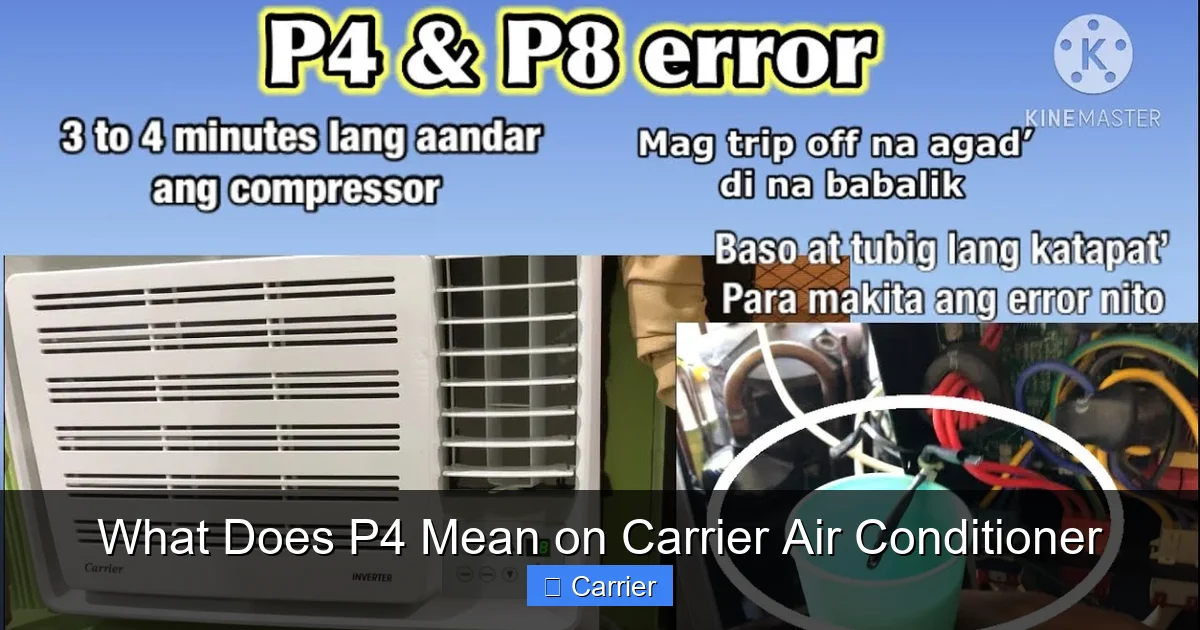
Visual guide about What Does P4 Mean on Carrier Air Conditioner
Image source: i.ytimg.com
Before diving into the P4 specifically, it helps to grasp why Carrier—like other major brands—uses diagnostic codes in their units. Modern air conditioners are smart machines packed with sensors, microprocessors, and safety protocols designed to protect both your home and the system itself.
When something goes wrong—like a clogged filter or low refrigerant—the unit monitors performance and reacts accordingly. Instead of shutting down completely (which would leave you sweltering), it displays a code like P4 to alert you to a developing issue. These aren’t arbitrary numbers; each one corresponds to a real-world problem that technicians have mapped out over decades of service data.
For example, if your unit senses abnormal temperatures around the evaporator coil (the cold part inside your furnace or air handler), it may trigger a P4 code. This could indicate ice buildup, poor airflow, or even a failing sensor. By catching it early, you prevent bigger failures like compressor burnout or refrigerant leaks.
So while seeing “P4” might feel alarming, think of it as your AC’s way of saying, “Hey, I’m working too hard—let’s check this out.” And that’s exactly where this guide comes in.
The Role of Sensors in Your Carrier AC System
At the heart of every Carrier air conditioner are several temperature and pressure sensors working behind the scenes. One of the most critical is the indoor coil temperature sensor, which monitors how cold the evaporator coil gets during cooling cycles.
Why does this matter? Because if the coil drops below freezing, moisture in the air condenses and freezes on the metal surface. That’s normal… until it blocks airflow. When airflow stops or slows dramatically, heat exchange grinds to a halt. The coil keeps getting colder, the refrigerant can’t absorb more heat efficiently, and eventually, the system shuts down to prevent damage.
That’s where the P4 code kicks in. It’s essentially the system’s emergency brake—a safety feature that pauses operation when it detects potentially harmful conditions. But unlike a full crash, it gives you a heads-up so you can intervene before permanent harm occurs.
Other sensors play roles too—like those measuring outdoor ambient temperature or suction line pressure—but the indoor coil sensor is especially sensitive because it directly affects cooling capacity and energy use.
How the P4 Code Is Triggered
Now let’s talk mechanics. What exactly makes your Carrier show P4?
The short answer: the system compares what the indoor coil temperature sensor reads against expected values based on runtime, airflow, and refrigerant charge. If readings stay too low for too long—or suddenly spike beyond safe limits—the control board flags it as an anomaly.
Common scenarios include:
– **Ice formation on the coil** due to restricted airflow from dirty filters or blocked vents.
– **Low refrigerant levels**, which cause abnormally low coil temperatures.
– **Faulty or miswired sensors**, leading to incorrect data being sent to the brain of the unit.
– **Dirty or frost-covered coils**, reducing efficiency and triggering protective shutdowns.
– **Thermostat communication issues**, especially in multi-zone setups or smart homes.
Importantly, the P4 isn’t always hardware-related. Sometimes it’s a simple case of neglect—like forgetting to replace a filter for six months. That restricts airflow, starves the coil of warm air, and leads to freezing. Your job is to figure out which path yours took.
Common Causes of the P4 Error on Carrier Units
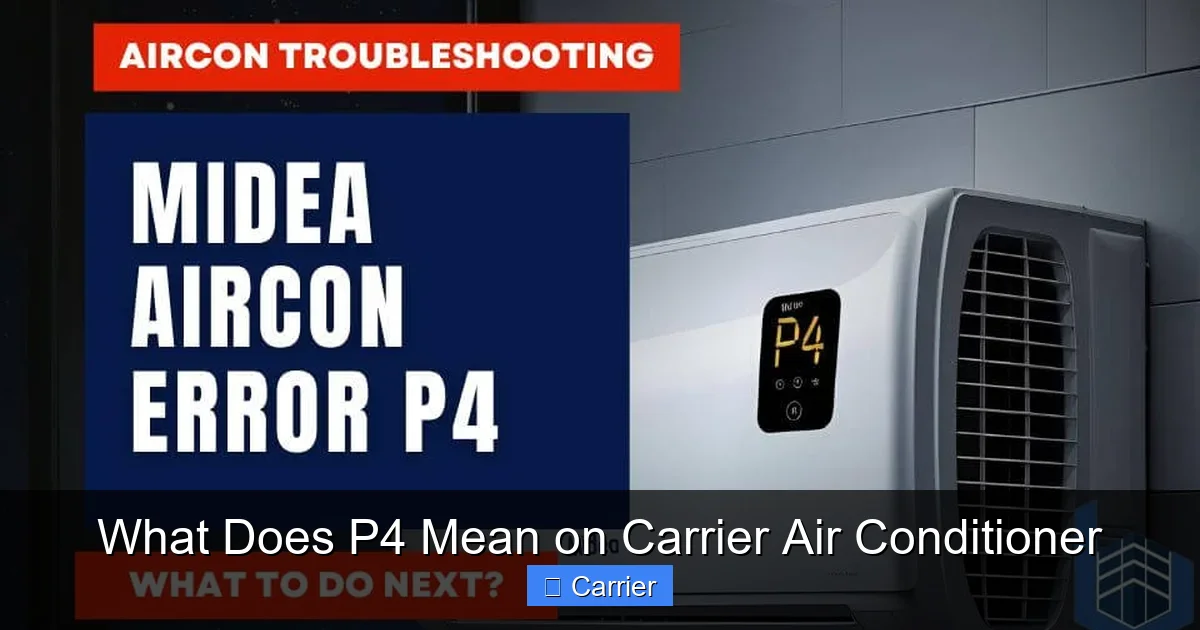
Visual guide about What Does P4 Mean on Carrier Air Conditioner
Image source: blossomaircon.com
Let’s dig deeper into what actually sets off the P4 light. Knowing the root cause saves time, money, and stress. Below are the most frequent culprits reported by homeowners and certified technicians alike.
1. Restricted Airflow Due to Dirty Filters
This is arguably the #1 reason for P4 errors. Your AC pulls room air through return ducts, past the filter, then across the cold evaporator coil. If the filter is clogged with dust, pet hair, or debris, airflow drops significantly.
With less air moving over the coil, moisture condenses faster than usual and turns to ice. The coil keeps getting colder, the sensor notices, and—boom—P4 appears.
💡 *Pro Tip:* Change your filter every 30–90 days depending on usage. Homes with pets or allergies may need monthly changes.
2. Clogged or Dirty Evaporator Coils
Over time, dirt, pollen, and mold build up on the delicate fins of the indoor coil. Not only does this reduce efficiency, but it also traps moisture close to the surface, increasing the chance of frost.
Even without complete blockage, a lightly coated coil can disrupt normal heat transfer and confuse the temperature sensor.
3. Low Refrigerant Levels
Refrigerant carries heat from inside your home to the outside condenser. If there’s a leak—common in older units or poorly installed systems—the refrigerant level drops. Lower refrigerant means lower coil temperatures, which again triggers the P4 safety response.
But here’s the catch: diagnosing low refrigerant requires a pressure test. You can’t do it with a multimeter alone. So while low refrigerant causes P4, it usually needs a pro to confirm and recharge properly.
4. Failed Indoor Coil Temperature Sensor
Sensors age, just like any electronic component. A degraded or broken sensor might report wildly inaccurate temperatures. For instance, it might read -10°F when the actual coil is at 45°F. The control board interprets this as dangerously cold and activates the P4 lockout.
Replacement is straightforward—if you’re comfortable accessing the air handler—but requires matching part numbers and careful installation.
5. Wiring or Connection Problems
Loose wires, corrosion, or damaged connectors between the sensor and control board can send garbled signals. Even a partially disconnected wire might mimic a sensor failure.
This often happens after maintenance work or during storms with power surges. Always double-check connections if the error appears suddenly.
6. Thermostat or Control Board Glitches
In rare cases, the problem isn’t mechanical at all—it’s digital. Faulty firmware, static electricity, or outdated settings can cause false alarms. Rebooting the thermostat or resetting the AC unit sometimes clears these phantom codes.
Still, persistent P4 after reboots usually points to a physical issue.
Step-by-Step Troubleshooting Guide for P4 Errors
Don’t reach for the phone to schedule service just yet. Many P4 issues resolve with simple DIY checks. Follow this methodical approach:
Step 1: Power Down Safely
Before touching anything, turn off your AC at the thermostat and switch off the circuit breaker for the unit. Safety first—especially if you suspect ice buildup, which can be slippery and dangerous to navigate.
Step 2: Inspect and Replace Air Filters
Remove the filter and hold it up to the light. If it’s dark gray or black, replace it immediately. Even moderately dirty filters restrict airflow enough to cause freezing.
Step 3: Check for Ice Buildup
If you see frost or ice on the indoor coil (usually visible through the access panel), turn off the unit and let it thaw naturally. Do NOT use hot water or blow dryers—this can crack the coil.
Once thawed, wipe the area gently with a soft cloth and ensure no debris remains.
Step 4: Clean the Evaporator Coil (If Accessible)
Use a fin comb and coil cleaner spray to gently remove grime. Avoid high-pressure washers—they bend fins and ruin seals. If you’re not confident doing this yourself, skip ahead to calling a pro.
Step 5: Verify Thermostat Settings
Make sure your thermostat is set to “cool” mode, not fan-only or heat pump. Also confirm it’s not calling for continuous operation, which can overwhelm the system.
Step 6: Reset the Unit
After addressing obvious issues, restore power and wait 10–15 minutes. Many Carrier models automatically clear minor glitches after a restart. Monitor the next cycle closely.
If the P4 returns within 24 hours, move to Step 7.
Step 7: Examine Wiring and Sensor Connections
Locate the air handler (often in the basement or attic). Find the indoor coil and trace the sensor wire to its plug-in connector near the control board. Gently unplug and reseat it. Look for frayed wires or corrosion.
Note: Only attempt this if you’re familiar with electrical components. Otherwise, skip to contacting a technician.
Step 8: Call a Licensed HVAC Technician
If none of the above resolves the issue, it’s time for professional help. A certified Carrier technician can:
– Perform a refrigerant pressure test
– Scan for additional error codes
– Test sensor resistance with specialized tools
– Replace faulty parts under warranty if applicable
Trying to force a cycle while the P4 is active risks compressor damage—so patience pays off.
When to Replace vs. Repair: Making Smart Decisions
One question we hear often is, “Should I replace the sensor or just get a new AC?” Great question—and the answer depends on context.
Replace the Sensor If…
– The sensor tests out of spec (typically ±2°F accuracy)
– Wiring looks intact but the code persists after cleaning/reseating
– Your unit is under 10 years old and well-maintained
– You have the right part number (check your model’s service manual)
Sensor replacements are relatively inexpensive ($50–$150) and quick for trained techs.
Consider Full Replacement If…
– Your unit is over 12–15 years old
– Multiple error codes appear simultaneously
– Refrigerant needs recharging frequently (suggests major leak)
– Repairs cost exceeds 50% of a new system’s price
New Carrier units come with enhanced diagnostics, better energy ratings, and improved warranties—so it’s worth evaluating long-term value.
Warranty Considerations
Most Carrier systems carry a 5–10 year parts warranty on compressors and controls. If your P4 stems from a manufacturing defect, repairs should be free. Always provide your serial number when calling support—they’ll verify coverage instantly.
Never attempt unauthorized modifications—doing so voids warranty protection.
Preventing Future P4 Errors: Maintenance Best Practices
The best cure is prevention. Here’s how to keep your Carrier running smoothly year-round:
Monthly Filter Checks
Set a reminder on your calendar. Mark it on your phone or fridge. Consistent filter care prevents 80% of airflow-related issues—including P4.
Biannual Professional Tune-Ups
Schedule inspections every spring before cooling season hits. Technicians clean coils, check refrigerant levels, tighten connections, and calibrate sensors. Think of it like an oil change for your car.
Seal Ductwork and Vents
Leaky ducts waste energy and unevenly distribute cold air, straining the indoor coil. Seal gaps with mastic tape and insulate unconditioned spaces like attics or crawlways.
Avoid Blocking Return Vents
Furniture, curtains, or rugs blocking return grilles create dead zones and reduce effective airflow. Keep at least 18 inches clearance around all vents.
Monitor Humidity Levels
High humidity makes your AC work harder and increases condensation—leading to faster coil icing. Use a hygrometer to track indoor moisture; ideal range is 30–50% RH.
Keep Outdoor Unit Clear
Trim shrubs away from the condenser unit and remove leaves/debris monthly. Poor outdoor airflow affects overall system balance.
By following these habits, you’ll not only avoid P4 errors but also enjoy lower utility bills and longer equipment life.
Real-World Examples: What Actually Happened
To make this concrete, let’s look at two true stories from Carrier owners who dealt with P4:
Case Study 1: Sarah’s Pet-Friendly Home
Sarah noticed her Carrier unit showing P4 after adopting two rescue cats. She’d been changing filters quarterly but missed one month. Within two weeks, ice formed thick on the coil. After replacing the filter and letting the unit thaw overnight, the error vanished. Lesson: pets shed more than you think!
Case Study 2: Mike’s Aging System
Mike’s 14-year-old Carrier kept throwing P4 despite clean filters and coils. A technician found the indoor coil sensor was reading 20°F lower than reality. Replacing it resolved the issue instantly. Mike saved $400 compared to buying new—and learned the value of professional diagnostics.
These examples show how diverse P4 causes can be—but also how targeted solutions work.
Conclusion: Stay Calm, Stay Informed
Seeing “P4” on your Carrier air conditioner doesn’t mean catastrophe. It’s your system’s intelligent way of saying, “Something’s off—let’s fix it before it breaks.” Armed with this guide, you now know what the code means, what likely caused it, and how to respond safely.
Start with the basics: check your filter, look for ice, and give the unit a reset. If those don’t work, don’t guess—call a trusted HVAC professional. Carrier systems are built to last, and with proper care, yours can too.
Remember: regular maintenance isn’t just about comfort—it’s about peace of mind. By staying proactive, you avoid surprises, save money, and keep your home cool and calm all summer long.
Frequently Asked Questions
Can I run my Carrier AC if it shows P4?
No, it’s unsafe to operate a Carrier air conditioner when the P4 code is active. The error indicates potential ice buildup or sensor malfunctions that could damage the compressor or reduce efficiency. Continuing to run the unit may worsen the problem or void your warranty.
How much does it cost to fix a P4 error on a Carrier unit?
Repair costs vary widely. Simple fixes like replacing a filter or cleaning coils may cost nothing if you do them yourself. More involved repairs—like sensor replacement—range from $100 to $300 including labor. Full system replacement starts around $3,000–$7,000 depending on size and features.
Will a dirty filter cause a P4 code on my Carrier?
Yes, definitely. Clogged filters restrict airflow, causing the indoor coil to freeze. As the temperature drops abnormally, the sensor triggers the P4 safety shutdown. Regular filter changes prevent this common issue.
Is P4 specific to certain Carrier models?
While the P4 code appears across many Carrier series—including Comfort®, Performance™, and Infinity®—the exact meaning may vary slightly by model year. Always consult your owner’s manual or Carrier’s online code lookup tool for confirmation.
Can low refrigerant trigger a P4 error?
Absolutely. Low refrigerant levels cause the evaporator coil to become excessively cold. Since the system can’t maintain proper heat exchange, it interprets this as a fault and displays P4. However, diagnosing refrigerant loss requires professional equipment.
How do I reset a Carrier AC after clearing a P4 error?
Turn off the unit at the thermostat and disconnect power for at least 5 minutes. Restore power and allow the system to complete a full diagnostic cycle (about 15–20 minutes). Most Carrier models auto-clear codes once the underlying issue is resolved.

