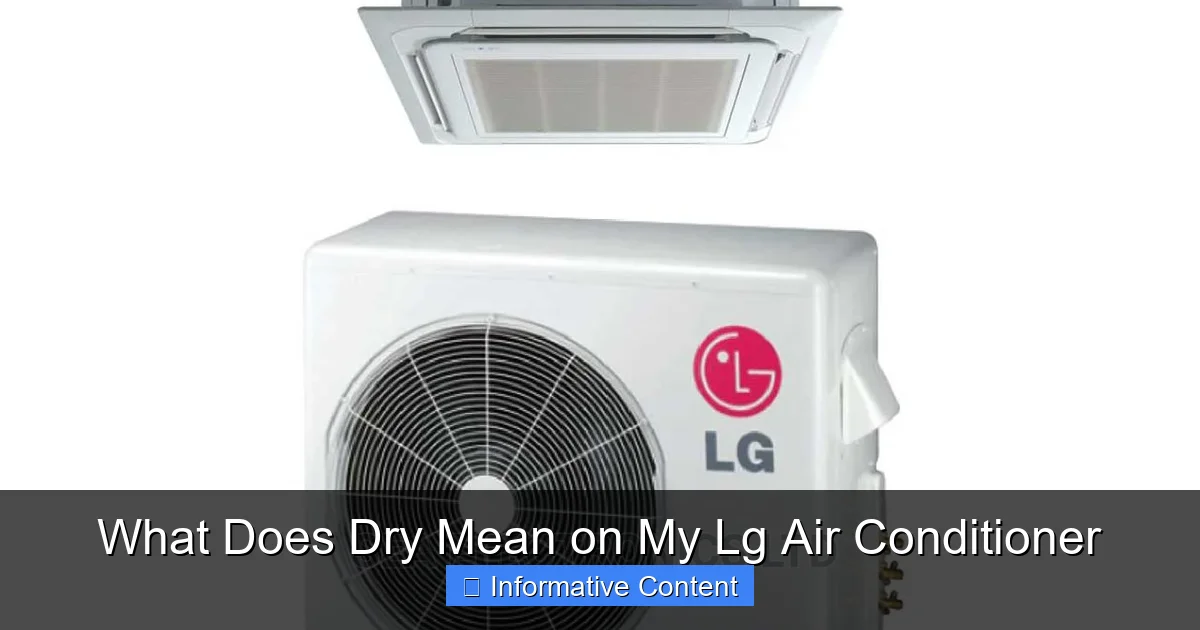
The "Dry" mode on your LG air conditioner is designed to remove excess moisture from the air without drastically lowering the temperature. It’s perfect for humid days when you want comfort without the chill, helping prevent mold, mildew, and musty odors while improving indoor air quality.
Key Takeaways
Reduces Humidity: Dry mode lowers indoor moisture levels, making your space feel more comfortable during humid weather.
Energy Efficient: Uses less energy than cooling mode since it doesn’t need to lower the temperature significantly.
Prevents Mold and Mildew: By controlling humidity, it helps inhibit the growth of mold, dust mites, and bacteria.
Improves Air Quality: Less moisture means fewer allergens and a fresher-smelling home.
Gentle Operation: The fan runs at a low speed, minimizing noise and wear on the system.
Ideal for Damp Seasons: Best used during rainy, humid, or monsoon seasons when the air feels sticky.
Not a Dehumidifier Replacement: While helpful, it’s not as powerful as a standalone dehumidifier for extreme moisture issues.
Quick Answers to Common Questions
What does Dry mode do on an LG air conditioner?
Dry mode reduces indoor humidity by removing moisture from the air using the evaporator coils, without significantly lowering the temperature.
Is Dry mode the same as a dehumidifier?
No, Dry mode is less powerful than a standalone dehumidifier. It’s best for moderate humidity control, not extreme moisture issues.
Can I use Dry mode all the time?
No, overuse can over-dry the air. Use it during humid weather or after activities like showering, but not continuously.
Does Dry mode save energy?
Yes, it uses less energy than Cool mode because the compressor cycles on and off and the fan runs at a low speed.
When should I avoid using Dry mode?
Avoid it in dry climates or during cold weather when indoor air is already low in humidity.
📑 Table of Contents
- Understanding the "Dry" Mode on Your LG Air Conditioner
- How Does Dry Mode Work?
- When Should You Use Dry Mode?
- Benefits of Using Dry Mode on Your LG Air Conditioner
- Common Misconceptions About Dry Mode
- Tips for Getting the Most Out of Dry Mode
- Comparing Dry Mode to Other AC Modes
- Conclusion: Make Dry Mode Part of Your Comfort Routine
Understanding the "Dry" Mode on Your LG Air Conditioner
Have you ever looked at your LG air conditioner’s remote and wondered, “What does Dry mean?” You’re not alone. Many homeowners see the “Dry” button but aren’t sure when or why to use it. It’s one of those features that sounds simple but actually plays a big role in your home’s comfort and air quality.
The “Dry” mode—sometimes labeled as “Dehumidify” or “Dry Cool” on certain LG models—is specifically designed to reduce humidity levels in your indoor environment. Unlike the standard Cool mode, which focuses on lowering the air temperature, Dry mode prioritizes removing excess moisture from the air. This is especially useful during humid seasons like spring and summer, or in regions with high humidity year-round.
Think of it this way: on a hot, sticky day, the air might feel heavy and uncomfortable, even if the temperature isn’t extremely high. That’s because high humidity prevents sweat from evaporating off your skin, making you feel warmer than the actual temperature suggests. Dry mode helps by pulling that moisture out of the air, giving you that refreshing, breathable feeling without turning your AC into an icebox.
How Does Dry Mode Work?
LG remote displaying Dry mode button
Visual guide about What Does Dry Mean on My Lg Air Conditioner
Image source: pictures-ghana.jijistatic.com
So, how exactly does your LG air conditioner remove moisture from the air? It’s not magic—it’s science, and it’s based on the same principles that power your refrigerator.
When you activate Dry mode, the air conditioner’s compressor runs intermittently, and the indoor fan operates at a low speed. This slower fan speed allows more time for warm, humid air to pass over the cold evaporator coils inside the unit. As the air cools, its ability to hold moisture decreases, causing water vapor to condense into liquid droplets. These droplets collect on the coils and drip into a drain pan, where they’re safely removed from your home—usually through a drain hose or evaporation system.
This process is similar to what happens when you see water droplets form on the outside of a cold drink on a humid day. The cold surface causes moisture in the air to condense. In your LG AC, the evaporator coils act as that cold surface, pulling moisture out of the indoor air.
One key difference between Dry mode and Cool mode is the compressor cycle. In Cool mode, the compressor runs continuously to maintain a set temperature. In Dry mode, the compressor turns on and off based on humidity levels, not temperature. This intermittent operation makes Dry mode more energy-efficient and gentler on your system.
Temperature vs. Humidity: What’s the Difference?
It’s easy to confuse temperature and humidity, but they’re two different things. Temperature measures how hot or cold the air is, while humidity refers to the amount of water vapor in the air. High humidity makes the air feel “sticky” or “muggy,” even if the temperature is moderate.
For example, a room at 78°F (25.5°C) with 80% humidity will feel much warmer and more uncomfortable than the same room at 78°F with 40% humidity. That’s why Dry mode is so valuable—it targets the humidity, not just the heat, to improve your comfort.
Why Slower Fan Speed Matters
The low fan speed in Dry mode isn’t just about saving energy—it’s essential for effective dehumidification. When air moves too quickly over the evaporator coils, it doesn’t have enough time to cool and release moisture. By slowing the fan, LG ensures that air spends more time in contact with the cold coils, maximizing moisture removal.
This also means the air leaving your vents might feel slightly cooler than the room temperature, but it won’t be as cold as in Cool mode. The goal isn’t to chill the room—it’s to dry it.
When Should You Use Dry Mode?
Now that you understand how Dry mode works, the next question is: when should you use it? The answer depends on your climate, the season, and how your home feels.
During Humid or Rainy Seasons
Dry mode shines during periods of high humidity, such as rainy summers, monsoon seasons, or damp spring weather. If you live in a coastal area or a region with frequent thunderstorms, you’ve probably experienced that “heavy air” feeling. That’s your cue to switch to Dry mode.
For instance, imagine it’s a warm, overcast day with light rain. The temperature is around 75°F (24°C), but the air feels thick and clammy. Turning on Cool mode might make the room too cold, but Dry mode will remove the moisture, making the space feel fresh and comfortable without overcooling.
After Cooking or Showering
Everyday activities like cooking, showering, or doing laundry can add significant moisture to your indoor air. Steam from a boiling pot or a hot shower can quickly raise humidity levels, especially in small or poorly ventilated spaces.
Using Dry mode for 30–60 minutes after these activities can help pull excess moisture from the air, preventing condensation on windows, mirrors, and walls. This is especially helpful in bathrooms and kitchens, where mold and mildew love to grow.
In Basements or Damp Rooms
Basements, laundry rooms, and crawl spaces are naturally more prone to high humidity. If you notice dampness, musty smells, or condensation on surfaces, Dry mode can help. Run it periodically to keep moisture levels in check and protect your belongings from damage.
When You Want Comfort Without the Chill
Some people are sensitive to cold air or prefer not to run their AC at full blast. If you want to feel comfortable without turning your home into a freezer, Dry mode is a great compromise. It reduces that sticky, clammy feeling without dropping the temperature too much.
Avoid Using Dry Mode in Dry Climates
If you live in a dry climate—like the desert Southwest—Dry mode may not be necessary. In fact, using it could make your indoor air too dry, leading to dry skin, irritated sinuses, or static electricity. In such areas, Cool mode or a fan is usually sufficient.
Benefits of Using Dry Mode on Your LG Air Conditioner
Using Dry mode isn’t just about comfort—it offers several practical benefits that can improve your home environment and even save you money.
Improved Indoor Air Quality
High humidity creates the perfect breeding ground for mold, mildew, dust mites, and bacteria. These allergens can trigger respiratory issues, allergies, and asthma. By reducing moisture, Dry mode helps keep these pollutants in check, leading to cleaner, healthier air.
For example, if you’ve ever noticed a musty smell in your bedroom or closet, it’s likely due to excess humidity. Running Dry mode for a few hours can eliminate that odor and make your space feel fresher.
Energy Efficiency and Cost Savings
Because Dry mode uses the compressor less frequently and runs the fan at a low speed, it consumes less energy than Cool mode. This can lead to lower electricity bills, especially if you use it instead of running your AC at full blast on moderately warm days.
Let’s say it’s 80°F (27°C) outside, but the humidity is 75%. Instead of setting your AC to 72°F and cranking the Cool mode, you could use Dry mode to remove moisture and feel comfortable at 78°F. That small adjustment can make a big difference in energy use.
Protects Your Home and Belongings
Excess moisture doesn’t just affect your health—it can damage your home. Over time, high humidity can warp wood furniture, peel paint, ruin electronics, and weaken structural materials. Dry mode helps prevent these issues by maintaining a balanced indoor environment.
For instance, if you store books, artwork, or musical instruments in your home, keeping humidity under control is essential. Dry mode can help preserve these items by preventing warping, mold growth, or corrosion.
Reduces Odors and Musty Smells
Moisture encourages the growth of mold and mildew, which often produce unpleasant odors. Whether it’s a damp basement or a stuffy closet, Dry mode can help eliminate these smells by tackling the root cause: humidity.
Try running Dry mode for a few hours in problem areas, and you may notice a significant improvement in air freshness.
Gentle on Your AC System
Because Dry mode operates at lower speeds and uses the compressor less aggressively, it puts less strain on your air conditioner. This can extend the lifespan of your unit and reduce the need for repairs.
Think of it like driving a car in low gear—it’s easier on the engine than constantly accelerating and braking. Similarly, Dry mode gives your AC a gentler workout, helping it last longer.
Common Misconceptions About Dry Mode
Despite its benefits, Dry mode is often misunderstood. Let’s clear up some common myths so you can use it effectively.
Myth 1: Dry Mode Cools the Room Like Cool Mode
No—Dry mode is not designed to lower the temperature significantly. While the air may feel slightly cooler due to reduced humidity, the primary goal is dehumidification, not cooling. If you’re looking to drop the temperature, Cool mode is the better choice.
Myth 2: Dry Mode Is the Same as a Dehumidifier
While both reduce humidity, a standalone dehumidifier is much more powerful and efficient at removing large amounts of moisture. Dry mode is helpful for everyday humidity control, but it’s not a replacement for a dedicated dehumidifier in extremely damp environments like basements or flood-prone areas.
Myth 3: You Should Use Dry Mode All the Time
Using Dry mode continuously can over-dry the air, leading to discomfort and health issues. It’s best used strategically—during humid weather or after moisture-generating activities—rather than as a constant setting.
Myth 4: Dry Mode Uses More Energy
Actually, the opposite is true. Because the compressor cycles on and off and the fan runs slowly, Dry mode typically uses less energy than Cool mode. It’s a more efficient way to manage comfort on moderately warm, humid days.
Myth 5: Dry Mode Only Works in Summer
While most useful in warm, humid months, Dry mode can also be helpful in spring and fall when humidity levels fluctuate. Even in winter, indoor activities like cooking or drying clothes can raise humidity, making Dry mode useful year-round in some homes.
Tips for Getting the Most Out of Dry Mode
To maximize the effectiveness of Dry mode on your LG air conditioner, follow these practical tips.
Use It During the Right Conditions
Activate Dry mode when humidity is high but the temperature isn’t extreme. Ideal conditions include overcast days, light rain, or after indoor activities that add moisture.
Close Windows and Doors
For Dry mode to work efficiently, keep windows and doors closed. Openings allow humid outdoor air to enter, counteracting the dehumidification process.
Clean Your Air Filter Regularly
A dirty air filter restricts airflow, reducing the AC’s ability to remove moisture. Check and clean or replace your filter every 1–2 months, especially during humid seasons.
Monitor Humidity Levels
Use a hygrometer (a device that measures humidity) to track indoor moisture levels. Ideal indoor humidity is between 30% and 50%. If it’s consistently above 60%, Dry mode can help bring it down.
Combine with Ventilation
In areas like bathrooms and kitchens, use exhaust fans while running Dry mode to remove steam and moisture more effectively.
Don’t Overuse It
Avoid running Dry mode for extended periods in already dry environments. Over-dehumidification can cause discomfort and damage sensitive materials.
Comparing Dry Mode to Other AC Modes
Your LG air conditioner likely has several modes: Cool, Heat, Fan, Auto, and Dry. Understanding how Dry mode differs from the others helps you choose the right setting for your needs.
Dry Mode vs. Cool Mode
- Cool mode lowers temperature and reduces humidity as a side effect.
- Dry mode focuses on reducing humidity with minimal temperature change.
- Cool mode uses more energy; Dry mode is more efficient for humid days.
Dry Mode vs. Fan Mode
- Fan mode circulates air without cooling or dehumidifying.
- Dry mode actively removes moisture using the compressor and evaporator coils.
- Use Fan mode for air circulation; use Dry mode for humidity control.
Dry Mode vs. Auto Mode
- Auto mode adjusts settings based on room temperature.
- Dry mode maintains a focus on humidity, regardless of temperature.
- Auto mode is convenient; Dry mode is targeted for specific conditions.
Dry Mode vs. Heat Mode
- Heat mode warms the air and can reduce relative humidity (since warm air holds more moisture).
- Dry mode cools slightly and removes moisture directly.
- Use Heat mode in cold weather; use Dry mode in humid conditions.
Activating Dry Mode on Your LG Remote
Most LG remotes feature a dedicated “Dry” button marked with a water‑drop icon. Press it once to toggle the mode; the display will show “DRY” and the fan speed will automatically drop to low. On newer models you can also select Dry through the on‑screen menu under “Mode.” In practice, the unit will run a short compressor cycle, pause, then repeat until the room humidity falls near the target range.
LG ThinQ Smart Control for Dry Mode
If your LG unit supports ThinQ, you can enable Dry mode from the smartphone app or via voice assistants. The app lets you set a humidity target (e.g., 45 %) and schedule daily run times, which is handy for basements that tend to get damp overnight. This smart integration also sends filter‑clean reminders, helping maintain dehumidification performance.
Maintaining Your LG AC for Optimal Dehumidification
Regular upkeep keeps Dry mode working efficiently. Beyond cleaning the filter, inspect the condensate drain line for clogs each season and verify the evaporator coil isn’t coated with dust. A quick vacuum of the coil fins (with the power off) can restore moisture‑removal capacity. For a deeper dive on seasonal upkeep, see our guide on seasonal upkeep for your AC.
When to Call a Professional
If Dry mode runs continuously without lowering humidity, the refrigerant charge may be low or the compressor could be short‑cycling. Other red flags include water leaking from the indoor unit or a persistent musty odor despite cleaning. In those cases, a certified HVAC technician should diagnose the system—our article on diagnosing warm‑air issues covers related troubleshooting steps.
Conclusion: Make Dry Mode Part of Your Comfort Routine
The “Dry” mode on your LG air conditioner is more than just a button—it’s a smart, energy-efficient tool for managing indoor humidity and improving your comfort. By removing excess moisture from the air, it helps prevent mold, reduce allergens, and create a fresher, more breathable environment.
Whether you’re dealing with a rainy spring, a humid summer, or just a damp basement, Dry mode offers a targeted solution that Cool mode can’t match. It’s gentle on your system, easy on your wallet, and great for your health.
Next time you feel that sticky, heavy air, don’t reach for the Cool button right away. Try Dry mode instead. You might be surprised how much more comfortable your home feels—without the chill.
Remember, the key is using it wisely. Pair it with good ventilation, regular maintenance, and awareness of your home’s humidity levels. With a little practice, Dry mode can become an essential part of your seasonal comfort routine.
So go ahead—press that Dry button with confidence. Your home (and your sinuses) will thank you.
Want to fine‑tune your settings for maximum savings? Check out our recommendations for energy‑saving thermostat settings.
Frequently Asked Questions
What is the ideal humidity level for indoor air?
The ideal indoor humidity level is between 30% and 50%. Levels above 60% can promote mold growth, while levels below 30% may cause dryness and discomfort.
Can Dry mode help with allergies?
Yes, by reducing humidity, Dry mode helps control mold, dust mites, and other allergens that thrive in moist environments.
How long should I run Dry mode?
Run it for 1–2 hours during or after high-moisture activities, or as needed during humid weather. Avoid continuous use.
Will Dry mode cool my room?
It may feel slightly cooler due to reduced humidity, but it won’t lower the temperature like Cool mode. Its main purpose is dehumidification.
Can I use Dry mode in winter?
Yes, if indoor activities like cooking or drying clothes raise humidity. However, avoid it if the air is already dry.
Why is my LG AC not removing moisture in Dry mode?
Check if the air filter is clean, windows are closed, and the unit is the right size for the room. A dirty filter or poor sealing can reduce efficiency.
Does LG’s ThinQ app let me set a humidity target for Dry mode?
Yes, on compatible models the ThinQ app allows you to choose a specific humidity percentage and schedule Dry mode runs, giving you precise control over indoor moisture.
Can Dry mode replace a whole‑house dehumidifier?
For most homes Dry mode handles everyday humidity well, but a whole‑house dehumidifier is still recommended for persistent high‑moisture problems such as flooded basements or chronic condensation. For more on selecting the right equipment, see our guide on picking a unit that matches your space.
Where can I find official guidance on indoor humidity levels?
The EPA provides detailed recommendations on maintaining healthy indoor humidity; you can review their guidance on indoor humidity.
Are there any new LG innovations that improve Dry mode performance?
Recent LG models feature variable‑speed compressors and enhanced coil coatings that boost dehumidification efficiency; learn more about the latest compressor technology in our overview of latest compressor technology.