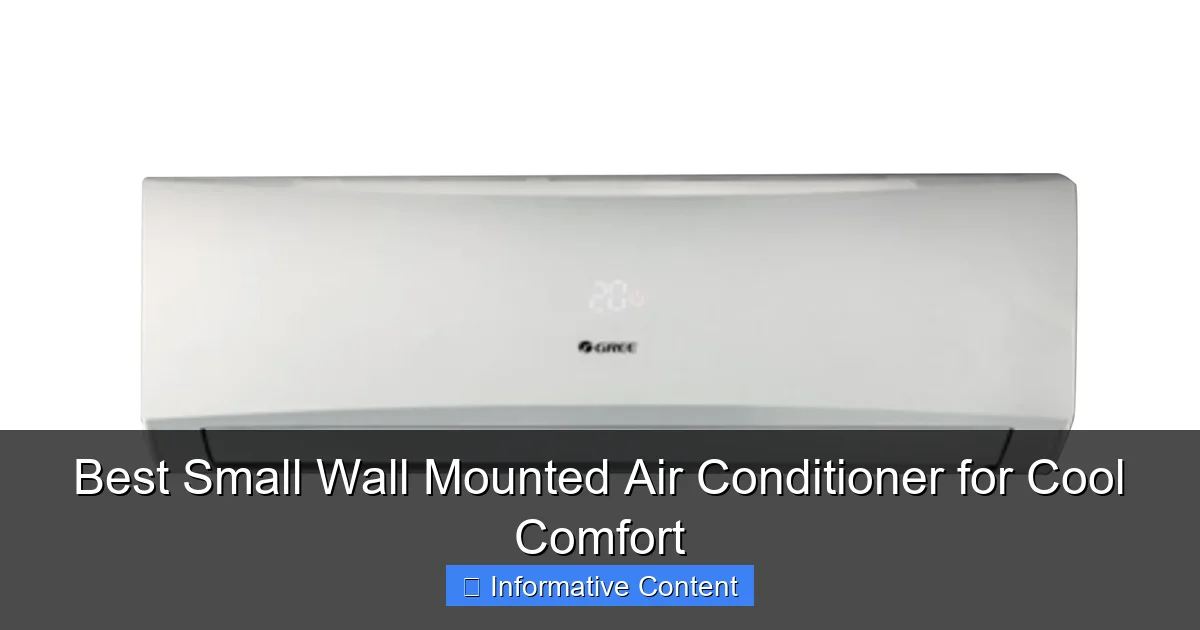
Featured image for wall unit air conditioner and heater
Wall unit air conditioner and heater combos deliver year-round comfort in one sleek, space-saving design, ideal for apartments, offices, and rooms without central HVAC. With energy-efficient heating and cooling modes, remote control access, and quiet operation, these units offer a smart, all-in-one climate control solution for ultimate convenience and performance.
Key Takeaways
- Choose wisely: Match unit size to room dimensions for optimal performance.
- Energy efficiency: Look for high SEER and HSPF ratings to save on bills.
- Smart controls: Use Wi-Fi enabled models for remote temperature adjustments.
- Regular maintenance: Clean filters monthly to ensure efficient operation.
- All-in-one solution: Select units with both heating and cooling for year-round comfort.
- Noise matters: Prioritize low-decibel models for quiet operation in living spaces.
- Proper installation: Ensure correct mounting to prevent air leaks and inefficiency.
📑 Table of Contents
- The Ultimate Comfort Solution: Wall Unit Air Conditioner and Heater
- How Wall Unit Air Conditioner and Heater Systems Work
- Benefits of Wall Units: Why They Beat the Alternatives
- Choosing the Right Wall Unit for Your Space
- Installation and Maintenance: Do’s and Don’ts
- Top Models Compared: Finding Your Perfect Fit
- Final Thoughts: Is a Wall Unit Right for You?
The Ultimate Comfort Solution: Wall Unit Air Conditioner and Heater
Imagine this: It’s the dead of winter. Snow is piling up outside your window, and the chill has seeped into your bones. You reach for the thermostat, but your central heating system groans to life, taking forever to warm the house. Now, picture a sleek wall unit mounted high on your living room wall, quietly humming as it pumps out cozy, even heat in minutes. Or, flip the season—it’s a scorching summer afternoon, and your old window AC unit sounds like a jet engine while barely cooling the room. A wall unit air conditioner and heater could be your game-changer.
Wall units are like the Swiss Army knives of climate control. They’re compact, efficient, and designed to handle both sweltering heat and freezing cold—all without the bulk of central systems or the noise of portable units. Whether you’re upgrading an outdated setup, outfitting a new space, or just tired of battling seasonal discomfort, these systems offer a smart, all-in-one solution. In this guide, we’ll break down how they work, why they’re worth considering, and how to pick the perfect model for your needs—no sales jargon, just real talk.
How Wall Unit Air Conditioner and Heater Systems Work
The All-in-One Design: Cooling and Heating in One Package
Think of a wall unit air conditioner and heater as a mini HVAC system. Unlike traditional window units (which only cool) or space heaters (which only warm), these systems pack both functions into a single, wall-mounted unit. Here’s the magic: they use a heat pump technology. In cooling mode, they extract heat from indoors and expel it outside—just like a standard AC. In heating mode, they reverse the process, pulling warmth from the outdoor air (yes, even in winter!) and pumping it inside.
For example, the Daikin FTX25NMVJU uses an inverter-driven compressor to adjust output based on room temperature, making it 30% more energy-efficient than older on/off models. This means no abrupt blasts of cold or hot air—just smooth, consistent comfort.
Key Components You Should Know
- Indoor Unit: Mounted on an interior wall, this houses the fan, evaporator coil, and controls. It’s the “face” of your system—sleek, quiet, and often Wi-Fi enabled.
- Outdoor Unit: Installed outside (usually on a bracket or concrete pad), this contains the compressor and condenser coil. It’s the workhorse, handling heat exchange.
- Refrigerant Lines: Insulated copper tubes connecting both units, transferring refrigerant. Proper insulation is crucial to prevent energy loss.
- Drain Line: Removes condensation from cooling mode. Clogs here are a common cause of leaks—so keep it clean!
Pro Tip: If you live in an older building, check your wall’s structural integrity before installing. A 12,000 BTU unit can weigh 70+ pounds—drywall alone won’t cut it.
Installation Basics: DIY or Pro?
Most wall units require a through-the-wall sleeve (for mini-splits) or a wall penetration (for ductless systems). While some handy homeowners tackle this, we strongly recommend hiring a licensed HVAC pro. Why? Incorrect refrigerant line sizing or poor insulation can slash efficiency by up to 40%. Plus, improper installation voids most warranties.
One reader shared: “I tried installing a ductless unit myself. The refrigerant leak took $300 and a pro visit to fix. Lesson learned!”
Benefits of Wall Units: Why They Beat the Alternatives
Energy Efficiency That Saves Money
Wall units outperform most alternatives in energy savings. Take the SEER (Seasonal Energy Efficiency Ratio) and HSPF (Heating Seasonal Performance Factor) ratings: modern units range from 16–25 SEER and 9–13 HSPF. Compare that to a typical central AC (13–16 SEER) or electric baseboard heater (HSPF 3.4), and the difference is stark.
Example: A 20,000 BTU wall unit with 20 SEER/10 HSPF costs about $0.12 per hour to run. A 15,000 BTU window AC (10 SEER) costs $0.18/hour for cooling, while a 1,500W space heater (HSPF 3.4) costs $0.21/hour for heating. Over a year, that’s hundreds saved.
Zoned Comfort: Heat or Cool Only Where You Need It
Say goodbye to heating your empty basement or cooling a guest room no one uses. Wall units let you create “zones”—each with its own thermostat. For instance, you can set your bedroom to 68°F at night while keeping the living room at 72°F during the day. This precision cuts energy waste by up to 25%, according to the U.S. Department of Energy.
Real-world use: A family in Chicago uses a wall unit in their sunroom. “We keep it 70°F in winter and 75°F in summer,” says the homeowner. “Our main furnace barely runs now.”
Space-Saving and Aesthetic Perks
No more bulky window units blocking your view or portable heaters cluttering the floor. Wall units are mounted high, freeing up space. Modern designs are minimalist—think brushed metal finishes, slim profiles, and hidden controls. The Mitsubishi MSZ-FH18NA, for instance, is just 8 inches deep and comes in white, silver, or black to match any decor.
Bonus: No seasonal removal! Unlike window ACs, you won’t need to store or reinstall them every year.
Quiet Operation: Sleep and Work in Peace
Most wall units run at 19–35 decibels—quieter than a whisper (30 dB). Compare that to window units (50–70 dB) or portable ACs (60–75 dB). The LG LW1517IVSM operates at 19 dB in “sleep mode,” making it ideal for bedrooms or offices.
Choosing the Right Wall Unit for Your Space
Size Matters: Matching BTUs to Room Size
Oversizing or undersizing your unit wastes energy and money. Use this rule of thumb:
- 100–250 sq. ft.: 5,000–8,000 BTUs
- 250–400 sq. ft.: 8,000–12,000 BTUs
- 400–600 sq. ft.: 12,000–18,000 BTUs
- 600–1,000 sq. ft.: 18,000–24,000 BTUs
Adjust for these factors:
- Ceiling height: Add 2,000 BTUs for ceilings over 8 ft.
- Insulation: Poor insulation? Add 10–20% more BTUs.
- Sunlight: South-facing windows? Add 10% more cooling power.
Example: A 300 sq. ft. sunroom with large south-facing windows needs a 10,000–12,000 BTU unit—not the 8,000 BTU suggested for a standard room.
Critical Features to Compare
- Inverter Technology: Adjusts power smoothly, saving energy and reducing noise. Skip older on/off models.
- Heating Capacity (COP): Look for a COP of 3+ (e.g., 3,000W input = 9,000W output). Below 2.5? Avoid.
- Smart Controls: Wi-Fi apps, voice control (Alexa/Google), and scheduling save time and energy.
- Air Quality: HEPA filters, ionizers, or UV-C lights help with allergies or pet odors.
- Warranty: Aim for 5+ years on parts, 10+ years on the compressor.
Climate Considerations: Cold Weather Performance
Standard heat pumps lose efficiency below 40°F. If you live in a cold climate (e.g., Canada, northern U.S.), look for “cold climate” models with:
- Low-ambient heating (down to -15°F)
- Hyper-heating inverter tech
- Backup electric heat strips (for extreme cold)
The Mitsubishi Hyper-Heat series, for instance, heats efficiently at -13°F. A homeowner in Minnesota reports: “It kept our 400 sq. ft. garage at 65°F all winter—even during a -10°F cold snap.”
Installation and Maintenance: Do’s and Don’ts
Professional Installation: Worth Every Penny
We can’t stress this enough: hire a pro. A licensed HVAC technician ensures:
- Proper refrigerant charge (too little or too much = poor performance)
- Correct line set sizing (1/4” and 3/8” lines for most units)
- Adequate drainage slope (¼” per foot)
- Compliance with local codes (e.g., electrical permits)
Cost: $500–$2,500, depending on complexity. But it’s cheaper than fixing a botched DIY job.
DIY Maintenance Tasks You Can Handle
While the pro handles installation, you can—and should—maintain your unit:
- Clean Filters Monthly: Rinse or vacuum reusable filters. Clogged filters reduce airflow by 50%.
- Check Drain Line: Pour 1 cup of vinegar down the drain every 3 months to prevent clogs.
- Inspect Outdoor Unit: Clear leaves/debris from the condenser coils. A 1” gap around the unit is ideal.
- Test Thermostat Accuracy: Use a separate thermometer. If it’s off by more than 2°F, recalibrate.
Pro Tip: Schedule a professional tune-up every 2–3 years. Technicians check refrigerant levels, electrical connections, and coil cleanliness—preventing breakdowns.
Common Installation Mistakes to Avoid
- Ignoring Wall Thickness: The refrigerant lines need a clear path. Measure your wall before buying.
- Poor Indoor Unit Placement: Avoid spots near heat sources (e.g., radiators) or direct sunlight. Mount it high (6–8 ft) for even airflow.
- Skipping Insulation: Uninsulated refrigerant lines lose 10–20% efficiency. Use foam tape or pre-insulated lines.
- Overloading Circuits: Most units need a 15–20 amp dedicated circuit. Sharing circuits causes tripped breakers.
Top Models Compared: Finding Your Perfect Fit
Best Overall: Mitsubishi MSZ-FH18NA
- BTUs: 18,000 (cooling), 21,000 (heating)
- SEER/HSPF: 22.5/10.5
- Features: Wi-Fi, hyper-heating (down to -13°F), 19 dB noise
- Price: $1,800–$2,200 (unit only)
- Verdict: Ideal for cold climates and large rooms. Quiet and efficient.
Best Budget: Frigidaire FHWW103WB1
- BTUs: 10,000 (cooling), 10,500 (heating)
- SEER/HSPF: 16.5/9.0
- Features: Remote control, 3 fan speeds, 28 dB noise
- Price: $600–$800
- Verdict: Great for small rooms. Less efficient but affordable.
Best Smart Features: LG LW1517IVSM
- BTUs: 15,000 (cooling), 16,000 (heating)
- SEER/HSPF: 22.0/10.2
- Features: Alexa/Google Assistant, Wi-Fi, 19 dB noise
- Price: $1,200–$1,500
- Verdict: Perfect for tech lovers. Voice control and scheduling.
Data Table: Quick Comparison
| Model | Cooling (BTU) | Heating (BTU) | SEER | HSPF | Noise (dB) | Smart Features | Price |
|---|---|---|---|---|---|---|---|
| Mitsubishi MSZ-FH18NA | 18,000 | 21,000 | 22.5 | 10.5 | 19 | Wi-Fi, App | $1,800–$2,200 |
| Frigidaire FHWW103WB1 | 10,000 | 10,500 | 16.5 | 9.0 | 28 | Remote | $600–$800 |
| LG LW1517IVSM | 15,000 | 16,000 | 22.0 | 10.2 | 19 | Alexa, Wi-Fi | $1,200–$1,500 |
| Daikin FTX25NMVJU | 9,000 | 10,000 | 23.0 | 11.0 | 22 | App, Scheduling | $1,500–$1,800 |
Final Thoughts: Is a Wall Unit Right for You?
Let’s be real: a wall unit air conditioner and heater isn’t the cheapest upfront investment. But when you factor in long-term energy savings, year-round comfort, and space-saving design, the math adds up. We’ve seen homeowners cut heating/cooling bills by 30–50%, and renters finally gain control over their climate without landlord drama.
The key is matching the right unit to your needs. Don’t just grab the biggest BTU model—consider your room’s insulation, sunlight, and climate. And please, for the love of comfort, hire a pro for installation. A poorly installed unit is like a sports car with square tires: it won’t perform.
As one happy user told us: “We installed a wall unit in our 300 sq. ft. home office. It’s now our favorite room in the house—perfect temperature, no noise, and the Wi-Fi controls let me pre-cool before I start work.” That’s the power of a well-chosen, well-installed wall unit. Whether you’re battling a drafty apartment, a sun-scorched sunroom, or just want smarter comfort, this all-in-one solution delivers. So take the leap—your future self will thank you every season.
Frequently Asked Questions
What is a wall unit air conditioner and heater?
A wall unit air conditioner and heater is a ductless HVAC system mounted on a wall to provide both cooling and heating. It’s an energy-efficient solution for single rooms or small spaces, offering year-round comfort with a compact design.
How does a wall-mounted AC and heater work?
The indoor unit absorbs heat (for cooling) or releases heat (for heating) while the outdoor compressor unit handles refrigerant circulation. These units use inverter technology to adjust output, maintaining consistent temperatures efficiently.
Are wall unit air conditioners and heaters energy efficient?
Yes, most wall unit air conditioner and heater systems feature high SEER and HSPF ratings, using inverter-driven compressors to reduce energy waste. They’re often more efficient than central HVAC systems for zone-specific climate control.
Can I install a wall unit AC and heater myself?
Professional installation is recommended for proper refrigerant line routing, electrical connections, and drainage. DIY attempts may void warranties or lead to performance issues due to improper setup.
What size wall unit air conditioner and heater do I need?
Unit size depends on room square footage, insulation, and climate. A 12,000 BTU unit typically covers 400-550 sq ft, but consult a sizing guide or HVAC professional for precise recommendations.
How do I maintain my wall unit AC and heater?
Clean or replace air filters monthly, wipe the indoor unit with a damp cloth, and schedule annual professional maintenance. Regular upkeep ensures optimal efficiency and extends the lifespan of your system.