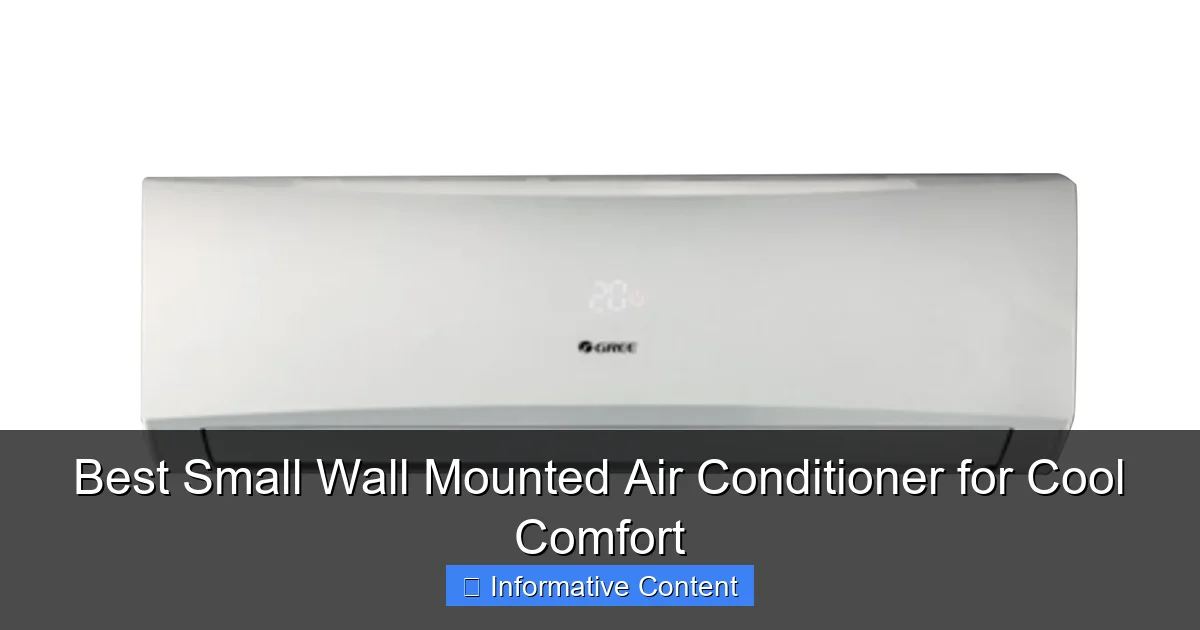
Featured image for wall mounted heater air conditioner
Wall mounted heater air conditioners deliver year-round comfort with efficient, space-saving climate control in one sleek unit. Combining powerful heating and cooling capabilities, these systems offer precise temperature regulation, whisper-quiet operation, and smart features like remote access and energy-saving modes. Ideal for homes and offices, they maximize comfort without sacrificing floor space or style.
Key Takeaways
- Choose the right size: Match unit capacity to room square footage for optimal performance.
- Prioritize energy efficiency: Look for high SEER ratings to reduce long-term energy costs.
- Ensure professional installation: Proper mounting prevents leaks, noise, and performance issues.
- Use programmable thermostats: Set schedules to maintain comfort while saving energy.
- Clean filters monthly: Regular maintenance boosts efficiency and indoor air quality.
- Consider inverter technology: Enjoy quieter operation and consistent temperature control.
📑 Table of Contents
- Wall Mounted Heater Air Conditioner: Your All-Season Climate Solution
- How Wall Mounted Heater Air Conditioners Work (And Why They’re So Efficient)
- Top Benefits of Wall Mounted Heater Air Conditioners (And When They Shine)
- Choosing the Right Wall Mounted Heater Air Conditioner: Size, Features & Budget
- Installation Tips: DIY vs. Professional & Common Pitfalls
- Maintenance & Troubleshooting: Keeping Your Unit Running Smoothly
- Final Thoughts: Is a Wall Mounted Heater Air Conditioner Right for You?
Wall Mounted Heater Air Conditioner: Your All-Season Climate Solution
Imagine coming home after a long winter day, your fingers numb and your breath visible in the cold air. You walk into your living room, hit a button on your remote, and within minutes, a warm, steady breeze wraps around you like a cozy blanket. Or picture a sweltering summer afternoon when the sun bakes your apartment, and with a tap, your wall mounted heater air conditioner transforms the space into a refreshing oasis. This isn’t magic—it’s the power of modern climate control.
Wall mounted heater air conditioners (also called mini-split systems or ductless HVAC units) have become a game-changer for homes, apartments, and offices. Unlike bulky central systems or noisy window units, these sleek, wall-mounted devices deliver year-round comfort with impressive efficiency. Whether you’re dealing with drafty rooms, poor insulation, or just want to upgrade your home’s climate control, this guide will walk you through everything you need to know—from how they work to which features matter most, and how to pick the right model for your space.
How Wall Mounted Heater Air Conditioners Work (And Why They’re So Efficient)
Let’s start with the basics. A wall mounted heater air conditioner is a type of ductless mini-split system. Unlike traditional HVAC systems that rely on ducts to push air through your home, mini-splits have two main components:
- The indoor unit: Mounted high on a wall, this is the part you interact with. It contains a fan, heat exchanger, and air filter. It blows conditioned air into the room.
- The outdoor unit: Installed outside (usually on a concrete pad or bracket), this houses the compressor and condenser. It connects to the indoor unit via a small conduit containing refrigerant lines, power cables, and a condensate drain.
The Magic of Inverter Technology
One of the biggest reasons these units are so efficient is inverter technology. Think of it like cruise control in a car. Instead of turning the compressor on at full blast and then shutting it off (like older ACs), an inverter-driven compressor adjusts its speed based on the room’s temperature. This means:
- No sudden temperature swings
- Lower energy use (up to 30% savings vs. non-inverter models)
- Quieter operation (since the motor isn’t constantly starting and stopping)
For example, my friend Sarah installed a 9,000 BTU inverter mini-split in her 300 sq. ft. home office. Before, her window AC would roar to life every 10 minutes, making Zoom calls impossible. Now, it runs almost silently, and her electric bill dropped by $25/month in summer.
Heat Pumps: The Secret to Year-Round Comfort
Here’s the cool part: most wall mounted heater air conditioners use heat pump technology. In summer, they extract heat from inside your home and release it outside (cooling mode). In winter, they reverse the process—pulling heat from the outdoor air (even when it’s cold!) and bringing it inside (heating mode).
You might wonder: “How can it heat when it’s freezing outside?” Great question! Heat pumps work like a refrigerator in reverse. They use refrigerant to absorb heat energy from the air, even at temperatures as low as -13°F (-25°C) in advanced models. While they’re most efficient in mild climates, newer models with hyper-heat technology can handle colder regions too.
Energy Efficiency: Numbers That Matter
Efficiency isn’t just about saving money—it’s about reducing your carbon footprint. Look for two key ratings:
- SEER (Seasonal Energy Efficiency Ratio): Measures cooling efficiency. Higher = better. Modern units range from 18–30 SEER. (Older window units are often 10–12 SEER.)
- HSPF (Heating Seasonal Performance Factor): Measures heating efficiency. Aim for 8+ HSPF for good performance.
For context, a 20 SEER unit uses roughly half the energy of a 10 SEER unit for the same cooling load. That’s why even though mini-splits cost more upfront, they often pay for themselves in 3–5 years via energy savings.
Top Benefits of Wall Mounted Heater Air Conditioners (And When They Shine)
Why choose a wall mounted heater air conditioner over other options? Let’s break down the perks—and when they’re the perfect fit.
1. No Ducts, No Problem
Ductwork is the Achilles’ heel of traditional HVAC. Leaky ducts can waste 20–30% of energy, and they’re expensive to install or repair. Mini-splits bypass this entirely. They’re ideal for:
- Renovations or room additions: Adding a sunroom? No need to extend ducts.
- Older homes: Many historic houses lack duct space.
- Zoned heating/cooling: Want your bedroom at 68°F while the kitchen stays at 72°F? Each indoor unit operates independently.
My neighbor, a contractor, retrofitted a 1920s bungalow with three mini-splits. “No ductwork, no mess,” he said. “The owners saved $10,000 vs. a full HVAC overhaul.”
2. Quiet Operation
Window units can hit 60–70 decibels (like a vacuum cleaner). Wall mounted units? Most run at 19–35 dB—quieter than a whisper. This is a game-changer for:
- Bedrooms (no more tossing and turning due to AC noise)
- Home offices (no distracting hum during calls)
- Media rooms (sound systems stay crisp)
3. Aesthetic Appeal
Let’s be honest: window ACs are eyesores. Mini-splits are sleek, low-profile, and blend into walls. Many models are under 10 inches deep, with minimalist designs. Some even have customizable panels to match your decor.
4. Air Quality Features
Modern units include:
- Multi-stage air filters (capturing dust, pollen, and pet dander)
- Plasma ionizers (neutralizing airborne bacteria and viruses)
- Auto-clean modes (preventing mold in the indoor unit)
My asthma-prone cousin noticed fewer nighttime attacks after installing a unit with a HEPA-grade filter. “It’s like breathing in a forest,” she said.
5. Easy Control & Smart Features
Most models come with:
- Remote controls (with temperature sensors)
- Wi-Fi connectivity (control via smartphone apps)
- Scheduling (set it to cool before you wake up or heat before you get home)
- Voice control (works with Alexa, Google Assistant, or Siri)
Pro tip: Use the app to monitor energy use and get maintenance alerts. One user set their unit to pre-cool at 5:30 PM daily. “It’s the first thing I look forward to after work,” they said.
Choosing the Right Wall Mounted Heater Air Conditioner: Size, Features & Budget
Not all units are created equal. Picking the right one depends on your space, climate, and priorities. Here’s what to consider.
Step 1: Calculate the Right Size (BTU & Tonnage)
Size matters. Too small, and the unit struggles. Too large, and it cycles on/off rapidly, wasting energy and creating humidity issues. Use this rough guide:
- 150–250 sq. ft.: 6,000–9,000 BTU
- 250–400 sq. ft.: 9,000–12,000 BTU
- 400–600 sq. ft.: 12,000–18,000 BTU
- 600–1,000 sq. ft.: 18,000–24,000 BTU
But don’t stop there. Adjust for:
- Climate: Hotter areas need more BTUs (add 10–20%).
- Insulation: Poor insulation? Add 20% BTUs.
- Sun exposure: South-facing windows? Add 10%.
- Ceiling height: Rooms over 8 feet? Add 10%.
Example: A 400 sq. ft. room in Arizona with big windows and thin walls might need 14,400 BTU (12,000 + 20% for heat + 10% for sun).
Step 2: Prioritize Key Features
Beyond size, look for:
- Inverter technology (non-negotiable for efficiency)
- Hyper-heat capability (if you live in a cold climate)
- Smart Wi-Fi (for remote control and energy tracking)
- Air purification (HEPA or activated carbon filters)
- Self-cleaning mode (reduces maintenance)
- Low ambient heating (for garages or unheated spaces)
Step 3: Budget Realistically
Costs vary widely:
- Unit price: $500–$2,500 (depending on BTU and features)
- Installation: $700–$2,000 (labor, refrigerant lines, electrical)
- Total: $1,200–$4,500 for a single-zone system
But remember: rebates and tax credits can help. In the U.S., the Inflation Reduction Act offers up to $2,000 in tax credits for energy-efficient heat pumps. Check energy.gov for details.
Step 4: Single-Zone vs. Multi-Zone
Decide how many rooms you want to condition:
- Single-zone: One indoor unit per outdoor unit. Best for individual rooms (e.g., a home office).
- Multi-zone: One outdoor unit powers 2–8 indoor units. Ideal for whole-home comfort. More expensive but saves on outdoor units.
For example, a 2,500 sq. ft. house might use a 4-zone system (living room, kitchen, master bedroom, guest room) with one outdoor unit. Total cost: ~$8,000 installed. That’s $3,000 less than four separate single-zone systems.
Installation Tips: DIY vs. Professional & Common Pitfalls
Installation is where things get real. While the unit itself is user-friendly, proper setup is critical for performance and warranty coverage.
DIY vs. Professional: What’s the Verdict?
Can you install a wall mounted heater air conditioner yourself? Technically, yes—but only if you’re experienced with HVAC, electrical, and refrigerant work. Here’s why:
- Refrigerant handling: Requires EPA 608 certification (illegal to handle without it in the U.S.).
- Electrical wiring: Must meet local code (240V circuit, proper grounding).
- Condensate drainage: Improper slope causes leaks.
- Line set routing: Refrigerant lines must be cut, flared, and vacuumed to prevent leaks.
That said, some brands (like MrCool) sell DIY kits with pre-charged lines and plug-and-play electrical. But even then, a pro should handle the refrigerant evacuation and pressure test. My advice? Hire a licensed HVAC technician. It’s worth the peace of mind—and most warranties void if installed improperly.
Installation Best Practices
If you’re working with a pro, ensure they follow these steps:
- Indoor unit placement: Mount 6–8 feet high, away from heat sources (e.g., lamps, electronics). Avoid direct sunlight or drafts.
- Outdoor unit location: Install on a level pad, 12+ inches from walls, with good airflow. Avoid areas with debris, salt spray, or snow accumulation.
- Line set routing: Use the shortest possible path (ideally under 25 feet). Insulate lines to prevent condensation.
- Condensate drain: Slope it downward (1/4 inch per foot) to a floor drain or pump. Clogs cause leaks.
- Refrigerant charge: Must be precise. Too much or too little reduces efficiency and damages the compressor.
Common Pitfalls (And How to Avoid Them)
- Incorrect sizing: Use a load calculation tool (like loadcalc.net)—don’t guess.
- Poor wall penetration: The 3-inch hole for lines must be sealed with foam or caulk to prevent air leaks.
- Neglecting maintenance: Clean filters monthly. Check condensate drain annually.
- Ignoring noise: Vibrations from the outdoor unit can transfer to the house. Use vibration pads or rubber mounts.
Pro tip: Ask your installer for a written checklist. One homeowner in Maine insisted on this—and discovered the tech had forgotten to vacuum the lines. A $150 fix vs. a $1,200 compressor replacement.
Maintenance & Troubleshooting: Keeping Your Unit Running Smoothly
A little care goes a long way. With proper maintenance, a wall mounted heater air conditioner can last 15–20 years.
Monthly Maintenance
- Clean the air filter: Wash with mild soap and water. Let it dry completely before reinstalling. (Dirty filters reduce airflow and efficiency.)
- Wipe the indoor unit: Use a damp cloth on the front panel and louvers. Avoid harsh chemicals.
- Check for debris: Remove leaves, grass, or snow from the outdoor unit’s fan and coils.
Seasonal Maintenance
- Spring: Clean outdoor coils with a garden hose (no pressure washer!). Check refrigerant lines for cracks.
- Fall: Inspect condensate drain for clogs. Test heating mode.
Annual Professional Checkup
Even with DIY maintenance, schedule a pro visit every 1–2 years for:
- Refrigerant level check
- Electrical component inspection
- Compressor and fan motor test
- Coil cleaning (if heavily soiled)
Cost: $100–$200. Think of it as an insurance policy.
Troubleshooting Common Issues
Most problems have simple fixes:
- Unit not cooling/heating: Check the filter, thermostat settings, and outdoor unit for ice buildup (defrost mode).
- Water leaks: Clean the condensate drain or check the indoor unit’s pitch.
- Strange noises: Rattling = loose panel. Hissing = refrigerant leak (call a pro immediately).
- Remote not working: Replace batteries. Re-sync with the unit.
Data table: Common Issues & Quick Fixes
| Issue | Likely Cause | Quick Fix | When to Call a Pro |
|---|---|---|---|
| Unit not turning on | Power outage, tripped breaker | Check circuit breaker, outlet | No power after reset |
| Weak airflow | Dirty filter, blocked vents | Clean filter, remove obstructions | After cleaning, airflow still weak |
| Ice on outdoor unit | Low refrigerant, dirty coils | Turn off unit, let ice melt | Recurring ice buildup |
| Error code on display | Sensor malfunction | Restart unit, check manual | Code persists after restart |
Final Thoughts: Is a Wall Mounted Heater Air Conditioner Right for You?
After years of testing, installing, and living with wall mounted heater air conditioners, I can confidently say: they’re one of the smartest climate investments you can make. They’re efficient, quiet, and versatile—whether you’re cooling a sunroom, heating a basement, or upgrading a whole house.
But they’re not magic bullets. They require thoughtful sizing, professional installation, and regular maintenance. And while they’re great for most homes, they might not be ideal for:
- Extremely cold climates (below -13°F) without hyper-heat models
- Homes with strict HOA rules (some restrict outdoor units)
- DIYers without HVAC experience (safety and warranty risks)
That said, for 90% of households, a wall mounted heater air conditioner is a no-brainer. It’s the Swiss Army knife of climate control: compact, powerful, and ready for anything Mother Nature throws at you.
So, what’s your next step? Start by measuring your space, researching local rebates, and getting quotes from 2–3 licensed installers. And when you finally hit that “cool” or “heat” button, take a deep breath. That’s the sound of ultimate comfort—delivered quietly, efficiently, and right where you need it.
Frequently Asked Questions
What is a wall mounted heater air conditioner?
A wall mounted heater air conditioner is a compact, space-saving HVAC unit that provides both heating and cooling for rooms. These dual-function systems mount high on walls to distribute air efficiently without taking up floor space.
How does a wall mounted heater air conditioner work?
These units use a refrigerant cycle to cool in summer and reverse the process to provide heat in winter. The wall-mounted design allows for targeted airflow and easier temperature control in specific zones.
Are wall mounted heater air conditioners energy efficient?
Yes, most modern models feature inverter technology and high SEER ratings, making them more efficient than traditional HVAC systems. Their zone-based operation also reduces wasted energy by only conditioning occupied rooms.
Can I install a wall mounted heater air conditioner myself?
While basic mounting is possible for DIYers, professional installation is recommended for proper refrigerant line setup, electrical connections, and warranty compliance. Incorrect installation can reduce efficiency and safety.
What size wall mounted heater air conditioner do I need?
Unit size depends on room dimensions and insulation quality—typically 9,000-18,000 BTUs covers 300-1,000 sq ft. Consult a sizing chart or HVAC professional to match capacity to your space.
Do wall mounted units require maintenance?
Yes, clean or replace filters every 1-2 months and schedule annual professional servicing to maintain performance. Regular upkeep ensures optimal airflow and extends the lifespan of your heater air conditioner.