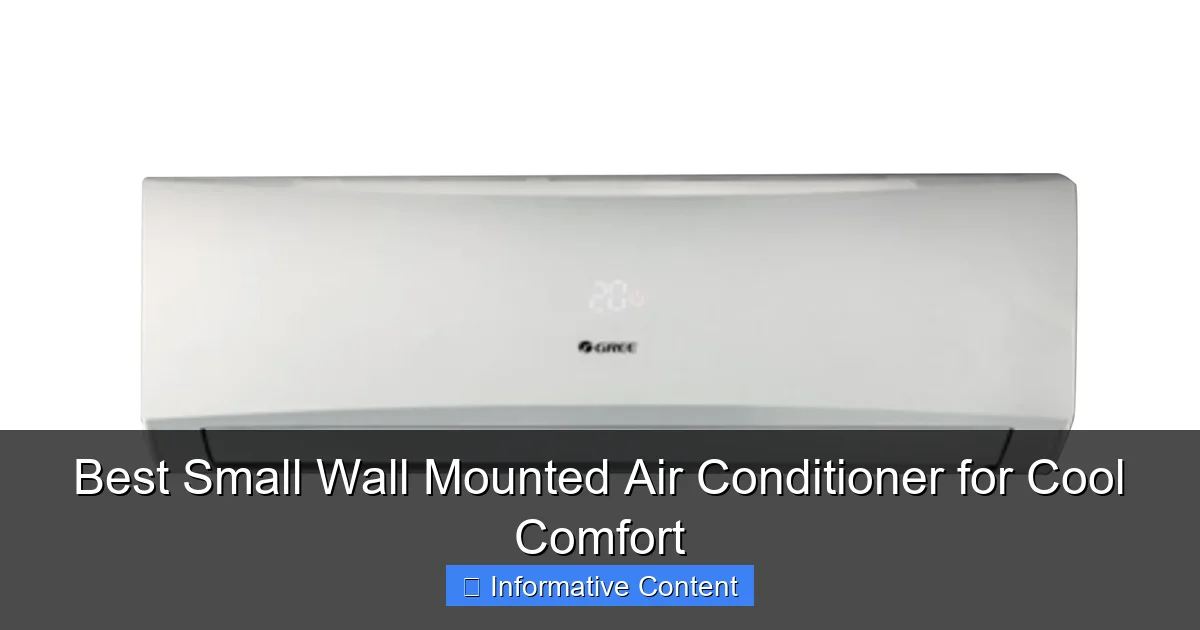
Featured image for wall mounted air conditioner installation
Proper wall mounted air conditioner installation ensures maximum efficiency, safety, and long-term performance. This guide walks you through essential steps—from selecting the ideal wall location and checking structural support to securely mounting the unit and sealing gaps—so you can enjoy reliable cooling without costly mistakes. Follow expert tips and manufacturer instructions carefully to avoid leaks, noise, or system damage.
Key Takeaways
- Choose the right location: Select a wall with structural support and proper clearance for airflow.
- Check electrical requirements: Ensure your circuit can handle the unit’s power needs safely.
- Use a level for mounting: A perfectly level bracket prevents leaks and ensures efficient operation.
- Seal gaps thoroughly: Prevent air leaks and moisture with proper insulation and sealant.
- Test before finalizing: Run the unit briefly to confirm cooling and drainage work correctly.
- Follow manufacturer instructions: Always refer to the manual for model-specific steps and safety tips.
📑 Table of Contents
- Why a Wall Mounted Air Conditioner Might Be Your Summer Savior
- Choosing the Right Unit: Size, Efficiency, and Features
- Preparing for Installation: Tools, Safety, and Planning
- Step-by-Step Installation Process
- Sealing, Insulation, and Final Checks
- Common Pitfalls and How to Avoid Them
- When to Call a Professional
Why a Wall Mounted Air Conditioner Might Be Your Summer Savior
Remember that sweltering summer day last year when your portable AC unit gave up the ghost right in the middle of a heatwave? Yeah, me too. That sticky, sweaty, fan-only existence is exactly why I started looking into wall mounted air conditioners. Unlike bulky portable units or expensive central AC systems, wall mounted units offer a clean, efficient solution that keeps you cool without taking up valuable floor space. They’re sleek, quiet, and—once installed—require minimal maintenance.
But here’s the thing: while these units are fantastic, the installation process can feel a bit intimidating. Drilling into walls, dealing with refrigerant lines, and electrical connections sound like a job for a pro, right? Well, not always. With the right tools, preparation, and guidance, many homeowners can handle a wall mounted air conditioner installation themselves. This guide is designed to walk you through every step—from choosing the right unit to sealing up that final gap—so you can enjoy cool, quiet comfort without breaking the bank or your back.
Choosing the Right Unit: Size, Efficiency, and Features
Know Your Room Size (and BTUs)
Before you even think about drilling holes, you need to pick the right unit. The first rule of thumb: match the BTU (British Thermal Unit) output to your room size. Too small, and it’ll run nonstop without cooling. Too large, and it’ll cool too quickly without removing humidity—leaving you feeling clammy.
Here’s a quick reference based on square footage:
- 150–250 sq. ft.: 5,000–6,000 BTU
- 250–350 sq. ft.: 7,000–8,000 BTU
- 350–450 sq. ft.: 9,000–10,000 BTU
- 450–550 sq. ft.: 12,000 BTU
- 550–700 sq. ft.: 14,000–15,000 BTU
Pro tip: If your room gets direct sunlight, has high ceilings, or is in a kitchen (heat from cooking), add 10–20% more BTU. For example, a 400 sq. ft. kitchen might need a 10,500 BTU unit instead of 9,000.
SEER Ratings and Energy Efficiency
You’ll see SEER (Seasonal Energy Efficiency Ratio) ratings on most units. The higher the number, the more efficient the AC. In the U.S., the minimum SEER is 13, but many modern units are 18–22 SEER. A higher SEER means lower electricity bills over time—especially if you run your AC a lot.
For example, a 12,000 BTU unit with a 20 SEER rating might cost $120/year to run (assuming 8 hours/day, 3 months/year). The same unit at 14 SEER could cost $170/year. That’s a $50 savings per year—$500 over 10 years. Worth it? Absolutely.
Smart Features and Remote Control
Today’s wall mounted air conditioners aren’t just cooling machines. Many come with:
- Wi-Fi connectivity: Control your AC via smartphone app (hello, pre-cooling before you get home!)
- Sleep mode: Gradually adjusts temperature and fan speed for quieter nighttime operation
- Auto-restart: If power goes out, it turns back on with your last settings
- Air purification filters: Some models include HEPA or ionizing filters for cleaner air
One of my favorite features? The follow-me mode, where a remote sensor adjusts cooling based on where you are in the room. No more cold spots or sweating on the couch.
Preparing for Installation: Tools, Safety, and Planning
Tools You’ll Need (Don’t Skip This!)
Before you start, gather your tools. Nothing kills momentum like realizing you need a 3/8-inch drill bit halfway through. Here’s your checklist:
- Stud finder (to avoid drilling into studs)
- Level (a crooked AC is a leaky AC)
- Power drill with masonry bits (for brick/concrete) or wood bits (for wood framing)
- Measuring tape
- Adjustable wrench (for flare connections)
- Vacuum pump (if installing refrigerant lines—more on this later)
- Insulated screwdrivers (for electrical work)
- Pipe cutter (for copper lines)
- Flashlight (because you’ll be working in tight spaces)
- Safety gear: gloves, goggles, dust mask
Location, Location, Location
Where you install your unit matters more than you think. Follow these guidelines:
- Height: 6–7 feet from the floor. High enough to avoid drafts, low enough to reach the filter for cleaning.
- Wall type: Solid walls (concrete, brick, or 2×4 wood frame) work best. Avoid hollow or thin walls—they can’t support the weight.
- Drainage: The unit should slope slightly downward toward the outdoor side (about 1/4 inch per foot) so condensation drains properly.
- Clearance: At least 12 inches of space on all sides. No furniture or curtains blocking airflow.
Real-life example: I once installed a unit too close to a bookshelf. The airflow was blocked, the unit ran constantly, and the bookshelf got damp from condensation. Learned that lesson the hard way.
Electrical Requirements: Don’t Get Zapped
Most wall mounted ACs run on 115V or 230V. Check your unit’s manual. If it’s 230V, you’ll likely need a dedicated circuit—meaning a new breaker in your electrical panel. This is not a DIY job for most people. Hire a licensed electrician if you’re unsure.
For 115V units (common in smaller models), you can often plug into a standard outlet—but make sure it’s on its own circuit. No sharing with the microwave or space heater!
Step-by-Step Installation Process
Step 1: Mount the Wall Bracket
The wall bracket is the backbone of your installation. It holds the entire unit’s weight—sometimes up to 100 pounds. Here’s how to do it right:
- Use the included template (or trace the bracket) and mark drill points.
- Use a stud finder to ensure you’re not drilling into a stud. If you are, move the bracket left or right by a few inches.
- Drill pilot holes. For concrete/brick, use a masonry bit and anchors. For wood, use wood screws.
- Attach the bracket with the provided bolts. Use a level to make sure it’s perfectly horizontal.
Tip: If you’re installing on brick, use plastic anchors rated for the unit’s weight. I once used drywall anchors—big mistake. The unit sagged after a month.
Step 2: Prepare the Wall Opening
This is where you create a hole for the refrigerant lines, drain hose, and electrical cable. Most kits include a foam or metal wall sleeve.
- Measure the sleeve size (usually 2–3 inches in diameter).
- Use a hole saw bit on your drill. Start from the inside, then finish from the outside to avoid blowout.
- Clean up debris—especially if you’re drilling through insulation.
Warning: If you hit a wire or pipe, stop immediately. Turn off power and call a pro. Safety first!
Step 3: Connect the Refrigerant Lines and Drain
This is the most technical part. The refrigerant lines (copper pipes) transfer heat from inside to outside. They must be:
- Properly flared (no leaks)
- Insulated (to prevent condensation and efficiency loss)
- Vacuumed (to remove air and moisture)
Steps:
- Thread the lines through the wall opening.
- Attach the flare nuts to the indoor unit. Use a flare tool if needed.
- Insulate the lines with foam tubing (included in most kits).
- Connect the drain hose to the indoor unit’s drain port. Run it through the wall opening, ensuring it slopes downward.
- On the outside, connect the lines to the outdoor unit. Use a torque wrench (not pliers!) to avoid over-tightening.
- Evacuate the lines with a vacuum pump (15–30 minutes). This is critical—air in the system reduces efficiency and can damage the compressor.
Pro tip: If you don’t have a vacuum pump, some HVAC supply stores rent them for $20–$50/day. Worth it for a leak-free install.
Step 4: Mount the Indoor Unit
Now comes the fun part—hanging the unit!
- Lift the indoor unit (get help if it’s heavy) and slide it onto the wall bracket.
- Secure it with the provided screws or locking mechanism.
- Double-check that it’s level and the drain hose isn’t kinked.
Step 5: Outdoor Unit Installation
The outdoor unit needs a stable, well-ventilated location. Here’s what to do:
- Place it on a concrete pad, metal stand, or wall-mounted bracket.
- Ensure at least 12 inches of clearance on all sides (more for airflow).
- Connect the refrigerant lines and electrical cable (follow the manual’s wiring diagram).
- Secure the unit to prevent vibration noise.
Sealing, Insulation, and Final Checks
Seal the Wall Opening
Leaving gaps around the wall opening is a common mistake. It lets hot air in, cold air out, and can cause water damage. Here’s how to seal it properly:
- Use expanding foam (like Great Stuff) to fill gaps around the sleeve.
- For a cleaner look, add a wall plate (included in many kits) to cover the hole.
- On the outside, apply weatherproof caulk around the sleeve to prevent rainwater entry.
My trick: I use a piece of foam pipe insulation around the lines before sealing. It adds extra thermal protection and reduces vibration noise.
Test for Leaks and Efficiency
Before you call it a day, run these checks:
- Leak test: Turn on the AC. Listen for hissing sounds. Use a leak detection spray (soapy water) on flare connections—if bubbles form, you have a leak.
- Drain test: Pour water into the indoor unit’s drain pan. It should flow smoothly through the hose.
- Temperature check: After 15 minutes, the air from the vents should be 15–20°F colder than room temperature.
- Electrical check: Use a multimeter to confirm voltage at the outdoor unit matches the manual’s specs.
Clean Up and Maintenance Prep
Wipe down the indoor unit with a damp cloth. Set a reminder to clean the air filter every 2–4 weeks (more if you have pets). Most filters just pop out and rinse under water.
For the outdoor unit, keep the area free of leaves and debris. Trim back plants at least 2 feet.
Common Pitfalls and How to Avoid Them
Pitfall 1: Incorrect Refrigerant Line Length
Most kits include pre-charged lines (typically 15–25 feet). If your wall opening is too far from the outdoor unit, you might need to extend the lines. But here’s the catch: adding refrigerant is illegal without an EPA certification. You’ll need a pro to add charge and re-vacuum the system.
Solution: Plan your layout before drilling. If you’re over 25 feet, consider a split system with longer lines (available in some premium models).
Pitfall 2: Poor Drainage
Clogged or improperly sloped drain hoses are a recipe for water damage. I’ve seen units leak onto floors, ceilings, and even electrical outlets.
Solution: Use a transparent drain hose so you can see blockages. Slope it downward with no dips or loops. For long runs, consider a condensate pump.
Pitfall 3: Noisy Operation
A rattling or humming AC is usually due to:
- Loose mounting screws
- Vibrating against the wall (add rubber pads)
- Unbalanced outdoor unit
Solution: Tighten all screws, add vibration pads, and ensure the outdoor unit is level.
Pitfall 4: Ignoring Local Codes
Some cities require permits for wall mounted air conditioner installation, especially if you’re modifying the structure. Failing to get one could cause issues when selling your home.
Solution: Check with your local building department. In most cases, a simple wall opening doesn’t need a permit, but it’s better to be safe.
When to Call a Professional
Let’s be honest: even with this guide, some jobs are better left to the pros. Here’s when to pick up the phone:
- Electrical work: If you’re installing a 230V circuit or modifying your panel.
- Refrigerant handling: If you need to extend lines or recharge the system.
- Structural concerns: If your wall can’t support the unit (e.g., drywall over metal studs).
- Complex layouts: If the indoor and outdoor units are far apart or on different floors.
Professional installation typically costs $500–$1,500, but it includes labor, permits, and a warranty. For a $1,200 unit, that’s a big chunk—but peace of mind is priceless.
One last thing: always keep your receipt and warranty info. Most manufacturers require professional installation for full warranty coverage.
| Installation Step | Time Required | Difficulty Level | Common Mistakes |
|---|---|---|---|
| Mounting the wall bracket | 30–60 minutes | Easy | Drilling into studs, not using a level |
| Drilling wall opening | 15–30 minutes | Medium | Hitting pipes/wires, oversized hole |
| Connecting refrigerant lines | 60–90 minutes | Hard | Leaky flares, no vacuuming |
| Mounting indoor unit | 30–45 minutes | Medium | Improper drainage slope |
| Outdoor unit setup | 45–60 minutes | Easy | Poor ventilation, unstable base |
Installing a wall mounted air conditioner isn’t just about staying cool—it’s about doing it efficiently, safely, and with confidence. Whether you tackle it yourself or hire a pro, the key is planning. Measure twice, drill once. Test everything. And don’t rush the vacuuming step (seriously, it’s the most important part).
Remember, a well-installed unit can last 10–15 years. That’s 10+ summers of quiet, reliable cooling. No more sweaty nights, no more bulky units in your living room. Just you, a cold drink, and the perfect temperature.
So go ahead—grab your drill, check your BTUs, and make this the summer you finally take control of your comfort. Your future self (and your energy bill) will thank you.
Frequently Asked Questions
What do I need to install a wall mounted air conditioner?
You’ll need the indoor and outdoor units, mounting brackets, refrigerant lines, electrical wiring, a drill, level, and possibly a helper. Ensure you have access to a nearby power source and a suitable exterior wall for the outdoor unit.
Can I install a wall mounted air conditioner myself?
While DIY installation is possible, it’s recommended to hire a professional for wall mounted air conditioner installation to ensure proper sealing, electrical connections, and refrigerant handling. Improper installation can lead to leaks, inefficiency, or safety hazards.
How much does wall mounted air conditioner installation cost?
Installation costs typically range from $500 to $1,500, depending on complexity, location, and whether additional electrical or structural work is needed. Always get multiple quotes from licensed HVAC technicians.
Where should I mount the indoor unit for best performance?
Mount the indoor unit high on an interior wall, away from direct sunlight, heat sources, and obstructions. Ensure it’s level and has enough clearance for airflow and maintenance access.
Do I need a permit for wall mounted air conditioner installation?
In many areas, yes—especially if electrical or structural modifications are involved. Check with your local building department to determine if a permit is required before starting the installation.
How long does it take to install a wall mounted AC unit?
Professional wall mounted air conditioner installation usually takes 4 to 8 hours, depending on the complexity of the setup and any unforeseen issues. DIY installations may take longer for first-time installers.