
Deciding between a Trane or Carrier air conditioner can feel overwhelming, but both brands offer top-tier performance, energy efficiency, and long-term reliability. This guide breaks down key differences in technology, pricing, durability, and customer satisfaction to help you make an informed decision that suits your home and budget.
Key Takeaways
- Both Trane and Carrier are industry leaders with decades of experience in HVAC innovation and customer service.
- Trane emphasizes durability and rugged performance, often favored in extreme climates and commercial applications.
- Carrier focuses on energy efficiency and smart technology, offering advanced features like Wi-Fi thermostats and variable-speed compressors.
- Installation quality matters more than brand—even the best unit underperforms with poor installation.
- Warranty terms vary significantly; Trane often includes longer compressor warranties, while Carrier offers strong labor coverage.
- Long-term cost includes energy bills and maintenance—higher SEER ratings can save hundreds over time.
- Local climate and home size influence performance—consult a licensed HVAC pro to match the right system to your needs.
📑 Table of Contents
Trane or Carrier Air Conditioner: Which One Is Right for You?
When your home starts to feel more like a sauna than a sanctuary, the search for the perfect air conditioner begins. And if you’ve done any research, you’ve likely come across two names that dominate the conversation: Trane and Carrier. Both are household names in the HVAC world, known for their reliability, innovation, and long-standing reputations. But when it comes to choosing between a Trane or Carrier air conditioner, the decision isn’t always clear-cut.
You’re not just buying a machine—you’re investing in comfort, energy savings, and peace of mind for years to come. With so many models, features, and price points, it’s easy to feel overwhelmed. Should you go with Trane’s reputation for rugged durability? Or does Carrier’s focus on smart technology and efficiency win you over? The good news? Both brands are excellent choices. The better news? This guide will help you cut through the noise and find the right fit for your home, budget, and lifestyle.
Brand History and Reputation
Understanding where Trane and Carrier come from can give you valuable insight into what they offer today. Both companies have deep roots in the HVAC industry, but their origins and philosophies differ in meaningful ways.
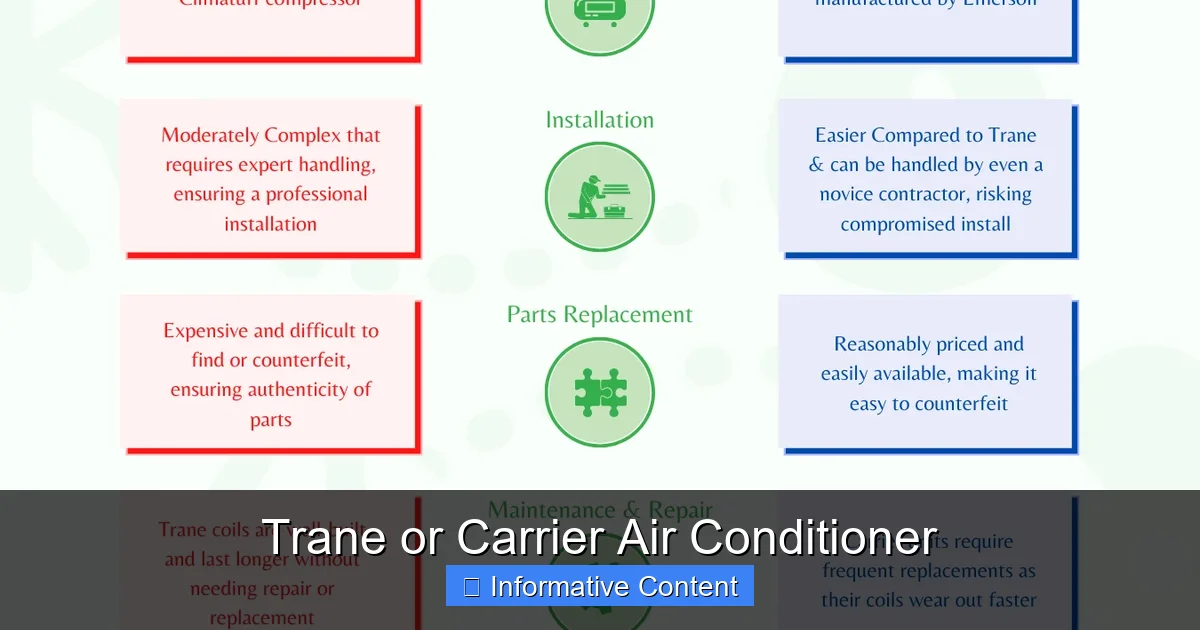
Visual guide about Trane or Carrier Air Conditioner
Image source: greenleafair.com
Trane: Built to Last
Founded in 1885 as a heating company in La Crosse, Wisconsin, Trane has built a reputation for engineering systems that endure. Originally focused on industrial and commercial heating, Trane expanded into residential cooling in the mid-20th century. What sets Trane apart is its no-nonsense approach to durability. The company often uses heavier-gauge steel in its outdoor units and emphasizes long-term performance over flashy features.
Trane’s slogan, “It’s Hard to Stop a Trane,” isn’t just marketing—it reflects a design philosophy. Their units are built to withstand harsh weather, from scorching summers to freezing winters. This makes them a popular choice in regions with extreme climates, like the Southwest or the Midwest. Homeowners who prioritize longevity and minimal breakdowns often lean toward Trane for its proven track record.
Carrier: Innovation and Efficiency
Carrier has an even longer legacy—founded in 1915 by Willis Carrier, the inventor of modern air conditioning. That’s right: Carrier literally created the first electrical air conditioning system. This heritage of innovation continues today, with Carrier leading the charge in energy-efficient and smart home integration.
Carrier is known for pushing the boundaries of HVAC technology. They were among the first to introduce variable-speed compressors, which adjust cooling output based on demand, saving energy and improving comfort. Their Infinity and Performance series include Wi-Fi-enabled thermostats, allowing you to control your system from your phone. For tech-savvy homeowners who want a system that “learns” their preferences and optimizes performance, Carrier is a natural fit.
Reputation in the Market
Both brands consistently rank high in customer satisfaction surveys. According to J.D. Power and Consumer Reports, Trane and Carrier often appear in the top tiers for reliability and performance. However, satisfaction can vary by region and installer. A poorly installed Carrier unit may underperform, just as a well-maintained Trane can last 20+ years.
One thing to note: Trane is often perceived as the “tank” of air conditioners—built to last, but maybe not the flashiest. Carrier, on the other hand, is seen as the “smart car”—efficient, connected, and packed with features. Neither is inherently better; it depends on what you value most.
Performance and Efficiency Comparison
When comparing a Trane or Carrier air conditioner, performance and efficiency are often the first things homeowners consider. After all, you want a system that cools your home effectively without sending your energy bills through the roof.
SEER Ratings and Energy Efficiency
SEER (Seasonal Energy Efficiency Ratio) measures how efficiently an air conditioner uses electricity over a typical cooling season. The higher the SEER rating, the more efficient the unit. Both Trane and Carrier offer models ranging from basic 14 SEER units to high-efficiency 22+ SEER systems.
For example, Trane’s XV20i model boasts a 22 SEER rating, while Carrier’s Infinity 20 offers up to 20.5 SEER. These top-tier models use variable-speed technology to adjust cooling output in small increments, maintaining consistent temperatures and reducing energy waste. In practical terms, a 20 SEER unit can save you 30–50% on cooling costs compared to a 10 SEER unit from the 1990s.
But here’s the catch: higher SEER ratings come with higher upfront costs. A 22 SEER Trane might cost $2,000 more than a 16 SEER model. However, in hot climates with long cooling seasons, that investment can pay off in 5–7 years through lower utility bills.
Compressor Technology
The compressor is the heart of your air conditioner—it’s what pumps refrigerant and drives the cooling process. Both brands use advanced compressor designs, but with different approaches.
Trane often uses scroll compressors in its higher-end models. These are known for their quiet operation and durability. Scroll compressors have fewer moving parts than reciprocating compressors, which means less wear and tear over time. Trane’s two-stage and variable-speed compressors allow the system to run at lower speeds most of the time, only ramping up during extreme heat.
Carrier, meanwhile, has been a pioneer in variable-speed technology. Their Greenspeed Intelligence system, found in the Infinity series, uses a communicating thermostat and inverter-driven compressor to precisely match cooling output to demand. This not only saves energy but also improves humidity control—a big plus in humid climates like Florida or the Gulf Coast.
Noise Levels
Nobody wants a noisy air conditioner disrupting their peace. Both brands prioritize quiet operation, but there are differences.
Trane’s outdoor units often feature sound-dampening technology, such as insulated compressor compartments and slow-speed fans. Their quietest models operate at around 55 decibels—about as loud as a quiet conversation.
Carrier also emphasizes low noise, with some models rated as low as 52 decibels. Their use of variable-speed fans means the unit rarely runs at full blast, reducing noise during normal operation. If you live in a quiet neighborhood or have a bedroom near the outdoor unit, this can be a deciding factor.
Real-World Performance
Let’s say you live in Phoenix, Arizona, where summer temperatures regularly hit 110°F. A Trane XV20i with a 22 SEER rating will handle the heat with ease, thanks to its robust build and efficient compressor. But a Carrier Infinity 20 with Greenspeed Intelligence might offer better humidity control and smoother temperature regulation, even in extreme conditions.
In a milder climate like Portland, Oregon, where summers are warm but not scorching, a mid-tier 16 SEER model from either brand could be more than sufficient. The key is matching the system to your climate and usage patterns.
Durability and Build Quality
When you’re spending thousands of dollars on an air conditioner, you want it to last. Durability isn’t just about how long it runs—it’s about how well it withstands weather, wear, and time.
Materials and Construction
Trane is known for using heavier materials in its outdoor units. Many models feature powder-coated steel cabinets with thicker gauge metal, which resists rust and denting. The compressor is often housed in a fully enclosed, insulated compartment to protect it from debris and extreme temperatures.
Carrier also uses high-quality materials, but with a focus on precision engineering. Their units often have sleek, modern designs with corrosion-resistant coatings. While not as “heavy-duty” as Trane, Carrier’s build quality is still excellent and designed for long-term reliability.
Weather Resistance
If you live in an area with harsh weather—hail, snow, high winds, or salt air—durability becomes even more important. Trane’s rugged design makes it a favorite in coastal regions and areas prone to storms. Their units are often tested to withstand hail up to 2 inches in diameter.
Carrier units are also weather-resistant, but may require additional protection in extreme environments. For example, homes near the ocean might benefit from a corrosion-resistant coil coating, which both brands offer as an add-on.
Longevity and Lifespan
On average, a well-maintained air conditioner lasts 15–20 years. Trane units often push toward the higher end of that range, especially in moderate climates. Carrier units are similarly durable, though some users report more frequent repairs in the 12–15 year range.
That said, lifespan depends heavily on maintenance. Changing filters regularly, cleaning coils, and scheduling annual tune-ups can extend the life of any system—regardless of brand.
Cost and Value: Trane vs. Carrier
Price is often the biggest factor in the Trane or Carrier air conditioner debate. But it’s not just about the sticker price—it’s about total cost of ownership.
Upfront Costs
Both brands fall into the premium price category. A standard 3-ton, 16 SEER unit from Trane or Carrier typically costs between $4,500 and $6,500, including installation. High-efficiency models (18+ SEER) can range from $6,000 to $9,000 or more.
Trane units are often slightly more expensive upfront, especially in the higher tiers. This reflects their heavier build and longer warranty on key components. Carrier’s pricing is competitive, with more variation based on features and technology.
Installation and Labor
Here’s a critical point: the brand matters less than the installer. A poorly installed Trane can fail prematurely, while a well-installed Carrier can outlast expectations. Always choose a licensed, experienced HVAC contractor with good reviews.
Installation costs can vary by region and complexity. Replacing an existing system is usually cheaper than a full retrofit. Ask for a detailed quote that includes labor, permits, and any necessary ductwork modifications.
Long-Term Savings
While Trane may cost more upfront, its durability can reduce repair costs over time. Carrier’s energy-efficient models can save you more on monthly bills, especially in hot climates.
Let’s do the math: A 20 SEER Carrier unit might save $150 per year on electricity compared to a 16 SEER model. Over 15 years, that’s $2,250 in savings. If the Carrier costs $1,000 more upfront, you still come out ahead.
But if you live in a cooler climate with short summers, the savings may not justify the higher cost. In that case, a mid-tier Trane or Carrier model could offer better value.
Financing and Rebates
Both brands offer financing options through dealers, and many utility companies provide rebates for high-efficiency units. For example, installing a 16+ SEER system might qualify you for a $300–$500 rebate. Check with your local energy provider and ask your installer about available incentives.
Warranty and Customer Support
A strong warranty can save you thousands in repair costs. When comparing Trane or Carrier air conditioner models, pay close attention to warranty terms.
Trane Warranty
Trane offers some of the best warranties in the industry. Most models come with a 10-year compressor warranty and a 10-year parts warranty. Some high-end models include a 12-year compressor warranty. Trane also offers a “Registered Limited Warranty” that extends coverage if you register your unit within 60 days of installation.
One standout feature: Trane’s “No Hassle” replacement policy. If the compressor fails within the warranty period, they’ll replace the entire outdoor unit—not just the compressor. This can save you $1,500–$2,000 in labor and parts.
Carrier Warranty
Carrier also offers strong warranties, typically 10 years on the compressor and 10 years on parts. Their Infinity series includes a 10-year unit replacement warranty for the compressor. Carrier also provides a “Labor Warranty” option, which covers labor costs for repairs—something Trane doesn’t offer.
However, Carrier’s warranty terms can be more complex. Some coverage requires registration and annual maintenance records. Be sure to read the fine print.
Customer Service and Support
Both brands have extensive dealer networks, so finding local support is usually easy. Trane is often praised for straightforward, no-nonsense customer service. Carrier offers more digital tools, including online troubleshooting and app-based support.
If you value quick, reliable service, Trane may have the edge. If you prefer tech-driven support and remote diagnostics, Carrier could be the better fit.
Which Brand Should You Choose?
So, Trane or Carrier air conditioner—which one wins? The truth is, there’s no universal winner. The best choice depends on your priorities, climate, and budget.
If you live in a hot, humid climate and want the most energy-efficient, smart-connected system, Carrier’s Infinity series with Greenspeed Intelligence is hard to beat. The variable-speed technology, Wi-Fi controls, and excellent humidity management make it ideal for modern homes.
If you’re in a region with extreme weather—blazing summers, freezing winters, or coastal conditions—Trane’s rugged build and long compressor warranty offer peace of mind. It’s the system you install and forget about for 20 years.
For most homeowners, the deciding factor won’t be brand loyalty, but the quality of the installer and the specific model that fits your home. A 16 SEER Trane installed by a top-rated contractor may outperform a 20 SEER Carrier installed by a rookie.
Take the time to get multiple quotes, ask about warranties, and read reviews of local dealers. And don’t forget to consider your long-term goals: Are you planning to stay in your home for 10+ years? Then investing in a high-efficiency system makes sense. If you’re moving soon, a mid-tier model may be more cost-effective.
Ultimately, both Trane and Carrier are excellent choices. With proper installation and maintenance, either brand can keep your home cool, comfortable, and energy-efficient for decades.
Frequently Asked Questions
Is Trane better than Carrier?
Neither brand is universally better—it depends on your needs. Trane excels in durability and long-term reliability, while Carrier leads in energy efficiency and smart technology. Choose based on your climate, budget, and priorities.
How long do Trane and Carrier air conditioners last?
With proper maintenance, both brands typically last 15–20 years. Trane units may last slightly longer in harsh conditions, while Carrier’s advanced features can improve comfort and efficiency over time.
Are Trane air conditioners more expensive than Carrier?
Trane units often have a higher upfront cost, especially in premium models. However, Carrier’s high-efficiency systems can also be pricey. Total cost depends on the model, SEER rating, and installation complexity.
Do Trane and Carrier offer smart thermostats?
Yes, both brands offer Wi-Fi-enabled thermostats. Carrier’s Infinity Touch thermostat integrates seamlessly with their systems, while Trane offers the Trane ComfortLink II, which supports remote control and scheduling.
Can I install a Trane or Carrier unit myself?
No. Air conditioner installation requires licensed HVAC professionals due to refrigerant handling, electrical work, and safety codes. DIY installation voids warranties and can be dangerous.
Which brand has better warranty coverage?
Trane offers longer compressor warranties and a “No Hassle” replacement policy. Carrier includes labor warranty options and strong parts coverage. Compare specific model warranties before deciding.