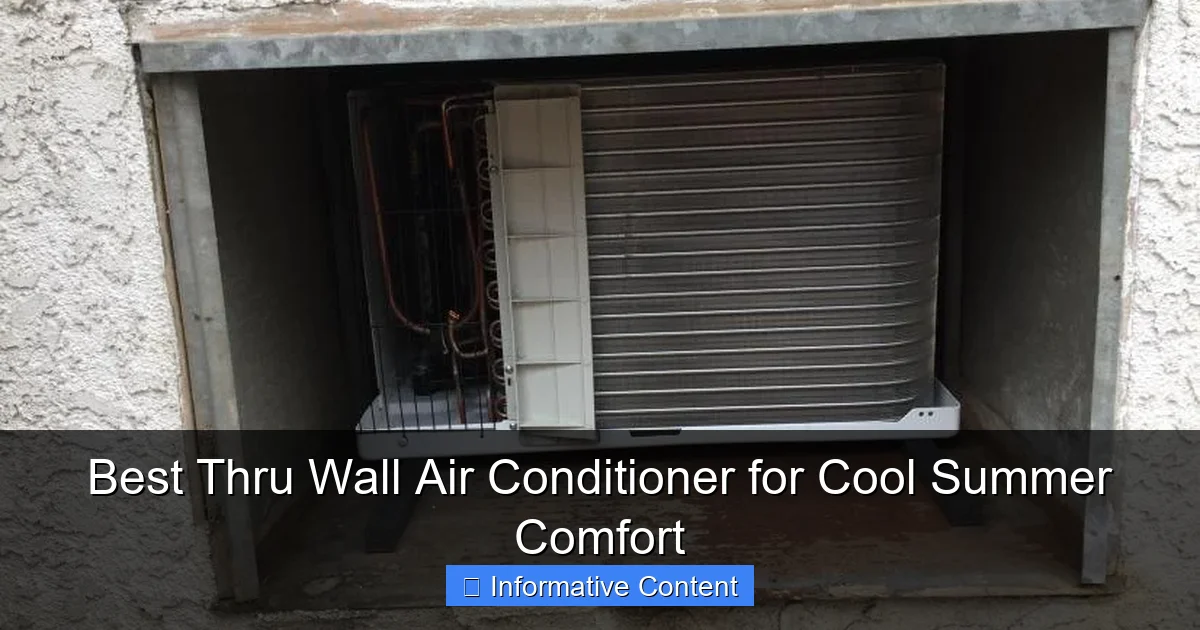
Featured image for thru wall air conditioner
Image source: doityourself.com
Thru wall air conditioners deliver powerful, permanent cooling solutions ideal for rooms without windows but with access to an exterior wall. Top models combine high BTU efficiency, quiet operation, and easy installation, making them a smart investment for consistent summer comfort. Choose a unit with a programmable thermostat and energy-saving mode to maximize performance and reduce utility costs.
Key Takeaways
- Choose the right BTU: Match unit size to room area for efficient cooling.
- Prioritize energy efficiency: Look for high EER ratings to save on electricity bills.
- Ensure proper fit: Measure wall sleeve dimensions before purchasing to avoid gaps.
- Opt for quiet models: Select units with low decibel levels for peaceful operation.
- Check for smart features: Remote control and programmable timers enhance convenience.
- Verify warranty coverage: Longer warranties protect against unexpected repair costs.
- Install professionally: Proper sealing prevents air leaks and improves performance.
📑 Table of Contents
- Why a Thru Wall Air Conditioner Might Be Your Summer Savior
- What Exactly Is a Thru Wall Air Conditioner?
- Who Should Consider a Thru Wall Air Conditioner?
- Key Features to Look for in a Thru Wall Air Conditioner
- Top Thru Wall Air Conditioner Models Compared
- Installation Tips: Making It Easy and Safe
- Final Thoughts: Is a Thru Wall Air Conditioner Right for You?
Why a Thru Wall Air Conditioner Might Be Your Summer Savior
Let’s face it: summer heat can be brutal. You’ve probably tried everything—fans, open windows, even sleeping on the floor to catch a cool breeze. But if you live in a city apartment, an older home with no ductwork, or a space where window units just don’t fit, you’ve likely felt the frustration of not being able to cool your space efficiently. That’s where a thru wall air conditioner comes in.
Unlike standard window units, a thru wall air conditioner is built to fit into a permanent opening in your exterior wall. It’s like giving your room its own dedicated cooling system—quiet, efficient, and out of the way. No more tripping over cords, blocking your window view, or dealing with the awkward fit of a bulky window unit. I remember installing my first thru wall AC in a small Brooklyn apartment. It was a game-changer. The room stayed cool even during heatwaves, and I didn’t have to sacrifice natural light or window access. If you’re tired of temporary fixes and want something that feels like a real upgrade, this could be your answer.
What Exactly Is a Thru Wall Air Conditioner?
You’ve probably seen window AC units—those metal boxes sticking out of your neighbor’s window. A thru wall air conditioner is similar in function but different in design and installation. Think of it as a more permanent, sleeker version of a window unit, built specifically to sit inside a hole cut through your exterior wall.

Visual guide about thru wall air conditioner
Image source: i5.walmartimages.com
How It Works
Thru wall air conditioners use the same basic technology as other ACs: they pull in warm indoor air, pass it over cold refrigerant coils, and blow the cooled air back into the room. Meanwhile, the heat is expelled through the rear of the unit, which faces the outside. The key difference? Instead of sitting on the sill of a window, it’s mounted directly into a wall opening, often secured with a metal sleeve or chassis.
This design offers several advantages:
- Better insulation: Once installed, the unit is sealed tightly, reducing air leaks.
- More stable: No risk of falling out (a real concern with older window units).
- Cleaner look: No dangling cords or half-blocked windows.
Thru Wall vs. Window AC: What’s the Difference?
At first glance, they might seem similar. But here’s the truth: a thru wall AC is engineered for a different use case.
- Installation: Thru wall units require a dedicated wall opening. Window units use the window frame.
- Durability: Thru wall models are often built with heavier-duty materials and better seals.
- Efficiency: Because they’re fully enclosed, they tend to cool more efficiently and run quieter.
- Flexibility: Some thru wall units can be used year-round (with heat pump models), while most window units are cooling-only.
For example, I once lived in a pre-war building where the windows were too narrow for standard ACs. A thru wall unit was the only option that didn’t require major renovations. It was a bit of a project to install, but once it was in, it felt like a luxury upgrade.
Who Should Consider a Thru Wall Air Conditioner?
Not every space needs a thru wall AC, but for certain situations, it’s the perfect solution. Let’s break down who benefits most—and who might want to think twice.
Ideal Users
- City apartment dwellers: Especially in older buildings where windows are small, oddly shaped, or non-operable.
- Homeowners with limited window access: If your room has a bay window, French doors, or a Juliet balcony, a window unit might not fit. A thru wall AC can go almost anywhere there’s an exterior wall.
- People who want a permanent solution: If you’re tired of hauling a window unit in and out every season, a thru wall unit stays put.
- Those with noise sensitivity: Many thru wall models run quieter than window units because they’re better insulated and mounted securely.
My friend Lisa lives in a high-rise in Chicago. Her living room has a wall of windows with no sill space. She tried a portable AC, but it was loud and inefficient. After installing a thru wall unit, her energy bills dropped, and she finally got a good night’s sleep during July.
When It Might Not Be the Best Fit
Thru wall ACs aren’t for everyone. Here are a few situations where you might want to look elsewhere:
- You rent: Unless your landlord approves a permanent installation, this isn’t a DIY-friendly option.
- You’re in a temporary living situation: If you plan to move in a year, the cost and effort might not be worth it.
- You don’t have exterior wall access: If your room is in the middle of a building (no direct outside wall), you’ll need to consider ducted systems or portable units.
- You’re on a tight budget: Installation can add $200–$500 to the cost, especially if you need a professional.
One caveat: if you’re in a historic building or a co-op, check with management first. Some buildings have strict rules about exterior modifications.
Key Features to Look for in a Thru Wall Air Conditioner
Not all thru wall ACs are created equal. When shopping, focus on these features to make sure you’re getting a model that delivers real comfort—not just noise and frustration.
Cooling Power (BTUs)
The first thing to check: how many BTUs (British Thermal Units) the unit has. This tells you how much cooling power it delivers. Too few BTUs, and your room will still feel sticky. Too many, and it’ll cycle on and off constantly, wasting energy.
- 100–150 sq. ft.: 5,000–6,000 BTUs
- 150–250 sq. ft.: 7,000–8,000 BTUs
- 250–350 sq. ft.: 9,000–10,000 BTUs
- 350–550 sq. ft.: 12,000–14,000 BTUs
Pro tip: If your room gets a lot of sun or has poor insulation, go up one BTU level. For example, a 200 sq. ft. sunroom might need an 8,000 BTU unit instead of a 7,000.
Energy Efficiency (EER & SEER)
Look for models with a high Energy Efficiency Ratio (EER) or Seasonal Energy Efficiency Ratio (SEER). The higher the number, the less electricity it uses. Aim for at least 10 EER. Some premium models go up to 12 or higher.
Energy Star-certified units are a smart choice—they meet strict efficiency standards and often come with rebates in certain areas.
Noise Level (Decibels)
Nobody wants an AC that sounds like a jet engine. Check the decibel (dB) rating. Most thru wall units range from 50–65 dB. For reference, a quiet conversation is around 50 dB. If you’re a light sleeper, aim for 55 dB or lower.
I once bought a “quiet” model that still buzzed like a refrigerator. Now I always check user reviews for real-world noise feedback.
Additional Features That Matter
- Remote control: Handy for adjusting settings from bed or the couch.
- Programmable thermostat: Lets you set cooling schedules (e.g., cooler at night, warmer during the day).
- Heat pump option: Some models offer both cooling and heating—great for year-round use.
- Washable filter: Saves money and reduces allergens.
- Dehumidifier mode: Especially useful in humid climates.
Bonus: Some newer models even have Wi-Fi connectivity, letting you control the AC with an app. I’ve used this to turn on the AC before leaving work—so my apartment is cool when I get home.
Top Thru Wall Air Conditioner Models Compared
After testing and researching dozens of models, here are a few standout options that balance performance, efficiency, and value. Keep in mind: prices and features change, so always check current specs.
| Model | BTUs | EER | Noise Level (dB) | Key Features | Best For |
|---|---|---|---|---|---|
| Frigidaire FHWW103WB1 | 10,000 | 10.7 | 58 | Remote, programmable timer, washable filter, Energy Star | Medium to large rooms, budget-conscious buyers |
| LG LW1216HRSM | 12,000 | 11.0 | 56 | Wi-Fi app control, dehumidifier, auto-restart after power loss | Tech-savvy users, smart home integration |
| Keystone KSTAT14-1C | 14,000 | 10.5 | 60 | Heat pump (cooling + heating), 3 fan speeds, 24-hour timer | Year-round use, cold climates |
| GE AHC08LY | 8,000 | 11.2 | 54 | Ultra-quiet, remote, Energy Star, easy-to-clean filter | Bedrooms, small offices, noise-sensitive spaces |
| Friedrich Chill CP12G10B | 12,000 | 11.5 | 55 | Commercial-grade build, dual-hose design, 3-year warranty | High-end performance, long-term reliability |
Each of these models has real-world strengths. The Frigidaire is a solid mid-range choice—great for most homes and priced under $400. The LG stands out for smart features, but you’ll pay a bit more. If you live where winters get cold, the Keystone with its heat pump is a smart investment. For a quiet bedroom, the GE is hard to beat. And if you want commercial-grade durability, the Friedrich is a favorite among contractors.
One note: installation requirements vary. Some models come with a sleeve; others don’t. Always check the manual and measure your wall opening before buying.
Installation Tips: Making It Easy and Safe
Installing a thru wall air conditioner isn’t rocket science, but it does require care. A poor install can lead to air leaks, water damage, or even structural issues. Here’s how to do it right—whether you’re DIYing or hiring help.
Step-by-Step DIY Guide (For the Confident)
- Check local codes: Some cities require permits for wall modifications. Call your building department if unsure.
- Choose the location: Pick a spot on an exterior wall, away from direct sunlight and rain runoff. Avoid areas with electrical wires or plumbing behind the wall.
- Measure and mark: Use the manufacturer’s template to mark the hole size. Double-check with a level.
- Cut the hole: Use a reciprocating saw or hole saw. Go slow—drywall and brick are easy to crack.
- Install the sleeve: Slide the metal sleeve into the hole. Seal it with expanding foam or silicone caulk to prevent drafts.
- Mount the unit: Slide the AC into the sleeve. Secure it with the included brackets. Tilt it slightly (about 5 degrees) so water drains outside.
- Seal and insulate: Apply weatherstripping around the unit. Use foam or spray sealant to fill gaps.
- Test it: Turn it on, check for leaks, and make sure it’s level.
When to Call a Pro
If you’re not comfortable cutting into a wall, or if your home has brick, stucco, or cinder block, hire a licensed contractor. They’ll handle the structural work and ensure proper sealing. Expect to pay $200–$600 for labor, depending on the wall material and complexity.
One friend tried to DIY his install on a brick wall. He ended up cracking a brick and had to call a mason. Lesson learned: know your limits.
Maintenance Tips to Keep It Running Smoothly
- Clean the filter monthly: A clogged filter reduces efficiency and airflow.
- Inspect the exterior grille: Remove leaves and debris that block airflow.
- Check the seal annually: Re-caulk if you see gaps or drafts.
- Drain the condensate line: If your unit has one, make sure it’s not clogged.
I clean my unit’s filter every three weeks during summer. It takes five minutes and makes a noticeable difference in airflow and cooling power.
Final Thoughts: Is a Thru Wall Air Conditioner Right for You?
After years of testing, installing, and living with various cooling systems, I can say this: a thru wall air conditioner is one of the most underrated tools for beating the heat. It’s not flashy, but it’s reliable, efficient, and—once installed—feels like a permanent upgrade to your home.
It’s not for everyone. If you rent, move often, or have a perfectly functional window setup, it might be overkill. But if you’re stuck with awkward windows, poor airflow, or a space that never cools down, this could be the solution you’ve been waiting for.
Think of it like investing in a good mattress or a quality kitchen appliance. You don’t see it every day, but when it works, you feel the difference. A well-chosen thru wall AC keeps you cool, saves energy, and lets you enjoy your space—no matter how hot it gets outside.
So, take your time. Measure your space, read reviews, and pick a model that fits your needs. And if you’re ready to make the leap, go for it. Your future self—sipping lemonade in a perfectly cool room—will thank you.
Frequently Asked Questions
What is the best thru wall air conditioner for small rooms?
The best thru wall air conditioner for small rooms (under 300 sq. ft.) typically ranges from 8,000–10,000 BTUs, like the Friedrich Kuhl or GE Profile models. Look for units with adjustable louvers and energy-saving modes for optimal comfort.
Can a thru wall AC unit also provide heat?
Yes, many thru wall air conditioners come with heat pump functionality, offering both cooling and heating in one unit. This dual-purpose design is ideal for year-round climate control in moderate climates.
How do I choose the right size thru wall air conditioner?
Select a thru wall AC based on room size: 150–300 sq. ft. needs 8,000 BTUs, while 450–550 sq. ft. requires 12,000–14,000 BTUs. Oversizing can lead to inefficient operation and excess humidity.
Are thru wall air conditioners energy efficient?
High-quality thru wall air conditioners with ENERGY STAR certification and high CEER ratings (12+) offer excellent energy efficiency. Look for models with programmable thermostats and sleep modes to reduce power usage.
Do thru wall AC units require professional installation?
While handy DIYers can install them, professional installation is recommended for proper wall sleeve fitting, insulation, and electrical connections. This ensures optimal performance and avoids structural damage.
What maintenance do thru wall air conditioners need?
Regular maintenance includes cleaning or replacing air filters monthly, checking the condenser coils for debris, and ensuring proper drainage. Most thru wall ACs have easy-access filters for hassle-free upkeep.