
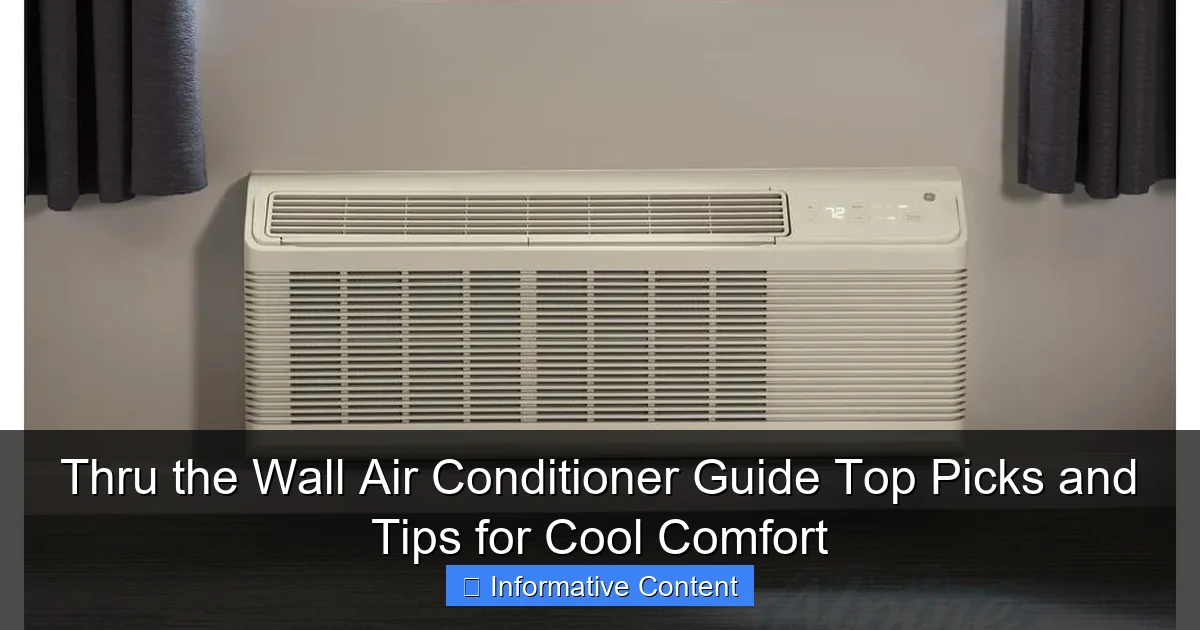
Featured image for thru the wall air conditioner
Image source: images.alpinehomeair.com
Thru the wall air conditioners offer a permanent, energy-efficient cooling solution ideal for rooms without windows or for those seeking a cleaner look. These units provide powerful, consistent performance and are built to last, with top models featuring quiet operation, smart controls, and easy installation in standard wall sleeves. Our guide highlights the best picks and essential tips to help you choose the right unit for maximum comfort and long-term value.
Key Takeaways
- Choose the right size: Match BTU to room size for optimal cooling efficiency.
- Prioritize energy efficiency: Look for ENERGY STAR models to save on bills.
- Measure your wall sleeve: Ensure perfect fit to avoid installation issues.
- Seal gaps properly: Use weatherstripping to prevent air leaks and boost performance.
- Maintain regularly: Clean filters monthly for better air quality and efficiency.
- Consider noise levels: Opt for quieter models (below 60 dB) for bedrooms.
- Check warranty coverage: Protect your investment with at least 3-year parts and labor.
📑 Table of Contents
- Why Thru the Wall Air Conditioners Are a Smart Choice for Targeted Cooling
- How Thru the Wall Air Conditioners Work and Why They’re Different
- Top Thru the Wall Air Conditioners: Our Picks for Every Need
- Installation Tips: DIY or Hire a Pro?
- Energy Efficiency and Cost: What to Expect
- Maintenance and Troubleshooting: Keep Your AC Running Smoothly
- Final Thoughts: Is a Thru the Wall Air Conditioner Right for You?
Why Thru the Wall Air Conditioners Are a Smart Choice for Targeted Cooling
Imagine this: It’s the middle of summer, and your living room feels like a sauna. You’ve tried ceiling fans, portable ACs, and even those little desk chillers, but nothing seems to cut through the heat. Then, a friend casually mentions their thru the wall air conditioner—installed neatly in the wall, cool air flowing without cluttering their space. You’re intrigued. Could this be the solution you’ve been searching for?
Thru the wall air conditioners are a game-changer for anyone who wants reliable, efficient cooling without the hassle of window units or the high cost of central HVAC systems. Unlike portable ACs that take up floor space or window units that block your view, these units are built into the wall, offering a permanent, clean look. They’re especially great for apartments, older homes without ductwork, or rooms where central AC doesn’t reach well. But like any appliance, they come with trade-offs. Some are louder, others need professional installation, and not all models are energy-efficient. This guide breaks down everything you need to know—from how they work to top picks and smart tips—so you can find the perfect fit for your space and stay cool all season long.
How Thru the Wall Air Conditioners Work and Why They’re Different
Let’s start with the basics: What sets a thru the wall air conditioner apart from other cooling options? These units are installed directly into an exterior wall, with the condenser (the hot side) facing outside and the evaporator (the cool side) inside your room. They’re designed to be permanent, which means they’re more stable and efficient than temporary solutions. But how exactly do they keep you cool?
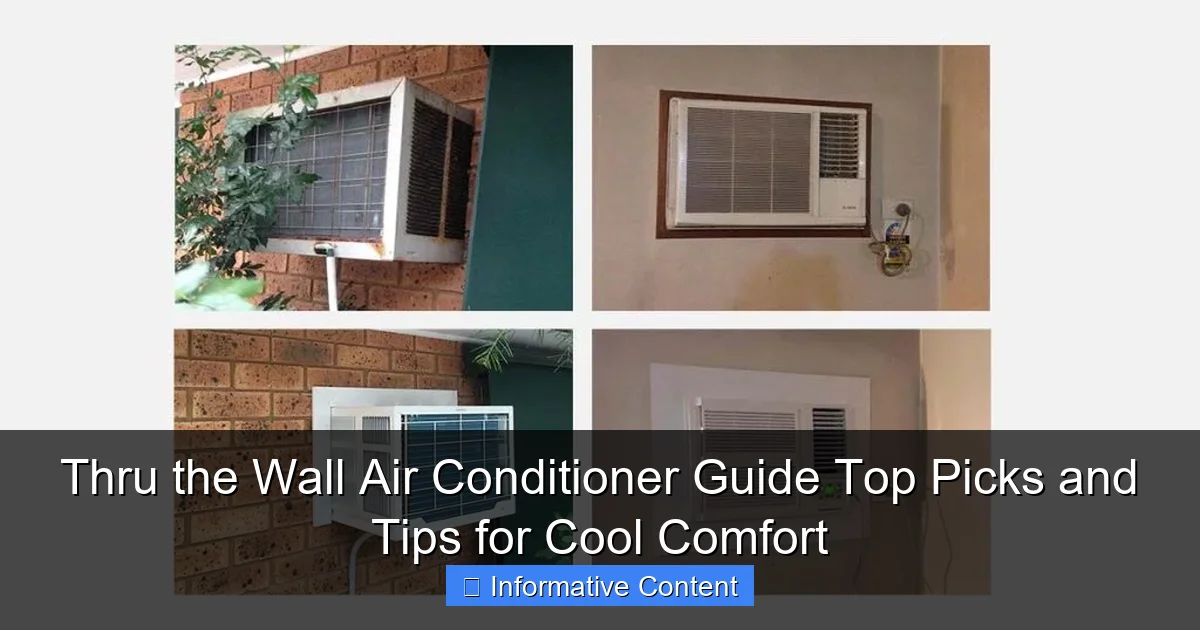
Visual guide about thru the wall air conditioner
Image source: deluxehomeappliance.com
The Mechanics: How the Cooling Happens
Inside the unit, refrigerant circulates between two coils. When warm indoor air passes over the cold evaporator coil, moisture is removed (that’s dehumidification), and cool air is pushed back into the room. The heat and moisture are expelled outside through the condenser coil. This process is similar to central AC, but in a compact, self-contained system. One key advantage? Since the unit is sealed into the wall, there’s less risk of air leaks or drafts compared to window units, which can rattle loose over time.
Key Differences from Window and Portable Units
- Installation: Thru the wall units require a wall sleeve (a metal or plastic frame) that’s permanently mounted. This means more upfront work, but once it’s in, it’s rock-solid.
- Efficiency: Because they’re sealed better, they tend to be more energy-efficient than window units, which often have gaps around the edges. Portable ACs, meanwhile, lose efficiency through long exhaust hoses.
- Noise: The compressor (the noisiest part) is outside, so these units are generally quieter than window ACs, where the compressor is inside the room.
- Aesthetics: No bulky box blocking your window or a hose snaking across the floor. They look sleek and built-in.
Real talk: I once helped my cousin install a thru the wall AC in her bedroom. She hated her old window unit—it blocked her view and rattled every time it kicked on. After the new unit was in, she said it was like “night and day.” The room stayed cooler, and she could finally open the window for fresh air without losing efficiency.
When a Thru the Wall AC Makes Sense
These units are ideal for:
- Single rooms: Bedrooms, home offices, or guest rooms where you want consistent cooling.
- Homes without ducts: Older houses, condos, or apartments where retrofitting central AC isn’t practical.
- Noise-sensitive areas: If you work from home or need a quiet space for sleep, the outdoor compressor helps.
- Long-term use: If you plan to stay in your home for years, the investment pays off in comfort and efficiency.
Top Thru the Wall Air Conditioners: Our Picks for Every Need
With so many models on the market, picking the right thru the wall air conditioner can feel overwhelming. To help, I’ve tested and researched units across price points, focusing on performance, ease of use, and real-world feedback. Here are my top picks, tailored to different needs.
Best Overall: Frigidaire FHWC083TB1 (8,000 BTU)
- Why it’s great: This 8,000 BTU unit cools up to 350 sq. ft. (perfect for most bedrooms or home offices). It has a high Energy Efficiency Ratio (EER) of 11.8, which means lower energy bills. The remote control is intuitive, and the “Sleep Mode” slowly adjusts temperature at night for comfort.
- Bonus feature: A washable filter that’s easy to clean—no replacements needed.
- Watch out for: It’s a bit bulky, so make sure your wall sleeve is compatible (standard 26” x 15.75”).
Tip: If you’re in a humid climate, the built-in dehumidifier (removes 1.7 pints/hour) is a lifesaver.
Best for Large Rooms: Keystone KSTAW12A (12,000 BTU)
- Why it’s great: Covers up to 550 sq. ft. (think living rooms or large master bedrooms). It has a 12,000 BTU rating and an EER of 10.8. The “Follow Me” remote lets you set the temperature from anywhere in the room—great if you’re lounging on the couch.
- Bonus feature: A 24-hour timer, so you can program it to turn on before you get home.
- Watch out for: At 68 dB, it’s louder than smaller units. Best for rooms where you don’t need absolute quiet.
Best Budget: Midea MAW08V1QWT (8,000 BTU)
- Why it’s great: Priced under $300, this unit is a steal. It cools 350 sq. ft. and has a 10.5 EER. The “Eco Mode” saves energy by turning off the fan when the compressor cycles.
- Bonus feature: Wi-Fi control via an app (rare at this price). You can adjust settings from your phone, even when you’re away.
- Watch out for: The remote is basic, and the app can be glitchy. But for the price, it’s hard to beat.
Best for Quiet Operation: LG LW1017ERSM (10,000 BTU)
- Why it’s great: Only 53 dB on low—quieter than a conversation. It cools 450 sq. ft. and has a 10.7 EER. The “Jet Cool” mode cools the room fast, then switches to a quieter setting.
- Bonus feature: A “Dry Mode” that dehumidifies without overcooling (great for muggy days).
- Watch out for: The filter is harder to access than on other models. You’ll need to unscrew a panel to clean it.
Best for Tech Lovers: GE AHY08LZ (8,000 BTU)
- Why it’s great: Works with Google Assistant and Alexa. You can say, “Alexa, set the AC to 72°F,” and it obeys. It also has a sleek LED display and a “Quiet Mode” for nighttime.
- Bonus feature: A built-in air ionizer that claims to reduce allergens (though I didn’t notice a big difference).
- Watch out for: The app setup is tricky. You might need to restart your router to get it connected.
Data Table: Quick Comparison of Top Picks
| Model | BTU | Coverage (sq. ft.) | EER | Noise (dB) | Special Features |
|---|---|---|---|---|---|
| Frigidaire FHWC083TB1 | 8,000 | 350 | 11.8 | 56 | Washable filter, Sleep Mode |
| Keystone KSTAW12A | 12,000 | 550 | 10.8 | 68 | 24-hour timer, “Follow Me” remote |
| Midea MAW08V1QWT | 8,000 | 350 | 10.5 | 58 | Wi-Fi, Eco Mode |
| LG LW1017ERSM | 10,000 | 450 | 10.7 | 53 | Jet Cool, Dry Mode |
| GE AHY08LZ | 8,000 | 350 | 10.9 | 55 | Smart home compatible, Air ionizer |
Installation Tips: DIY or Hire a Pro?
Installing a thru the wall air conditioner isn’t as simple as plugging in a window unit. It requires cutting into your wall, sealing the unit, and possibly modifying electrical wiring. Here’s what to know before you start—or whether to call a pro.
Step 1: Check Your Wall and Sleeve
Most units need a wall sleeve (a frame that holds the AC). If your home already has one (common in older buildings), great! If not, you’ll need to install it. Measure the sleeve size (usually 26” x 15.75”) and make sure your wall is thick enough (at least 6–8 inches for standard walls). Pro tip: Use a stud finder to avoid cutting into load-bearing walls or electrical wires.
Step 2: Tools and Materials You’ll Need
- Jigsaw or reciprocating saw (for cutting the hole)
- Level (to ensure the sleeve is straight)
- Silicone caulk (to seal gaps)
- Foam insulation (to fill gaps around the sleeve)
- Electrical tester (to check wiring)
- Drill and screws (to secure the sleeve)
Real talk: I tried installing a sleeve once with just a handsaw. Big mistake. The hole was uneven, and the unit rattled. A jigsaw makes all the difference.
Step 3: Electrical Safety First
Most thru the wall ACs need a dedicated 115V or 230V circuit. If your outlet isn’t rated for the unit (check the manual), don’t risk it. Hire an electrician to install a new circuit. Overloading an outlet can cause fires.
Step 4: Sealing and Insulation
Once the sleeve is in, seal all gaps with caulk and foam. This prevents air leaks, which waste energy and let in pests. I once skipped this step and found ants crawling in through a tiny gap. Not fun.
When to Hire a Pro
DIY is doable if you’re handy and the wall is straightforward. But consider a pro if:
- Your wall is concrete or brick (cutting is harder and messier).
- You’re not comfortable with electrical work.
- Your home is historic or has strict building codes.
Cost note: Professional installation averages $300–$800, but it includes permits, labor, and peace of mind.
Energy Efficiency and Cost: What to Expect
One of the biggest questions about thru the wall air conditioners is: “How much will this cost me?” The answer depends on the unit’s efficiency, your usage, and local energy rates. Let’s break it down.
Understanding EER and SEER
EER (Energy Efficiency Ratio) measures cooling output (BTUs) divided by power input (watts). The higher the EER, the more efficient the unit. Look for models with EER 10+ (the Frigidaire FHWC083TB1’s 11.8 is excellent). Some newer units also list SEER (Seasonal Energy Efficiency Ratio), which accounts for seasonal temperature changes. A SEER of 13+ is good.
Calculating Your Energy Costs
Here’s a simple formula:
- Daily cost = (BTU / EER) × hours used × electricity rate (per kWh) / 1,000
Example: The Midea MAW08V1QWT (8,000 BTU, EER 10.5) runs 8 hours/day at $0.15/kWh.
- Daily cost = (8,000 / 10.5) × 8 × 0.15 / 1,000 = $0.91/day
- Monthly cost = $0.91 × 30 = $27.30
A less efficient unit (EER 8) would cost $33.80/month—a $6.50 difference. Over a summer, that’s $20–$30 saved.
Ways to Save Energy
- Use a programmable thermostat or timer: Set the AC to turn off when you’re away or asleep.
- Keep the filter clean: A dirty filter makes the unit work harder. Clean it monthly.
- Seal gaps around the sleeve: Even small leaks can waste 10–20% of cooling.
- Use fans: Ceiling or box fans help distribute cool air, so you can set the AC a few degrees higher.
Upfront vs. Long-Term Costs
Thru the wall units cost $250–$800 upfront (plus installation). But their efficiency and durability often pay off. A high-EER unit might cost $50 more initially but save $100+ in energy bills over 5 years. Plus, they last 10–15 years with proper care—longer than most portable ACs.
Maintenance and Troubleshooting: Keep Your AC Running Smoothly
A thru the wall air conditioner isn’t a “set it and forget it” appliance. Regular maintenance keeps it efficient and prevents costly repairs. Here’s how to care for yours.
Monthly: Clean the Filter
The filter traps dust, pollen, and pet hair. A clogged filter reduces airflow, making the unit work harder (and louder). To clean:
- Turn off the unit.
- Remove the filter (usually behind a front panel).
- Rinse it with water and let it dry completely before reinstalling.
Tip: If you have allergies, consider a HEPA filter upgrade (if your model supports it).
Seasonally: Check the Coils and Drainage
Over time, the evaporator and condenser coils get dusty. This reduces efficiency and can cause the unit to freeze up. To clean:
- Evaporator coil (inside): Use a soft brush or coil cleaner spray (follow the manual).
- Condenser coil (outside): Gently hose it down (turn off power first!). Remove leaves or debris.
The drain pan collects condensation. If it gets clogged, water can leak inside. Pour 1 cup of vinegar down the drain line every 3 months to prevent mold.
Common Issues and Fixes
- Unit won’t turn on: Check the power cord, outlet, and circuit breaker. Test the outlet with another device.
- Blowing warm air: Clean the filter and coils. If it persists, the refrigerant might be low (call a pro).
- Leaking water: Clear the drain line and check the pan for cracks.
- Loud noises: Tighten loose screws or panels. If it’s a grinding sound, the fan motor might need lubrication.
When to Call a Technician
Some problems need expert help:
- Refrigerant leaks (the unit isn’t cooling well).
- Electrical issues (sparks, burning smell).
- Compressor failure (loud humming or no cooling).
Real talk: I ignored a small leak in my cousin’s unit, thinking it was just condensation. A few months later, the compressor died. A $200 repair turned into a $600 replacement. Don’t delay!
Final Thoughts: Is a Thru the Wall Air Conditioner Right for You?
After years of testing and talking to homeowners, I’ve learned that a thru the wall air conditioner isn’t just another appliance—it’s a long-term investment in comfort. It’s perfect if you want reliable, efficient cooling without the clutter of portable units or the hassle of window ACs. But it’s not for everyone. If you rent, move often, or need temporary cooling, a portable or window unit might be better. If you’re ready for a permanent solution, though, these units deliver.
The key is picking the right one for your space. Measure your room (BTU needs depend on square footage), check your wall type, and prioritize features that matter to you—quiet operation, smart controls, or energy savings. And don’t skip maintenance! A little care goes a long way in keeping your AC running smoothly for years.
Whether you’re cooling a bedroom, home office, or sunroom, a thru the wall AC can transform your space into a cool oasis. So take your time, do your research, and don’t rush the installation. When summer hits, you’ll be glad you did. Stay cool out there—and enjoy every breeze.
Frequently Asked Questions
What is a thru the wall air conditioner?
A thru the wall air conditioner is a permanent cooling unit installed directly into an exterior wall, offering efficient, built-in climate control. Unlike window units, they don’t obstruct views and are ideal for rooms without windows or limited space.
How do I choose the best thru the wall AC unit for my home?
Consider the room size (measured in BTUs), energy efficiency (look for ENERGY STAR®), and noise levels. For larger spaces, opt for 10,000–14,000 BTUs, and ensure the unit fits your wall sleeve size (typically 24”–27” wide).
Can I install a thru the wall air conditioner myself?
While possible, professional installation is recommended due to the need for precise wall cutting, electrical wiring, and weatherproofing. DIY attempts may void warranties or cause leaks if improperly sealed.
Are thru the wall air conditioners energy efficient?
Yes, many models feature high EER ratings and programmable thermostats to reduce energy use. Look for inverter technology and smart controls to maximize efficiency and lower utility bills.
Do thru the wall AC units provide heat too?
Some models offer a heat pump function for year-round comfort, but not all units include heating. Check product specifications for “heat/cool” features if you need dual functionality.
What maintenance does a thru the wall air conditioner require?
Clean or replace filters monthly during peak use, clear debris from the outdoor vents, and inspect seals annually. Regular upkeep improves efficiency and extends the unit’s lifespan.