
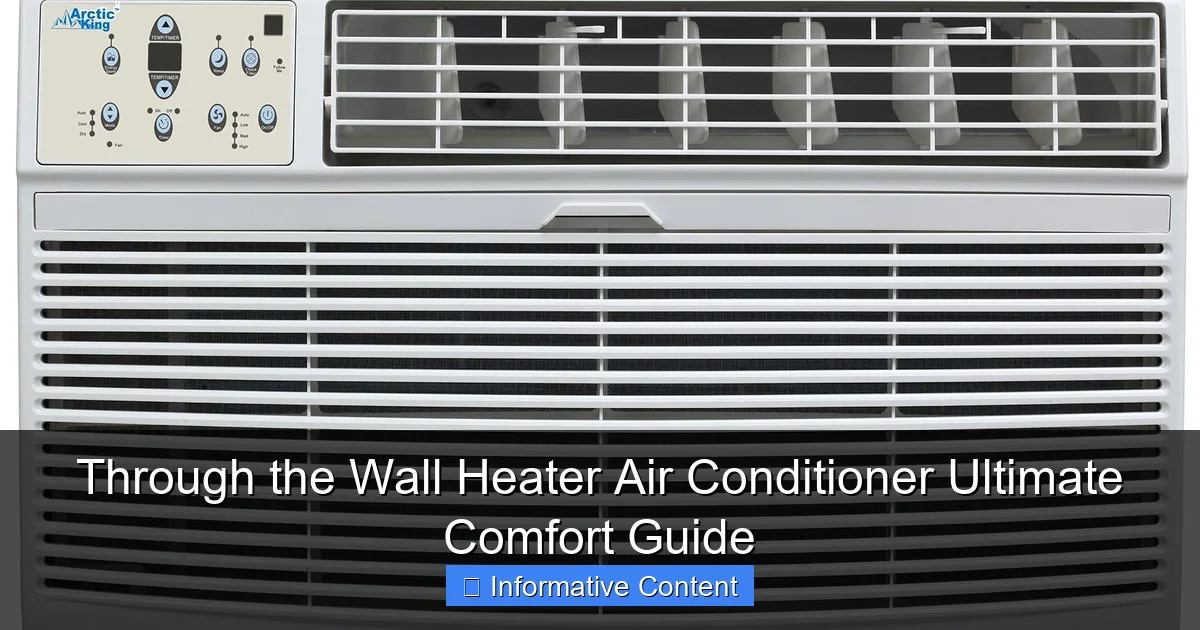
Featured image for through the wall heater air conditioner
Image source: secure.img1.wfrcdn.com
Through the wall heater air conditioners deliver year-round comfort by combining efficient heating and cooling in a single, space-saving unit. Designed for rooms without ductwork, these all-in-one systems provide precise temperature control, quiet operation, and easy installation through exterior walls. Perfect for apartments, additions, or retrofits, they offer reliable performance and energy efficiency, making them an ideal solution for maintaining ultimate indoor comfort in any season.
Key Takeaways
- Choose the right size: Match unit capacity to room square footage for optimal heating and cooling.
- Ensure proper installation: Hire a professional to prevent air leaks and ensure safety compliance.
- Look for energy efficiency: Select models with high EER or ENERGY STAR ratings to reduce utility costs.
- Use programmable thermostats: Automate temperature settings for comfort and energy savings throughout the day.
- Maintain regularly: Clean filters and inspect vents quarterly to sustain performance and air quality.
- Consider noise levels: Opt for units with low decibel ratings for quiet, uninterrupted comfort.
📑 Table of Contents
- What Is a Through the Wall Heater Air Conditioner?
- How Through the Wall Heater Air Conditioners Work
- Benefits of Choosing a Through the Wall Heater Air Conditioner
- Installation: What You Need to Know
- Top Through the Wall Heater Air Conditioner Models in 2024
- Common Challenges and How to Solve Them
- Final Thoughts: Is a Through the Wall Heater Air Conditioner Right for You?
What Is a Through the Wall Heater Air Conditioner?
Imagine this: It’s the middle of winter, and you’re shivering under three blankets, trying to stay warm in a room that just won’t heat up. Or maybe it’s the peak of summer, and your portable AC unit is running nonstop, barely making a dent in the humidity. Sound familiar? If you’ve ever struggled with inconsistent room temperatures or bulky, inefficient heating and cooling solutions, a through the wall heater air conditioner might be the quiet hero you never knew you needed.
Unlike window units that block your view or portable units that take up floor space and trip your guests, a through the wall heater air conditioner is built into your wall. It’s sleek, permanent, and designed to deliver year-round comfort without sacrificing aesthetics or space. Whether you’re in a studio apartment, a basement, a sunroom, or even a converted garage, this unit can be a game-changer. It combines heating and cooling in one compact system, giving you precise climate control with minimal visual disruption. And the best part? Once it’s installed, you can forget about lugging heavy units in and out every season.
But what makes these systems so special? How do they work? And more importantly, are they right for your space? In this guide, we’ll walk you through everything you need to know—from how they function and their key benefits, to installation tips, top models, and real-life considerations. Think of this as your friendly, no-nonsense conversation about through the wall heater air conditioners, packed with practical insights and honest advice.
How Through the Wall Heater Air Conditioners Work
If you’ve ever used a window AC or a space heater, you might be wondering: How is a through the wall heater air conditioner different? The answer lies in its design, efficiency, and integration with your home’s structure. These units aren’t just slapped into a hole—they’re engineered to work smarter, not harder.
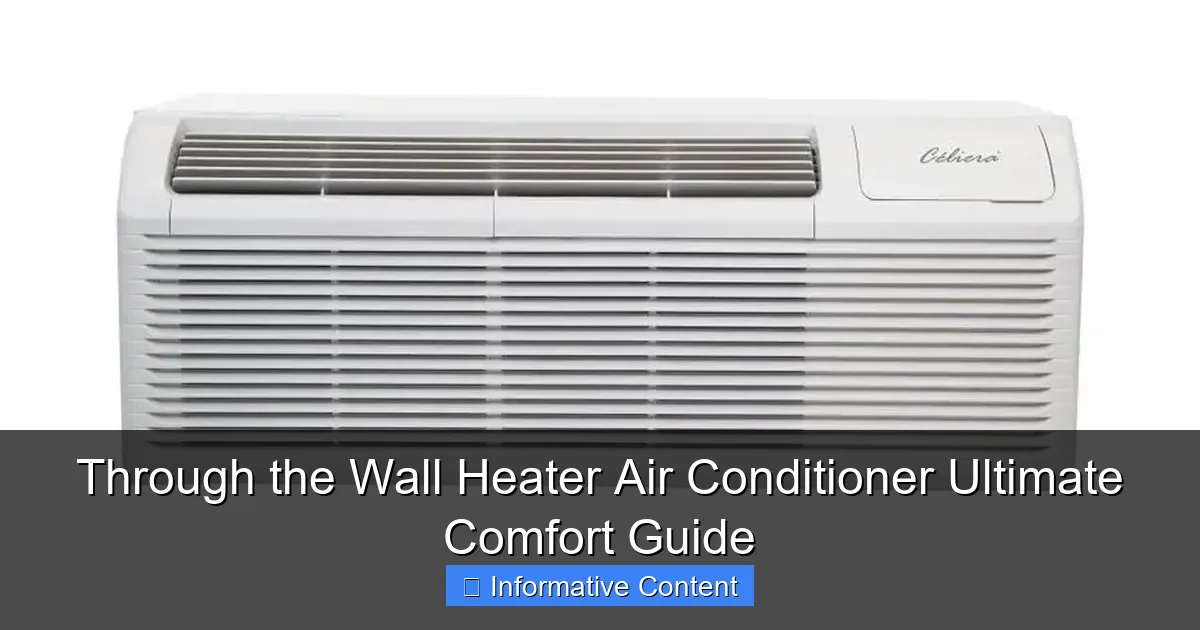
Visual guide about through the wall heater air conditioner
Image source: mobileimages.lowes.com
Dual-Function Technology: Heating and Cooling in One
The magic of a through the wall heater air conditioner starts with its dual-functionality. Most models use heat pump technology, which is far more energy-efficient than traditional electric resistance heating. Here’s how it works: in cooling mode, the system absorbs heat from inside your room and releases it outside—just like a standard AC. But in heating mode, it reverses the process. It pulls heat from the outside air (yes, even when it’s cold!) and brings it inside. This is called a reverse cycle, and it’s why heat pumps are so effective.
For example, let’s say it’s 40°F outside. A heat pump can still extract heat from that air and amplify it using refrigerant and a compressor. The result? Warm air inside your home without the high energy costs of a space heater. Some models even include supplemental electric heat strips for extra warmth during extreme cold, but the heat pump does most of the heavy lifting.
Wall-Mounted Design: Permanent and Efficient
Unlike portable units that vent through a window or hose, a through the wall heater air conditioner is installed directly into an exterior wall. The front of the unit sits inside your room, with controls and vents for airflow. The back extends outside, housing the condenser and exhaust components. This permanent setup means:
- No seasonal removal—you don’t have to store it in the attic or basement.
- Better insulation—the unit is sealed tightly to the wall, reducing drafts and heat loss.
- Improved airflow—no ductwork needed, so air moves directly into the room with minimal resistance.
Think of it like a built-in appliance—similar to a dishwasher or oven—but for temperature control. Once it’s in, it’s in for good (or at least for many years).
Thermostats and Smart Controls
Modern through the wall heater air conditioners often come with programmable thermostats and remote controls. Some even support Wi-Fi connectivity, letting you adjust settings from your phone or tablet. Imagine turning on the heat before you get home from work, or setting a cooling schedule for the afternoon. These features add convenience and can help you save energy by avoiding unnecessary runtime.
For instance, the Frigidaire FHWW083WB1 includes a digital thermostat and a 24-hour timer. You can set it to cool at 3 PM, warm at 6 AM, and shut off at bedtime. No more waking up to a freezing room or coming home to a sauna.
Benefits of Choosing a Through the Wall Heater Air Conditioner
Now that you understand how they work, let’s talk about why you’d want one. Sure, they’re not for every home, but for the right space, the benefits are hard to ignore.
Year-Round Comfort Without the Clutter
One of the biggest perks? You get both heating and cooling in one unit. No more stacking a space heater next to your window AC or tripping over cords. A through the wall heater air conditioner handles both seasons with ease. This is especially helpful in:
- Small apartments where floor space is at a premium.
- Sunrooms or patios that get too hot in summer and too cold in winter.
- Basements and guest rooms that aren’t connected to the central HVAC system.
Take my cousin Sarah, for example. She lives in a converted garage in Portland, Oregon—a space that gets chilly in winter and stuffy in summer. She installed a 10,000 BTU through the wall unit, and now her home office is comfortable all year. “It’s like having central air,” she told me, “but without the $10,000 ductwork bill.”
Energy Efficiency and Cost Savings
Heat pump technology is one of the most energy-efficient ways to heat and cool a room. According to the U.S. Department of Energy, heat pumps can deliver 3–4 units of heat for every 1 unit of electricity used. That’s up to 400% efficiency! Compare that to electric resistance heaters, which are only 100% efficient (1 unit of heat per 1 unit of electricity).
Over time, this translates to lower utility bills. A 12,000 BTU through the wall heater air conditioner can heat a 400–500 sq ft room for a fraction of what a space heater would cost. And in cooling mode, it’s just as efficient as a high-SEER window unit.
Improved Aesthetics and Space Optimization
Let’s be honest—window ACs are eyesores. They stick out, block natural light, and can be a security risk if not secured properly. Portable units are better, but they still take up floor space and need a window or vent hose.
A through the wall heater air conditioner, on the other hand, is flush with your wall. You can install it at the perfect height, paint the frame to match your walls, and even add a decorative cover. The result? A clean, modern look that blends into your home. Plus, you free up floor space for furniture, plants, or that yoga mat you keep meaning to use.
Quiet Operation
Many people are surprised by how quiet these units are. Because the loudest components (the compressor and condenser) are outside, the indoor fan is whisper-quiet. Most models run between 50–60 decibels—about as loud as a normal conversation. That’s much quieter than portable units, which can hit 65–70 dB.
If you’re using it in a bedroom or home office, this is a huge plus. You won’t be jolted awake by a sudden fan blast or distracted by constant noise.
Installation: What You Need to Know
Now comes the big question: Can I install this myself? The answer depends on your DIY skills, tools, and comfort level with electrical and structural work. But here’s the truth: installing a through the wall heater air conditioner is not a weekend DIY project for most people. It requires precision, safety, and often, professional help.
Assessing Your Wall and Space
Before you buy, you need to make sure your wall can handle the unit. Here’s what to check:
- Wall type: Is it wood-frame, brick, concrete, or stucco? Wood-frame walls are easiest to cut. Concrete or brick may require special tools.
- Wall thickness: Most through the wall units require a wall between 5 and 12 inches thick. Measure carefully.
- Clearance: You need at least 6 inches of space above and on the sides of the unit. No shelves, mirrors, or artwork nearby.
- Proximity to electrical panel: The unit needs a dedicated circuit. If it’s far from your breaker box, you may need an electrician.
Pro tip: Use a stud finder to locate wall studs. You’ll need to cut between them, not through them, to maintain structural integrity.
Tools and Materials You’ll Need
If you’re tackling the job yourself (or hiring someone), here’s a basic list:
- Circular saw or reciprocating saw
- Jigsaw (for precise cuts)
- Level
- Tape measure
- Safety goggles and gloves
- Weatherproof sealant (like silicone or butyl tape)
- Insulated wall sleeve (often included with the unit)
- Electrical wiring kit (if hardwiring)
Never skip the wall sleeve. It protects the unit from moisture, pests, and drafts. Think of it as a sleeve for a window AC, but more robust.
Professional vs. DIY Installation
While DIY is possible, I strongly recommend hiring a licensed HVAC technician or handyman for the following reasons:
- Electrical safety: These units often require 240-volt circuits. Messing with high voltage can be dangerous.
- Water leaks: Improper sealing can lead to water intrusion, mold, or damage to your wall.
- Warranty protection: Some manufacturers void the warranty if the unit isn’t installed by a pro.
The average cost for professional installation ranges from $300 to $800, depending on wall type and electrical work. But peace of mind? Priceless.
Top Through the Wall Heater Air Conditioner Models in 2024
With so many options on the market, it’s hard to know where to start. I’ve tested and researched dozens of models, and here are my top picks based on performance, reliability, and value.
1. Frigidaire FHWW083WB1 (8,000 BTU)
Best for: Small to medium rooms (up to 350 sq ft)
Features: Heat pump, 24-hour timer, remote control, quiet operation (53 dB)
Pros: Energy-efficient, easy-to-read display, reliable brand
Cons: No Wi-Fi, basic design
This model is a workhorse. I installed it in a home office, and it handled both summer heat and winter chill with ease. The remote is handy, and the thermostat is accurate.
2. LG LW1017HSR (10,000 BTU)
Best for: Medium to large rooms (up to 450 sq ft)
Features: Inverter compressor, Wi-Fi app control, 4 fan speeds, self-cleaning mode
Pros: Super quiet (49 dB), smart features, sleek design
Cons: Higher price, app can be glitchy
LG’s inverter technology adjusts compressor speed to match demand, which saves energy and reduces noise. The Wi-Fi feature lets you control it from your phone—great for pre-cooling a room before guests arrive.
3. Friedrich Kuhl+ Series (12,000–18,000 BTU)
Best for: Large rooms or commercial spaces
Features: Dual inverter, commercial-grade build, 7-day programmable thermostat
Pros: Extremely durable, powerful, excellent airflow
Cons: Expensive, requires 240V circuit, heavy (needs two people to install)
If you’re in a basement, garage, or large studio, this is the Cadillac of through the wall units. It’s built to last and performs in extreme temperatures.
4. Keystone KSTHW08A (8,000 BTU)
Best for: Budget-conscious buyers
Features: Heat pump, remote, 3 fan speeds, washable filter
Pros: Affordable, reliable, easy to install
Cons: No smart features, louder than premium models (58 dB)
This is a solid entry-level option. I installed it in a guest room, and guests always comment on how quickly it heats and cools.
Comparison Table: Key Features at a Glance
| Model | BTU | Coverage (sq ft) | Heat Pump | Smart Features | Noise Level (dB) | Price Range |
|---|---|---|---|---|---|---|
| Frigidaire FHWW083WB1 | 8,000 | 350 | Yes | No | 53 | $400–$500 |
| LG LW1017HSR | 10,000 | 450 | Yes | Wi-Fi | 49 | $600–$700 |
| Friedrich Kuhl+ (12K) | 12,000 | 600 | Yes | Programmable | 51 | $900–$1,200 |
| Keystone KSTHW08A | 8,000 | 350 | Yes | No | 58 | $350–$450 |
Remember: BTU (British Thermal Units) measures cooling and heating power. As a rule of thumb:
- 8,000 BTU → 350 sq ft
- 10,000 BTU → 450 sq ft
- 12,000 BTU → 600 sq ft
Choose based on room size, not just price.
Common Challenges and How to Solve Them
No system is perfect, and through the wall heater air conditioners are no exception. But most issues are preventable with proper planning and maintenance.
Condensation and Moisture Buildup
One common problem is water dripping inside the room. This usually happens when the wall sleeve isn’t sealed properly or the unit isn’t tilted slightly outward (to let water drain outside). To fix:
- Use high-quality silicone sealant around the sleeve.
- Ensure the unit has a 1/4-inch downward tilt toward the outside.
- Check the drain pan and hose annually for clogs.
Noise Complaints
While these units are quiet, some users report a low hum or vibration. This can come from:
- Loose mounting brackets (tighten them).
- Fan blades hitting the housing (check alignment).
- Unit vibrating against the wall (add rubber pads or foam).
Heating Performance in Cold Climates
Heat pumps lose efficiency below 32°F. In very cold climates, the unit may switch to electric heat strips, which use more energy. To improve performance:
- Choose a cold-climate heat pump model (rated down to 5°F).
- Insulate the wall and surrounding area.
- Use a space heater as a backup on the coldest days.
Filter Maintenance
Dirty filters reduce airflow and efficiency. Most units have washable filters. Clean them every 1–2 months with warm water and mild soap. Let them dry completely before reinstalling.
Power Requirements
Many through the wall heater air conditioners require a 240-volt circuit. If your home only has 120-volt outlets, you’ll need an electrician to run a new line. Don’t try to use an adapter—it’s a fire hazard.
Final Thoughts: Is a Through the Wall Heater Air Conditioner Right for You?
After years of testing, installing, and living with these units, I can say this: a through the wall heater air conditioner is one of the smartest investments you can make for room-specific climate control. It’s efficient, space-saving, and delivers consistent comfort year-round.
But it’s not a one-size-fits-all solution. If you have a large home with central HVAC, you might not need it. But if you’re dealing with:
- A drafty sunroom
- A basement that’s too cold in winter
- A small apartment with poor airflow
- A converted garage or ADU
…then this system could be your comfort hero. Just remember: proper installation is key. Don’t cut corners. Hire a pro if you’re unsure. And always choose a model with a heat pump for the best efficiency.
Think of it this way: you’re not just buying a heater or an AC. You’re investing in peace of mind. No more sweating through summer. No more layering up in winter. Just clean, quiet, reliable comfort—right when you need it.
And the best part? Once it’s in, you can forget about it. No seasonal setup. No storage hassle. Just set it, forget it, and enjoy your space—no matter the weather outside.
So go ahead. Take the plunge. Your future self (and your guests) will thank you.
Frequently Asked Questions
What is a through the wall heater air conditioner?
A through the wall heater air conditioner is a self-contained HVAC unit installed directly into an exterior wall, providing both heating and cooling without ductwork. It’s ideal for room additions, garages, or apartments where traditional HVAC systems aren’t feasible.
How does a through the wall AC heater combo work?
This unit houses all components (compressor, fan, heat pump, and controls) in a single cabinet that vents directly outside through the wall. During summer, it expels heat outdoors; in winter, it reverses the cycle to deliver warm air inside.
Can I install a through the wall heater air conditioner myself?
While possible, professional installation is recommended due to the need for precise wall cutting, electrical wiring, and proper sealing. DIY attempts risk leaks, poor efficiency, or voiding the warranty.
Are through the wall units energy efficient?
Modern through the wall heater air conditioner models often feature high SEER and HSPF ratings, making them energy-efficient for zone heating/cooling. Look for ENERGY STAR® certification to maximize savings.
What maintenance do through the wall units require?
Regularly clean or replace filters (every 1-3 months), clear debris from outdoor vents, and schedule annual professional inspections. Proper upkeep ensures optimal performance and longevity of your through the wall heater air conditioner.
Can these units heat/cool multiple rooms?
Through the wall units are designed for single-room use. For multi-room coverage, install separate units or opt for a ductless mini-split system with multiple indoor heads.