
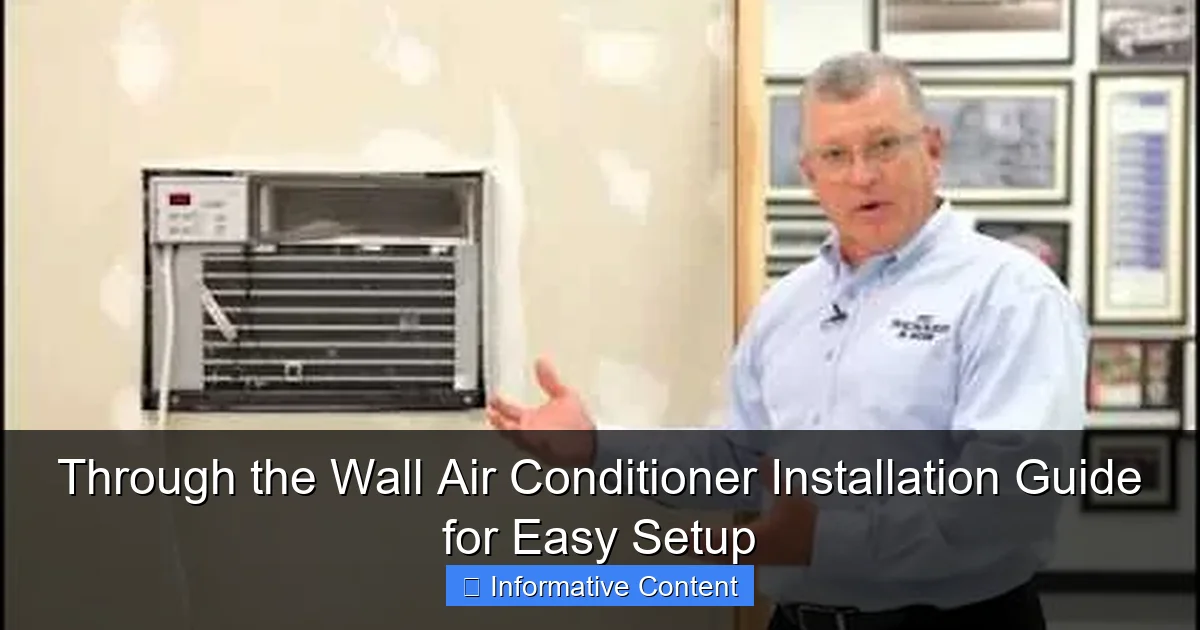
Featured image for through the wall air conditioner installation
Image source: i.ytimg.com
Installing a through the wall air conditioner is a straightforward DIY project that ensures efficient, permanent cooling for your space. With the right tools, a properly sized wall sleeve, and attention to weatherproofing, you can complete the setup in just a few hours. Always follow manufacturer instructions and prioritize electrical safety to avoid hazards and maximize performance.
Key Takeaways
- Measure carefully: Ensure precise wall opening dimensions for a snug fit.
- Seal gaps properly: Use foam tape to prevent air leaks and improve efficiency.
- Secure the unit: Anchor the AC firmly to avoid vibrations and noise.
- Check electrical requirements: Match voltage and amperage to avoid hazards.
- Insulate the sleeve: Add insulation for better temperature control and energy savings.
- Follow manufacturer instructions: Adhere to guidelines for optimal performance and warranty.
📑 Table of Contents
- Why Through the Wall Air Conditioners Are a Game-Changer
- Choosing the Right Through the Wall Air Conditioner
- Pre-Installation: Tools, Permits, and Prep Work
- Step-by-Step Installation Process
- Common Installation Mistakes (And How to Avoid Them)
- Data Table: Through the Wall AC Installation Checklist
- Final Thoughts: Is a Through the Wall AC Right for You?
Why Through the Wall Air Conditioners Are a Game-Changer
Let’s be honest—summer heat can turn your home into a sauna if you’re not prepared. Central AC is great, but it’s not always an option. Maybe you rent, live in a historic building, or just don’t want to deal with ductwork. That’s where through the wall air conditioner installation comes in. These units are like the Swiss Army knife of cooling: compact, efficient, and perfect for rooms without windows (or ones with windows you’d rather keep intact). I remember installing my first through-the-wall unit in a tiny home office. It felt like a DIY rite of passage—equal parts excitement and “Wait, did I just break my wall?” But with the right prep, it’s simpler than you’d think.
Through-the-wall ACs aren’t just for renters. They’re ideal for adding targeted cooling to sunrooms, basements, or even garages. Unlike window units, they sit flush with your wall, freeing up window space and reducing noise. Plus, many models come with energy-saving features like programmable thermostats and inverter tech. But here’s the catch: installation matters. A sloppy job can lead to leaks, drafts, or even structural issues. This guide walks you through the process step by step, from choosing the right unit to sealing the deal (literally).
Choosing the Right Through the Wall Air Conditioner
Size and BTU: The Goldilocks Principle
First things first: size matters. An undersized unit will run nonstop, while an oversized one will cool the room too fast, leaving you clammy and wasting energy. The key is BTUs (British Thermal Units). Here’s a quick rule of thumb:
- 100–150 sq. ft. room: 5,000–6,000 BTUs
- 250–300 sq. ft. room: 7,000–8,000 BTUs
- 400–450 sq. ft. room: 10,000–12,000 BTUs
But don’t stop there. Sun exposure, ceiling height, and insulation matter too. My friend Sarah bought an 8,000-BTU unit for her 300 sq. ft. living room, only to realize her west-facing windows turned it into a solar oven by 3 PM. She ended up upgrading to 10,000 BTUs and adding reflective window film. Pro tip: Use a cooling calculator for precision.
Wall vs. Window Units: What’s the Difference?
At first glance, through-the-wall ACs look like window units that got a promotion. But there are critical differences:
- Drainage: Wall units often have internal drain pans, while window units rely on gravity. This makes wall units better for humid climates.
- Ventilation: Wall units usually vent 100% of hot air outside, while window units can recirculate some indoor air.
- Installation: Wall units require a dedicated sleeve (more on this later), while window units use a mounting bracket.
For example, my neighbor tried to install a window unit in a brick wall using a “universal” bracket. Spoiler: It didn’t end well. The unit wobbled like a Jenga tower and leaked every time it rained. Wall-specific units avoid this with a snug sleeve and weatherproof seals.
Energy Efficiency and Smart Features
Not all wall ACs are created equal. Look for:
- Energy Star certification: Saves ~15% on energy bills vs. non-certified models.
- Inverter technology: Adjusts compressor speed to match cooling needs (quieter and more efficient).
- Smart controls: Wi-Fi thermostats let you schedule cooling via an app. My unit turns on 30 minutes before I get home from work—no more walking into a sweatbox.
One caveat: Smart features can add $100+ to the price. If you’re on a budget, prioritize BTUs and efficiency over apps.
Pre-Installation: Tools, Permits, and Prep Work
Gather Your Tools (No, a Hammer Won’t Cut It)
Before you start, assemble these essentials:
- Measuring tape (measure the wall opening and unit sleeve).
- Level (a crooked install = a leaky AC).
- Circular saw or reciprocating saw (for cutting through drywall/wood).
- Jigsaw (for precise cuts in siding or brick).
- Drill with masonry bits (if working with brick/concrete).
- Utility knife (for trimming insulation).
- Caulk gun and exterior-grade sealant (silicone or butyl rubber).
- Stud finder (to avoid cutting through load-bearing studs).
Pro tip: Borrow or rent a rotary hammer drill if you’re dealing with concrete block. It’s a back-saver.
Check Local Codes and Permits
Many areas require permits for wall modifications, especially in historic districts or multi-unit buildings. I learned this the hard way when I installed a unit in my condo without checking HOA rules—$200 fine and a sternly worded email. Call your local building department to ask:
- Is a permit needed for wall penetrations?
- Are there restrictions on exterior modifications?
- Do I need a licensed electrician for wiring?
For example, in California, you’ll need a permit if the opening exceeds 12 inches in any dimension. In NYC, you might need landlord approval even for renters.
Prep the Wall and Sleeve
Most through-the-wall ACs come with a metal sleeve that fits into the wall opening. Here’s how to prep:
- Measure twice, cut once: The sleeve should fit snugly. Standard sizes are 26″ x 15.5″ (for 8,000–12,000 BTU units).
- Locate studs and wires: Use a stud finder to mark studs and avoid cutting into electrical conduits.
- Cut the opening: Start with a small pilot hole, then use a saw to cut the full opening. For brick, use a masonry bit and chisel.
- Test-fit the sleeve: Slide it in. It should be flush with both sides of the wall.
Example: I once installed a sleeve in a plaster wall. The opening was perfect—until I realized the sleeve’s flange was 1/4″ too wide. A few minutes with a utility knife fixed it, but it taught me to always check flange dimensions.
Step-by-Step Installation Process
Step 1: Secure the Sleeve
This is the backbone of your install. Here’s how:
- Apply sealant: Run a bead of exterior-grade caulk around the sleeve’s exterior flange.
- Insert the sleeve: Tilt it slightly (1–2 degrees) so the exterior side is lower. This lets condensation drain outside.
- Anchor it: Use screws or brackets to secure the sleeve to wall studs. For masonry, use masonry anchors.
Pro tip: Use expanding foam insulation (not spray foam) to fill gaps around the sleeve. It’s easier to trim and won’t damage the unit.
Step 2: Install the Unit
Now for the main event:
- Remove packaging: Take off the unit’s front panel and any shipping brackets.
- Slide it in: Carefully push the unit into the sleeve. It should click into place.
- Secure the unit: Use the included screws to attach the unit to the sleeve.
- Connect the drain: If your unit has a drain hose, route it outside or to a floor drain.
Warning: Don’t force it. My first attempt ended with a scratched sleeve and a bruised ego. If it doesn’t slide in easily, check for obstructions.
Step 3: Seal and Insulate
Sealing is what separates a pro install from a DIY disaster:
- Interior gaps: Fill with foam backer rod and caulk. Trim excess with a knife.
- Exterior gaps: Use exterior-grade sealant. For brick, match the mortar color.
- Insulate: Add rigid foam or fiberglass batts around the sleeve to prevent drafts.
Example: My friend Tom skipped sealing the exterior. A week later, rain poured into his living room. A $2 tube of silicone saved him from a $500 repair.
Step 4: Electrical Setup
Most wall ACs need a 240V circuit. If you’re replacing an old unit:
- Verify voltage: Use a multimeter to check the outlet.
- Upgrade if needed: Hire an electrician to install a new 240V outlet. Never use an adapter!
For new installs: Run a dedicated circuit from your breaker panel. This prevents tripped breakers and ensures safe operation.
Common Installation Mistakes (And How to Avoid Them)
Ignoring the Slope
Remember the 1–2 degree tilt? Skipping this leads to condensation buildup and water damage. I once visited a friend whose unit leaked every time it rained. The fix? A $5 level and 10 minutes of work.
Overlooking Insulation
Without proper insulation, you’ll get:
- Drafts: Cold air escapes in winter; hot air enters in summer.
- Condensation: Can rot wood framing or promote mold.
Solution: Use rigid foam insulation (R-value 5–6) around the sleeve. For extreme climates, add a vapor barrier.
DIY Electrical Work
Wiring a 240V circuit isn’t a “YouTube tutorial” job. Mistakes can cause:
- Electrical fires
- Voided warranties
- Code violations
Rule of thumb: If you’re not 100% confident, hire a licensed electrician. It’s cheaper than a hospital bill.
Neglecting Maintenance
Even the best install fails without care. Key tasks:
- Clean filters monthly (or more if you have pets).
- Check drain lines annually to prevent clogs.
- Inspect seals before each cooling season.
My unit’s performance dropped 20% after I skipped filter cleaning for six months. Lesson learned.
Data Table: Through the Wall AC Installation Checklist
| Task | Tools Needed | Estimated Time | Difficulty |
|---|---|---|---|
| Measure wall opening | Measuring tape, level | 15 minutes | Easy |
| Cut wall opening | Circular saw, jigsaw, drill | 30–60 minutes | Medium |
| Install sleeve | Caulk gun, screws, level | 45 minutes | Medium |
| Mount AC unit | Screwdriver, level | 30 minutes | Easy |
| Seal and insulate | Caulk, foam, utility knife | 60 minutes | Hard |
| Electrical setup | Multimeter, electrician (if needed) | 1–3 hours | Hard |
Final Thoughts: Is a Through the Wall AC Right for You?
After installing three of these units (and learning from my mistakes), here’s my take: through the wall air conditioner installation is absolutely worth it if you need permanent, efficient cooling. But it’s not a “set it and forget it” job. The upfront effort pays off in lower energy bills, less noise, and a cleaner look.
Ask yourself: Are you comfortable cutting into your wall? If the answer is “not really,” hire a pro. The average cost is $300–$500, but it includes permits, labor, and a warranty. If you’re handy, DIY can save you money—but don’t cut corners on sealing or electrical work.
And remember: A well-installed wall AC can last 10+ years. Mine’s on year eight and still runs like new (knock on wood). So grab your tools, measure twice, and enjoy that sweet, sweet cool air. Just don’t forget to invite me over when it’s done. I’ll bring the lemonade.
Frequently Asked Questions
What is the best way to install a through the wall air conditioner?
The best way to install a through the wall air conditioner is to follow the manufacturer’s instructions carefully, ensuring proper wall sleeve placement and sealing gaps with insulation or caulk. Hiring a professional is recommended for electrical and structural safety.
Can I install a through the wall air conditioner in an existing wall?
Yes, you can install a through the wall air conditioner in an existing wall, but you’ll need to cut an opening for the sleeve and reinforce the area if necessary. Ensure the wall isn’t load-bearing and has no electrical wiring or plumbing.
Do I need a professional for through the wall air conditioner installation?
While DIY installation is possible, hiring a professional ensures proper electrical connections, secure mounting, and compliance with local building codes. This is especially important for hardwired units.
What tools are required for through the wall air conditioner installation?
Common tools include a stud finder, level, drill, saw, measuring tape, caulk gun, and screwdrivers. You may also need a hammer, pry bar, and insulation foam for sealing gaps.
How do I ensure proper drainage for my through the wall air conditioner?
Ensure the unit is slightly tilted backward (about 1/4 inch) to allow condensate to drain outside. Check that the drain pan and holes are clear of debris to prevent leaks.
Is a through the wall air conditioner energy efficient?
Through the wall air conditioners are generally more energy-efficient than window units, especially if properly sealed and installed. Look for models with a high SEER rating for better efficiency.