
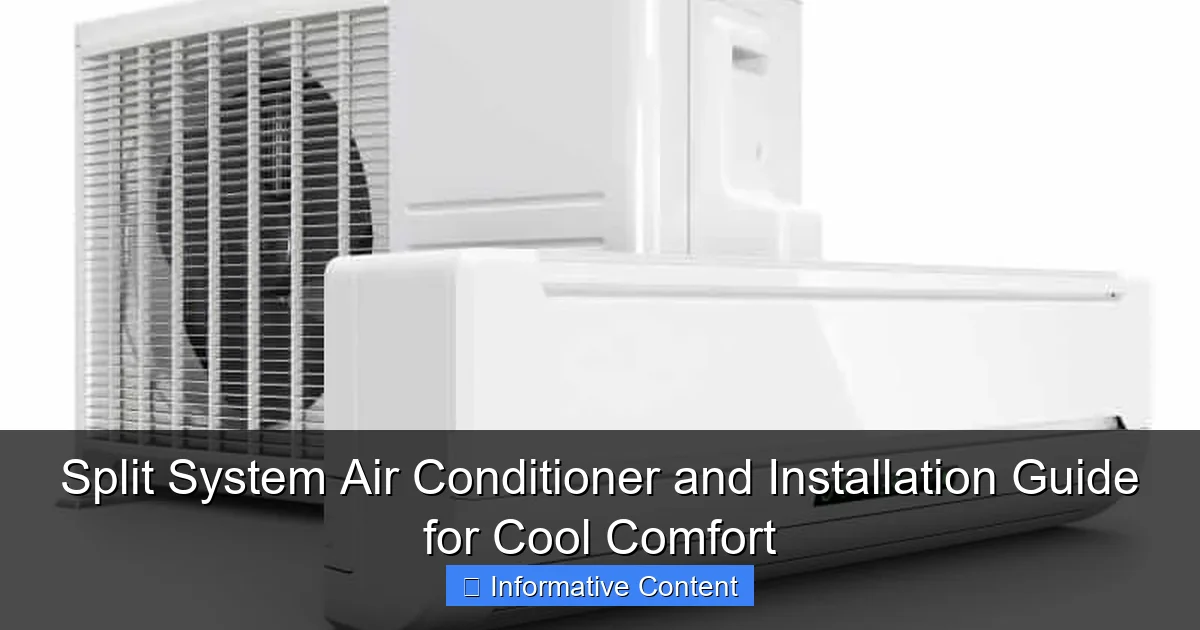
Featured image for split system air conditioner and installation
Image source: southeastelectrical.com.au
Split system air conditioners offer efficient, quiet cooling by separating the compressor and condenser outdoors from the air-handling unit indoors. Proper installation—positioning the indoor unit high on a wall, ensuring correct refrigerant line routing, and maintaining optimal outdoor clearance—is critical for peak performance and energy savings. This guide walks you through selecting the right model and executing a seamless, professional-grade installation.
Key Takeaways
- Choose the right size: Match AC capacity to room size for optimal efficiency.
- Prioritize professional installation: Ensures safety, performance, and warranty compliance.
- Seal refrigerant lines properly: Prevents leaks and maintains cooling efficiency.
- Optimize indoor unit placement: Install high on walls for even air distribution.
- Maintain clear outdoor unit space: Keep 2+ feet clearance for airflow and efficiency.
- Schedule annual maintenance: Clean filters and coils to extend system lifespan.
📑 Table of Contents
- What Is a Split System Air Conditioner?
- Types of Split System Air Conditioners: Finding Your Perfect Fit
- Key Features to Look for in a Split System Air Conditioner
- Split System Air Conditioner Installation: What to Expect
- Maintenance and Troubleshooting: Keep Your Split System Running Smoothly
- Data Table: Split System Air Conditioner Comparison (2024 Models)
- Final Thoughts: Cool, Quiet, and Efficient Comfort
What Is a Split System Air Conditioner?
Imagine this: It’s the middle of summer. The sun’s blazing, the humidity’s thick, and the inside of your home feels more like a sauna than a sanctuary. You’ve tried fans, ice packs, and even sleeping on the tile floor, but nothing’s cutting it. Then, someone mentions a split system air conditioner. You’re intrigued—but what exactly is it, and how does it work?
A split system air conditioner is one of the most popular and efficient ways to cool (and sometimes heat) your home. Unlike bulky window units or central HVAC systems that require ductwork, a split system separates the noisy parts from the cooling parts. It has two main components: an outdoor unit (the compressor and condenser) and an indoor unit (the air handler and evaporator). These two are connected by refrigerant lines, power cables, and a condensate drain—hence the name “split.”
How It Works: The Cooling Magic
Think of your split system like a heat-moving team. The indoor unit absorbs warm air from your room, cools it down using refrigerant, and sends the chilled air back inside. Meanwhile, the outdoor unit releases the heat it pulled from your home into the outside air. It’s like having a tiny heat vacuum—quiet, efficient, and surprisingly effective.
One of the best things about a split system? You can install multiple indoor units connected to a single outdoor unit. This is called a multi-split system, and it’s perfect for cooling different rooms without running ducts through your walls. Plus, most modern units come with smart features like Wi-Fi control, timers, and even air purification.
Why Choose a Split System?
If you’ve ever lived with a rattling window AC, you know the frustration: loud, inefficient, and barely cools one room. A split system solves all that. It’s quiet (the noisy compressor is outside), energy-efficient (many models have high SEER ratings), and visually discreet (indoor units are sleek and wall-mounted).
And here’s a personal favorite: you don’t need to block a window. That means more natural light, better airflow, and no awkward furniture rearranging to accommodate a bulky unit. Whether you’re cooling a bedroom, living room, or a whole house, a split system offers flexible, targeted comfort.
Types of Split System Air Conditioners: Finding Your Perfect Fit
Not all split systems are created equal. Depending on your space, budget, and needs, one type might be a better match than another. Let’s break down the main types so you can pick the right one without feeling overwhelmed.
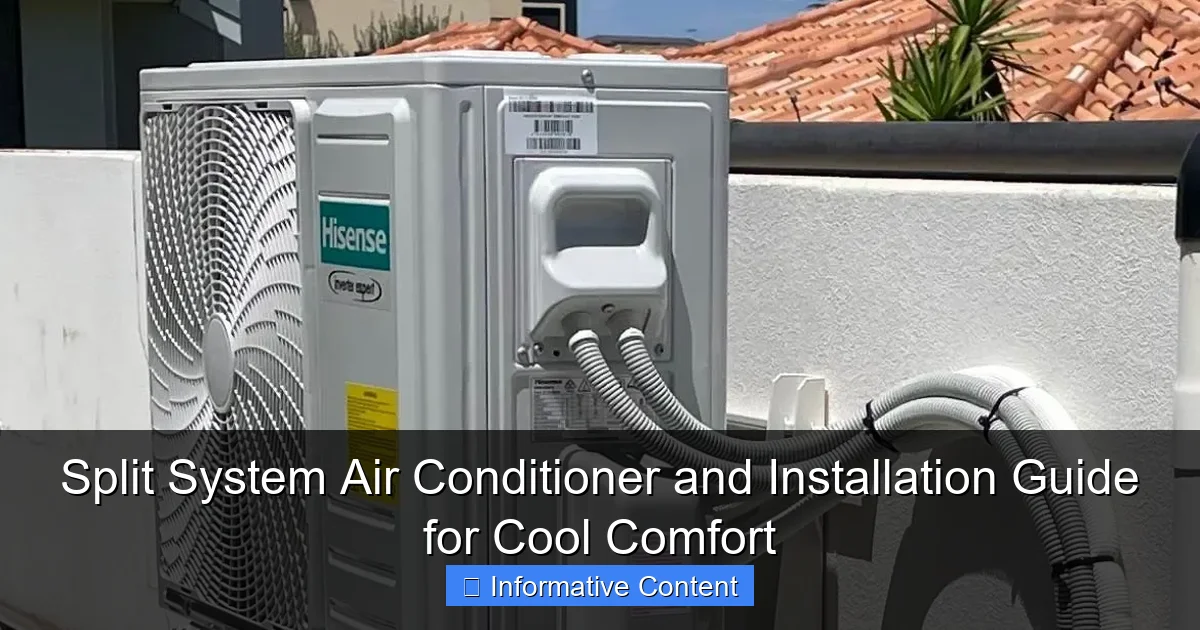
Visual guide about split system air conditioner and installation
Image source: lirp.cdn-website.com
1. Wall-Mounted Split Systems (Most Common)
These are the classic split systems you see in homes, offices, and hotels. The indoor unit hangs high on a wall, out of the way but still effective. They’re great for single rooms or small open-plan areas.
- Pros: Affordable, easy to install, energy-efficient, quiet.
- Cons: Limited coverage (usually 100–400 sq ft per unit), not ideal for very large or oddly shaped rooms.
Real-life example: I installed a 12,000 BTU wall-mounted unit in my 150 sq ft home office. It cools the room in under 10 minutes and runs so quietly I forget it’s on. Perfect for focused work days.
2. Ceiling Cassette Units (For Larger Spaces)
These units are recessed into the ceiling, with only the faceplate visible. They’re ideal for larger rooms, offices, or commercial spaces where aesthetics matter.
- Pros: Even airflow, modern look, great for high ceilings.
- Cons: More expensive, requires professional ceiling access for installation.
Tip: If you’re renovating or have drop ceilings, ceiling cassettes are worth the extra cost. They distribute air in four directions, eliminating hot spots.
3. Floor-Mounted or Low-Wall Units
These are mounted near the floor, often under a window or in a hallway. They’re perfect for rooms with limited wall space or for people who prefer a more traditional look.
- Pros: Easy access for cleaning, good for low-ceiling rooms.
- Cons: Can be obstructed by furniture, less efficient airflow than wall units.
4. Ducted Split Systems (Whole-House Cooling)
Think of this as a hybrid between a split system and central AC. The indoor unit is hidden in your attic or crawl space, and cool air is delivered through ducts to multiple rooms.
- Pros: Whole-house comfort, quiet operation, hidden indoor unit.
- Cons: Expensive, requires ductwork, complex installation.
When to consider: If you’re building a new home or doing a major renovation, a ducted split system can offer central comfort without the bulk of a traditional HVAC.
5. Multi-Split Systems (Multiple Rooms, One Compressor)
Love the idea of cooling your bedroom, living room, and kitchen—but don’t want three outdoor units? A multi-split system connects up to 5 indoor units to one outdoor compressor.
- Pros: Saves space, reduces outdoor noise, energy-efficient.
- Cons: Higher upfront cost, all units share the same compressor (so if it breaks, all rooms lose cooling).
Pro tip: Use zoning. Set different temperatures for each room, so you’re not cooling an empty guest bedroom all day.
Key Features to Look for in a Split System Air Conditioner
You’ve decided a split system is the way to go. But now comes the tricky part: choosing the right model. With so many brands, features, and specs, it’s easy to get lost. Here’s what to focus on—beyond just the price tag.
1. Cooling Capacity (BTU Rating)
This is the big one. BTU stands for British Thermal Unit, and it measures how much heat an AC can remove per hour. Too little BTU? Your room stays warm. Too much? You’ll cool the room quickly but waste energy and create humidity.
Here’s a quick guide:
- 100–250 sq ft: 6,000–8,000 BTU
- 250–400 sq ft: 9,000–12,000 BTU
- 400–600 sq ft: 14,000–18,000 BTU
- 600–800 sq ft: 21,000–24,000 BTU
Real talk: I once bought a 10,000 BTU unit for a 350 sq ft room. It cooled fast, but the room felt clammy because it cycled on and off too quickly. I swapped to a 12,000 BTU with a variable-speed compressor—problem solved.
2. Energy Efficiency (SEER Rating)
SEER (Seasonal Energy Efficiency Ratio) tells you how efficiently the unit uses electricity. The higher the SEER, the less you’ll pay on your energy bill. Look for at least SEER 16 or higher for good efficiency. Premium models go up to SEER 25+.
Example: A SEER 16 unit uses about 25% less energy than a SEER 12 model. Over 10 years, that can save you hundreds.
3. Inverter Technology (Variable-Speed Compressor)
Older ACs turn on and off to maintain temperature. Inverter models run continuously at variable speeds, adjusting output to match demand. This means:
- Less noise
- More consistent temperatures
- Lower energy use
Why it matters: My first non-inverter unit sounded like a jet engine every time it kicked on. My inverter model? Barely a whisper.
4. Air Quality Features
Modern split systems do more than cool. Look for:
- HEPA or multi-stage filters: Trap dust, pollen, and allergens
- Dehumidification mode: Reduces sticky air in humid climates
- Plasma ionizers or UV lights: Kill bacteria and mold (great for allergy sufferers)
Tip: If you live in a humid area like Florida or the Gulf Coast, a unit with strong dehumidifying power is a must.
5. Smart Controls and Connectivity
Want to cool your bedroom before you get home? Or adjust the temperature from your couch? Many split systems now come with:
- Wi-Fi control via smartphone app
- Voice control (Alexa, Google Assistant)
- Scheduling and energy usage tracking
Bonus: Some apps show real-time energy use. I use mine to see if I left the AC on during the day—saving me from surprise bills.
6. Noise Levels (Decibel Rating)
Check the indoor and outdoor noise levels. For bedrooms, aim for under 30 dB (indoor) and under 55 dB (outdoor). That’s quieter than a whisper.
Split System Air Conditioner Installation: What to Expect
You’ve picked your unit. Now comes the installation. This is where DIY dreams often meet reality. While some handy homeowners can handle basic setups, professional installation is strongly recommended—especially for refrigerant lines, electrical work, and wall mounting.
Why You Should Hire a Pro (Most of the Time)
Here’s the truth: installing a split system isn’t just plugging in a window unit. It involves:
- Mounting heavy indoor and outdoor units
- Drilling a 3-inch hole through an exterior wall
- Running refrigerant lines and electrical wiring
- Connecting and charging the refrigerant system (requires EPA certification)
- Testing for leaks, pressure, and performance
Personal story: My neighbor tried a DIY install. He got the units mounted and the lines run—but the refrigerant charge was wrong. The AC ran for two weeks before it broke. The repair cost more than a pro install would’ve.
Bottom line: Hire a licensed HVAC technician. It’s safer, faster, and ensures your warranty stays valid.
What Happens During a Professional Installation?
A typical installation takes 4–8 hours, depending on complexity. Here’s the step-by-step:
- Site assessment: The technician checks your walls, electrical panel, and ideal locations for units.
- Mounting the indoor unit: A bracket is secured to the wall, and the unit is hung (usually high on an exterior wall).
- Drilling the hole: A 3-inch hole is drilled for refrigerant lines, power, and drain.
- Running lines and wiring: Refrigerant lines, electrical cable, and a condensate drain are fed through the hole.
- Installing the outdoor unit: Placed on a level surface (concrete pad, wall bracket, or ground mount).
- Connecting and charging: Lines are connected, vacuumed to remove air, and refrigerant is added.
- Testing: The system is powered on, checked for leaks, airflow, and temperature drop.
Tip: Ask your installer to show you how to clean the filters and reset the system. It’ll save you time later.
DIY Installation: When It Might Be Possible
If you’re very handy, have HVAC experience, and your unit is a pre-charged mini-split (some brands sell these with pre-filled refrigerant), you might be able to DIY. But:
- You still need to handle electrical connections safely
- Improper installation voids the warranty
- Refrigerant leaks are a health and environmental hazard
Rule of thumb: If you’re unsure, call a pro. It’s worth the peace of mind.
Cost of Installation
Professional installation typically costs $500–$2,000, depending on:
- Unit size and type
- Number of indoor units
- Wall material (concrete vs. wood)
- Electrical upgrades (if needed)
- Location (urban vs. remote)
Example: Installing a single 12,000 BTU wall unit in a suburban home with easy access might cost $700. Adding a second unit? Add $400–$600.
Maintenance and Troubleshooting: Keep Your Split System Running Smoothly
You’ve got your split system installed and running. Great! But to keep it efficient and long-lasting, you need a simple maintenance routine. Think of it like changing the oil in your car—small effort, big payoff.
Monthly Tasks
- Clean the indoor air filter: Most units have a removable filter behind the front panel. Wash it with mild soap and water, then let it dry completely. Do this every 3–4 weeks during heavy use.
- Check the condensate drain: Look for clogs or algae. Pour a cup of vinegar down the drain every few months to prevent buildup.
- Inspect the outdoor unit: Remove leaves, grass, and debris. Keep a 2-foot clearance around it.
Pro tip: I keep a cleaning log on my phone. Every time I clean the filter, I mark it down. No more guessing when it’s due.
Annual Professional Maintenance
Even with regular cleaning, schedule a professional tune-up once a year. They’ll:
- Check refrigerant levels
- Inspect electrical connections
- Test the thermostat and controls
- Clean the outdoor coil
- Ensure proper drainage
Cost: Usually $100–$200, but it can prevent costly repairs down the line.
Common Issues and Quick Fixes
Here are a few problems you might face—and how to handle them:
- AC not cooling? Check the filter (clogged filters reduce airflow). Also, make sure the outdoor unit isn’t blocked.
- Water leaking inside? This is usually a clogged drain. Try flushing it with vinegar or call a pro.
- Strange noises? Rattling could mean loose parts. Hissing might be a refrigerant leak (turn it off and call a pro).
- Unit not turning on? Check the circuit breaker and remote batteries. Still no luck? Call for help.
Remember: If you smell gas or hear loud banging, turn off the system and call a technician immediately.
Data Table: Split System Air Conditioner Comparison (2024 Models)
| Brand & Model | BTU | SEER | Type | Smart Features | Indoor Noise (dB) | Est. Install Cost |
|---|---|---|---|---|---|---|
| Daikin FTXS12LVJU | 12,000 | 23.0 | Wall-mounted | Wi-Fi, Alexa | 22 | $700–$900 |
| Mitsubishi MSZ-FH12NA | 12,000 | 20.5 | Wall-mounted | Wi-Fi, app control | 21 | $800–$1,000 |
| LG LW1517IVSM | 14,000 | 17.5 | Ceiling cassette | Wi-Fi, voice control | 35 | $1,200–$1,500 |
| Panasonic CS-XE9RKUA | 9,000 | 19.0 | Wall-mounted | Wi-Fi, app, Alexa | 20 | $650–$850 |
| Carrier 40MBFQ18 | 18,000 | 21.0 | Multi-split (up to 3 units) | Wi-Fi, zoning | 25 | $1,500–$2,000 |
This table gives you a snapshot of popular 2024 models. Use it to compare efficiency, noise, and features. Remember: the best unit for you depends on your room size, climate, and budget.
Final Thoughts: Cool, Quiet, and Efficient Comfort
Choosing and installing a split system air conditioner isn’t just about beating the heat. It’s about creating a home that feels comfortable, healthy, and efficient. Whether you’re cooling a single room or an entire house, a well-chosen split system can make a huge difference in your quality of life.
From wall-mounted units for cozy bedrooms to multi-split systems for whole-home comfort, there’s a solution for every need. Focus on BTU size, SEER rating, inverter technology, and smart features—and don’t skimp on professional installation. It’s an investment that pays off in lower bills, fewer repairs, and years of reliable performance.
And don’t forget: maintenance matters. A few minutes a month can keep your unit running smoothly for 10–15 years. Clean the filter, check the drain, and schedule an annual tune-up. Your future self will thank you.
So, the next time the summer sun turns your living room into an oven, you’ll know exactly what to do. Pick the right split system, install it right, and enjoy cool, quiet, refreshing air—without breaking the bank or your back.
Stay cool, my friend. You’ve earned it.
Frequently Asked Questions
What is a split system air conditioner and how does it work?
A split system air conditioner consists of an outdoor compressor unit and an indoor air-handling unit connected by refrigerant lines. The outdoor unit expels heat while the indoor unit circulates cooled air, offering efficient temperature control for single rooms or zones.
How much does split system air conditioner installation typically cost?
Split system air conditioner installation costs range from $2,000 to $7,000 depending on unit size, brand, and complexity of ductless setup. Professional installation ensures optimal performance and warranty compliance.
Can I install a split system air conditioner myself?
While DIY installation is possible, we strongly recommend professional installation to handle refrigerant lines, electrical connections, and ensure proper drainage. Incorrect installation can void warranties and reduce efficiency.
How long does split system air conditioner installation take?
Most residential split system installations take 4-8 hours for a single zone. Multi-zone systems or complex retrofits may require additional time for routing lines and electrical work.
What size split system air conditioner do I need for my space?
Proper sizing depends on room square footage, insulation, and climate zone—typically 18,000-24,000 BTU for 800-1,200 sq ft. A licensed HVAC technician can perform a load calculation for optimal efficiency.
Are split system air conditioners energy efficient?
Yes, modern split systems boast SEER ratings of 18-25+, making them 30-50% more efficient than window units. Inverter technology adjusts output to maintain consistent temperatures while reducing energy consumption.