
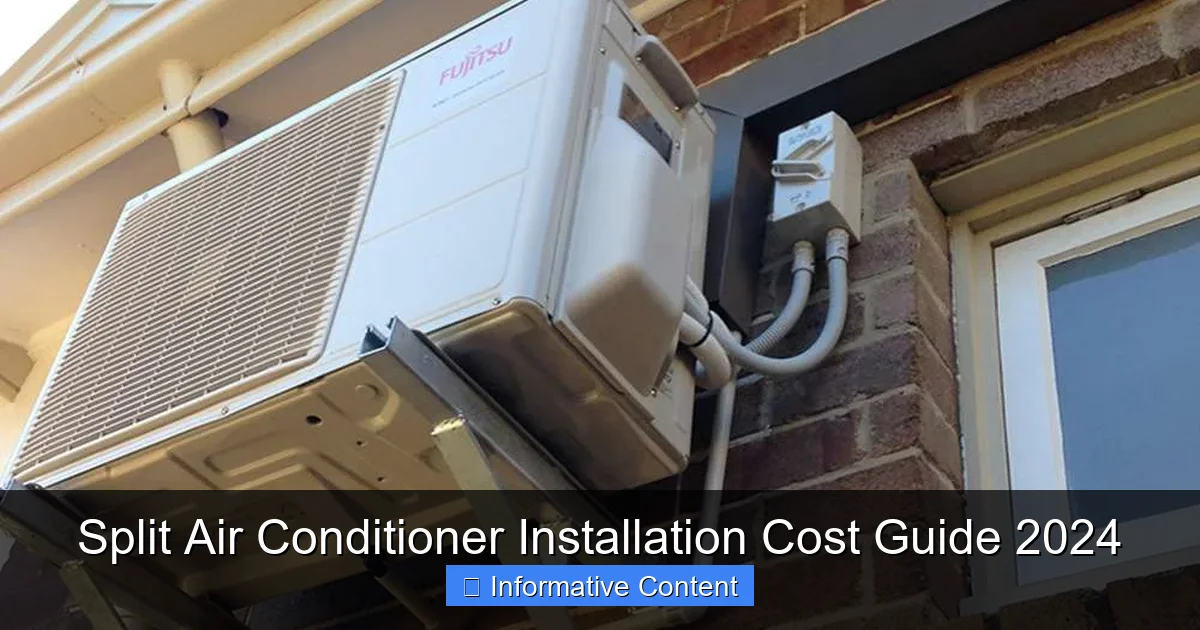
Featured image for split air conditioner installation cost
Image source: alliancecc.com.au
The average split air conditioner installation cost in 2024 ranges from $300 to $1,500, depending on unit size, labor rates, and site complexity. Additional expenses like electrical upgrades or wall modifications can add $100–$500, making professional assessment crucial for accurate budgeting. Always get multiple quotes to ensure competitive pricing and reliable service.
Key Takeaways
- Compare multiple quotes: Always get 3+ installer estimates to ensure fair pricing.
- Unit size matters: Larger capacity ACs cost more but improve efficiency in big spaces.
- Installation complexity affects price: Tight spaces or long refrigerant lines increase labor costs.
- Check for rebates: Many regions offer incentives for energy-efficient split AC models.
- DIY isn’t recommended: Hiring certified pros ensures safety and avoids costly mistakes.
- Factor in maintenance: Budget for annual servicing to extend your system’s lifespan.
📑 Table of Contents
- What Affects Split Air Conditioner Installation Cost in 2024?
- Factors That Influence Installation Cost
- Average Split AC Installation Cost by Region and Scenario
- Hidden Costs and How to Avoid Them
- DIY vs. Professional Installation: Pros and Cons
- How to Save Money on Installation (Without Cutting Corners)
- Final Thoughts: Plan Smart, Pay Less
What Affects Split Air Conditioner Installation Cost in 2024?
Installing a split air conditioner might seem straightforward, but the cost can vary more than you think. I remember helping my neighbor last summer install a 1.5-ton inverter AC. We thought we’d save money by doing the basic setup ourselves, but we quickly realized the complexity. A few missteps later, we ended up calling a pro—and paying double what we’d budgeted. That’s when I learned: understanding the split air conditioner installation cost isn’t just about the price tag on the unit. It’s about the full picture—labor, materials, location, and unexpected hiccups.
Whether you’re upgrading your home comfort, replacing an old window unit, or installing AC for the first time, knowing what drives the cost helps you avoid surprises. In 2024, prices are still influenced by inflation, supply chain shifts, and rising demand for energy-efficient models. But don’t worry—this guide breaks it all down in plain language. We’ll cover average costs, what impacts the price, and how to get the best value. Think of this as your friendly, no-nonsense roadmap to a cooler home without blowing your budget.
Factors That Influence Installation Cost
1. AC Unit Size and Type
The size of your split AC—measured in tons or BTUs—directly affects installation complexity and cost. A 1-ton unit for a small bedroom is simpler and cheaper to install than a 2.5-ton model for a large living room. Why? Larger units need thicker copper tubing, stronger wall support, and more refrigerant. For example, installing a 1-ton AC might cost $150–$250 in labor, while a 2.5-ton unit could run $300–$500.
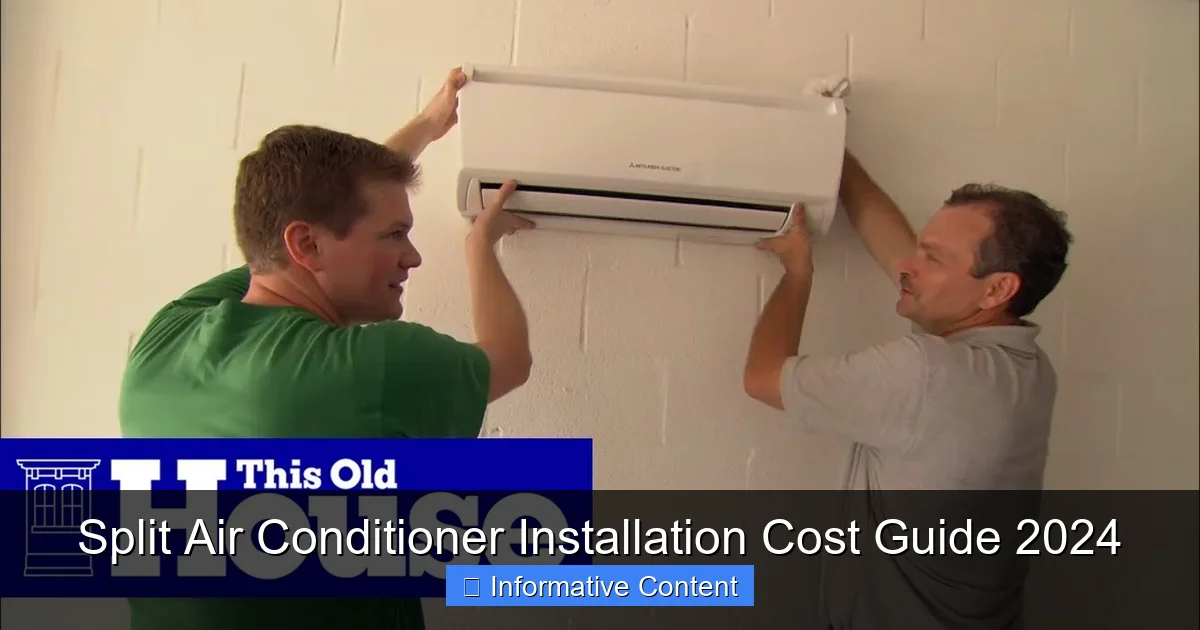
Visual guide about split air conditioner installation cost
Image source: i.ytimg.com
The type also matters. Inverter ACs are more efficient but require precise refrigerant charging and electrical connections. Non-inverter models are simpler but less energy-smart. If you’re choosing a wall-mounted split versus a floor-mounted or ceiling cassette, labor increases due to harder access and longer tubing runs. A floor unit might need a longer refrigerant line, which adds $10–$20 per extra foot.
2. Distance Between Indoor and Outdoor Units
Most installers include a standard 15–20 feet of copper tubing in the base price. But if your outdoor unit sits 30 feet away—say, on the roof or far end of the house—you’ll pay extra. Every additional foot of tubing costs $10–$20. Why so much? It’s not just the metal. Longer lines mean more refrigerant, precise bending to avoid kinks, and careful insulation to prevent condensation.
My cousin learned this the hard way. Her outdoor unit was on the second-floor balcony, and the indoor unit in the master bedroom below. The 40-foot run added $300 to the bill. “I wish I’d planned the layout before buying the AC,” she said. Tip: Always measure the shortest possible path between units during planning. Avoid sharp bends and go through walls when possible to minimize length.
3. Wall Type and Mounting Complexity
Drilling into brick, concrete, or double-layer drywall is harder than wood or standard drywall. If you’ve got solid brick or cinder block, expect a $50–$150 surcharge for extra labor and special tools. One installer I spoke with said, “Brick takes twice as long. We use diamond-tipped drills and wear out bits faster.”
Also, consider the wall’s condition. Is it load-bearing? Does it have wiring or pipes behind it? A quick check with a stud finder and circuit tester can prevent costly mistakes. If you’re in an older home, budget for a pre-installation inspection. It’s better to spend $75 on a pro check than $500 fixing a cracked wall.
4. Electrical Requirements
Most split ACs need a dedicated circuit. If your electrical panel is full or outdated, you might need an upgrade. Adding a new 20-amp circuit costs $200–$500, depending on local electrician rates. Older homes with fuse boxes often require a panel upgrade, which can hit $1,000–$2,000.
One friend in a 1970s house had to upgrade his entire panel just to run a 2-ton AC. “I thought I was saving money with a DIY install,” he laughed, “but the electrician said my wiring was a fire hazard.” Moral: Never skip the electrical check. Most installers offer a free site visit to assess your setup.
5. Local Labor Rates and Permits
Costs vary widely by region. In cities like New York or San Francisco, labor runs $80–$120/hour. In smaller towns, it might be $40–$60. Rural areas often charge more due to travel time. Always get 3–5 quotes to compare.
Some states require HVAC permits, especially for new circuits or outdoor unit placement. Permits cost $50–$200 and add 1–2 days to the timeline. In California, for example, you need a permit if the outdoor unit is on a roof or near a property line. Check with your local building department.
Average Split AC Installation Cost by Region and Scenario
National Averages (2024)
Here’s a snapshot of what you can expect across the U.S. in 2024:
- Basic 1-ton split AC (15-ft run, standard wall): $300–$500 total (unit + install)
- Mid-range 1.5-ton inverter AC (20-ft run, brick wall): $600–$900
- Large 2.5-ton AC (30-ft run, panel upgrade): $1,200–$2,000
Note: These include labor, standard materials (tubing, insulation, brackets), and basic electrical work. Extras like permits, wall repairs, or refrigerant top-ups are additional.
Regional Price Differences
| Region | Avg. Labor/Hour | Avg. Total Cost (1.5-ton) | Common Challenges |
|---|---|---|---|
| Northeast (NY, MA) | $90–$120 | $700–$1,000 | Brick/concrete walls, strict permits |
| South (TX, FL) | $60–$80 | $500–$750 | High humidity (needs extra drainage) |
| Midwest (IL, OH) | $50–$70 | $450–$650 | Older homes with outdated wiring |
| West (CA, CO) | $80–$110 | $800–$1,200 | Earthquake bracing, solar integration |
| Southwest (AZ, NV) | $70–$90 | $600–$850 | Heat stress on outdoor units |
Real-World Examples
Example 1: Sarah in Austin, TX, installed a 1.5-ton inverter AC. Her outdoor unit was 25 feet away, and the wall was standard drywall. She got a quote of $650, including a new circuit. Total cost: $680 (unit was $1,200, but she bought it on sale).
Example 2: James in Chicago needed a 2-ton AC for his 1,500 sq ft apartment. The brick wall and 35-ft tubing run added $200. His panel was full, so he paid $400 for a new circuit. Total: $1,600 (unit: $1,100).
Example 3: Maria in San Diego wanted a ceiling cassette for her living room. The installation required scaffolding (adds $150) and a permit ($120). Total: $1,400 (unit: $1,800).
Hidden Costs and How to Avoid Them
1. Extra Refrigerant Charging
If your tubing run is over 20 feet, the installer might need to add refrigerant. Most units come pre-charged for 15–20 feet. Each additional pound costs $30–$50. A 30-ft run could need 2 extra pounds—$60–$100.
Tip: Choose a model with a long-line kit. Some brands (like Daikin or Mitsubishi) sell kits with pre-charged refrigerant for runs up to 50 feet. It’s cheaper than paying per pound later.
2. Drainage and Condensate Pump
Split ACs produce condensate. If the indoor unit is below the outdoor unit, gravity drains work. But if it’s above, you need a condensate pump—adds $100–$250. In humid areas, poor drainage causes mold. One installer told me, “I’ve seen pumps fail in 2 years. Spend on a quality one.”
Also, ensure the drain line slopes downward. A 1/4-inch drop per foot is ideal. If the line is too flat, water backs up and leaks. Use a level during installation.
3. Noise and Vibration Control
Outdoor units can be noisy. If it’s near a bedroom or neighbor’s window, you might need a vibration pad or sound blanket—adds $50–$150. In some cities, noise ordinances require units to be 50 dB or less at the property line.
Tip: Place the outdoor unit on a rubber pad and away from walls. Avoid concrete pads—they amplify vibration.
4. Post-Installation Repairs
Cheap installers might cut corners. I once saw a job where the installer didn’t vacuum the refrigerant line properly. The AC ran, but froze after 3 months. Fixing it cost $400.
Red flags: No vacuum test, loose wiring, or missing insulation. Always ask for a post-installation checklist:
- Leak test (soap bubble or electronic detector)
- Vacuum test (30 minutes minimum)
- Electrical continuity check
- Drainage test (pour water into the indoor unit)
DIY vs. Professional Installation: Pros and Cons
Can You Install a Split AC Yourself?
Technically, yes—but it’s risky. I tried it once with a portable AC. It leaked, froze, and I had to call a pro. Split ACs are even more complex. You need to:
- Drill a 3-inch hole through the wall
- Mount heavy indoor/outdoor units (50+ lbs)
- Connect refrigerant lines (pressurized!)
- Vacuum the system (requires a gauge and pump)
- Charge refrigerant (requires EPA 608 license in the U.S.)
Without proper tools and knowledge, you risk:
- Refrigerant leaks (toxic and flammable)
- Electrical hazards (fire risk)
- Voided warranty (most manufacturers require pro install)
- Inefficient cooling (poor refrigerant charge)
When DIY Might Make Sense
If you’re handy, have HVAC experience, and own the tools (vacuum pump, manifold gauge, refrigerant scale), DIY can save $200–$400. But only if:
- The run is under 20 feet
- Walls are easy to drill (drywall, wood)
- You have a dedicated circuit
- You’re installing a non-inverter model (simpler refrigerant charge)
Tip: Buy a pre-charged line set kit. Brands like Mr. Cool and Pioneer offer “no-vacuum” systems. They’re more expensive but reduce the risk of leaks.
Why Professional Installation Is Worth It
Pros bring expertise, tools, and insurance. They know:
- How to route lines for minimal loss (shorter = more efficient)
- Where to place units for optimal airflow
- Local codes and permit requirements
- How to test for leaks and efficiency
Plus, most offer 1–3 years of labor warranty. If the AC fails, they fix it—no arguing with the manufacturer. One installer told me, “A $500 install is cheap if it saves you $1,000 in repairs later.”
How to Save Money on Installation (Without Cutting Corners)
1. Get Multiple Quotes
Always get 3–5 quotes. I once saved $300 by comparing a national chain ($850) with a local pro ($550). Ask for a detailed breakdown:
- Labor hours
- Materials (tubing, insulation, brackets)
- Extras (permits, electrical work)
Red flag: A quote that’s 50% lower than others. It might exclude key steps or use subpar materials.
2. Buy the Unit Separately
Some installers mark up the AC by 20–30%. Buy the unit online (Amazon, Home Depot) and hire an installer just for labor. You’ll save $100–$300. Just ensure the model is compatible with your home (voltage, size, refrigerant type).
3. Time It Right
Installers are busiest in summer. Book in fall or winter for 10–20% discounts. One pro said, “We’re desperate for work in January. You’ll get better rates and faster service.”
4. Bundle Services
If you need multiple ACs or a furnace, bundle the job. One installer might charge $600 for one AC but $1,000 for two. Also, ask about maintenance plans. A $150/year plan includes annual cleaning and priority service.
5. Negotiate Add-Ons
Installers often upsell. Need a condensate pump? Get a quote first. Want extra insulation? Buy the material yourself and ask them to install it. You’ll save $50–$100.
6. Check for Rebates and Tax Credits
In 2024, the U.S. offers tax credits for energy-efficient ACs (up to $600). Some states add rebates. For example:
- California: $200–$500 for SEER 16+ units
- New York: $100–$300 for inverter models
Check Energy.gov or your utility provider’s website.
Final Thoughts: Plan Smart, Pay Less
Installing a split AC isn’t just about the price tag. It’s about getting a system that works safely, efficiently, and lasts 10–15 years. The split air conditioner installation cost can range from $300 to $2,000, but the key is planning. Measure your space, check your electrical, and get multiple quotes.
Remember my neighbor? He saved $200 by waiting until fall to install. He bought the unit online, hired a local pro, and used a tax credit. Total savings: $450. “It was worth the wait,” he said.
Don’t let hidden costs surprise you. Ask questions. Demand transparency. And if something feels off, trust your gut. A good installer won’t mind explaining their process. After all, you’re not just buying cool air—you’re investing in comfort, health, and peace of mind. With the right approach, you’ll get all three without breaking the bank.
Frequently Asked Questions
What is the average split air conditioner installation cost in 2024?
The average split air conditioner installation cost in 2024 ranges from $500 to $2,500, depending on unit size, complexity, and labor rates. Basic installations with minimal modifications tend to fall on the lower end of this range.
Does the type of split AC affect installation pricing?
Yes, ductless mini-splits are generally cheaper to install than multi-zone or ceiling cassette systems. The number of indoor units and refrigerant line length also significantly impacts the final split air conditioner installation cost.
Are there additional charges beyond the basic installation fee?
Common extra costs include electrical upgrades ($100–$500), wall mounting brackets ($50–$200), and extended refrigerant lines ($50–$100 per foot). Always ask for a detailed quote to avoid surprises.
Can I install a split AC myself to save money?
DIY installation is not recommended—improper setup can void warranties and reduce efficiency. Professional installation ensures refrigerant handling compliance and optimal performance, which saves money long-term.
How long does a split AC installation take?
Most single-zone split AC installations take 4–8 hours, while multi-zone systems may require 1–2 full days. The timeline depends on wall material, line routing, and electrical requirements.
Do companies offer free installation with AC purchase?
Some retailers or HVAC companies include free basic installation as a promotional offer, but read the fine print—exclusions often apply for complex setups or older homes requiring upgrades.