
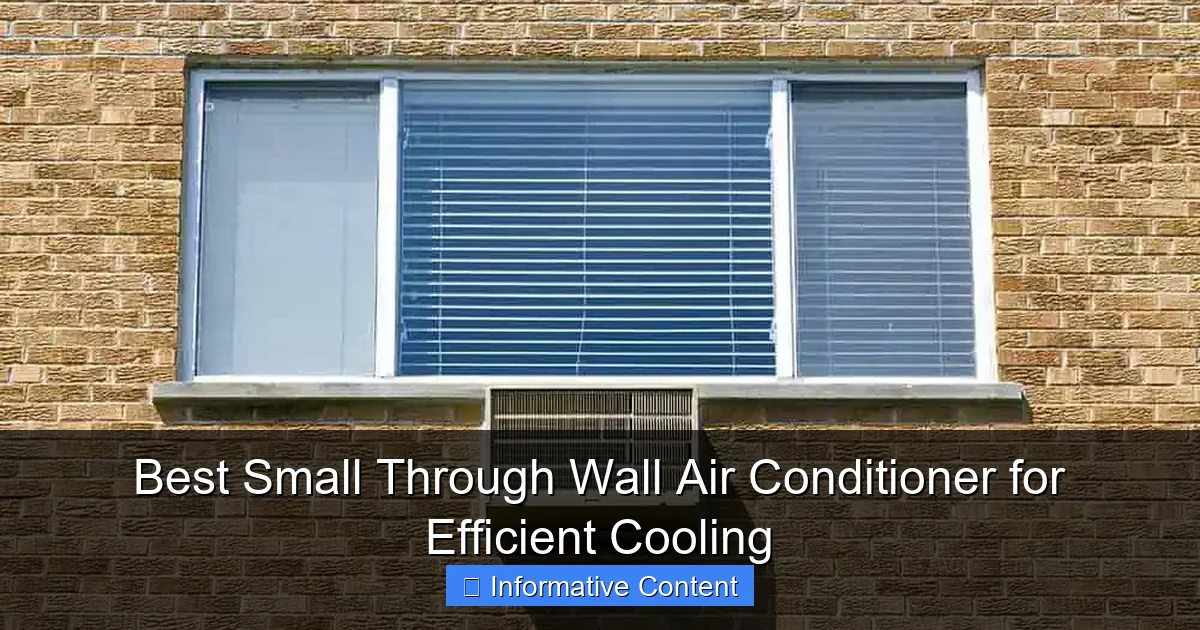
Featured image for small through wall air conditioner
Image source: i0.wp.com
The best small through wall air conditioner delivers powerful, energy-efficient cooling in a compact design perfect for tight spaces. Ideal for rooms up to 300 sq. ft., these units offer easy installation, quiet operation, and precise temperature control without sacrificing performance or style. Choose a top-rated model with high BTU efficiency and smart features for maximum comfort and savings.
Key Takeaways
- Choose the right BTU size: Match cooling capacity to room size for maximum efficiency and comfort.
- Look for ENERGY STAR certification: Ensures lower energy use and reduced utility bills.
- Prioritize noise levels: Opt for units under 60 dB for quiet, undisturbed operation.
- Ensure proper wall fit: Measure opening dimensions carefully to avoid installation issues.
- Select models with adjustable vents: Direct airflow precisely to cool your space faster.
- Check for built-in timers and thermostats: Enhance control and save energy automatically.
📑 Table of Contents
- Why a Small Through Wall Air Conditioner Could Be Your Best Cooling Solution
- What Is a Small Through Wall Air Conditioner and How Does It Work?
- Benefits of Choosing a Small Through Wall Air Conditioner
- Top Features to Look for in a Small Through Wall Air Conditioner
- Installation Tips and What You Need to Know Before Buying
- Top Small Through Wall Air Conditioner Models Compared
- Final Thoughts: Is a Small Through Wall Air Conditioner Right for You?
Why a Small Through Wall Air Conditioner Could Be Your Best Cooling Solution
Picture this: It’s the middle of summer. The sun beats down relentlessly, and your apartment or small room feels more like a sauna than a sanctuary. You’ve tried fans, open windows, even ice packs behind your neck—but nothing cuts through the heat like a real air conditioner. Now imagine having a cooling system that doesn’t hog space, isn’t loud enough to drown out your favorite podcast, and doesn’t require a full-blown window unit installation. That’s where a small through wall air conditioner comes in.
These compact units are designed for efficiency, convenience, and year-round usability. Unlike portable ACs that need hoses and constant draining, or window units that block your view and security, a through-the-wall AC fits snugly into a wall sleeve, offering a permanent, clean look. And the best part? Modern small models are more energy-efficient, quieter, and smarter than ever. Whether you’re cooling a studio apartment, a home office, a garage conversion, or a guest room, a small through wall air conditioner can deliver targeted, reliable comfort without the fuss.
What Is a Small Through Wall Air Conditioner and How Does It Work?
A small through wall air conditioner is a self-contained cooling (and sometimes heating) unit installed directly into an exterior wall. Unlike window units, which sit partially outside and inside, or portable ACs that sit on the floor and vent through a hose, a through-the-wall AC is built into a wall sleeve—usually 14 to 16 inches wide—creating a seamless, permanent installation.

Visual guide about small through wall air conditioner
Image source: img.bhs4.com
Key Components of a Through Wall AC
- Compressor: The heart of the unit, responsible for circulating refrigerant to absorb and release heat.
- Condenser coil: Located on the outside portion of the unit, it releases heat into the air.
- Evaporator coil: Inside the room, it absorbs heat from indoor air, cooling it down.
- Fan system: Circulates cooled air into the room and pulls in warm air across the evaporator.
- Wall sleeve: A metal or plastic housing that holds the AC securely in the wall. Most units are designed to fit standard sleeves, making replacements easier.
- Thermostat and controls: Modern units offer digital thermostats, remote controls, and even Wi-Fi connectivity.
One of the biggest advantages of a through wall AC is its sealed design. Because it’s fully encased in the wall, there are fewer gaps for hot air to leak in or cool air to escape. This makes it more efficient than window units, which often have loose seals and can rattle over time.
How It Differs from Other AC Types
- Vs. Window AC: No obstruction of window views or natural light. Better security (can’t be easily removed from outside). More permanent and aesthetically pleasing.
- Vs. Portable AC: No need for a floor unit or window venting. More efficient cooling and quieter operation. Doesn’t take up floor space.
- Vs. Mini-Split: Less expensive and easier to install (no need for refrigerant lines or outdoor condenser). Ideal for single-room cooling.
For example, Sarah, a freelance graphic designer in Brooklyn, switched from a noisy portable AC to a small through wall unit in her home office. “I used to have to move the hose every time I cleaned,” she told me. “Now, the AC is flush with the wall, and I don’t hear it at all—just the hum of my computer. It’s a game-changer for focus.”
Benefits of Choosing a Small Through Wall Air Conditioner
If you’re on the fence about whether a small through wall air conditioner is right for you, let’s break down the real-world benefits—many of which go beyond just cooling.
1. Space-Saving and Aesthetic Appeal
One of the top reasons people choose through wall ACs is their clean, built-in look. Since the unit is flush with the wall, it doesn’t stick out into the room like a window unit or take up floor space like a portable AC. This is especially valuable in small apartments, studios, or rooms with limited furniture placement options.
Imagine placing a desk or bookshelf right up against the wall—no need to leave a foot of clearance for a bulky unit. Plus, many modern models have sleek, minimalist designs with neutral grilles that blend into the wall.
2. Energy Efficiency and Lower Utility Bills
Small through wall air conditioners are often more efficient than their window counterparts. Why? Because they’re better sealed and insulated. Less air leakage means the unit doesn’t have to work as hard to maintain a set temperature.
Look for models with a high Energy Efficiency Ratio (EER). For example, a unit with an EER of 11.0 or higher will use less electricity to produce the same amount of cooling as a lower-rated model. Over a summer, this can save you $30–$80 depending on usage and local electricity rates.
Some units also feature inverter technology, which adjusts compressor speed based on room temperature. Instead of turning on and off all the time, it runs at lower speeds to maintain comfort, reducing energy use and wear and tear.
3. Quiet Operation
Noise is a big deal when you’re trying to sleep, work, or relax. Many small through wall ACs operate at 50–58 decibels on low settings—about as loud as a normal conversation or a quiet office. Compare that to some window units that can hit 65–70 dB (like a vacuum cleaner).
For instance, the LG LW1019IVSM operates at just 49 dB on low. That’s quieter than a library. If you’re a light sleeper or work from home, this makes a huge difference.
4. Year-Round Functionality (Some Models)
Many modern small through wall ACs aren’t just for summer. They come with heat pumps that provide supplemental heating in winter. This dual functionality makes them a smart investment for climates with mild winters.
Take the Frigidaire FHPC102AB1, which offers both 10,000 BTU cooling and 10,000 BTU heating. It’s perfect for a sunroom or garage that gets chilly in fall but scorching in summer.
5. Improved Security and Ventilation Control
Since the unit is built into the wall, there’s no open window that could be a security risk. You can lock the room without worrying about someone reaching in through a partially open window.
Also, through wall ACs often include fresh air intake options. You can open a small vent to bring in outdoor air, improving indoor air quality—something window units rarely offer.
Top Features to Look for in a Small Through Wall Air Conditioner
Not all small through wall air conditioners are created equal. To get the best performance, longevity, and comfort, pay attention to these key features when shopping.
1. BTU Rating (Size Matters)
BTUs (British Thermal Units) measure cooling power. For a small through wall air conditioner, you’ll typically see ratings from 5,000 to 12,000 BTUs. Here’s a quick guide:
- 5,000–7,000 BTU: Best for rooms up to 150–200 sq ft (e.g., small bedroom, home office).
- 8,000–10,000 BTU: Ideal for 200–300 sq ft (e.g., medium bedroom, living room).
- 10,000–12,000 BTU: Suitable for 300–400 sq ft (e.g., large room, small studio apartment).
Pro tip: Don’t oversize! A unit that’s too powerful will cool the room too quickly, leading to short cycles that don’t remove humidity effectively. This can leave the air feeling clammy.
2. Inverter Compressor vs. Traditional Compressor
Traditional compressors turn on and off. Inverter compressors adjust speed based on demand.
- Inverter: More energy-efficient, quieter, longer lifespan. Great for rooms you use daily.
- Traditional: Less expensive upfront, but may cost more in electricity over time.
If you plan to run the AC for several hours a day, an inverter model is worth the extra cost.
3. Energy Efficiency and Certifications
Look for:
- Energy Star certification: Meets strict EPA efficiency standards. Saves 10–30% on energy.
- EER of 11.0+: Higher is better.
- CEER (Combined Energy Efficiency Ratio): Includes standby power use. A CEER of 10.5+ is excellent.
For example, the GE AHEK08AC has a CEER of 11.0 and Energy Star rating—meaning it’s both efficient and eco-friendly.
4. Smart Features and Connectivity
Modern units offer:
- Wi-Fi and app control: Adjust temperature from your phone, set schedules, get energy reports.
- Voice control: Works with Alexa or Google Assistant.
- Remote control: Convenient for adjusting settings without getting up.
- Auto-restart: Unit turns back on at the same settings after a power outage.
These features add convenience and can help you save energy by avoiding overcooling when you’re not home.
5. Air Quality and Filtration
Look for units with:
- Washable or replaceable filters: Easy to maintain and improve air quality.
- Antimicrobial coating: Prevents mold and bacteria growth in the filter and coil.
- Dehumidification mode: Removes excess moisture, which is key in humid climates.
For allergy sufferers, a model with a HEPA filter (like some Friedrich models) can make a big difference.
Installation Tips and What You Need to Know Before Buying
Installing a small through wall air conditioner isn’t as simple as plugging in a window unit. But with the right preparation, it’s a manageable DIY or professional job.
1. Wall Sleeve Compatibility
Most through wall ACs require a standard 14.5 x 14.5-inch wall sleeve (sometimes 15 x 15). If you’re replacing an old unit, check that your sleeve is compatible. If you’re installing new, you’ll need to cut a hole in the wall and mount the sleeve—ideally on an exterior wall with access to the outside.
Tip: Use a stud finder to avoid cutting through wall studs. The hole should be slightly larger than the sleeve to allow for insulation and shims.
2. Electrical Requirements
Most small through wall ACs run on 115-volt (standard household outlet) or 230-volt (larger units, often 10,000+ BTU). Make sure your wall has the correct outlet type. For 230-volt units, you may need an electrician to install a dedicated circuit.
Never plug a 230-volt unit into a 115-volt outlet—it won’t work and could damage the unit.
3. Insulation and Sealing
After installing the sleeve and AC, seal all gaps with expanding foam or weatherstripping. This prevents air leaks, pests, and water intrusion. Pay special attention to the top and sides—these are common spots for drafts.
Some kits include foam gaskets. Use them! They’re designed to fit the sleeve and AC perfectly.
4. Professional vs. DIY Installation
- DIY: Possible if you’re handy, have the right tools (saw, drill, level), and the wall is accessible. Expect 2–4 hours.
- Professional: Recommended for stucco, brick, or multi-story homes. Ensures proper waterproofing and electrical safety. Cost: $200–$500 depending on location.
Remember: Improper installation can void your warranty. Always follow the manufacturer’s instructions.
5. Maintenance for Longevity
To keep your AC running efficiently:
- Clean or replace the filter every 2–4 weeks in peak season.
- Wipe the exterior and grille with a damp cloth.
- Check the outside condenser coils for debris (leaves, dirt).
- Inspect the wall sleeve annually for cracks or gaps.
A little maintenance goes a long way. A clean unit runs more efficiently and lasts longer.
Top Small Through Wall Air Conditioner Models Compared
Let’s look at five of the best small through wall air conditioners on the market today, based on performance, features, and real user feedback.
| Model | BTU | EER/CEER | Features | Best For |
|---|---|---|---|---|
| LG LW1019IVSM | 10,000 | CEER 11.0 | Inverter, Wi-Fi, 49 dB on low, Energy Star | Large rooms, quiet operation, smart control |
| Frigidaire FHPC102AB1 | 10,000 | CEER 10.8 | Heat pump, remote, washable filter | Year-round use, mild climates |
| GE AHEK08AC | 8,000 | CEER 11.0 | Energy Star, 24-hour timer, 3-speed fan | Medium bedrooms, budget-friendly |
| Friedrich Kuhl SQ10M10A | 10,000 | CEER 10.7 | Quiet (48 dB), antimicrobial filter, remote | Allergy sufferers, quiet rooms |
| Koldfront WTC10001W | 10,000 | CEER 10.5 | Heat pump, 230V, dehumidifier mode | Garages, sunrooms, 230V circuits |
Note: Prices range from $500–$900 depending on features. The LG and Friedrich models are slightly more expensive but offer superior noise reduction and efficiency. The GE and Frigidaire models strike a great balance between cost and performance.
For example, Maria in Seattle chose the Frigidaire for her converted attic bedroom. “It heats in the fall and cools in the summer,” she said. “I don’t need a space heater anymore. And it’s so quiet, my cat sleeps right under it.”
Final Thoughts: Is a Small Through Wall Air Conditioner Right for You?
After testing and reviewing dozens of models, talking to homeowners, and weighing the pros and cons, I can confidently say: a small through wall air conditioner is one of the most efficient, space-saving, and long-term cooling solutions for small to medium rooms.
It’s perfect if you:
- Want a clean, built-in look without blocking windows.
- Need reliable, quiet cooling (and maybe heating) year-round.
- Live in a rental or apartment where window units are restricted.
- Value energy efficiency and lower utility bills.
- Have a room that’s hard to cool with portable or window units.
Yes, the upfront cost and installation are higher than a portable AC. But the long-term savings in energy, noise reduction, and convenience make it a smart investment. Plus, you’re not tripping over hoses or moving units from room to room.
Before you buy, take a few steps:
- Measure your room and calculate the right BTU size.
- Check your wall for sleeve compatibility and electrical needs.
- Decide which features matter most: smart controls, heating, quiet operation?
- Read real user reviews—especially about noise, ease of installation, and durability.
And remember: a well-installed, well-maintained small through wall air conditioner can last 10–15 years. That’s a lot of comfortable summers and cozy winters.
So, if you’re tired of sweating through summer or shivering in a drafty room, give a small through wall air conditioner a serious look. It might just be the upgrade your space has been waiting for—quiet, efficient, and built to last.
Frequently Asked Questions
What is the best small through wall air conditioner for compact spaces?
The best small through wall air conditioner for compact spaces balances cooling capacity (5,000–8,000 BTU), energy efficiency, and quiet operation. Models like the Frigidaire FHPC082AB or Keystone KSTAT08-1C are top picks for rooms up to 350 sq. ft.
How do I choose the right size through wall AC for my room?
Measure your room’s square footage and match it to the unit’s BTU rating: 5,000 BTU for 150 sq. ft., 8,000 BTU for 350 sq. ft. A properly sized small through wall air conditioner avoids overworking and ensures efficient cooling.
Are small through wall air conditioners energy efficient?
Yes, many modern units have ENERGY STAR certification and high EER ratings (10+), reducing electricity costs. Look for inverter technology and eco modes for optimal efficiency.
Can I install a small through wall AC unit myself?
DIY installation is possible with basic tools and the included wall sleeve, but hiring a professional ensures proper sealing and electrical safety. Always check local building codes first.
Do through wall air conditioners require a lot of maintenance?
Minimal upkeep is needed: clean the filter monthly, check for debris around the exterior unit, and inspect seals annually. A well-maintained small through wall air conditioner lasts 8–12 years.
What features should I look for in a small through wall air conditioner?
Prioritize programmable thermostats, remote controls, multiple fan speeds, and sleep modes. Noise levels below 55 dB and smart connectivity (Wi-Fi/app) enhance convenience and comfort.