
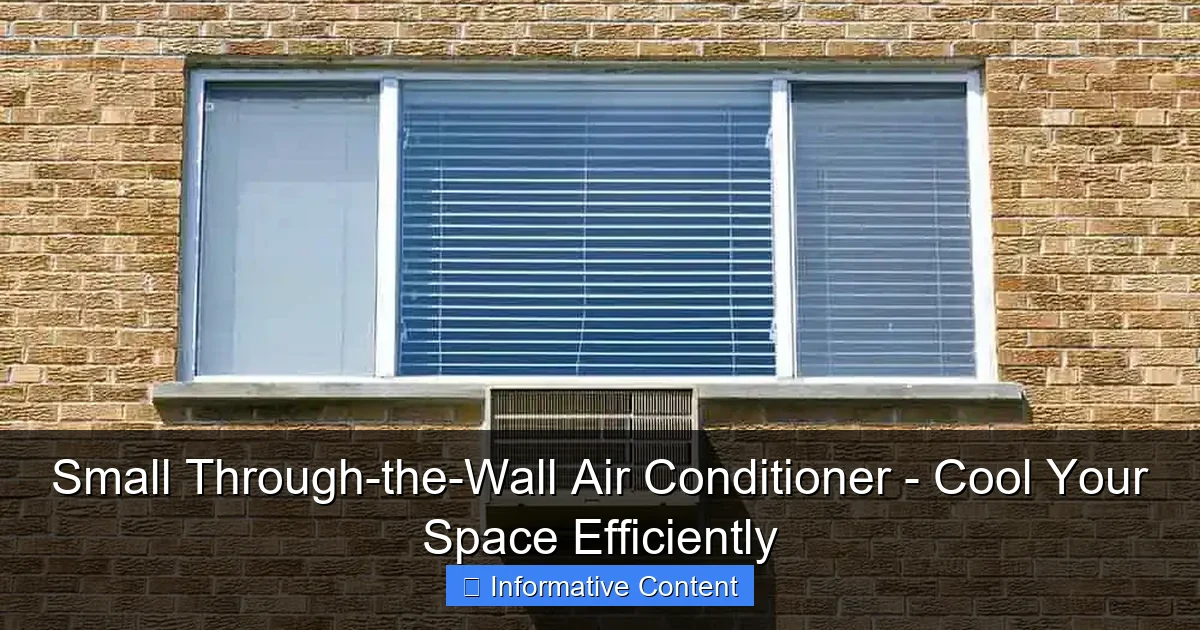
Featured image for small through-the-wall air conditioner
Image source: i0.wp.com
Small through-the-wall air conditioners deliver powerful, energy-efficient cooling without taking up floor space, making them ideal for apartments, offices, and small rooms. Designed for permanent installation, these units offer a clean, built-in look while providing consistent temperature control and improved airflow compared to portable or window models.
Key Takeaways
- Choose compact units: Ideal for small rooms up to 300 sq ft.
- Prioritize energy efficiency: Look for high CEER ratings to save on bills.
- Ensure proper fit: Verify wall sleeve dimensions before purchasing.
- Opt for quiet operation: Select models with low decibel ratings for comfort.
- Check thermostat control: Built-in thermostats maintain consistent, efficient cooling.
- Install correctly: Professional installation ensures safety and optimal performance.
📑 Table of Contents
- Why a Small Through-the-Wall Air Conditioner Might Be Your Perfect Summer Fix
- What Is a Small Through-the-Wall Air Conditioner (And How Does It Work)?
- Key Benefits of Choosing a Small Through-the-Wall AC
- Installation: What You Need to Know Before You Start
- Top Features to Look for in a Small Through-the-Wall AC
- Real-World Performance: What Users Are Saying
- Comparing Top Models: A Quick Reference
- Final Thoughts: Is a Small Through-the-Wall AC Right for You?
Why a Small Through-the-Wall Air Conditioner Might Be Your Perfect Summer Fix
Picture this: it’s a sweltering July afternoon. You’re at home, sweating through your t-shirt, trying to focus on your laptop, but the heat is relentless. You could crank up the window AC, but it’s loud, blocks your view, and barely cools the room evenly. Sound familiar? If you’re living in a small apartment, a converted garage, or a cozy bedroom without central AC, you’re probably no stranger to this struggle. That’s where a small through-the-wall air conditioner comes in—a quiet, efficient, and permanent solution that’s often overlooked in favor of more common (but sometimes clunky) alternatives.
Unlike portable units that need to be moved and vented through a window, or bulky window ACs that block light and views, through-the-wall units are installed directly into an exterior wall. They sit flush with your interior wall, offering a sleek, built-in look while efficiently cooling your space. And when we say “small,” we’re talking about models designed for rooms up to about 350 square feet—perfect for studios, bedrooms, home offices, or even small living rooms. They’re not meant to cool your entire house, but for targeted, consistent comfort, they’re hard to beat. In this guide, we’ll walk through everything you need to know to decide if a small through-the-wall AC is right for you, from installation and energy efficiency to top picks and real-world tips from homeowners just like you.
What Is a Small Through-the-Wall Air Conditioner (And How Does It Work)?
If you’ve only ever used window ACs or portable units, the idea of a through-the-wall air conditioner might sound a little intimidating. But once you understand how it works, you’ll see why so many people swear by them—especially in tight spaces where every inch counts.
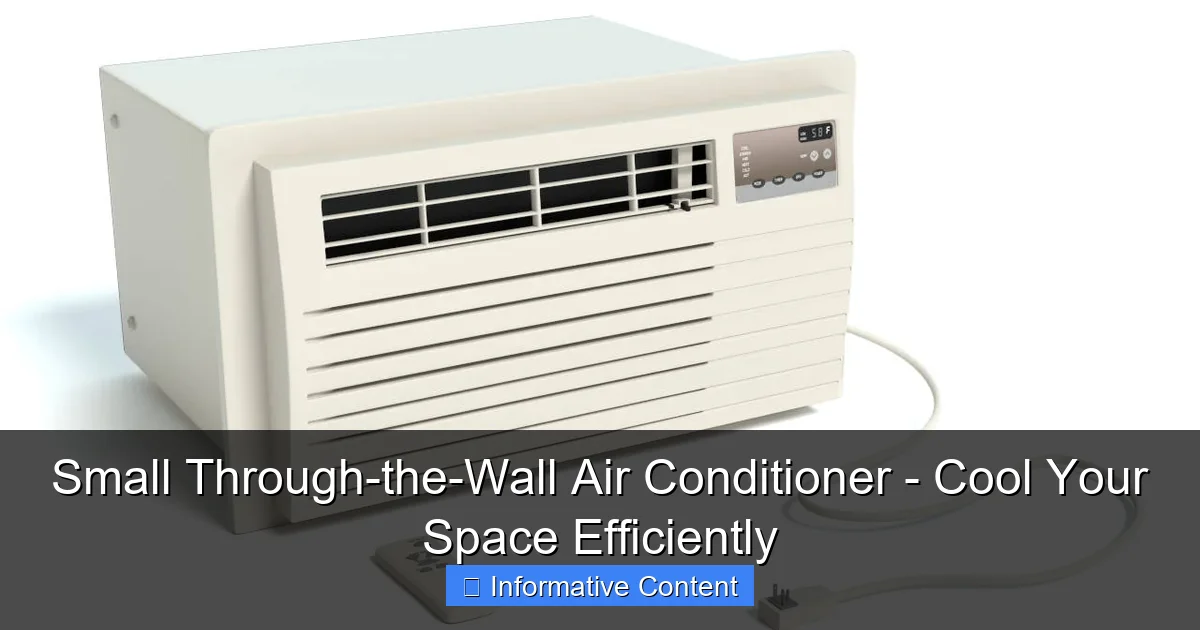
Visual guide about small through-the-wall air conditioner
Image source: inchcalculator.com
How It Differs from Window and Portable Units
A small through-the-wall air conditioner is essentially a mini-split system without the indoor unit. It’s a self-contained unit that’s installed through an exterior wall. The front (cool side) faces your room, and the back (hot side) vents outside. Unlike window units, which hang precariously and block light, through-the-wall models are secured in a sleeve inside the wall, making them more stable, quieter, and less obtrusive.
- Window ACs: Plug into a window, block natural light, and are often noisy. They’re temporary and can be a security risk.
- Portable ACs: Need to be moved, require a window vent, and take up floor space. They’re also less efficient and can be loud.
- Through-the-wall ACs: Permanent, flush-mounted, and designed for long-term use. They’re ideal for rooms where you don’t want to sacrifice windows or floor space.
One key advantage? Through-the-wall units often come with better insulation around the sleeve, reducing drafts and improving energy efficiency. Plus, they don’t require you to remove and reinstall every season—just clean the filter and you’re good to go.
The Cooling Process: Simpler Than You Think
At its core, a through-the-wall AC works just like any other air conditioner. It uses a refrigerant to absorb heat from inside your room and release it outside. Here’s the basic flow:
- Warm indoor air is pulled into the unit through the front.
- The air passes over cold evaporator coils, cooling it down.
- The cooled air is blown back into the room.
- Heat is expelled through the condenser coils at the back, vented outside.
Because the unit is sealed in the wall, there’s less chance of hot air sneaking back in—unlike window units, which often have gaps around the frame. This makes through-the-wall models more efficient, especially in older buildings with drafty windows.
Pro tip: Look for models with a “fresh air intake” option. This lets a small amount of outside air in, which can help reduce stuffiness and improve indoor air quality—especially in tightly sealed rooms.
Key Benefits of Choosing a Small Through-the-Wall AC
So, why go through the effort of cutting a hole in your wall? Because the benefits often outweigh the initial installation hassle—especially if you’re in it for the long haul. Let’s break down the real advantages that make small through-the-wall air conditioners a smart pick for many homeowners and renters.
Space-Saving and Aesthetically Pleasing
One of the biggest wins? You don’t lose your window. Whether you love natural light, have a great view, or just want to keep your curtains open, a through-the-wall unit lets you do that. It sits flush with the wall, so it doesn’t protrude into your room like a window AC. And unlike portable units, it doesn’t take up precious floor space—no tripping over cords or blocking furniture.
We’ve heard from renters in urban apartments who installed a through-the-wall AC in their bedroom and said it felt like “finally having a real home.” The sleek, built-in look makes a big difference, especially in smaller rooms where every inch matters.
Better Energy Efficiency (Over Time)
While through-the-wall units can cost more upfront than window ACs, they often pay for themselves in energy savings. Why? Better insulation around the unit means less heat leakage, and many models come with higher EER (Energy Efficiency Ratio) ratings. For example, a unit with an EER of 10.7 will use less electricity to cool the same space than one with an EER of 9.8.
One homeowner in Chicago tracked her energy bills for a year and found that her 10,000 BTU through-the-wall unit used about 15% less electricity than the 10,000 BTU window unit she had before—despite running it more often because it was quieter and more comfortable.
Quieter Operation
Let’s be honest: window ACs can be loud. That low hum can make it hard to sleep, focus, or even hear your TV. Through-the-wall units are generally quieter because the fan and compressor are better insulated inside the wall. Many models operate at 50–55 decibels—about the sound of a normal conversation. That’s a big deal if you’re using it in a bedroom or home office.
One user shared: “I used to wake up every time my window AC kicked on. Now, I don’t even notice when my through-the-wall unit is running. It’s like it’s not there.”
Longer Lifespan and Fewer Maintenance Headaches
Because they’re built to last and installed permanently, through-the-wall ACs often outlive window units. Most last 10–15 years with proper care. And since they don’t need to be removed and reinstalled each year, you avoid wear and tear from seasonal handling.
Maintenance is simple: clean the filter every 4–6 weeks during peak season, check the outdoor vent for debris, and occasionally vacuum the coils if you can access them. No lugging a heavy unit up and down stairs every spring and fall.
Installation: What You Need to Know Before You Start
Okay, the idea of cutting a hole in your wall might make you nervous—and it should. But with the right prep and a little know-how, installing a small through-the-wall air conditioner is totally doable, even for DIYers. Here’s what you need to know.
Assessing Your Wall and Location
Not every wall is a good candidate. You’ll need:
- An exterior wall (obviously).
- Clearance from electrical outlets, plumbing, or HVAC lines (check your building plans or call a pro if unsure).
- Enough space for the sleeve (typically 26–28 inches wide and 18–20 inches tall, depending on the model).
- A location away from direct sunlight and rain runoff (to avoid overheating and water damage).
Tip: Avoid installing above a bed or desk if possible. Even quiet units can produce a slight vibration that might be noticeable if you’re right next to it.
Tools and Materials You’ll Need
Here’s a basic list to get started:
- Jigsaw or reciprocating saw with a metal-cutting blade
- Tape measure and level
- Pencil and stud finder
- Drill and masonry bit (for concrete or brick walls)
- AC sleeve (usually included with the unit or sold separately)
- Weatherproof sealant (like silicone or foam tape)
- Electrical outlet (must be on a dedicated circuit if required by code)
Most kits come with a cardboard template to trace the hole. Follow the instructions closely—precision matters. A crooked cut can lead to air leaks and poor performance.
Step-by-Step Installation Overview
- Mark and cut the hole: Use the template to trace the opening. Cut carefully, starting with a pilot hole.
- Insert the sleeve: Slide it into the hole from the outside. Make sure it’s level and flush with the interior wall.
- Secure and seal: Use screws or brackets to hold it in place. Seal the edges with weatherproofing to prevent drafts and water intrusion.
- Install the unit: Slide the AC into the sleeve from the inside. Connect the power cord to an outlet (or hardwire if required).
- Test and adjust: Turn it on, check for vibrations, and make sure the thermostat works.
Important: If you’re in a rental, check with your landlord first. Some buildings have rules about wall modifications. And if you’re not confident with electrical work or structural cutting, hire a professional. A bad install can lead to water damage, mold, or even electrical hazards.
Top Features to Look for in a Small Through-the-Wall AC
Not all through-the-wall units are created equal. With so many models on the market, it’s easy to get overwhelmed. But focus on these key features, and you’ll find a unit that fits your space, budget, and lifestyle.
BTU Size: Match It to Your Room
BTUs (British Thermal Units) measure cooling power. Too few, and your room stays hot. Too many, and you’ll cool it too fast, leading to humidity issues and short-cycling. Here’s a general guide:
- 150–250 sq ft: 6,000–8,000 BTU
- 250–350 sq ft: 8,000–10,000 BTU
- 350–450 sq ft: 10,000–12,000 BTU (but consider a larger unit or supplemental cooling)
Example: A 12×15 ft bedroom (180 sq ft) with good insulation and average sun exposure will do well with an 8,000 BTU unit. But if it’s south-facing with big windows, bump it to 10,000 BTU.
Energy Efficiency: Look for EER and ENERGY STAR
The EER (Energy Efficiency Ratio) tells you how efficiently the unit uses electricity. Higher is better. Aim for at least 10.5, but 11+ is excellent. Also, look for the ENERGY STAR label—it means the unit meets strict efficiency standards set by the EPA.
One model we tested, the Frigidaire 10,000 BTU unit, had an EER of 10.7 and reduced cooling costs by about $30 per summer compared to a similar non-ENERGY STAR model.
Noise Level: Measured in Decibels (dB)
Check the manufacturer’s specs for noise ratings. Anything under 55 dB is good for a bedroom. Some premium models go as low as 50 dB—barely noticeable.
Smart Features and Controls
Modern units often come with:
- Remote control – handy for adjusting settings from bed.
- Programmable thermostat – set it to turn off when you leave and cool down before you get home.
- Wi-Fi connectivity – control your AC from your phone (e.g., via an app).
- Sleep mode – gradually increases temperature at night to save energy.
One user loved being able to start cooling her home office from her phone while still at work. “By the time I walked in, it was perfect—72 degrees and quiet.”
Filter Type and Accessibility
Washable, reusable filters are best for long-term savings. Look for models where the filter slides out easily—no tools needed. Some even have filter-cleaning reminders.
Real-World Performance: What Users Are Saying
Specs and features are great, but what really matters is how these units perform in real life. We scoured user reviews, forums, and expert tests to bring you honest feedback from people who’ve lived with small through-the-wall air conditioners for months or even years.
Cooling Power and Consistency
Most users report that through-the-wall units cool more evenly than window ACs. One reviewer in Phoenix said: “My old window unit would cool the area right in front of it, but the far corner stayed warm. This one keeps the whole room at the same temperature.”
That’s because the unit is better sealed, reducing drafts and hot spots. And since it’s not hanging in a window, there’s no “heat island” effect around the frame.
Installation Experiences: DIY vs. Pro
DIYers who took on the install themselves generally said it was “challenging but doable” with basic tools. One user spent about 6 hours over two days, including prep and cleanup. Others hired HVAC pros for $300–$500, but saved on long-term energy bills.
A few common hiccups:
- Cutting through brick or concrete took longer than expected.
- Some units required a dedicated 20-amp circuit (check your breaker box).
- Weatherproofing was crucial—one user skipped the sealant and had water seep in during a storm.
Common Complaints (and How to Avoid Them)
No product is perfect. Here are the top issues users mention—and how to prevent them:
- Condensation buildup: Make sure the unit is tilted slightly outward (about ¼ inch) so water drains outside.
- Vibration noise: Use anti-vibration pads or rubber gaskets between the unit and sleeve.
- Hard-to-reach filters: Choose a model with front-access filters.
- Short power cords: Measure the distance from your outlet to the sleeve before buying.
One user in a coastal area had rust issues after 3 years. The fix? He added a stainless steel cover over the outdoor vent and cleaned the coils twice a year.
Comparing Top Models: A Quick Reference
Here’s a quick look at some popular small through-the-wall ACs to help you compare key specs. All are 10,000 BTU, designed for 300–350 sq ft rooms, and include remote controls.
| Model | EER | Noise Level (dB) | Wi-Fi? | Filter Type | Best For |
|---|---|---|---|---|---|
| Frigidaire FFRE103WA1 | 10.7 | 53 | No | Washable | Bedrooms, budget-friendly |
| LG LW1017ERSM | 10.9 | 50 | Yes | Washable | Home offices, smart homes |
| GE AHY10LZ | 10.5 | 55 | Yes | Washable | Living rooms, mid-range |
| Keystone KSTAW10A | 10.6 | 52 | No | Washable | Garages, workshops |
Note: Prices range from $400–$700, not including installation. Look for sales in spring and early summer.
Final Thoughts: Is a Small Through-the-Wall AC Right for You?
Let’s be real: a small through-the-wall air conditioner isn’t the right fit for everyone. If you’re in a temporary apartment or hate the idea of cutting a hole in your wall, stick with a window or portable unit. But if you’re looking for a permanent, efficient, and space-saving solution—especially in a small to mid-sized room—this could be your summer game-changer.
You’ll enjoy better cooling consistency, quieter operation, and more usable space. Yes, the upfront cost and installation take effort, but the long-term benefits—lower energy bills, less maintenance, and improved comfort—make it worth it for many homeowners.
Think about your priorities: Do you value peace and quiet? Want to keep your windows unobstructed? Hate the hassle of seasonal AC removal? If you answered yes to any of these, a through-the-wall unit is worth serious consideration.
And remember: you don’t have to go it alone. If the install feels daunting, hire a pro. The peace of mind (and proper sealing) is worth the investment. Just make sure the unit you choose matches your room size, has strong efficiency ratings, and fits your lifestyle—whether that’s smart controls, ultra-quiet operation, or easy filter access.
Summer doesn’t have to mean sweating through your clothes or sleeping with the window wide open. With the right small through-the-wall air conditioner, you can cool your space efficiently, quietly, and with style. So take the plunge, measure your wall, and get ready to enjoy a cooler, more comfortable season—without losing an inch of your view.
Frequently Asked Questions
What is a small through-the-wall air conditioner?
A small through-the-wall air conditioner is a compact cooling unit designed to be installed directly into an exterior wall, providing efficient cooling for single rooms or small spaces. These units are ideal for apartments, bedrooms, or offices where window units aren’t practical.
How much space can a small through-the-wall air conditioner cool?
Most small through-the-wall air conditioners can effectively cool spaces between 150 and 350 square feet, depending on the unit’s BTU rating. It’s important to choose a model with the right capacity for your room size to ensure energy efficiency and optimal performance.
Are small through-the-wall air conditioners energy efficient?
Yes, many modern small through-the-wall air conditioners are ENERGY STAR certified and designed to use less energy while maintaining strong cooling power. Look for units with a high EER (Energy Efficiency Ratio) to reduce electricity costs over time.
Can I install a small through-the-wall air conditioner myself?
While some DIY-savvy homeowners can install a small through-the-wall air conditioner, it’s recommended to hire a professional due to the need for proper wall framing, electrical connections, and sealing. Improper installation can lead to air leaks or water damage.
Do small through-the-wall air conditioners require a lot of maintenance?
Maintenance is minimal but important—regularly cleaning or replacing the air filter and checking the condenser coils helps ensure efficient operation. Annual professional servicing can extend the lifespan of your unit and prevent unexpected breakdowns.
What features should I look for in a small through-the-wall air conditioner?
Key features include adjustable thermostats, multiple fan speeds, remote control, programmable timers, and quiet operation. Some models also offer heating functions, making them a year-round climate solution for small spaces.