
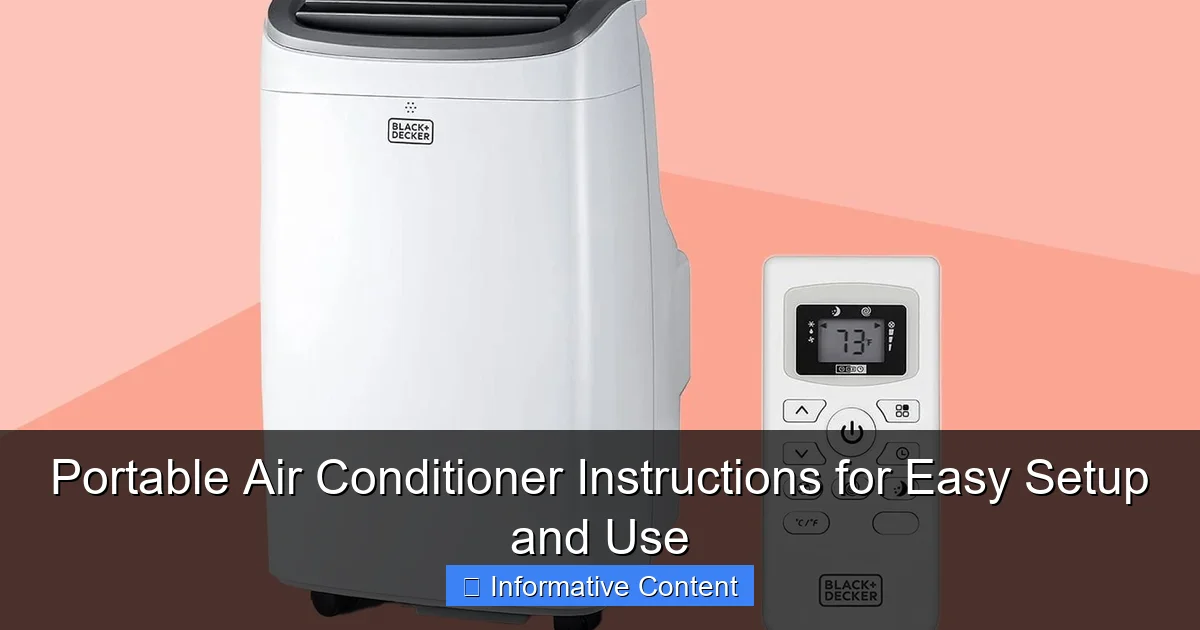
Featured image for portable air conditioner instructions
Image source: acallsolutions.com
Setting up your portable air conditioner correctly is the key to fast, efficient cooling. Follow the included venting instructions carefully—ensuring a tight window seal and proper exhaust hose alignment—to prevent hot air leaks and maximize performance. With simple controls and smart placement, you can enjoy cool comfort in under 15 minutes.
Key Takeaways
- Read the manual first: Always review manufacturer instructions before setup.
- Ensure proper venting: Use the exhaust hose to vent hot air outside.
- Check power requirements: Confirm voltage compatibility to avoid damage.
- Maintain airflow: Keep intake and exhaust areas unobstructed.
- Clean filters regularly: Improve efficiency with monthly filter cleaning.
- Drain water safely: Empty the reservoir to prevent overflow.
- Start with low settings: Gradually adjust temperature for optimal cooling.
📑 Table of Contents
- Why Portable Air Conditioners Are a Lifesaver (And How to Use One Right)
- Unboxing and Initial Setup: Getting Started Right
- Operating Your Portable Air Conditioner: Controls, Modes, and Settings
- Maintenance and Care: Keeping Your AC Running Smoothly
- Troubleshooting Common Issues: When Things Go Wrong
- Energy Efficiency and Cost-Saving Tips
- Final Thoughts: Your Portable AC, Your Way
Why Portable Air Conditioners Are a Lifesaver (And How to Use One Right)
Remember that summer day when your central AC gave up mid-afternoon? The one where you were sweating through your shirt, your dog was panting like a steam engine, and the idea of opening a window just brought in more hot air? Yeah, we’ve all been there. That’s when a portable air conditioner swoops in like a superhero. These compact units are perfect for cooling down a single room, a home office, or even a small apartment without the hassle of installation or the cost of upgrading your entire HVAC system.
But here’s the catch: buying a portable AC is only half the battle. If you don’t set it up correctly or use it the right way, you might end up with a noisy, inefficient machine that barely cools the air. I’ve seen it happen — friends who unboxed their unit, plugged it in, and expected instant relief, only to realize they forgot the vent hose or placed it near a heat source. That’s why understanding your portable air conditioner instructions is so important. Whether you’re a first-time owner or just upgrading your model, this guide will walk you through everything you need to know — from unboxing to daily use — so you can stay cool all season long.
Unboxing and Initial Setup: Getting Started Right
What’s in the Box?
When your portable air conditioner arrives, it’s easy to get excited and start plugging it in right away. But hold up — take a moment to check what’s inside. Most models come with:
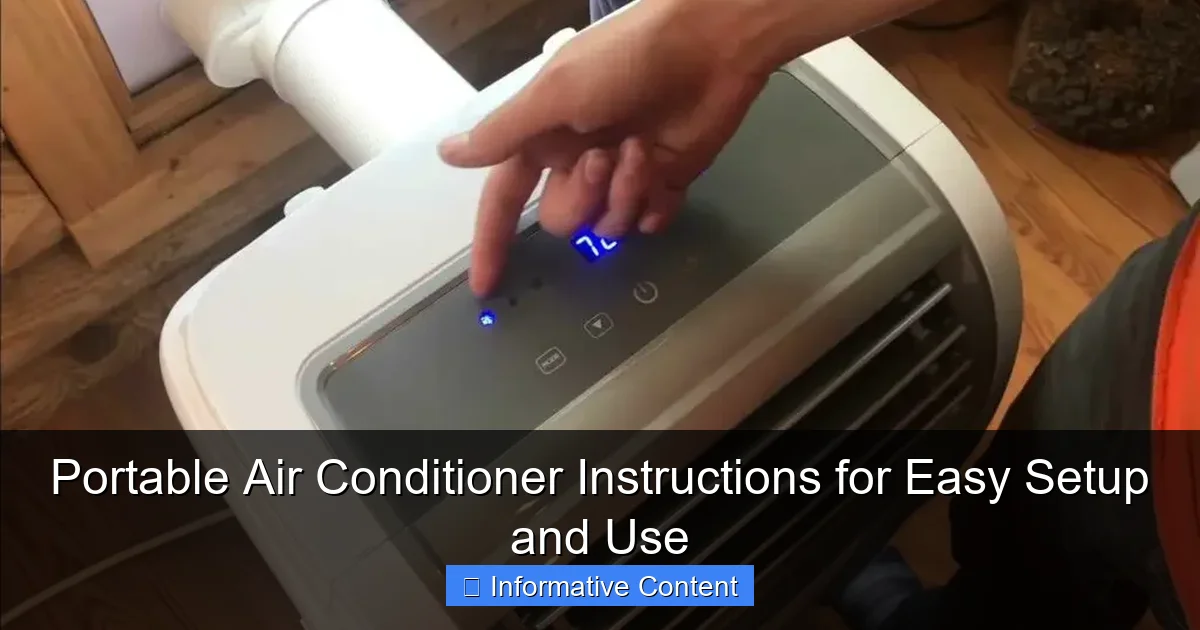
Visual guide about portable air conditioner instructions
Image source: smartacsolutions.com
- The main AC unit
- An exhaust hose (usually 5–7 feet long)
- A window venting kit (plastic panels, brackets, and screws)
- A remote control (with batteries)
- A user manual (yes, read it!)
- A drainage hose or drip tray (for manual models)
For example, the Honeywell MN12CES includes a flexible hose, two window panels, and a quick-start guide. Missing any of these? Don’t panic — just contact customer support. Most brands offer replacements within 30 days.
Choosing the Right Spot
Where you place your portable AC can make or break its performance. Think of it like a campfire — you want it close enough to feel the heat (cool air, in this case), but far enough to avoid direct exposure to flames (or in this case, heat sources).
Here’s what to consider:
- Near a window: The exhaust hose must reach outside. Measure the distance from your window to where you want the unit. If it’s over 7 feet, you might need an extension kit (sold separately).
- On a flat, stable surface: Uneven floors can cause the unit to vibrate or even tip. I once placed mine on a slightly slanted rug — it wobbled all night and woke me up every time it shifted.
- Away from heat sources: Keep it clear of radiators, ovens, or direct sunlight. Heat makes the AC work harder, which means higher energy bills and less cooling.
- With good airflow: Leave at least 18–24 inches of space on all sides. Don’t shove it into a corner or behind furniture.
Pro tip: Use a tape measure to confirm the window kit fits your window type (sliding, double-hung, or casement). Some kits are universal, but others need adapters.
Venting the Exhaust Hose
This is the most important step. Portable ACs work by pulling in warm air, cooling it, and pushing hot air outside through the exhaust hose. If the hose isn’t vented properly, the hot air just circulates back into the room — defeating the purpose.
Here’s how to do it:
- Attach one end of the hose to the back of the unit. Most models have a twist-lock or snap-on connection.
- Extend the hose fully (don’t coil it — this reduces efficiency).
- Attach the other end to the window kit. Slide the plastic panels into your window frame, then secure them with brackets or tape. Make sure there are no gaps — use foam strips or weather sealing tape to block air leaks.
Example: My Frigidaire FFPA1022U1 came with a 5.5-foot hose. I used the included foam strips to seal the gaps in my sliding window. No hot air sneaking back in!
Operating Your Portable Air Conditioner: Controls, Modes, and Settings
Understanding the Control Panel
Most portable ACs have a simple control panel on the top or front. Buttons usually include:
- Power: Turns the unit on/off
- Mode: Cycles through cooling, dehumidifying, fan-only, and auto modes
- Fan Speed: Low, medium, or high
- Temperature: Adjusts the target temperature (usually 61–89°F)
- Timer: Sets auto-on or auto-off
- Sleep: Reduces noise and adjusts temperature over time
My LG LP0817WSR has a digital display that shows the current temperature. I love the “Sleep” mode — it lowers the fan speed after 30 minutes and raises the temp by 2°F every hour, so I’m not freezing at 3 a.m.
Choosing the Right Mode
Not all modes are created equal. Here’s when to use each:
- Cooling Mode: For hot days. The compressor kicks in to cool the air. Ideal for 75–85°F rooms.
- Dehumidify Mode: For humid but not hot days. It removes moisture without cooling much. Great for rainy seasons or damp basements. I use this in my basement during spring — it keeps the air fresh without making it too cold.
- Fan-Only Mode: For breezy days. It just circulates air. Saves energy and reduces noise.
- Auto Mode: The unit decides the best mode based on room temperature. Convenient, but not always precise.
Tip: In cooling mode, set the temperature 5–7°F lower than the current room temp. The AC will cool faster and shut off once it reaches the set point.
Using the Remote Control
Most portable ACs come with a remote. It’s super handy — no need to get up to adjust the temp or turn it off. But here’s a common mistake: people lose the remote or don’t check the batteries.
To avoid this:
- Store the remote in a designated spot (like a drawer or magnetic holder).
- Check the batteries every few months. I once went a week without realizing my remote was dead — I was using the buttons on the unit, which was annoying.
- Keep it clean. Dust and grime can block the infrared signal.
Bonus: Some remotes have a “follow me” feature. You hold it near you, and the AC adjusts the temperature based on where you are. My Honeywell model has this — it’s like having a personal climate butler!
Maintenance and Care: Keeping Your AC Running Smoothly
Cleaning the Air Filter
The air filter is like the AC’s lungs. If it’s clogged with dust, the unit can’t breathe — and that means poor cooling, higher energy use, and even breakdowns.
How to clean it:
- Turn off and unplug the unit.
- Locate the filter (usually behind a front panel or on the side).
- Remove it and tap off loose dust.
- Rinse it under lukewarm water (no soap — it can damage the mesh).
- Let it dry completely (takes about 1–2 hours).
- Reinstall it.
Frequency: Every 2–4 weeks during heavy use. I clean mine every 3 weeks in summer — it takes 10 minutes and makes a huge difference. A dirty filter can reduce cooling efficiency by up to 30% (source: ENERGY STAR).
Draining the Water (For Non-Self-Evaporative Models)
Portable ACs remove moisture from the air, which collects in a drip tray or internal tank. If it’s full, the unit will shut off or leak.
Two types of drainage:
- Manual Drainage: You have to empty the tank. Most common in older or budget models. I had one that needed emptying every 8 hours in high humidity.
- Continuous Drainage: Attach a hose to the back and run it to a floor drain or bucket. No manual work. My current model has this — I just ran the hose into my bathroom sink.
Tip: If your model has a “self-evaporative” feature, it recycles the water to cool the compressor, so you rarely need to drain it. But in very humid climates, you might still need to drain it occasionally.
Storing the Unit
When summer ends, don’t just shove the AC in a closet. Proper storage prevents mold, damage, and bad smells next season.
Steps:
- Drain all water from the tank and hose.
- Run the fan-only mode for 30 minutes to dry the interior.
- Clean the filter and exterior with a damp cloth.
- Coil the power cord and hose neatly.
- Store in a dry, cool place (not the garage or basement if it’s damp).
I keep mine in a sealed plastic bin with silica gel packs to absorb moisture. It’s ready to go next year!
Troubleshooting Common Issues: When Things Go Wrong
AC Isn’t Cooling
You turn it on, but the air feels lukewarm. What’s wrong?
- Check the vent hose: Is it kinked or disconnected? A loose hose lets hot air escape back into the room.
- Clean the filter: A dirty filter blocks airflow. I once ignored mine for a month — the AC barely cooled the room.
- Room too big: Portable ACs are rated for specific room sizes. A 10,000 BTU unit won’t cool a 400 sq ft living room. Check the manual — it’ll list the coverage area.
- Thermostat setting: Is it set higher than the room temp? Lower it by a few degrees.
Example: My neighbor’s AC wasn’t cooling. We found the hose was only half-attached to the window kit — hot air was leaking back in. A quick fix!
Water Leaking from the Unit
Water on the floor? Not good. Causes:
- Full drip tray: Empty it.
- Clogged drain hole: Use a pipe cleaner to clear it.
- Unit not level: Tilt it slightly backward so water flows to the drain.
- Frozen evaporator: If the coil freezes, it can thaw and leak. This happens if the filter is dirty or the fan is off. Turn it off, let it thaw, then restart.
Tip: Place a towel or tray under the unit to catch leaks — just in case.
Loud or Strange Noises
Grinding, buzzing, or rattling sounds? Here’s what it could be:
- Fan blade hitting something: Check for loose screws or debris.
- Loose parts: Tighten all screws.
- Compressor issue: If it’s a loud hum, call customer service. It might need repair.
I once had a rattling noise — turned out a plastic panel had come loose. A quick tighten fixed it.
Energy Efficiency and Cost-Saving Tips
How Much Electricity Does a Portable AC Use?
Portable ACs use 500–1,500 watts, depending on size and mode. To calculate your cost:
- Find the wattage (check the label or manual).
- Multiply by hours used per day.
- Multiply by your electricity rate (usually $0.10–$0.30 per kWh).
Example: A 1,200-watt AC running 8 hours/day at $0.15/kWh costs $1.44/day or $43.20/month.
Ways to Save Energy
You don’t have to choose between comfort and high bills. Try these:
- Use a programmable timer: Turn it off when you’re not home or sleeping.
- Close curtains and blinds: Block sunlight to keep the room cooler.
- Use ceiling fans: They circulate air, so you can set the AC a few degrees higher.
- Seal gaps: Weather-strip windows and doors to prevent cool air from escaping.
- Upgrade to an ENERGY STAR model: They use up to 15% less energy.
My energy bill dropped 20% when I started using the timer and a ceiling fan. Win-win!
Comparing Portable ACs: What to Look For
Not all portable ACs are equal. Here’s a quick comparison of popular models:
| Model | BTU | Coverage (sq ft) | Noise Level (dB) | Drainage Type | Energy Efficiency (CEER) |
|---|---|---|---|---|---|
| Honeywell MN12CES | 12,000 | 450 | 52 | Continuous | 10.5 |
| Frigidaire FFPA1022U1 | 10,000 | 400 | 53 | Manual | 9.8 |
| LG LP0817WSR | 8,000 | 300 | 49 | Self-evaporative | 11.2 |
| Whynter ARC-14S | 14,000 | 500 | 56 | Dual-hose (continuous) | 11.8 |
Note: Dual-hose models (like the Whynter) are more efficient — they pull fresh air from outside, so they don’t create negative pressure in the room.
Final Thoughts: Your Portable AC, Your Way
Using a portable air conditioner doesn’t have to be complicated. With the right portable air conditioner instructions, you can set it up quickly, use it efficiently, and keep it running for years. Think of it like a trusty sidekick — it’s not perfect (yes, it’s a bit noisy, and yes, you have to clean the filter), but it’s reliable when you need it most.
The key is to treat it with care. Read the manual, clean it regularly, and don’t ignore small issues — they can turn into big problems. And remember: a well-placed, well-maintained portable AC can make your space feel 10–20°F cooler, even on the hottest days. So go ahead, enjoy that cool breeze, and stay comfortable all summer long. You’ve got this!
Frequently Asked Questions
How do I set up my portable air conditioner for the first time?
Follow the portable air conditioner instructions to assemble the exhaust hose and window kit, then plug it into a grounded outlet. Ensure the unit is level and the exhaust hose is securely vented outside to avoid hot air recirculation.
Why is my portable air conditioner not cooling properly?
Check if the air filter is clogged or the exhaust hose is kinked, as both can reduce efficiency. Also, verify the room size matches the unit’s BTU rating, as undersized units struggle to cool large spaces.
Can I leave my portable air conditioner running overnight?
Yes, but ensure the unit has a built-in thermostat and auto-shutoff feature to prevent overheating. Empty the water tank or use a continuous drain hose to avoid overflow during extended use.
How often should I clean the portable air conditioner filter?
Clean the filter every 2 weeks for optimal performance, or more frequently in dusty environments. Refer to your portable air conditioner instructions for filter removal and cleaning steps.
What’s the correct way to vent a portable air conditioner through a sliding window?
Use the included window kit to seal the gap between the exhaust hose and window frame. Adjust the kit’s length to fit snugly, ensuring no hot air leaks back into the room.
How do I troubleshoot a portable air conditioner that won’t turn on?
Verify the power cord is securely plugged in and the outlet is working. If the unit has a reset button, press it; otherwise, consult the manual for error codes or circuit breaker checks.