
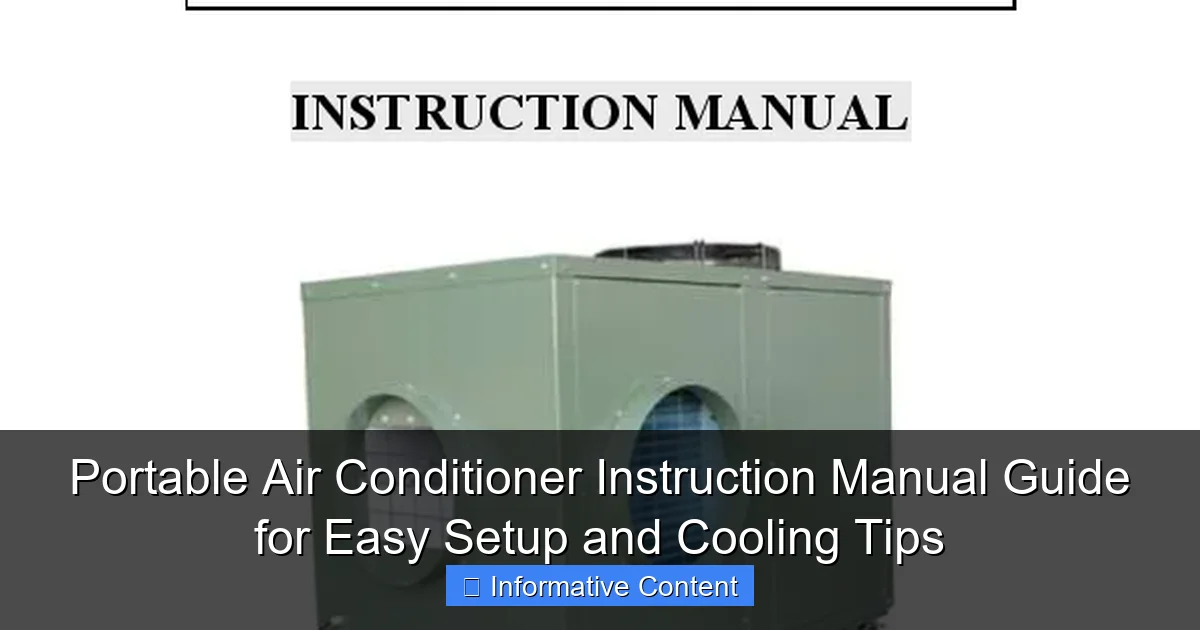
Featured image for portable air conditioner instruction manual
Image source: device.report
Master your portable air conditioner with the official instruction manual—your essential guide to fast, frustration-free setup and optimal cooling performance. Follow step-by-step instructions and expert tips to maximize efficiency, reduce energy use, and stay cool all season long.
Key Takeaways
- Read the manual first: Always review safety guidelines and setup steps before installation.
- Proper venting is critical: Ensure exhaust hose is securely connected and unobstructed.
- Choose the right location: Place near a window and outlet for optimal airflow.
- Clean filters regularly: Maintain efficiency by washing reusable filters monthly.
- Use timer functions: Schedule operation to save energy and cool efficiently.
- Check drainage needs: Empty the tank or set up continuous drainage when required.
📑 Table of Contents
- Why You Need a Portable Air Conditioner Instruction Manual
- Understanding Your Portable Air Conditioner Instruction Manual
- Step-by-Step Setup: From Box to Cooling
- Operating Modes and Settings Explained
- Maintenance and Troubleshooting: Keep Your AC Running Smoothly
- Pro Tips for Maximum Cooling Efficiency
- Comparison Table: Portable AC Features
- Final Thoughts: Your Path to Cool, Comfortable Days
Why You Need a Portable Air Conditioner Instruction Manual
Remember that sweltering afternoon last summer when the heat made your living room feel like a sauna? You dragged your portable air conditioner out of the closet, only to spend 20 minutes squinting at a confusing manual written in what felt like hieroglyphics. Sound familiar? If so, you’re not alone. A portable air conditioner instruction manual is more than just a stack of paper—it’s your roadmap to comfort, efficiency, and avoiding costly mistakes.
Whether you’re a first-time buyer or upgrading your current unit, the manual is your go-to guide for setup, maintenance, and troubleshooting. But here’s the catch: not all manuals are created equal. Some are clear and helpful; others seem like they were translated by someone who’s never used the product. In this guide, we’ll break down everything you need to know to get the most out of your portable AC, from unboxing to advanced cooling tips. Think of this as your friendly, no-nonsense companion to mastering your unit—no engineering degree required.
Understanding Your Portable Air Conditioner Instruction Manual
What’s Included in the Manual?
Let’s start with the basics. A typical portable air conditioner instruction manual includes:
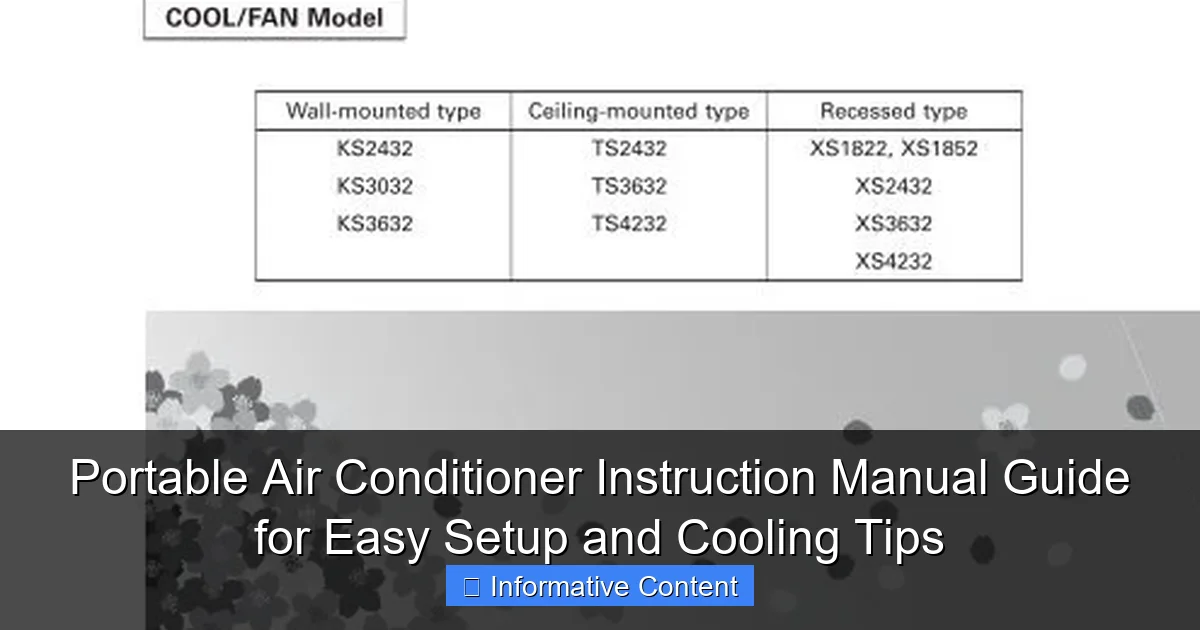
Visual guide about portable air conditioner instruction manual
Image source: img.yumpu.com
- Unboxing and setup instructions: How to safely unpack and position your unit.
- Parts list: Diagrams showing every component, from the exhaust hose to the water tank.
- Operating modes: Explanations of cooling, dehumidifying, fan-only, and sleep modes.
- Maintenance guidelines: Cleaning the filter, draining the water, and seasonal care.
- Troubleshooting tips: Common issues like error codes or poor airflow.
- Safety warnings: Critical reminders about electrical safety and proper ventilation.
For example, the Honeywell MN10CESWW manual includes a color-coded diagram of the exhaust hose setup, which makes installation a breeze. Meanwhile, some budget models skip visuals entirely, leaving you to guess where the hose connects. Always check if your manual includes clear diagrams—they’re worth their weight in gold.
How to Use the Manual Like a Pro
Here’s a pro tip: don’t wait until your room feels like a desert to open the manual. Instead:
- Read it before unboxing. This helps you identify tools you’ll need (e.g., a screwdriver for mounting brackets).
- Bookmark key sections. Use sticky notes or a digital PDF highlight tool for quick access later.
- Keep it accessible. Store it in a kitchen drawer or with your AC’s remote—somewhere you’ll remember.
One user, Maria from Texas, shared: “I kept my manual in a plastic sleeve taped to the AC unit. When my hose started leaking, I found the fix in two minutes.” Smart move, Maria!
Step-by-Step Setup: From Box to Cooling
Unboxing and Initial Inspection
First things first: unbox your unit in a cool, shaded area. Here’s what to do:
- Check for damage. Look for dents, scratches, or cracked parts. If you spot issues, contact the seller immediately.
- Verify all parts. Compare the manual’s parts list with what’s in the box. Missing the exhaust hose adapter? Don’t start setup yet.
- Inspect the filter. Most units have a pre-installed air filter. Ensure it’s clean and properly seated.
Example: The LG LP1419IVSM manual includes a checklist on page 3. Use it to tick off items as you unpack. If your manual lacks this, create your own checklist with the parts list.
Positioning Your Unit: The Golden Rules
Where you place your AC matters more than you think. Follow these guidelines:
- Distance from walls: Leave at least 18–24 inches of clearance on all sides for airflow.
- Near a window: The exhaust hose needs to vent hot air outside. Use the window kit provided.
- On a level surface: Uneven floors cause vibrations and noise. A small towel under one corner can help.
Pro tip: If you live in a rental, opt for a portable windowless AC (like the Whynter ARC-14S) that uses a dual-hose system. It doesn’t require permanent window modifications—a landlord’s dream.
Connecting the Exhaust Hose: A Common Pitfall
The exhaust hose is the lifeline of your portable AC. Here’s how to install it:
- Attach the hose to the unit. Most hoses twist or snap into place. Check the manual’s diagram.
- Extend the hose fully. Kinks reduce efficiency. If it’s too long, coil it loosely (no sharp bends).
- Seal the window gap. Use the foam insulation strips in the window kit. Gaps let hot air back in!
Common mistake: Users often overlook the hose direction. Always point it downhill (slightly tilted) to let condensation drain outside. The DeLonghi PACEX390 manual warns: “A poorly angled hose causes water leaks indoors.”
Operating Modes and Settings Explained
Cooling Mode: Your Summer Savior
This is the mode you’ll use most. To set it:
- Set your desired temperature. Most units range from 60°F to 85°F. For comfort, aim for 72–75°F.
- Adjust the fan speed. High speed cools faster; low speed is quieter for nighttime.
- Use “Auto” mode (if available). The AC adjusts fan speed based on room temperature.
Example: The Midea MAP10S1CWT has an “Auto” mode that kicks in when the room is within 3°F of the set temperature. It saves energy and reduces noise.
Dehumidifying and Fan-Only Modes
Not all days require cooling. Use these modes instead:
- Dehumidifying mode: Removes moisture from the air (ideal for humid climates). Note: It doesn’t cool as much as cooling mode.
- Fan-only mode: Circulates air without cooling. Great for mild days or improving airflow.
Pro tip: In humid areas like Florida, run dehumidifying mode at night to reduce mold risk. The Frigidaire FGPC1044S1 manual suggests using it for 2–3 hours before bedtime.
Advanced Features: Sleep Mode, Timer, and More
Many modern ACs include extras:
- Sleep mode: Gradually increases temperature by 1–2°F per hour to save energy while you sleep.
- Timer: Schedule the unit to turn on/off. Use it to pre-cool your room before coming home.
- Remote control: Adjust settings from your couch. Ensure the remote has batteries!
One user, James from California, said: “I programmed my timer to turn on at 5 PM. By the time I got home from work, my apartment was perfectly cool.” That’s smart energy use.
Maintenance and Troubleshooting: Keep Your AC Running Smoothly
Cleaning the Air Filter: The #1 Maintenance Task
A dirty filter reduces efficiency and spreads allergens. Here’s how to clean it:
- Turn off and unplug the unit. Safety first!
- Remove the filter. Slide it out from the back or side (check the manual).
- Rinse with lukewarm water. Avoid soap—it can damage the filter. Let it air-dry for 24 hours.
- Reinstall. Ensure it clicks into place.
How often? Every 2–4 weeks in summer; monthly in winter. The Honeywell MN10CESWW manual recommends a deep clean with mild vinegar every 3 months.
Draining the Water Tank: Preventing Leaks
Most portable ACs collect condensation in a tank. When it’s full, the unit shuts off (or leaks!). To drain:
- Check the manual’s water indicator. Some units beep or flash a light when full.
- Place a towel under the tank. Spills happen!
- Empty the tank. Pour water into a sink or use the continuous drain option (if your unit has one).
Pro tip: In humid climates, use the continuous drain hose (often included). Attach it to the tank and run it to a floor drain. The Whynter ARC-14S manual shows how to set this up in 5 minutes.
Common Issues and Quick Fixes
Even the best ACs have hiccups. Here’s how to handle them:
- Unit won’t turn on: Check the power outlet, circuit breaker, and remote batteries.
- Weak airflow: Clean the filter and ensure the exhaust hose isn’t kinked.
- Water leaks: Verify the tank isn’t full and the hose is angled downhill.
- Error codes: Refer to the manual. For example, “E1” on the LG LP1419IVSM means the water tank is full.
Example: One user’s unit kept shutting off. The manual’s troubleshooting section revealed a clogged filter. After cleaning, it worked perfectly.
Pro Tips for Maximum Cooling Efficiency
Optimize Your Room Setup
Your AC works best in a well-prepared room:
- Close curtains/blinds. Blocking sunlight reduces heat gain.
- Seal gaps. Weatherstrip doors and windows to keep cool air in.
- Use fans. Ceiling fans help circulate cool air, letting you raise the AC’s temperature by 4°F (saving energy).
Pro tip: Place a bowl of ice in front of a fan for a DIY “swamp cooler” effect. It’s not as powerful as AC, but it helps in a pinch.
Energy-Saving Hacks
Save money and the planet:
- Set the thermostat to 75°F. Every degree lower increases energy use by 3–5%.
- Use the timer. Avoid running the AC all day.
- Upgrade insulation. Add thermal curtains or window film.
Data: The U.S. Department of Energy estimates that proper thermostat settings can save up to $180/year.
Seasonal Care: Storing Your AC
When summer ends:
- Clean the unit thoroughly. Remove dust and debris.
- Drain all water. Residual moisture causes mold.
- Coil the cords. Avoid sharp bends to prevent damage.
- Store in a dry, cool place. A closet or basement works. Cover it with a breathable cloth.
Example: The DeLonghi PACEX390 manual includes a storage checklist on page 12. Use it to avoid “Why won’t it work next summer?” moments.
Comparison Table: Portable AC Features
| Feature | Honeywell MN10CESWW | LG LP1419IVSM | Whynter ARC-14S |
|---|---|---|---|
| BTU Rating | 10,000 | 14,000 | 14,000 |
| Drain Type | Manual | Manual + Continuous | Manual + Continuous |
| Noise Level (dB) | 52 | 51 | 56 |
| Energy Efficiency Ratio (EER) | 11.5 | 12.1 | 11.2 |
| Manual Clarity | Excellent (color diagrams) | Good (text-heavy) | Excellent (step-by-step) |
Note: The Whynter ARC-14S’s dual-hose system makes it ideal for hot climates, but it’s louder than the Honeywell. Choose based on your priorities.
Final Thoughts: Your Path to Cool, Comfortable Days
Let’s face it: a portable air conditioner is only as good as your ability to use it. The portable air conditioner instruction manual isn’t just a formality—it’s your secret weapon against summer heat, energy bills, and avoidable repairs. By understanding setup, mastering modes, and staying on top of maintenance, you’ll transform your AC from a clunky appliance into a reliable comfort companion.
Remember: every unit is different. Take 10 minutes to skim your manual now, and you’ll save hours of frustration later. And if you ever hit a snag? Don’t panic. Most issues—from water leaks to error codes—have simple fixes hiding in those pages. So go ahead, crack open that manual, and turn your home into an oasis. Your future cool self will thank you.
Frequently Asked Questions
How do I set up my portable air conditioner for the first time?
Follow the steps in your portable air conditioner instruction manual to assemble the exhaust hose, position the unit near a window, and secure the vent kit. Ensure the unit is on a flat, stable surface and the exhaust hose is properly connected to avoid overheating.
Why is my portable AC not cooling the room effectively?
Check if the air filter is clean, the exhaust hose is properly vented, and doors/windows are closed to prevent hot air leakage. Also, verify the room size matches your unit’s cooling capacity as listed in the portable air conditioner instruction manual.
How often should I clean or replace the air filter?
Clean the air filter every two weeks for optimal performance, especially during heavy use. Refer to your manual for filter removal instructions and use mild soap and water; replace it if damaged or excessively worn.
Can I leave my portable air conditioner running all day?
Yes, but ensure the unit has a built-in thermostat or timer to avoid overworking the compressor. Regularly empty the condensate tank (if not using a self-evaporative model) to prevent overflow and damage.
What does the “E3” error code mean on my portable AC?
The “E3” code typically indicates a full condensate tank or drainage issue. Empty the tank, check the drain hose for clogs, and restart the unit as described in the troubleshooting section of your manual.
How do I store my portable air conditioner during winter?
Drain all water from the unit, clean the filter, and dry the interior to prevent mold. Store it in a cool, dry place with the original packaging or a protective cover to avoid dust and damage.