
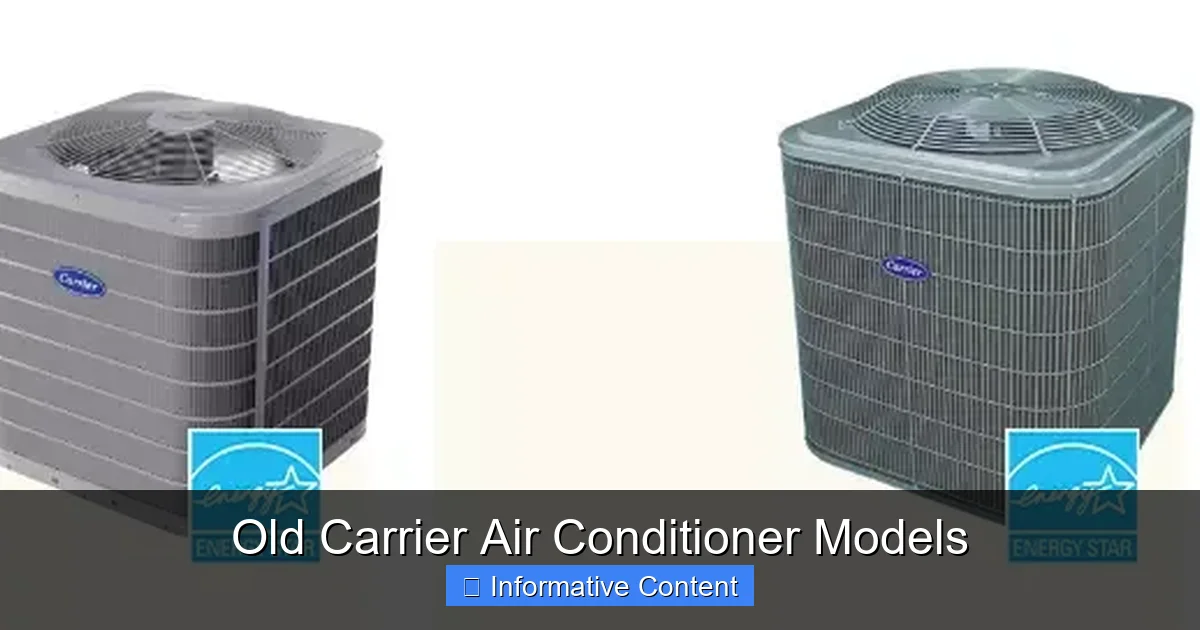
Old Carrier air conditioner models represent decades of innovation, durability, and trusted cooling performance. From the 1970s to the early 2000s, these units laid the foundation for modern HVAC systems and remain popular among homeowners seeking reliable, long-lasting climate control.
Key Takeaways
- Proven Durability: Many old Carrier air conditioner models were built with heavy-duty components, allowing them to last 20+ years with proper maintenance.
- Energy Efficiency Evolution: Early models had lower SEER ratings, but later vintage units (1990s–2000s) began incorporating higher efficiency designs.
- Classic Series Highlights: Models like the Carrier 38AK, 38TKS, and WeatherMaker series are well-regarded for their reliability and serviceability.
- Parts Availability: Despite being discontinued, many parts for older Carrier units are still available through HVAC suppliers and online retailers.
- Retrofit & Upgrade Options: Older systems can often be upgraded with modern thermostats, capacitors, or compressors to improve performance.
- Environmental Considerations: Older units may use R-22 refrigerant, which is being phased out, making retrofitting or replacement a smart long-term move.
- Collector & Restoration Interest: Some HVAC enthusiasts and homeowners restore vintage Carrier units for historical or aesthetic reasons.
📑 Table of Contents
- The Legacy of Old Carrier Air Conditioner Models
- A Brief History of Carrier Air Conditioning
- Notable Old Carrier Air Conditioner Models
- Why Old Carrier Models Still Matter
- Challenges of Owning an Old Carrier Air Conditioner
- Should You Keep, Repair, or Replace Your Old Carrier Unit?
- Tips for Maintaining Old Carrier Air Conditioners
- Conclusion
The Legacy of Old Carrier Air Conditioner Models
When it comes to trusted names in home cooling, few brands carry the weight of Carrier. For over a century, Carrier has been a pioneer in air conditioning technology, shaping how we live, work, and stay comfortable in hot climates. While modern systems boast smart features and ultra-high efficiency, many homeowners still rely—or reminisce—about the old Carrier air conditioner models that kept their homes cool through decades of summers.
These older units weren’t just machines; they were symbols of reliability. Built during an era when appliances were meant to last, many old Carrier models ran for 20, 25, even 30 years with minimal issues. They didn’t have Wi-Fi connectivity or voice control, but they delivered consistent cooling when it mattered most. Today, as energy costs rise and sustainability becomes a priority, there’s renewed interest in understanding these classic systems—not just for nostalgia, but for practical reasons like repair, retrofitting, and even restoration.
Whether you’re maintaining a vintage home, troubleshooting an aging unit, or simply curious about HVAC history, exploring old Carrier air conditioner models offers valuable insights. From their mechanical simplicity to their robust construction, these units tell a story of engineering excellence and enduring value.
A Brief History of Carrier Air Conditioning

Visual guide about Old Carrier Air Conditioner Models
Image source: andersonair.com
To truly appreciate old Carrier air conditioner models, it helps to understand the brand’s roots. Carrier was founded in 1915 by Willis Haviland Carrier, the inventor of modern air conditioning. His 1902 “Apparatus for Treating Air” revolutionized indoor climate control, initially for industrial use. By the mid-20th century, Carrier began bringing cooling comfort to homes across America.
The 1950s and 1960s marked the rise of residential air conditioning. Carrier introduced compact, reliable units designed for single-family homes. These early models were often window units or early central systems, built with cast iron compressors and copper coils—materials chosen for longevity. While not energy-efficient by today’s standards, they were groundbreaking at the time.
By the 1970s and 1980s, Carrier had established itself as a leader in the HVAC industry. The company launched its first central air conditioning systems for homes, including the iconic Carrier 38AK series. These units featured reciprocating compressors, durable cabinets, and straightforward controls. They were workhorses—simple to operate, easy to service, and built to endure.
The 1990s brought advancements in efficiency and environmental responsibility. Carrier responded by introducing models with higher Seasonal Energy Efficiency Ratio (SEER) ratings and beginning the transition from R-12 to R-22 refrigerant. The WeatherMaker series, launched in the late 1990s, became one of the most popular lines, combining improved efficiency with Carrier’s signature durability.
Notable Old Carrier Air Conditioner Models
Over the decades, Carrier released numerous air conditioning models, but a few stand out for their performance, popularity, and longevity. These old Carrier air conditioner models are still discussed among HVAC technicians and homeowners today.
Carrier 38AK Series (1970s–1980s)
One of the most iconic lines, the 38AK series was known for its rugged design and reliability. These units featured hermetic compressors, copper-aluminum coils, and heavy-gauge steel cabinets. Many 38AK models operated on R-22 refrigerant and had SEER ratings between 6 and 8—low by today’s standards, but impressive for their time.
Homeowners loved the 38AK for its quiet operation and consistent cooling. Technicians appreciated its straightforward design, which made troubleshooting and repairs relatively simple. Even today, you can find used 38AK units still running in older homes, a testament to their build quality.
Carrier 38TKS Series (1980s–1990s)
An evolution of the 38AK, the 38TKS series introduced improved efficiency and quieter operation. These models often featured scroll compressors, which were more reliable and energy-efficient than older reciprocating types. The 38TKS units typically had SEER ratings between 8 and 10, making them a popular upgrade during the energy-conscious 1990s.
One standout feature was the use of galvanized steel cabinets with baked-on enamel finishes, which resisted rust and corrosion. This made the 38TKS ideal for humid or coastal climates. Many of these units are still in service, especially in regions with mild winters and moderate cooling demands.
Carrier WeatherMaker Series (Late 1990s–Early 2000s)
The WeatherMaker line marked Carrier’s push toward higher efficiency and smarter design. These models featured advanced coil technology, improved airflow systems, and optional two-stage compressors. SEER ratings ranged from 10 to 13, placing them among the most efficient units of their era.
The WeatherMaker series also introduced better sound insulation, reducing outdoor noise—a major selling point for suburban homes. Some models included diagnostic LEDs and compatibility with early programmable thermostats, foreshadowing today’s smart HVAC systems.
Carrier 38YXA and 38YXA-12 (1990s)
These compact split-system units were designed for tight spaces and multi-family housing. The 38YXA series offered reliable cooling with SEER ratings up to 12. They were often used in apartments, condos, and small homes where space was limited.
What made the 38YXA special was its modular design. Technicians could easily access internal components, making maintenance faster and more affordable. These units are still found in older multifamily buildings, and parts remain available through HVAC distributors.
Carrier Infinity Series (Early 2000s)
Though technically a bridge between old and new, the early Infinity models (like the 2000 and 2001 series) are often grouped with vintage Carrier units. These systems introduced variable-speed compressors and advanced controls, offering unprecedented comfort and efficiency.
While more complex than earlier models, the early Infinity units retained Carrier’s reputation for durability. Many are still running today, especially when paired with proper maintenance and modern thermostats.
Why Old Carrier Models Still Matter
You might wonder: why talk about old Carrier air conditioner models when newer, smarter, and more efficient systems are available? The answer lies in their enduring value—both practical and sentimental.
Proven Longevity and Reliability
One of the biggest advantages of old Carrier air conditioner models is their track record. Unlike some modern units that may fail after 10–12 years, many vintage Carrier systems lasted two decades or more. This longevity came from robust materials, conservative engineering, and fewer electronic components that could fail.
For example, a 1985 Carrier 38AK unit in Phoenix, Arizona, was still cooling a 1,800-square-foot home in 2020—35 years after installation. The owner credited regular maintenance and the unit’s simple design. Stories like this are common among HVAC professionals and long-time homeowners.
Ease of Repair and Maintenance
Older Carrier models were designed with serviceability in mind. Components like capacitors, contactors, and fan motors were easy to access and replace. Technicians didn’t need specialized software or training—just basic tools and knowledge.
This simplicity means that even today, a skilled HVAC technician can often revive an old Carrier unit for a fraction of the cost of a new system. In contrast, modern units with circuit boards, variable-speed motors, and proprietary controls can be costly and difficult to repair.
Availability of Replacement Parts
Despite being discontinued, many parts for old Carrier air conditioner models are still manufactured or available through aftermarket suppliers. Companies like HVAC Parts Shop, Reliable Parts, and even Amazon carry capacitors, coils, filters, and compressors for vintage Carrier units.
For instance, a 1992 Carrier 38TKS needing a new run capacitor can often be fixed with a $25 part and a few minutes of work. This keeps repair costs low and extends the unit’s life.
Retrofitting for Modern Efficiency
Just because a unit is old doesn’t mean it can’t be improved. Many homeowners retrofit old Carrier models with modern upgrades to boost performance and efficiency.
Common retrofits include:
- Smart Thermostats: Installing a Nest, Ecobee, or Honeywell Lyric allows for better temperature control and energy savings.
- High-Efficiency Filters: Upgrading to MERV 8 or 11 filters improves indoor air quality without restricting airflow.
- Capacitor Upgrades: Replacing old capacitors with high-performance models can restore compressor efficiency.
- Refrigerant Management: While R-22 is phased out, some technicians use drop-in replacements like R-438A (Freon RF) to extend the life of older systems.
These upgrades can add years of service to an old unit while reducing energy bills.
Environmental and Economic Considerations
Replacing an old air conditioner isn’t always the greenest or most economical choice. Manufacturing new units requires significant energy and resources. Keeping an old Carrier model running—especially if it’s still functional—can be more sustainable.
Additionally, the cost of a new high-efficiency system can range from $5,000 to $12,000, including installation. In contrast, repairing an old unit might cost $200–$800. For homeowners on a budget or those in mild climates, this can be a smart financial decision.
Challenges of Owning an Old Carrier Air Conditioner
While old Carrier models have many advantages, they’re not without challenges. Understanding these issues helps homeowners make informed decisions about repair, replacement, or retrofitting.
Lower Energy Efficiency
Most old Carrier air conditioner models have SEER ratings between 6 and 10, far below today’s minimum standard of 13–14 (depending on region). This means they consume more electricity to deliver the same cooling.
For example, a 3-ton unit with a SEER of 8 uses about 4,500 watts, while a modern SEER 16 unit uses around 2,250 watts. Over a summer, this difference can add $200–$400 to your energy bill.
R-22 Refrigerant Phaseout
One of the biggest hurdles for owners of old Carrier units is the phaseout of R-22 refrigerant. Production of R-22 was banned in the U.S. in 2020, and prices have skyrocketed. A single pound can cost $100 or more, making recharging an old system expensive.
While alternatives like R-438A exist, they’re not always compatible and may void warranties or reduce efficiency. Some homeowners choose to retrofit their systems to use R-410A, but this requires replacing the compressor, coils, and refrigerant lines—costing nearly as much as a new unit.
Parts May Be Harder to Find
Although many parts are still available, some components for very old models (pre-1980) are no longer manufactured. Finding original compressors, control boards, or specific coils can be difficult and expensive.
In such cases, technicians may need to source used parts or recommend a partial system replacement.
Noise Levels
Older Carrier models were not designed with noise reduction as a priority. Units from the 1970s and 1980s can be quite loud, especially when the compressor kicks on. This can be disruptive in quiet neighborhoods or near bedrooms.
Modern units operate at 50–60 decibels, while older models can reach 70 dB or more—comparable to a vacuum cleaner.
Limited Smart Features
Old Carrier air conditioner models lack the connectivity and automation of today’s systems. No remote access, no energy usage reports, no integration with home assistants. For tech-savvy homeowners, this can be a drawback.
However, as mentioned earlier, adding a smart thermostat can partially bridge this gap.
Should You Keep, Repair, or Replace Your Old Carrier Unit?
Deciding what to do with an old Carrier air conditioner depends on several factors: age, condition, efficiency needs, and budget.
When to Keep and Maintain
Consider keeping your old unit if:
- It’s less than 20 years old and still cooling effectively.
- Repair costs are under $500 and the unit has no major issues.
- You live in a mild climate with low cooling demands.
- You’re planning to sell the home soon and don’t want a large upfront expense.
Regular maintenance—cleaning coils, replacing filters, checking refrigerant levels—can add years of life.
When to Repair
Repair makes sense when:
- The issue is minor (e.g., faulty capacitor, clogged filter, bad contactor).
- Parts are readily available and affordable.
- The unit has sentimental or historical value (e.g., in a restored home).
Always get a professional assessment before committing to repairs.
When to Replace
Replacement is the best option if:
- The unit is over 20 years old and requires frequent repairs.
- It uses R-22 and needs a recharge.
- Energy bills are unusually high due to inefficiency.
- You want smart features, better air quality, or quieter operation.
Modern Carrier units offer SEER ratings up to 26, variable-speed technology, and eco-friendly refrigerants—making them a worthwhile investment for long-term savings and comfort.
Tips for Maintaining Old Carrier Air Conditioners
If you’re keeping your old Carrier unit, proper maintenance is key to longevity. Here are some practical tips:
Schedule Annual Tune-Ups
Have a licensed HVAC technician inspect your system each spring. They’ll check refrigerant levels, clean coils, test electrical components, and ensure safe operation.
Replace Air Filters Monthly
Dirty filters restrict airflow, forcing the system to work harder. Use high-quality pleated filters and change them every 30–60 days during peak season.
Keep the Outdoor Unit Clean
Clear leaves, grass, and debris from around the condenser unit. Trim back vegetation to allow at least 2 feet of clearance on all sides.
Check Refrigerant Levels
Low refrigerant can indicate a leak. Never top off R-22 without finding and fixing the leak first.
Upgrade the Thermostat
A programmable or smart thermostat can reduce runtime and save energy—even on older systems.
Monitor for Unusual Noises or Odors
Grinding, buzzing, or musty smells can signal mechanical or electrical problems. Address them early to avoid costly repairs.
Conclusion
Old Carrier air conditioner models are more than relics of the past—they’re testaments to engineering excellence and enduring value. From the rugged 38AK to the efficient WeatherMaker series, these units have cooled homes for generations with reliability and simplicity.
While they may lack the bells and whistles of modern systems, their durability, ease of repair, and parts availability make them relevant even today. Whether you’re maintaining a vintage unit, considering a retrofit, or simply curious about HVAC history, understanding these classic models offers practical benefits and a deeper appreciation for the evolution of home comfort.
As energy efficiency and sustainability become priorities, the decision to repair, retrofit, or replace an old Carrier unit should be based on careful evaluation—not just age. With proper care, many of these systems can continue to serve faithfully for years to come. And for those who value craftsmanship and longevity, old Carrier air conditioner models remain a proud part of American home life.
Frequently Asked Questions
Are old Carrier air conditioner models still reliable?
Yes, many old Carrier models are still reliable, especially if they’ve been well-maintained. Units from the 1980s and 1990s often last 20+ years due to their durable construction and simple design.
Can I still get parts for a vintage Carrier AC unit?
Yes, many parts for old Carrier air conditioner models are still available through HVAC suppliers, online retailers, and aftermarket manufacturers. Common components like capacitors, filters, and contactors are widely accessible.
Is it worth repairing an old Carrier air conditioner?
It depends on the issue and the unit’s age. Minor repairs (under $500) on units under 20 years old are often worth it. However, if the system needs a refrigerant recharge or major component replacement, replacement may be more cost-effective.
What refrigerant do old Carrier models use?
Most old Carrier air conditioner models use R-22 refrigerant, which is being phased out due to environmental concerns. Production stopped in 2020, making it expensive and hard to find.
Can I upgrade my old Carrier unit to be more efficient?
Yes, you can improve efficiency by installing a smart thermostat, using high-MERV filters, upgrading capacitors, or retrofitting with compatible refrigerants. However, full efficiency gains require a new system.
How do I identify my old Carrier air conditioner model?
Check the manufacturer’s label on the outdoor unit. It will list the model number (e.g., 38TKS036) and serial number. You can also look up the model online or contact Carrier customer service for details.