
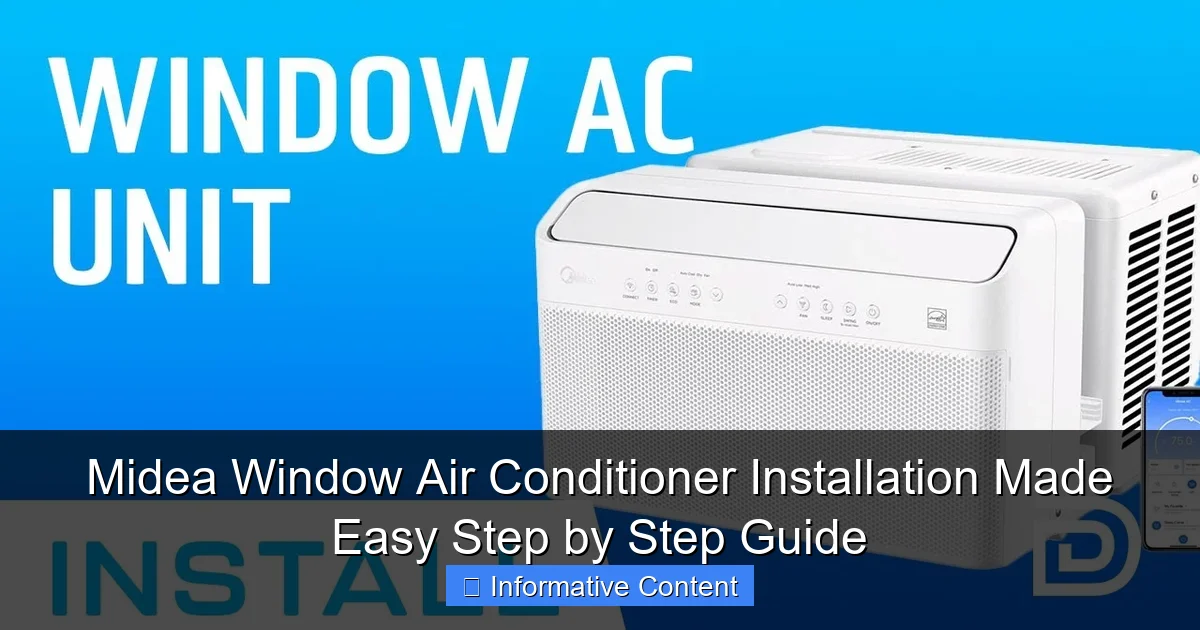
Featured image for midea window air conditioner installation
Image source: i.ytimg.com
Installing your Midea window air conditioner is quick and hassle-free with the right preparation and step-by-step guidance. This guide walks you through secure mounting, proper insulation, and safe electrical setup to ensure optimal performance and energy efficiency. Get your unit running in under an hour—no professional help needed.
Key Takeaways
- Measure twice, install once: Accurately measure your window to ensure a proper fit and avoid gaps.
- Use the included hardware: Rely on Midea’s mounting brackets and seals for a secure, weather-tight installation.
- Prioritize level placement: Ensure the unit is level to prevent drainage issues and improve efficiency.
- Seal all gaps tightly: Use foam panels and side curtains to block hot air leaks and maximize cooling.
- Check electrical requirements: Verify outlet voltage (115V/230V) matches your model to avoid damage.
- Test before finalizing: Run the AC briefly to confirm airflow, noise levels, and proper operation.
📑 Table of Contents
- Why Installing a Midea Window Air Conditioner Is Easier Than You Think
- Step 1: Choose the Right Midea Model and Check Your Window
- Step 2: Gather Your Tools and Prep the Workspace
- Step 3: Install the Support Bracket (Critical for Safety)
- Step 4: Position and Secure the Air Conditioner
- Step 5: Seal Gaps and Insulate for Efficiency
- Step 6: Test Your Midea Unit and Troubleshoot
- Final Thoughts: You’ve Got This!
Why Installing a Midea Window Air Conditioner Is Easier Than You Think
Let’s be real—installing an air conditioner sounds like a weekend project that requires tools, YouTube tutorials, and maybe even a call to your handiest neighbor. But here’s the good news: Midea window air conditioner installation doesn’t have to be stressful. In fact, if you’ve ever put together IKEA furniture or hung a heavy picture frame, you already have the basic skills needed. I learned this the hard way when I installed my first Midea unit during a sweltering July heatwave. I was sweating buckets, my cat was judging me from the couch, and I was convinced I’d need a professional. But after 45 minutes of focused effort (and zero trips to the hardware store), I had cool, refreshing air blowing through my living room.
The truth? Midea designs their window units with regular people in mind. No engineering degree required. Whether you’re a first-time renter, a DIY newbie, or just someone who wants to avoid a $150 installation fee, this guide is for you. We’ll walk through every step of Midea window air conditioner installation—from checking your window to testing your unit—so you can beat the heat without breaking a sweat (or the bank). And don’t worry: we’ll keep it simple, practical, and full of tips I’ve learned from my own trial-and-error journey.
Step 1: Choose the Right Midea Model and Check Your Window
Before you even unbox your new Midea air conditioner, take a breath. The key to a smooth Midea window air conditioner installation starts with picking the right unit and confirming your window can handle it. I once bought a 12,000 BTU unit for a tiny bedroom—only to realize it was overkill and too heavy for my old sash window. Lesson learned.

Visual guide about midea window air conditioner installation
Image source: i.ytimg.com
Match the BTU to Your Room Size
Midea offers models from 5,000 to 14,000 BTUs. Here’s a quick guide:
- 5,000–6,000 BTU: Perfect for small rooms (100–250 sq ft), like a home office or bedroom.
- 8,000–10,000 BTU: Ideal for medium spaces (250–450 sq ft), such as a living room or kitchen.
- 12,000–14,000 BTU: Best for large rooms (450–700 sq ft) or open-concept areas.
Pro tip: Measure your room’s square footage (length × width) and check Midea’s sizing chart on the box or website. Oversizing wastes energy and under-sizing leaves you hot and frustrated. For example, my 12×15 ft living room (180 sq ft) only needed an 8,000 BTU unit—not the 12,000 I initially picked.
Check Your Window Type and Fit
Most Midea window units work with **double-hung or sliding windows**. Here’s what to measure:
- Window width: Open the window and measure the inside width at the top, middle, and bottom. Use the narrowest measurement.
- Window height: Measure the vertical opening from the sill to the top of the window frame.
- Window sill depth: Measure from the outside wall to the inside edge of the sill. Midea units need at least 2.5 inches of clearance for the support brackets.
Example: My double-hung window was 28 inches wide and 36 inches tall—perfect for my 8,000 BTU Midea unit, which requires a 23–36 inch width and 14.5 inch height. If your window is too narrow, consider a **portable AC** or a different model. If it’s too wide, Midea’s adjustable side panels will fill the gap.
Check for Obstructions
Look for anything that might block installation: window locks, security bars, or nearby furniture. I once tried to install a unit in a window behind a bookshelf—big mistake. Clear the area first. Also, ensure the window opens and closes smoothly. If it’s stuck, use a lubricant (like WD-40) or call a pro to fix it before installing.
Step 2: Gather Your Tools and Prep the Workspace
Now that you’ve chosen your Midea unit and confirmed your window works, it’s time to prep. The good news? You likely have most tools at home. Here’s what you’ll need:
Essential Tools and Supplies
- Measuring tape (for double-checking dimensions)
- Screwdriver (Phillips #2—most Midea units use standard screws)
- Drill (optional but helpful for securing brackets)
- Level (a $10 bubble level from any hardware store)
- Scissors or utility knife (to cut foam or weatherstripping)
- Work gloves (protect your hands from sharp edges)
- Helper (optional but highly recommended—these units weigh 50–70 lbs!)
Pro tip: Lay out all tools and the Midea box near the window. My first install failed because I had to run to the garage for a screwdriver mid-way. Not fun.
Unbox and Inspect the Unit
Carefully open the box. Remove the AC and check for damage. Midea units come with:
- The air conditioner
- Adjustable side panels (for width)
- Foam seals (for gaps)
- Support brackets (for sill stability)
- Installation manual (keep it handy!)
Inspect the unit’s front and back for dents or scratches. If you see damage, contact Midea support immediately. Also, check that all parts are included. My neighbor’s unit was missing a bracket—Midea sent a replacement within 48 hours.
Prep the Window Area
Clear the window sill and surrounding area. Remove curtains, blinds, or decorations. Wipe the sill and window tracks with a damp cloth to remove dust. If your window has a lock, unlock it and remove it temporarily. I learned this after getting stuck mid-install with no way to close the window!
Step 3: Install the Support Bracket (Critical for Safety)
This step is often overlooked but crucial. A properly installed bracket prevents your Midea unit from falling—especially important if you live in an area with strong winds or live on a higher floor. I once saw a neighbor’s AC crash to the sidewalk below because they skipped this step. Not cool (pun intended).
Attach the Bracket to the Window Sill
- Position the bracket on the outside of the window sill, centered under the window opening.
- Use the included screws to secure it. If your sill is concrete or stone, use a drill with masonry bits (Midea includes anchors for this).
- Check that the bracket is level. Use your bubble level—tilting forward or backward can cause drainage issues.
Example: My sill was wooden, so I used the provided screws. For my sister’s brick apartment, she needed the masonry anchors (included in the box).
Test the Bracket’s Stability
Gently wiggle the bracket. If it moves, tighten the screws or add more anchors. The bracket should support the full weight of the unit without flexing. My 8,000 BTU Midea weighs 55 lbs—my bracket held it securely with no wobble.
Pro Tip: Add Extra Protection (Optional)
For added safety, install an **anti-theft locking bar** (sold separately) or use heavy-duty Velcro strips between the unit and window frame. This prevents the AC from being pushed out from the outside. My friend in a ground-floor apartment uses this—peace of mind is priceless.
Step 4: Position and Secure the Air Conditioner
Now comes the main event: placing your Midea unit into the window. This step is heavy work, so take your time. I recommend doing this in the morning before it gets too hot (or too tempting to rush).
Attach the Side Panels
- Slide the adjustable side panels into the grooves on the left and right sides of the unit.
- Extend them to fit your window’s width. The panels should press against the window frame when the unit is in place.
- Secure them with the included screws. Don’t overtighten—this can warp the panels.
Pro tip: Measure the side panels before installing. My window was 28 inches wide, so I extended the panels to 27.5 inches, leaving a 0.5-inch gap for easy adjustment later.
Place the Unit in the Window
- With a helper (or alone, if you’re strong), lift the unit and tilt it slightly backward.
- Lower it onto the support bracket. The unit’s front should be inside the room, and the back should extend outside.
- Ensure the unit sits flat on the bracket and isn’t tilted. Use your level again.
Warning: Never place the unit on an unsecured surface (like a chair or box). I once tried this and nearly dropped the unit—lesson learned!
Secure the Unit to the Window Frame
- Close the window sash down onto the unit’s top rail. Most Midea models have a built-in groove for this.
- Attach the included L-brackets or screws to connect the unit’s top to the window frame. This prevents the AC from sliding forward.
- For sliding windows, use the provided side brackets to lock the unit in place.
Example: My double-hung window used the L-brackets. My friend’s sliding window needed side brackets—both worked perfectly.
Step 5: Seal Gaps and Insulate for Efficiency
Even a perfectly installed Midea unit loses efficiency if air leaks around it. This step is where many DIYers cut corners—and regret it later. A 1/8-inch gap can waste 20% of your cooling power. I learned this when my electric bill spiked the first month.
Use the Included Foam Seals
- Cut the foam strips to fit the gaps between the unit and window frame.
- Press them firmly into place. For vertical gaps, use the side panels’ foam.
- For the top, use the included foam or a custom-cut piece of insulation.
Pro tip: For extra sealing, use **weatherstripping tape** (like V-seal or adhesive foam) on the window tracks. This also reduces noise from wind.
Insulate the Back (Outdoor Side)
The back of the unit is exposed to the elements. Wrap it with a **window AC insulator cover** (sold separately) or a custom-cut piece of foam board. This prevents heat from entering and protects the unit from rain and debris. My neighbor uses a $10 foam board—works great!
Check for Drafts
Close the window and run your hand around the edges. If you feel air moving, add more foam or tape. A well-sealed unit should feel snug and quiet. My first install had a draft from the left side—I added more foam and fixed it in 5 minutes.
Step 6: Test Your Midea Unit and Troubleshoot
You’re almost done! Now it’s time to fire up your Midea and enjoy the cool air. But first, let’s make sure everything works safely and efficiently.
Plug In and Turn On
- Plug the unit into a **dedicated 110V outlet** (not an extension cord or power strip).
- Press the power button. The unit should start with a beep and a fan noise.
- Set the thermostat to “Cool” and a low temperature (like 68°F) to test.
Warning: If the unit doesn’t turn on, check the outlet with another device. If it still doesn’t work, unplug it and contact Midea support.
Check Airflow and Drainage
- Feel the air blowing from the front. It should be strong and cool.
- Listen for unusual noises (grinding, rattling). These could mean loose parts.
- Check the back for dripping water. A little condensation is normal, but constant dripping may mean the unit is tilted incorrectly.
Example: My unit dripped water the first day. I used my level and adjusted the tilt—problem solved.
Data Table: Common Midea Installation Issues and Fixes
| Issue | Possible Cause | Quick Fix |
|---|---|---|
| Unit won’t turn on | Loose power cord, tripped breaker | Check outlet, reset breaker, ensure cord is secure |
| Loud noise | Loose side panels, debris in fan | Tighten screws, clean fan blades |
| Water leakage | Incorrect tilt, clogged drain | Adjust tilt, clean drain pan |
| Weak airflow | Dirty filter, blocked vents | Clean filter, clear vents |
| Window won’t close | Side panels too tight, unit too large | Adjust panels, recheck window fit |
Pro Tip: Register Your Unit
After installation, register your Midea on their website. This activates the 1-year warranty and gives you access to support. I did this after my install—when my remote control failed, Midea sent a replacement free of charge.
Final Thoughts: You’ve Got This!
Installing a Midea window air conditioner isn’t just about surviving the summer—it’s about reclaiming your comfort and independence. Whether you’re a renter avoiding a service call, a homeowner saving money, or just someone who loves a good DIY win, this project is totally doable. I’ve installed three Midea units over the years (including one with a wobbly window sill), and every time, the result was worth it: instant cool air, lower bills, and the smug satisfaction of doing it myself.
Remember, the key to success is patience. Take breaks, double-check measurements, and don’t rush the sealing step. And if you get stuck? Midea’s customer service is surprisingly helpful—I once called them about a missing screw, and they shipped it overnight. So go ahead: unbox that unit, gather your tools, and turn your hot room into a cool oasis. You’ve got this. And hey, if my cat can supervise an install, so can you.
Frequently Asked Questions
How do I install a Midea window air conditioner for the first time?
To install your Midea window air conditioner, first ensure the unit fits your window size and clear the area. Follow the included manual to secure the mounting brackets, position the AC, and seal gaps with foam strips—this prevents air leaks and improves efficiency.
Can I install a Midea window air conditioner without professional help?
Yes, most DIYers can handle Midea window air conditioner installation with basic tools and the step-by-step guide. Just ensure the window frame is sturdy, the electrical outlet is grounded, and you follow safety precautions like turning off power before connecting.
What tools do I need for Midea window air conditioner installation?
You’ll need a screwdriver, measuring tape, level, and possibly a drill for mounting brackets. Some kits include foam insulation and side panels, but having a utility knife handy helps trim seals for a snug fit.
How do I ensure proper drainage during Midea AC installation?
Angle the unit slightly outward (about 1/4 inch) so condensation drains outside. Check the drain pan and hose (if included) are unobstructed—this prevents water leaks and keeps indoor humidity under control.
Why is my Midea window air conditioner noisy after installation?
Noise often stems from improper leveling or loose brackets. Recheck the unit’s tilt and tighten all screws. Also, ensure the side panels are fully extended and sealed—vibrations from gaps can amplify sounds.
How do I winterize my Midea window air conditioner after installation?
Remove the unit and store it in a dry place, or use a waterproof cover to protect it from snow and ice. If leaving it in, seal gaps with weatherstripping and disconnect power to prevent energy loss and damage.