
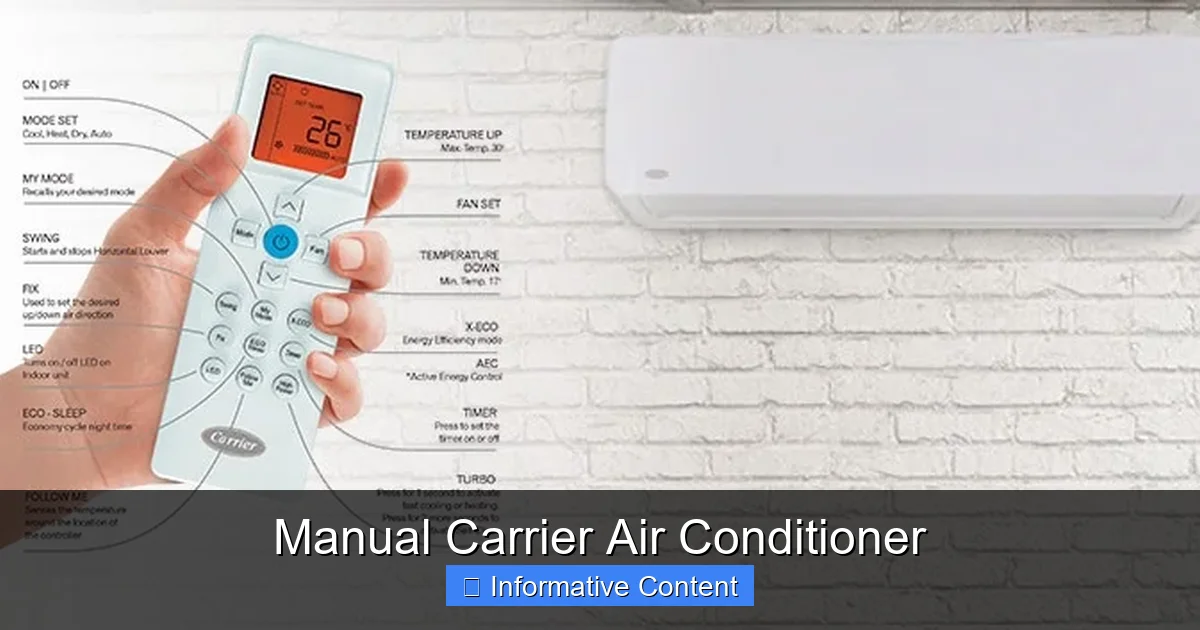
A manual Carrier air conditioner offers reliable, cost-effective cooling with simple controls and energy efficiency. Ideal for homes and offices, these units provide consistent comfort without complex automation, making them a smart choice for budget-conscious users who value durability and ease of use.
When the summer heat rolls in, staying cool becomes a top priority. Air conditioning isn’t just a luxury anymore—it’s a necessity for comfort, productivity, and even health. But with so many options on the market, choosing the right system can feel overwhelming. If you’re looking for a reliable, no-frills cooling solution, a manual Carrier air conditioner might be exactly what you need.
Unlike smart or programmable models that come with touchscreens, Wi-Fi connectivity, and app controls, manual air conditioners rely on simple mechanical controls. You turn a dial to set the temperature, adjust the fan speed with a switch, and flip a lever to change the mode. It’s straightforward, intuitive, and refreshingly uncomplicated. And while they may lack the high-tech features of modern units, manual Carrier air conditioners make up for it with durability, affordability, and consistent performance.
Carrier, a trusted name in HVAC systems for over a century, has built a reputation for quality and innovation. Their manual air conditioners reflect that legacy—offering solid engineering, efficient cooling, and long-term reliability. Whether you’re outfitting a small apartment, a home office, or a bedroom, these units provide dependable comfort without the complexity. In this guide, we’ll explore everything you need to know about manual Carrier air conditioners, from how they work to installation tips, maintenance, and why they might be the perfect fit for your space.
Key Takeaways
- Manual controls for simplicity: Manual Carrier air conditioners use straightforward dials and switches, eliminating the need for digital interfaces or remote controls.
- Energy-efficient cooling: These units are designed to deliver effective cooling while consuming less power, helping reduce electricity bills.
- Easy installation and maintenance: With fewer electronic components, installation is quicker, and routine maintenance is simpler and more affordable.
- Durable and long-lasting: Built with robust materials, manual Carrier ACs are known for their reliability and extended lifespan.
- Ideal for budget-conscious buyers: Lower upfront cost and reduced repair expenses make them a practical choice for many households.
- Consistent performance in moderate climates: Best suited for regions with stable temperatures where precise climate control isn’t always necessary.
- Environmentally friendly options available: Many models use eco-friendly refrigerants and meet modern energy standards.
📑 Table of Contents
What Is a Manual Carrier Air Conditioner?
A manual Carrier air conditioner is a type of cooling unit that operates using physical controls—like knobs, dials, and switches—instead of digital displays or remote controls. These systems are typically window-mounted or through-the-wall units, designed to cool a single room or small area. They’re part of Carrier’s broader lineup of residential air conditioners, known for their reliability and energy efficiency.
Unlike their digital counterparts, manual models don’t feature programmable timers, remote sensors, or smart home integration. Instead, you manually adjust the temperature, fan speed, and cooling mode by turning a dial or flipping a switch. For example, you might turn a thermostat knob to “cool” and select a fan setting like “low,” “medium,” or “high.” Some models also include a vent control to direct airflow or a mode switch for cooling, fan-only, or ventilation.
Despite their simplicity, these units are engineered with the same attention to quality as Carrier’s more advanced systems. They use proven refrigeration technology to remove heat and humidity from the air, delivering cool, comfortable air to your space. The lack of digital components doesn’t mean a lack of performance—manual Carrier air conditioners are built to last and perform consistently, even under regular use.
One of the key advantages of a manual system is its ease of use. There’s no learning curve, no app to download, and no remote to lose. This makes them especially appealing to older adults, renters, or anyone who prefers a “set it and forget it” approach to cooling. Plus, because they have fewer electronic parts, they’re less prone to malfunctions and easier to repair if something does go wrong.
How Does a Manual Carrier Air Conditioner Work?
Visual guide about Manual Carrier Air Conditioner
Image source: static-data2.manualslib.com
At its core, a manual Carrier air conditioner works by removing heat from indoor air and releasing it outside, much like any other air conditioner. The process involves a closed-loop refrigeration system that circulates a coolant (refrigerant) through a series of coils and components. Here’s a simplified breakdown of how it operates:
The Refrigeration Cycle
The refrigeration cycle is the heart of any air conditioner. In a manual Carrier unit, this cycle begins when the compressor—located in the outdoor section of the unit—pressurizes the refrigerant gas. This increases its temperature and pressure. The hot, high-pressure gas then flows into the condenser coil, where it releases heat to the outside air and condenses into a liquid.
Next, the liquid refrigerant passes through an expansion valve, which reduces its pressure and temperature. As it enters the evaporator coil inside your room, the cold refrigerant absorbs heat from the indoor air. A fan blows air over the cold coil, cooling it down and circulating the chilled air back into the room. The refrigerant, now warmed and turned back into a gas, returns to the compressor to restart the cycle.
Manual Controls in Action
In a manual system, you control this process using physical dials. For instance, turning the thermostat dial to a lower number signals the unit to run longer and cool more aggressively. The fan speed switch lets you choose how quickly air is circulated—higher speeds cool faster but may be noisier, while lower speeds are quieter but take longer to cool the room.
Some models also include a mode selector with options like “Cool,” “Fan,” and “Vent.” In “Cool” mode, the compressor and fan work together to lower the temperature. In “Fan” mode, only the fan runs, providing air circulation without cooling—great for mild days. “Vent” mode draws in fresh outdoor air, which can help improve indoor air quality.
Air Filtration and Airflow
Most manual Carrier air conditioners include a washable or replaceable air filter that traps dust, pollen, and other particles. This not only improves air quality but also helps maintain efficiency by keeping the evaporator coil clean. Regular cleaning of the filter is essential—typically every two to four weeks during peak usage.
The unit’s louvers or vents allow you to direct airflow up, down, or side to side. Adjusting these can help distribute cool air more evenly throughout the room. For example, pointing the vents toward the center of the room can prevent cold spots near windows or walls.
Benefits of Choosing a Manual Carrier Air Conditioner
While smart air conditioners with Wi-Fi and voice control are gaining popularity, manual models still offer several compelling advantages. Here’s why a manual Carrier air conditioner might be the right choice for your home or office:
1. Simplicity and Ease of Use
One of the biggest benefits of a manual system is its straightforward operation. There’s no need to navigate menus, download apps, or pair devices. You simply turn a dial to your desired temperature and adjust the fan as needed. This simplicity is especially helpful for children, elderly users, or anyone who isn’t tech-savvy.
For example, imagine coming home on a hot day and wanting instant relief. With a manual unit, you walk over, turn the dial to “cool,” set the fan to “high,” and within minutes, you’re enjoying a refreshing breeze. No waiting for an app to load or troubleshooting connectivity issues.
2. Lower Upfront and Maintenance Costs
Manual air conditioners are generally more affordable than their digital counterparts. Without expensive sensors, circuit boards, or remote controls, the manufacturing cost is lower—and that savings is passed on to you. This makes them an excellent option for budget-conscious buyers or those looking to cool a secondary space like a garage or guest room.
Maintenance is also simpler and cheaper. Since there are fewer electronic components, there’s less that can break. If a dial wears out or a switch fails, it’s usually a quick and inexpensive fix. In contrast, digital units may require specialized technicians and costly part replacements.
3. Energy Efficiency
Don’t let the lack of smart features fool you—manual Carrier air conditioners are designed with energy efficiency in mind. Many models are ENERGY STAR certified, meaning they meet strict guidelines set by the U.S. Environmental Protection Agency for energy performance.
These units use advanced compressors and insulation to minimize energy waste. For instance, a well-maintained manual unit can cool a 300-square-foot room using as little as 500–800 watts, depending on the model and settings. That’s comparable to many digital units, but without the added power draw from displays and Wi-Fi modules.
4. Durability and Longevity
Carrier is known for building tough, long-lasting appliances, and their manual air conditioners are no exception. With fewer moving parts and no delicate electronics, these units are less prone to failure. Many users report their manual Carrier ACs lasting 10–15 years or more with proper care.
The robust construction also means they can handle temperature fluctuations and power surges better than sensitive digital models. This makes them ideal for areas with unstable electricity or frequent storms.
5. Quiet Operation
Because manual units often use simpler fan motors and don’t have the constant background processing of digital systems, they tend to run quieter. This is a big plus for bedrooms, nurseries, or home offices where noise can be disruptive.
For example, a manual Carrier unit might produce around 50–55 decibels on low fan setting—about the same as a quiet conversation. That’s significantly quieter than some high-tech models that emit constant beeps, chimes, or fan noise from internal electronics.
Installation and Setup Guide
Installing a manual Carrier air conditioner is generally straightforward, especially for window units. However, proper installation is key to ensuring efficient operation, safety, and longevity. Here’s a step-by-step guide to help you get started:
Choosing the Right Location
The first step is selecting the best spot for your unit. For window installations, choose a window that’s centrally located, receives minimal direct sunlight, and has easy access to an electrical outlet. Avoid areas near heat sources like ovens or radiators, as this can reduce efficiency.
Make sure the window frame is sturdy and can support the weight of the unit—most manual Carrier ACs weigh between 50 and 80 pounds. Also, check that there’s enough space for the unit to extend into the room without blocking doors or walkways.
Preparing the Window
Before installing, clean the window sill and remove any obstructions. If your window opens horizontally (like a double-hung window), you may need to use extension panels or foam seals to fill gaps on the sides. These help prevent warm air from leaking in and cool air from escaping.
For through-the-wall installations, you’ll need to cut a hole in an exterior wall and secure the unit with brackets. This is a more involved process and may require professional help, especially if electrical wiring or structural modifications are needed.
Securing the Unit
Once the window is ready, carefully lift the air conditioner into place. Most models come with mounting brackets or support arms that attach to the window frame. Follow the manufacturer’s instructions to secure the unit firmly—this prevents it from falling and reduces vibration noise.
Use foam weather stripping or caulk to seal any gaps around the unit. This improves energy efficiency and keeps insects and debris out. Don’t forget to install the included window lock or security bracket to prevent unauthorized removal.
Electrical Connection
Manual Carrier air conditioners typically plug into a standard 120-volt outlet. However, larger units may require a dedicated 240-volt circuit. Always check the unit’s power requirements and consult an electrician if you’re unsure.
Never use an extension cord for permanent installation—it can overheat and pose a fire risk. If the outlet is too far, have a qualified electrician install a new one closer to the window.
Initial Setup and Testing
After installation, turn on the unit and test all settings. Set the thermostat to “cool,” adjust the fan speed, and check that air is blowing properly. Listen for unusual noises or vibrations, which could indicate a loose component.
Run the unit for at least 30 minutes to ensure it’s cooling effectively. If the room isn’t getting cooler, check the filter, vents, and thermostat settings. Also, make sure curtains or furniture aren’t blocking airflow.
Maintenance Tips for Long-Lasting Performance
Like any appliance, a manual Carrier air conditioner needs regular care to perform at its best. Fortunately, maintenance is simple and doesn’t require special tools or expertise. Here are some essential tips to keep your unit running smoothly:
Clean the Air Filter Monthly
The air filter is one of the most important components to maintain. A dirty filter restricts airflow, reduces cooling efficiency, and can cause the evaporator coil to freeze. Most manual Carrier units have a washable filter that you can remove, rinse with water, and reinstall.
To clean it, turn off the unit, slide out the filter (usually located behind a front panel), and rinse it under lukewarm water. Let it dry completely before putting it back. If the filter is damaged or too dirty to clean, replace it with a compatible model.
Inspect and Clean the Coils
Over time, dust and debris can accumulate on the evaporator and condenser coils, reducing heat transfer efficiency. Once or twice a year, use a soft brush or vacuum with a brush attachment to gently clean the coils. Be careful not to bend the delicate fins.
For deeper cleaning, you can use a commercial coil cleaner spray. Follow the product instructions and avoid spraying near electrical components.
Check the Drainage System
Manual air conditioners remove moisture from the air, which drains out through a small tube or pan. If this system gets clogged, water can back up and cause leaks or mold growth.
Inspect the drain hole or pan regularly and clear any blockages with a pipe cleaner or compressed air. If you notice water pooling inside the unit, turn it off and investigate the cause immediately.
Lubricate Moving Parts (If Applicable)
Some older models have fan motors or bearings that require occasional lubrication. Check your owner’s manual to see if your unit needs this. If so, use a few drops of lightweight machine oil on the designated points.
Modern units often have sealed motors that don’t require lubrication, so always refer to the manual before proceeding.
Schedule Professional Servicing
While most maintenance can be done at home, it’s a good idea to have a professional technician inspect your unit every 2–3 years. They can check refrigerant levels, test electrical connections, and ensure everything is working safely and efficiently.
This is especially important if you notice reduced cooling, strange noises, or increased energy bills—signs that something may need adjustment.
When to Choose a Manual Over a Digital Air Conditioner
With so many high-tech options available, you might wonder why anyone would choose a manual air conditioner. The truth is, manual models still have a strong place in the market—especially for certain users and situations.
For Budget-Conscious Buyers
If you’re looking to cool a single room without breaking the bank, a manual Carrier air conditioner offers excellent value. You get reliable cooling, energy efficiency, and brand-name quality at a fraction of the cost of a smart unit.
For example, a basic manual window unit might cost $200–$400, while a comparable digital model with Wi-Fi could be $500 or more. Over time, the savings on both purchase price and energy bills add up.
For Simplicity and Reliability
Not everyone wants or needs a smart air conditioner. If you prefer physical controls, don’t use apps, or live in an area with spotty internet, a manual unit is a hassle-free choice. There’s no risk of software glitches, firmware updates, or connectivity issues.
Plus, if something goes wrong, repairs are usually quicker and cheaper. A broken dial or switch is far easier to fix than a malfunctioning circuit board.
For Secondary or Seasonal Use
Manual air conditioners are ideal for spaces that aren’t used year-round, like guest rooms, cabins, or garages. You don’t need advanced features for occasional cooling—just a dependable unit that turns on when you need it.
They’re also great for renters who may not want to invest in a permanent, high-end system. A manual unit can be installed and removed easily, with minimal damage to the property.
For Older Homes or Offices
In older buildings with limited electrical capacity or no smart infrastructure, a manual air conditioner is often the most practical option. It doesn’t require special wiring, internet access, or compatibility with home automation systems.
It’s also a safer choice in areas prone to power outages—manual units are less likely to be damaged by surges and can be turned off easily during storms.
Conclusion
A manual Carrier air conditioner may not have the bells and whistles of modern smart systems, but it delivers something equally valuable: reliable, efficient, and straightforward cooling. With simple controls, lower costs, and long-lasting performance, these units are a smart choice for anyone who values practicality and durability.
Whether you’re cooling a bedroom, office, or vacation home, a manual Carrier air conditioner offers consistent comfort without the complexity. By following proper installation and maintenance practices, you can enjoy years of trouble-free operation and energy savings.
In a world of ever-increasing technology, sometimes the simplest solution is the best. If you’re looking for a no-nonsense way to beat the heat, a manual Carrier air conditioner is worth serious consideration.
Frequently Asked Questions
What is the difference between a manual and digital Carrier air conditioner?
A manual Carrier air conditioner uses physical dials and switches for control, while a digital model features a display, remote control, and often programmable settings. Manual units are simpler and more affordable, while digital models offer greater convenience and automation.
Can I install a manual Carrier air conditioner myself?
Yes, most manual window units can be installed by a homeowner with basic tools. However, through-the-wall installations or electrical upgrades may require professional help for safety and compliance.
How often should I clean the filter on my manual Carrier AC?
Clean the air filter every 2–4 weeks during peak usage. A dirty filter reduces efficiency and can cause the unit to freeze or overwork.
Are manual Carrier air conditioners energy efficient?
Yes, many manual models are ENERGY STAR certified and designed to use energy efficiently. Proper maintenance and correct sizing further improve efficiency.
Do manual air conditioners cool as well as digital ones?
Yes, manual units cool just as effectively as digital models when properly sized and maintained. The cooling performance depends on the unit’s capacity and installation, not the type of controls.
Can I use a manual Carrier air conditioner in a large room?
It depends on the unit’s BTU rating. Choose a model with enough capacity for your room size—typically 20 BTUs per square foot. For large rooms, consider a higher-capacity unit or supplemental cooling.