
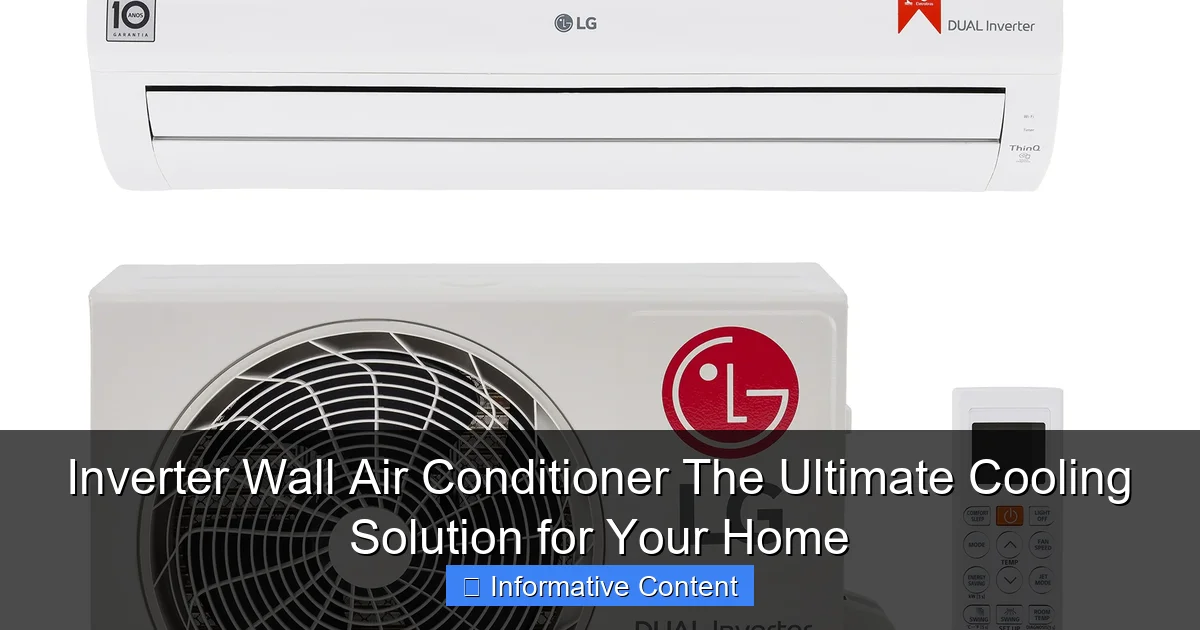
Featured image for inverter wall air conditioner
Image source: cdn.leroymerlin.com.br
Inverter wall air conditioners deliver unmatched energy efficiency and consistent cooling by intelligently adjusting compressor speed to match room conditions, eliminating the constant on-and-off cycles of traditional units. With quieter operation, faster temperature control, and lower electricity bills, they offer a smarter, more sustainable solution for year-round home comfort.
Key Takeaways
- Energy-efficient cooling: Inverter ACs adjust speed to cut energy use by up to 30%.
- Consistent comfort: Maintains steady temps without constant on/off cycling for optimal comfort.
- Quieter operation: Runs at low noise levels, ideal for bedrooms and living spaces.
- Faster cooling: Reaches set temps quicker than non-inverter models, boosting efficiency.
- Longer lifespan: Reduced wear and tear extends unit life with fewer repairs needed.
- Smart compatibility: Many models integrate with home automation for remote control.
📑 Table of Contents
- Inverter Wall Air Conditioner: The Ultimate Cooling Solution for Your Home
- How Inverter Wall Air Conditioners Work
- Energy Efficiency and Cost Savings
- Quiet Operation and Enhanced Comfort
- Smart Features and Modern Convenience
- Choosing the Right Inverter Wall Air Conditioner
- Inverter AC Performance Comparison
- Final Thoughts: Is an Inverter Wall Air Conditioner Right for You?
Inverter Wall Air Conditioner: The Ultimate Cooling Solution for Your Home
It’s one of those sweltering summer afternoons—the kind where the air feels thick, your shirt sticks to your back, and even the ceiling fan seems to be blowing hot air. You’ve tried opening windows, but the breeze is nonexistent. You’ve considered moving to the basement, but it’s dark and damp. Then you remember: you have an air conditioner. But when you turn it on, it roars to life like a jet engine, cools the room in five minutes, and then shuts off abruptly—only to repeat the cycle every 20 minutes. Sound familiar?
If you’ve ever lived through that frustrating on-and-off cycle, you’re not alone. Traditional air conditioners work in bursts, turning the compressor on at full power until the desired temperature is reached, then shutting off completely. This not only wastes energy but also leads to uneven cooling and higher electricity bills. Enter the inverter wall air conditioner—a smarter, quieter, and more efficient way to keep your home cool. Unlike conventional units, inverter ACs adjust their compressor speed continuously, maintaining a consistent temperature without the constant start-stop cycle. Think of it like driving a car: instead of slamming the accelerator and then braking repeatedly, you gently press the gas to maintain a steady speed. That’s the magic of inverter technology.
How Inverter Wall Air Conditioners Work
To truly appreciate why inverter wall air conditioners are such a game-changer, it helps to understand how they differ from traditional models. At the heart of every air conditioner is the compressor—the component responsible for circulating refrigerant and removing heat from your home. In a standard (non-inverter) AC, the compressor operates in two modes: full power or off. When the room warms up, the compressor kicks in at maximum capacity, cools the space rapidly, and then shuts down. This cycle repeats throughout the day, leading to temperature fluctuations and energy spikes.
Visual guide about inverter wall air conditioner
Image source: d2qc09rl1gfuof.cloudfront.net
The Role of the Inverter
In contrast, an inverter wall air conditioner uses a variable-speed compressor controlled by an inverter. This inverter adjusts the power supplied to the compressor motor, allowing it to run at different speeds depending on the cooling needs. When you first turn on the AC, it may run at high speed to quickly cool the room. But once the desired temperature is reached, instead of shutting off, it slows down and runs continuously at a lower speed to maintain that temperature. This results in smoother, more consistent cooling and significantly reduced energy consumption.
Benefits of Continuous Operation
One of the biggest advantages of this continuous operation is temperature stability. With a traditional AC, you might feel a blast of cold air followed by a gradual warming until the unit kicks back on. This rollercoaster effect can be uncomfortable, especially during sleep or relaxation. Inverter ACs eliminate this by maintaining a steady indoor climate. Additionally, because the compressor doesn’t have to start and stop repeatedly, there’s less mechanical stress, which can extend the lifespan of the unit.
For example, imagine you’re working from home on a hot day. With a conventional AC, you might notice the room getting warmer just as you’re about to join an important video call. You rush to adjust the thermostat, but the AC takes a few minutes to respond. With an inverter model, the temperature stays consistent, so you can focus on your work without interruptions.
Energy Efficiency and Cost Savings
One of the most compelling reasons to switch to an inverter wall air conditioner is its energy efficiency. According to the U.S. Department of Energy, inverter ACs can use up to 40% less energy than traditional models. This isn’t just a marketing claim—it’s backed by real-world data and user experiences. The reason? Traditional air conditioners consume a large amount of electricity every time the compressor starts up. This “inrush current” can be several times higher than the normal operating current. Inverter ACs avoid this by ramping up gradually and maintaining a steady load.
Real-World Savings Example
Let’s say you live in a region where summer temperatures regularly exceed 90°F, and you run your AC for about 8 hours a day. A 12,000 BTU non-inverter AC might consume around 1.2 kWh per hour, costing roughly $0.15 per hour (assuming an average electricity rate of $0.125 per kWh). Over a 90-day summer, that’s about $162 in electricity costs. In contrast, a similarly sized inverter AC might use only 0.7 kWh per hour, bringing your total cost down to around $94.50—a savings of nearly $68 for just one season.
Environmental Impact
Beyond personal savings, the environmental benefits are significant. Lower energy consumption means reduced demand on power plants, which in turn leads to fewer greenhouse gas emissions. If every household in the U.S. replaced their old AC with an inverter model, the collective energy savings could power millions of homes for a year. While individual impact may seem small, it adds up—especially when combined with other energy-efficient practices like using smart thermostats or improving home insulation.
It’s also worth noting that many inverter air conditioners use eco-friendly refrigerants like R-32, which have a lower global warming potential (GWP) compared to older refrigerants such as R-22. This makes them a more sustainable choice for environmentally conscious homeowners.
Quiet Operation and Enhanced Comfort
Have you ever tried to take a nap while your air conditioner is running, only to be jolted awake every time it kicks on? Or maybe you’ve had a conversation interrupted by the sudden roar of the compressor? These are common complaints with traditional ACs, but they’re virtually eliminated with inverter wall air conditioners.
Why Inverter ACs Are Quieter
The secret lies in the compressor’s operation. Because inverter ACs don’t cycle on and off abruptly, there’s no loud startup noise. Instead, the compressor ramps up smoothly and runs at a low, consistent speed. Many models also feature advanced sound-dampening technology, such as insulated compressor compartments and quieter fan blades. As a result, inverter ACs typically operate at noise levels between 19 and 40 decibels—comparable to a whisper or a quiet library. In contrast, traditional units can reach 50–60 decibels, which is similar to normal conversation or background music.
Improved Air Quality and Humidity Control
Another often-overlooked benefit of inverter technology is better humidity control. Traditional ACs remove moisture quickly during their short cooling bursts, but they don’t run long enough to dehumidify the air thoroughly. This can leave your home feeling clammy or sticky. Inverter ACs, on the other hand, run longer at lower speeds, allowing them to remove more moisture from the air. This not only improves comfort but also helps prevent mold and mildew growth, which thrive in humid environments.
For instance, if you live in a humid climate like Florida or Louisiana, you’ll notice a significant difference in indoor air quality with an inverter AC. Your clothes will feel drier, your skin won’t feel as sticky, and your home will simply feel more comfortable—even at the same temperature setting.
Smart Features and Modern Convenience
Today’s inverter wall air conditioners aren’t just about cooling—they’re packed with smart features that make them easier and more convenient to use. From Wi-Fi connectivity to voice control, these units are designed to fit seamlessly into modern lifestyles.
Wi-Fi and App Control
Many inverter ACs now come with built-in Wi-Fi, allowing you to control them remotely via a smartphone app. Whether you’re at work, on vacation, or just lounging on the couch, you can adjust the temperature, set schedules, or turn the unit on or off with a few taps. This is especially useful for managing energy use. For example, you can program the AC to start cooling your home 30 minutes before you arrive, so it’s comfortable when you walk in—without wasting energy while you’re away.
Voice Assistant Compatibility
If you already use smart home devices like Amazon Alexa or Google Assistant, you’ll love the integration with inverter ACs. Simply say, “Hey Google, set the living room AC to 72 degrees,” and it’s done. No more fumbling with remotes or getting up from the couch. Some models even support routines—like automatically turning on the AC when you say, “Good morning.”
Self-Diagnosis and Maintenance Alerts
Advanced inverter ACs often include self-diagnostic systems that monitor performance and alert you to potential issues. For example, if the air filter is clogged or the refrigerant level is low, the unit might send a notification to your phone. This proactive approach helps prevent breakdowns and ensures your AC runs efficiently year after year. Some models even have auto-clean functions that reduce dust and bacteria buildup inside the unit, improving air quality and extending its lifespan.
Imagine coming home after a long trip to find your AC has been running inefficiently for days. With a smart inverter model, you’d have received an alert and could have addressed the issue remotely—saving energy and avoiding discomfort.
Choosing the Right Inverter Wall Air Conditioner
With so many options on the market, selecting the right inverter wall air conditioner can feel overwhelming. But by focusing on a few key factors, you can make an informed decision that meets your needs and budget.
Size and Cooling Capacity
The first step is determining the right size for your space. An AC that’s too small won’t cool effectively, while one that’s too large will cycle on and off frequently, wasting energy. As a general rule, you’ll need about 20 BTUs per square foot of living space. For example, a 300-square-foot room would require a 6,000 BTU unit, while a 500-square-foot room would need around 10,000 BTUs.
However, other factors like ceiling height, insulation, sun exposure, and the number of windows can affect cooling needs. If your room gets a lot of afternoon sun, you might need a slightly larger unit. Conversely, a well-insulated basement may require less cooling power.
Energy Efficiency Ratings
Look for models with high Seasonal Energy Efficiency Ratio (SEER) ratings. The higher the SEER, the more efficient the unit. In the U.S., the minimum SEER rating for new ACs is 13, but inverter models often range from 16 to 25 or higher. A SEER 20 unit can be up to 30% more efficient than a SEER 13 model.
Also, check for ENERGY STAR certification. ENERGY STAR-qualified inverter ACs meet strict efficiency guidelines set by the Environmental Protection Agency and can qualify for rebates or tax incentives in some areas.
Installation and Maintenance
Proper installation is crucial for optimal performance. Always hire a licensed HVAC technician to install your inverter AC. They’ll ensure the unit is level, properly sealed, and connected to the right electrical circuit. Poor installation can lead to leaks, reduced efficiency, and even safety hazards.
Maintenance is equally important. Most manufacturers recommend cleaning or replacing the air filter every 1–3 months, depending on usage. Some models have washable filters, which can save money over time. Additionally, schedule professional servicing once a year to check refrigerant levels, clean coils, and inspect electrical connections.
Inverter AC Performance Comparison
To help you compare different models, here’s a quick overview of popular inverter wall air conditioners based on key features and performance metrics:
| Model | BTU | SEER Rating | Noise Level (dB) | Smart Features | Estimated Annual Cost* |
|---|---|---|---|---|---|
| LG Dual Inverter | 12,000 | 22 | 38 | Wi-Fi, Alexa/Google | $95 |
| Daikin Emura | 9,000 | 24 | 19 | App Control, Self-Clean | $78 |
| Panasonic XE9 | 10,000 | 20 | 40 | Wi-Fi, Voice Control | $88 |
| Mitsubishi MSZ-FH | 12,000 | 23 | 35 | Smart Thermostat Compatible | $82 |
*Based on 8 hours of daily use, 90-day cooling season, and $0.125/kWh electricity rate.
Final Thoughts: Is an Inverter Wall Air Conditioner Right for You?
After exploring the benefits—energy efficiency, quiet operation, consistent cooling, smart features, and long-term savings—it’s clear that an inverter wall air conditioner is more than just a luxury; it’s a smart investment for modern homes. While the upfront cost may be higher than traditional models (typically 20–30% more), the savings on electricity bills and reduced maintenance often pay for the difference within a few years.
Of course, no product is perfect. Inverter ACs may require more specialized servicing, and not all models are compatible with older electrical systems. But for most homeowners, especially those in hot climates or with high cooling demands, the advantages far outweigh the drawbacks.
Think of it this way: you wouldn’t buy a car that only accelerates and brakes—you’d want smooth, responsive control. The same logic applies to cooling your home. With an inverter wall air conditioner, you’re not just buying a machine; you’re investing in comfort, efficiency, and peace of mind. So the next time the temperature rises, you can relax knowing your home stays cool—quietly, consistently, and affordably.
Frequently Asked Questions
What is an inverter wall air conditioner and how does it work?
An inverter wall air conditioner is a type of cooling system that uses inverter technology to adjust the compressor speed based on room temperature, providing consistent comfort and energy efficiency. Unlike traditional units that cycle on and off, inverter models maintain a steady temperature by varying power output.
Why should I choose an inverter wall air conditioner over a non-inverter model?
An inverter wall air conditioner offers superior energy efficiency, quieter operation, and more stable cooling compared to non-inverter units. It reduces electricity consumption by up to 30–50% and eliminates temperature fluctuations, making it ideal for long-term home use.
Are inverter wall air conditioners energy efficient?
Yes, inverter wall air conditioners are highly energy efficient because they adjust compressor speed instead of frequently turning on and off. This results in lower power usage, reduced electricity bills, and a smaller environmental footprint.
How do I choose the right size inverter wall air conditioner for my room?
To choose the right size, consider the room’s square footage, ceiling height, insulation, and sun exposure. A properly sized inverter wall air conditioner ensures optimal cooling performance and energy efficiency without overworking the system.
Can an inverter wall air conditioner also heat my home?
Many inverter wall air conditioners come with a heat pump function, providing both cooling in summer and heating in winter. These models are called inverter heat pumps and offer year-round climate control with high efficiency.
What maintenance does an inverter wall air conditioner require?
Regular maintenance includes cleaning or replacing air filters every 1–2 months, checking refrigerant levels, and ensuring the outdoor unit is free of debris. Proper upkeep ensures peak performance, longevity, and energy efficiency of your inverter wall air conditioner.