
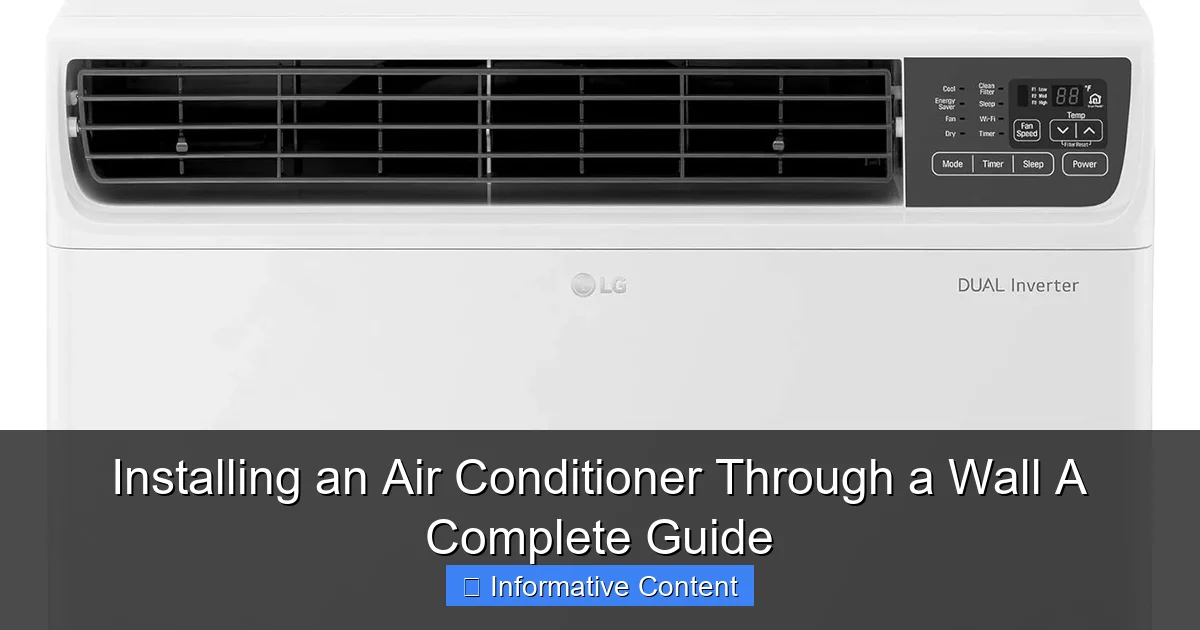
Featured image for installing an air conditioner through a wall
Image source: images-na.ssl-images-amazon.com
Installing an air conditioner through a wall requires precise planning and the right tools to ensure efficient cooling and structural integrity. Choose a sturdy wall, follow manufacturer guidelines, and seal gaps properly to prevent energy loss and water leaks—making DIY success both possible and long-lasting.
Key Takeaways
- Choose the right unit: Match AC size to room dimensions for optimal cooling.
- Reinforce the wall: Ensure structural support before cutting into walls.
- Seal gaps tightly: Prevent air leaks with proper insulation and caulking.
- Drill drainage slope: Angle the hole slightly outward for water runoff.
- Follow local codes: Check permits and regulations before installation.
- Secure mounting brackets: Prevent sagging or vibration with sturdy hardware.
- Test after install: Verify cooling and drainage before finalizing.
📑 Table of Contents
- Why Installing an Air Conditioner Through a Wall is a Game-Changer
- Choosing the Right Through-the-Wall Air Conditioner
- Tools and Materials You’ll Need (Don’t Skip This!)
- Step-by-Step Installation Process
- Common Mistakes and How to Avoid Them
- Maintenance and Long-Term Care
- Cost Comparison: DIY vs. Professional Installation
- Final Thoughts: Is It Worth It?
Why Installing an Air Conditioner Through a Wall is a Game-Changer
Imagine this: it’s the middle of summer, the sun is blazing, and your living room feels like an oven. You’ve tried fans, cold drinks, and even opening the windows—but nothing works. That’s when you realize it’s time for a real solution. Installing an air conditioner through a wall can be a total game-changer. Unlike window units that block your view and portable ACs that take up floor space, a through-the-wall AC gives you powerful cooling without sacrificing style or space. It’s sleek, efficient, and built to last.
Now, I’ll be honest—installing an air conditioner through a wall isn’t as simple as just drilling a hole and plugging it in. It’s a bit of a project, but with the right tools, a little patience, and this guide, you can do it. Whether you’re a DIY enthusiast or just someone who wants to understand what’s involved before hiring a pro, this post will walk you through every step. From picking the right AC to sealing the unit properly, I’ll share what I’ve learned from real installs, including the mistakes I’ve made (yes, there were a few) and the tricks that saved my sanity.
Choosing the Right Through-the-Wall Air Conditioner
Know Your Cooling Needs: BTUs Matter
Before you even think about drilling into your wall, you need to figure out how much cooling power you actually need. This is measured in British Thermal Units (BTUs). The general rule? 20 BTUs per square foot of space. So, for a 150-square-foot bedroom, you’d need about 3,000 BTUs. But here’s the catch: if your room gets a lot of sun, has high ceilings, or is in a humid area, you might need more. For example, my sunroom in Arizona needed 5,000 BTUs instead of the 3,500 I initially planned for—lesson learned!

Visual guide about installing an air conditioner through a wall
Image source: breathebetterair.org
Quick tip: Don’t go overboard with BTUs. An oversized unit will cool the room too quickly, turning off before it can dehumidify, leaving you feeling sticky. It’s like eating a whole pizza in one bite—too much, too fast.
Wall Sleeve or No Wall Sleeve?
There are two main types of through-the-wall ACs: those that use a wall sleeve and those that don’t. A wall sleeve is a metal frame that sits in the hole and holds the AC unit. It’s like a built-in shelf for your AC—super stable and easy to install or remove later. If you’re renting or plan to move, a sleeve is a great choice because it protects the hole and makes future upgrades easier.
Units without sleeves are cheaper upfront but require more precise cutting and sealing. I tried a no-sleeve unit once, and let’s just say my first attempt looked like a beaver got loose in my wall. A sleeve would’ve saved me time and a few curse words.
Energy Efficiency and Noise Levels
Look for units with a high Energy Efficiency Ratio (EER)—ideally over 10. The higher the EER, the less electricity you’ll use. Also, check the noise level in decibels (dB). Most through-the-wall ACs run between 50–65 dB, which is about as loud as a normal conversation. If you’re a light sleeper, go for a quieter model (closer to 50 dB). My first AC was 62 dB, and I swear I could hear it over my TV. My current one is 52 dB—much better!
Smart Features and Extras
Modern ACs come with handy features like Wi-Fi controls, programmable timers, and remote sensors. I love being able to turn my AC on from my phone before I get home. It’s like having a personal butler who pre-cools your house. Just don’t get too carried away—fancy features can add cost, so pick only what you’ll actually use.
Tools and Materials You’ll Need (Don’t Skip This!)
Essential Tools
- Stud finder: To locate wall studs and avoid cutting through them. I learned this the hard way when I accidentally drilled into a stud—my drill bit was never the same.
- Jigsaw or reciprocating saw: For cutting the hole in the wall. A jigsaw gives cleaner cuts, but a reciprocating saw is faster for thick walls.
- Measuring tape and level: Because crooked ACs are not only ugly but can cause leaks.
- Caulking gun and weatherproof sealant: To seal gaps and prevent air leaks. I recommend silicone-based caulk—it’s flexible and lasts longer.
- Power drill and masonry bits: If you’re cutting through brick or concrete.
- Utility knife: For trimming excess insulation or vapor barrier.
Materials Checklist
- AC unit with wall sleeve (or sleeve separately, if needed)
- Insulation foam or foam tape: To fill gaps around the sleeve. I use closed-cell foam—it’s moisture-resistant.
- Exterior-grade flashing or trim: To protect the outside of the hole from rain. Think of it as a raincoat for your wall.
- Vapor barrier (if required by local codes): Prevents moisture from entering the wall cavity.
- Screws and anchors: For securing the sleeve. Use stainless steel if you’re near the coast—rust is not your friend.
Pro Tips for Tool Prep
Before you start, lay out all your tools and double-check you have everything. There’s nothing worse than realizing halfway through that you’re missing a screwdriver. Also, wear safety gear—goggles, gloves, and a dust mask. Drywall dust is no joke for your lungs.
Step-by-Step Installation Process
Step 1: Measure and Mark the Hole
First, check your AC unit’s manual for the exact hole size. Most units need a hole 24–28 inches wide and 16–20 inches tall. Use a stud finder to locate studs and avoid cutting through them. If you must cut a stud, you’ll need to frame the hole with 2x4s (more on that later).
Mark the hole with a pencil and double-check with a level. I once got impatient and skipped the level—my AC looked like it was leaning into a windstorm. Not cute.
Step 2: Cut the Hole
Start with a small pilot hole to confirm you’re in the right spot. Then, use your saw to cut along the marked lines. For drywall, a jigsaw works well. For brick, use a masonry bit and go slowly. If you hit an unexpected obstacle (like a pipe or wire), stop immediately and call an electrician or plumber.
Pro tip: Tape a plastic sheet under the hole to catch dust and debris. Your floors will thank you.
Step 3: Install the Wall Sleeve
If you’re using a sleeve, slide it into the hole and check for level. Use shims (thin wood or plastic pieces) to adjust if it’s crooked. Secure the sleeve with screws through the side flanges. If your wall is brick or concrete, use masonry anchors.
For no-sleeve units, you’ll need to frame the hole with 2x4s to support the AC’s weight. This is called a “rough-in frame.” It’s more work, but it’s worth it for long-term stability.
Step 4: Insulate and Seal
Fill any gaps between the sleeve and wall with insulation foam. Don’t overstuff—too much foam can warp the sleeve. On the outside, apply flashing or trim to direct water away from the hole. I use a metal flashing with a drip edge—it’s like an umbrella for your AC.
Seal all seams with weatherproof caulk. Let it cure for 24 hours before installing the AC unit.
Step 5: Mount the AC Unit
Carefully slide the AC into the sleeve. Most units have side brackets that screw into the sleeve. Tighten them just enough to hold the unit—overtightening can bend the sleeve. Plug the AC into a grounded outlet. If your outlet is far away, use a heavy-duty extension cord (rated for the AC’s wattage).
Step 6: Final Checks
Turn on the AC and check for vibrations or strange noises. Make sure the unit is level and doesn’t wobble. Open the access panel and verify that all electrical connections are secure. Finally, test the remote or smart controls to ensure everything works.
Common Mistakes and How to Avoid Them
Mistake 1: Ignoring Wall Studs
Cutting through a stud can weaken your wall and make the AC unstable. Always use a stud finder and plan your hole around studs. If you must cut a stud, add a header and footer to redistribute the load.
Mistake 2: Poor Sealing
Even tiny gaps around the sleeve can let in hot air, bugs, and moisture. I once skipped sealing the top of my sleeve—within a month, ants were throwing a pool party inside. Seal every edge, inside and out.
Mistake 3: Wrong Hole Size
A hole that’s too small won’t fit the sleeve. A hole that’s too big leaves gaps that are hard to insulate. Measure twice, cut once. Seriously, it’s worth the extra time.
Mistake 4: Skipping the Vapor Barrier
In humid climates, a vapor barrier prevents moisture from seeping into the wall cavity and causing mold. Check your local building codes—some areas require it.
Mistake 5: Forgetting the Drain
Through-the-wall ACs produce condensate (water) that needs to drain outside. Make sure the unit is tilted slightly downward (about 1/4 inch per foot) so water flows out, not into your house. If you’re installing above a window, you might need a drain pan or pump.
Maintenance and Long-Term Care
Clean the Filters Monthly
Dirty filters reduce efficiency and strain the motor. Most units have reusable filters—just rinse with water and let them dry. I set a reminder on my phone for the first Sunday of every month. It takes 10 minutes and saves me money on my electric bill.
Inspect the Exterior Annually
Check the flashing, caulk, and insulation every spring. Look for cracks, gaps, or signs of water damage. Re-caulk as needed. I also hose down the outside fins to remove dust and debris—it helps the AC breathe better.
Check for Leaks
If you notice water dripping inside, the unit might not be tilted correctly or the drain could be clogged. Shut off the AC and inspect the sleeve and drain pan. A simple fix can prevent major damage.
Winterize (If You Don’t Use It Year-Round)
If you live in a cold climate, remove the AC unit in winter or cover it with an insulated cover. This prevents ice buildup and keeps pests out. I use a custom-fit cover with a drawstring—it’s like a winter jacket for my AC.
Cost Comparison: DIY vs. Professional Installation
You might be wondering, “Should I DIY or hire a pro?” Here’s a breakdown to help you decide:
| Cost Factor | DIY Installation | Professional Installation |
|---|---|---|
| Labor | $0 (your time) | $300–$800 (depending on complexity) |
| Tools | $100–$300 (if you don’t own them) | $0 (included in labor) |
| AC Unit | $400–$1,200 | $400–$1,200 |
| Materials | $50–$150 (sleeve, sealant, etc.) | $50–$150 (usually included) |
| Total Cost | $550–$1,650 | $750–$2,150 |
| Best For | Confident DIYers, budget-conscious homeowners | Those with complex walls (brick, stone), no DIY experience |
I’ve done both. DIY saved me about $500, but it took me two weekends. A pro would’ve had it done in a day. If you’re handy and patient, DIY is worth it. If you’re not, hire someone—it’s cheaper than fixing a botched job.
Final Thoughts: Is It Worth It?
Installing an air conditioner through a wall is more than just a summer upgrade—it’s an investment in comfort, energy efficiency, and home value. Yes, it’s a bit of work. You’ll get dusty, maybe swear a little, and probably eat a few too many snacks while you’re at it. But when you’re sitting in your perfectly cool room, watching the sunset without sweating, it’s all worth it.
Remember, the key is preparation. Measure carefully, seal thoroughly, and maintain regularly. Whether you DIY or hire a pro, take the time to do it right. Your future self (and your electric bill) will thank you. And hey, if you run into a problem? Don’t panic. Every installer—even the pros—has had a “learning moment.” Just take a deep breath, step back, and figure it out. You’ve got this.
Frequently Asked Questions
Can I install an air conditioner through a wall myself, or do I need a professional?
While DIY installation is possible for those with basic carpentry and electrical skills, hiring a professional ensures safety, proper sealing, and compliance with local codes. Improper installation can lead to energy loss or structural damage, so weigh the risks before proceeding.
What tools do I need for installing an air conditioner through a wall?
Essential tools include a stud finder, level, power drill, hole saw, measuring tape, screwdriver, and safety gear like goggles and gloves. For masonry walls, a hammer drill and masonry bit may also be required to cut through the material.
How do I choose the right size air conditioner for a wall installation?
Measure the room’s square footage and consider factors like insulation, ceiling height, and sun exposure to determine the correct BTU (British Thermal Unit) rating. A unit that’s too small will struggle to cool, while an oversized one may short-cycle, reducing efficiency.
What are the key steps for installing an air conditioner through a wall?
First, locate a stud-free area, then cut a hole slightly larger than the unit’s sleeve and secure it with brackets. Next, connect the electrical supply, install the AC unit, and seal gaps with foam or caulk to prevent air leaks and moisture intrusion.
How do I prevent water leakage when installing an AC through a wall?
Ensure the sleeve is sloped slightly outward (about 1/4 inch) for proper drainage and seal all gaps with waterproof caulk or foam. Regularly check the condensate drain line for clogs to avoid overflow issues.
Are there building code requirements for installing an air conditioner through a wall?
Yes, many regions have electrical, structural, and fire safety codes governing wall AC installations, including proper circuit wiring and firestopping. Always consult local regulations or a licensed professional to ensure compliance before starting the project.