
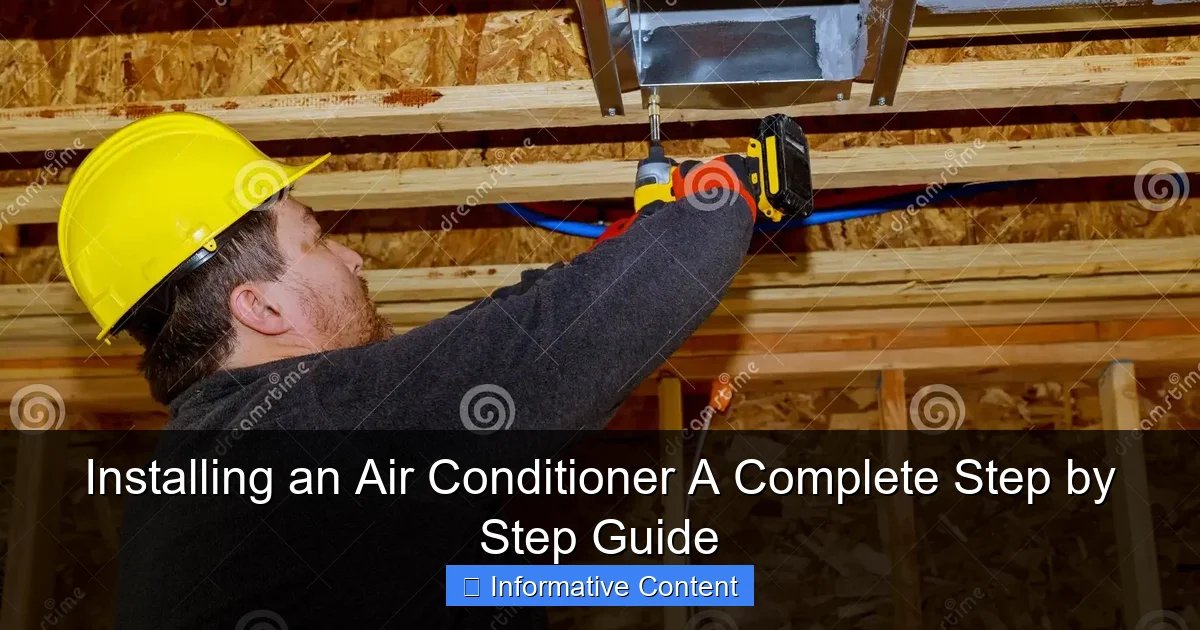
Featured image for installing an air conditioner
Image source: thumbs.dreamstime.com
Proper installation is crucial for optimal air conditioner performance and energy efficiency. This step-by-step guide walks you through selecting the right unit, preparing the site, mounting components, and connecting electrical and drainage systems—ensuring a safe, professional-grade setup. Whether you’re a DIY enthusiast or prepping for a pro, following these steps minimizes risks and maximizes cooling power.
Key Takeaways
- Choose the right size: Match AC capacity to room size for optimal efficiency and comfort.
- Turn off power first: Always disconnect electricity before starting any installation work for safety.
- Seal all gaps tightly: Prevent air leaks with proper insulation around the unit and ducts.
- Level the indoor unit: Ensure correct slope for condensate drainage to avoid water damage.
- Test system thoroughly: Run multiple cycles and check refrigerant levels post-installation.
- Follow local codes: Adhere to building regulations and permit requirements for legal compliance.
- Schedule professional help: Hire HVAC experts for complex steps like refrigerant handling or electrical work.
📑 Table of Contents
- Why Installing an Air Conditioner Is Worth the Effort
- Choosing the Right Air Conditioner for Your Space
- Preparing for Installation: Tools, Safety, and Planning
- Step-by-Step Installation Process
- Troubleshooting Common Installation Issues
- Maintenance Tips to Keep Your AC Running Smoothly
- Final Thoughts: Enjoy Your Cool, Comfortable Space
Why Installing an Air Conditioner Is Worth the Effort
Remember that one summer when the humidity clung to your skin like a second layer, and the fan just blew hot air around? I do. I was sweating through my shirt at 3 PM, trying to work from home, and my cat had retreated to the bathroom floor, where it was slightly cooler. That was the day I decided to install an air conditioner—and it changed everything.
Installing an air conditioner isn’t just about comfort; it’s about quality of life. Whether you’re battling scorching summers, dealing with allergies, or trying to sleep in a stuffy bedroom, the right AC unit can make a world of difference. But here’s the thing: it’s not as simple as plugging it in and turning it on. A poorly installed air conditioner can leak, freeze up, or waste energy, costing you more in the long run. That’s why knowing how to install an air conditioner properly—whether you’re a DIY enthusiast or just want to understand the process before hiring a pro—is crucial.
Choosing the Right Air Conditioner for Your Space
Before you even think about drilling holes or lifting heavy units, you need to pick the right air conditioner. This step is often overlooked, but it’s the foundation of a successful installation. The wrong size, type, or brand can lead to inefficiency, high energy bills, and constant repairs.
Visual guide about installing an air conditioner
Image source: thumbs.dreamstime.com
Types of Air Conditioners: Which One Fits Your Needs?
There are several types of air conditioners, each with its own pros and cons. Let’s break them down:
- Window Units: Best for single rooms. They’re affordable and easy to install, but can be noisy and block natural light. Great for renters or small apartments.
- Portable ACs: Wheels make them movable, but they need to vent hot air through a window. Less efficient than other types but ideal for temporary cooling.
- Split Systems (Ductless Mini-Splits): These have an indoor unit (mounted on the wall) and an outdoor compressor. They’re quiet, energy-efficient, and perfect for cooling multiple rooms without ducts.
- Central Air: Best for whole-house cooling. Requires ductwork, so it’s a big investment but offers consistent comfort.
- Through-the-Wall Units: Similar to window units but installed through an exterior wall. More permanent and less obtrusive, but harder to install.
Example: I chose a ductless mini-split for my 12×15 ft home office. It cost more upfront, but it’s whisper-quiet, cools the room evenly, and uses 30% less energy than my old window unit.
Size Matters: Calculating the Right BTU
An air conditioner that’s too small will run constantly and never cool your room. One that’s too big will cool too quickly, leading to humidity problems and wasted energy. The key is matching the unit’s cooling capacity (measured in BTUs) to your room’s size.
- 150–350 sq. ft. → 5,000–6,000 BTUs
- 350–450 sq. ft. → 7,000–8,000 BTUs
- 450–550 sq. ft. → 9,000–10,000 BTUs
- 550–700 sq. ft. → 12,000 BTUs
- 700–1,000 sq. ft. → 14,000–18,000 BTUs
Pro Tip: Add 10% more BTUs if the room gets direct sunlight or 20% if it’s on the top floor. Subtract 10% if the room is heavily shaded.
Energy Efficiency and Features to Look For
Look for units with a high SEER (Seasonal Energy Efficiency Ratio) rating. A SEER of 14+ is good; 16+ is excellent. Also, consider:
- Inverter Technology: Adjusts compressor speed to maintain temperature without cycling on/off, saving energy.
- Smart Features: Wi-Fi control, voice assistant compatibility, and scheduling options.
- Air Quality: Filters for allergens, dehumidifiers, and ionizers.
- Noise Level: Measured in decibels (dB). Under 55 dB is quiet for bedrooms.
I once bought a cheap window unit with no inverter. It cycled every 10 minutes, driving me crazy. My mini-split runs at 45 dB—quieter than a whisper.
Preparing for Installation: Tools, Safety, and Planning
Installing an air conditioner isn’t a one-hour job. It takes planning, the right tools, and a focus on safety. Rushing this step is the #1 reason installations fail.
Essential Tools and Materials
Here’s what you’ll need (specifics depend on your AC type):
- Basic Tools: Drill, level, tape measure, screwdrivers, wrenches, ladder.
- For Window Units: Support bracket, foam insulation strips, window seal kit.
- For Mini-Splits: Hole saw (for refrigerant lines), vacuum pump, manifold gauge set, refrigerant (if not pre-charged), mounting brackets.
- For Through-the-Wall: Concrete drill bits, wall sleeve, exterior weatherproofing.
- Safety Gear: Gloves, goggles, work boots, dust mask.
Tip: Rent a vacuum pump if you’re installing a mini-split. Buying one is overkill unless you’re a pro.
Measuring and Marking the Installation Spot
Measure twice, cut once. For window units, ensure the window opens fully and has a sturdy sill. For mini-splits, the indoor unit should be:
- At least 7 feet above the floor.
- 3+ feet from corners.
- Not directly above furniture or electronics.
- On a wall that’s opposite the outdoor unit (to minimize refrigerant line length).
I marked my mini-split spot with painter’s tape, then moved my desk and bookshelf to test clearance. Better to adjust now than after drilling!
Electrical and Structural Safety Checks
Never skip this:
- Power: Window and portable units need a dedicated 15–20 amp circuit. Mini-splits often require 240V wiring—hire an electrician if unsure.
- Structural Integrity: For window units, check the sill for rot. For wall-mounted units, ensure the wall can support the weight (e.g., studs in drywall, concrete anchors in masonry).
- Ventilation: Portable ACs need a window vent kit. Mini-splits need a 2.5–3 inch hole through the wall for refrigerant lines.
Real Talk: I once saw a friend’s window unit fall because he didn’t secure the bracket. It crashed onto his patio—and his grill. Ouch.
Step-by-Step Installation Process
Now, the main event. I’ll walk you through the process for three common types. Always read your unit’s manual first!
Installing a Window Air Conditioner
- Prepare the Window: Clean the sill and remove any screens. Open the window fully.
- Attach the Support Bracket: Place it on the sill, level it, and secure with screws. The bracket should extend 1–2 inches past the window frame.
- Position the Unit: With a helper, slide the AC into the window. The bottom should rest on the bracket, and the top should lean inward slightly (so water drains outside).
- Secure the Window: Lower the window sash onto the AC’s top rail. Use the included brackets to clamp the sash in place.
- Seal Gaps: Use foam strips on the sides and a window seal kit (or heavy-duty plastic) on the top. This prevents air leaks and pests.
- Plug In: Use a heavy-duty extension cord only if absolutely necessary (it’s safer to plug directly into the outlet).
Pro Tip: In humid climates, place a tray under the unit to catch condensate. I use an old baking pan with gravel to prevent spills.
Installing a Ductless Mini-Split System
This is more complex but doable with patience.
- Mount the Indoor Unit: Drill pilot holes, secure the mounting bracket with anchors, and hang the unit. Use a level—tilting it can cause water leaks.
- Drill the Wall Hole: Use a hole saw to make a 2.5–3 inch hole at a 1–2 degree downward angle (for drainage). Cover the hole with tape until ready.
- Run Refrigerant Lines and Wiring: Feed the copper refrigerant lines, drain hose, and electrical cable through the hole. Wrap them in insulation.
- Mount the Outdoor Unit: Place it on a level pad or bracket (at least 12 inches from walls). Ensure it’s not in direct sunlight or near vents.
- Connect Lines: Attach the refrigerant lines to the outdoor unit’s valves. Use a torque wrench to avoid over-tightening.
- Evacuate and Charge: Use a vacuum pump to remove air/moisture from the lines (critical for efficiency). Add refrigerant if needed.
- Test: Turn on the system. Check for leaks, unusual noises, and proper airflow.
Note: Evacuation takes 30+ minutes. I once rushed it and had to redo the job—lesson learned!
Installing a Through-the-Wall Air Conditioner
- Cut the Wall Opening: Use a saw to cut a hole slightly larger than the unit’s sleeve. Follow local building codes.
- Insert the Sleeve: Slide it into the hole, ensuring it’s level and flush. Seal gaps with expanding foam.
- Secure the Unit: Slide the AC into the sleeve and lock it in place. Use shims if needed for a snug fit.
- Weatherproof Exterior: Apply caulk around the sleeve and install a weather shield.
- Seal Interior: Use foam strips and trim around the unit to prevent drafts.
Safety Reminder: Always shut off power to the area before drilling into walls. I use a voltage tester to double-check.
Troubleshooting Common Installation Issues
Even with careful planning, things can go wrong. Here’s how to fix the most common problems.
Air Conditioner Not Cooling
- Cause: Low refrigerant, dirty filter, blocked airflow, or incorrect size.
- Fix: Clean the filter (do this monthly). Check for kinks in refrigerant lines. Use a thermometer to verify airflow temperature (should be 15–20°F cooler than room air).
I once had a mini-split that cooled poorly. Turns out, a leaf had clogged the outdoor unit’s fan. A 5-minute cleanup fixed it.
Water Leaking or Dripping
- Cause: Clogged drain line, tilted unit, or frozen evaporator coil.
- Fix: For window units, ensure it’s tilted slightly outward. For mini-splits, pour vinegar down the drain line to clear algae. If the coil is frozen, turn off the AC for 24 hours to thaw it.
Pro Tip: Add a drain pan under the indoor unit for extra protection.
Excessive Noise or Vibration
- Cause: Loose parts, unbalanced unit, or refrigerant issues.
- Fix: Tighten screws and brackets. For mini-splits, check the mounting bolts. If the compressor hums loudly, it might need professional servicing.
High Energy Bills
- Cause: Poor installation (e.g., air leaks, undersized unit, dirty coils).
- Fix: Seal all gaps around the unit. Upgrade to a higher SEER model if yours is old. Clean coils annually.
I saved $200/year by sealing my window unit’s gaps with foam tape. Small effort, big payoff!
Maintenance Tips to Keep Your AC Running Smoothly
Installation is just the start. Regular maintenance extends your AC’s life and keeps it efficient.
Monthly and Seasonal Tasks
| Frequency | Task | Details |
|---|---|---|
| Monthly | Clean/Replace Air Filter | Wash reusable filters with mild soap. Replace disposable ones every 1–3 months. |
| Monthly | Check Drain Line | Look for clogs or algae. Flush with vinegar if needed. |
| Seasonal | Clean Coils | Use a coil cleaner spray (not water) on the indoor and outdoor coils. |
| Seasonal | Inspect Refrigerant Lines | Look for leaks or damage. Wrap with insulation if exposed. |
| Seasonal | Check Fan Blades | Ensure they’re clean and spin freely. |
When to Call a Professional
Some jobs need expertise:
- Refrigerant Leaks: Never try to fix these yourself. Refrigerant is toxic and requires EPA certification to handle.
- Electrical Issues: If the unit won’t turn on or trips the breaker, call an electrician.
- Compressor Problems: Loud noises, no cooling, or frequent cycling mean it’s time for a pro.
I once ignored a hissing noise from my mini-split, thinking it was normal. It was a refrigerant leak—cost me $300 to fix. Listen to your AC!
Winterizing Your Air Conditioner
Protect your unit during cold months:
- Window Units: Remove and store indoors. If left in, cover the outside with a waterproof cover.
- Mini-Splits: Run a “cleaning” mode (if available) to clear moisture. Cover the outdoor unit with a breathable cover.
- Central Air: Cover the outdoor unit with a mesh cover to keep debris out.
My neighbor left his window unit in all winter. The snow melted, seeped in, and ruined it. Don’t be like my neighbor.
Final Thoughts: Enjoy Your Cool, Comfortable Space
Installing an air conditioner is a journey—from choosing the right unit to sealing that last gap. It’s not always easy, but it’s worth it. I’ve spent countless summer nights now sleeping soundly, my home office cool and quiet, and my energy bills lower than expected. You can too.
Remember: Take your time. Read the manual. Watch a few YouTube tutorials (I love HVAC pros who break things down simply). And if something feels beyond your skill level—like wiring or refrigerant—don’t hesitate to hire a pro. A well-installed air conditioner can last 15+ years. A botched one? It might be a money pit.
Now, go enjoy your cool, comfortable space. And when someone asks how you survived the heatwave, just smile and say, “I installed an air conditioner. Here’s how…”
Frequently Asked Questions
How do I choose the right size air conditioner for my space?
To select the proper size, calculate the room’s square footage and match it to the unit’s BTU (British Thermal Unit) rating. An undersized AC will struggle to cool, while an oversized one may cycle on/off frequently, reducing efficiency. Use an online BTU calculator or consult an HVAC professional for accuracy.
Can I install an air conditioner myself, or should I hire a professional?
While portable or window units can be DIY-friendly, split or central air conditioner installation requires professional expertise for electrical, refrigerant, and ductwork safety. Improper installation can void warranties or damage the system, so always verify local codes and your skill level.
What tools do I need for installing an air conditioner?
Basic tools include a drill, level, measuring tape, screwdrivers, and wrench set. For split systems, you’ll also need vacuum pumps and refrigerant gauges. Always check the manufacturer’s manual for model-specific requirements.
Where is the best location to install an air conditioner for maximum efficiency?
Install the unit on a shaded, well-ventilated wall away from direct sunlight and heat sources. For split systems, ensure the outdoor condenser is on a stable, debris-free surface with at least 12 inches of clearance on all sides.
How long does an air conditioner installation typically take?
Simple window units take 1-2 hours, while split systems may require 4-8 hours due to wiring, mounting, and refrigerant charging. Complex setups (e.g., ducted systems) could take 1-2 days depending on home layout.
What maintenance is required after installing an air conditioner?
Clean or replace filters monthly, check refrigerant levels annually, and clear debris from outdoor units. Schedule professional servicing every 1-2 years to ensure optimal performance and extend the air conditioner’s lifespan.