

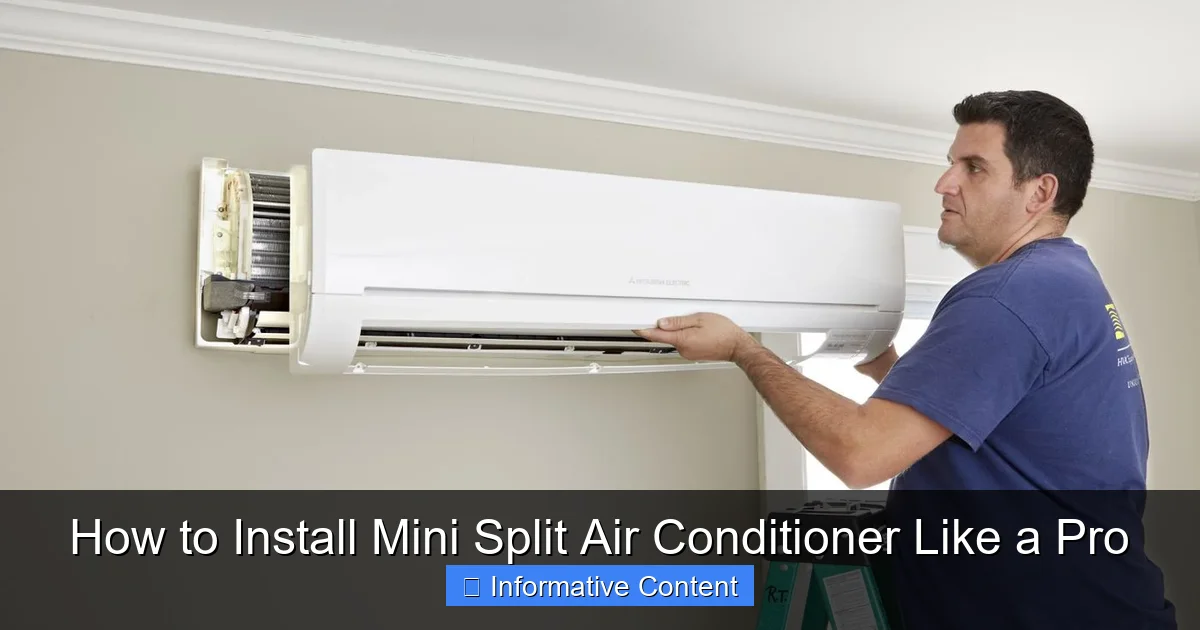
Featured image for install mini split air conditioner
Image source: ramsond.com
Installing a mini split air conditioner yourself can save you hundreds—if you follow the right steps and prioritize safety. With the correct tools, a clear plan, and careful attention to electrical and refrigerant line connections, even DIY beginners can achieve a professional-quality installation that ensures peak efficiency and long-term performance.
Key Takeaways
- Plan carefully: Choose optimal indoor and outdoor unit locations for efficiency.
- Follow codes: Always adhere to local electrical and building regulations.
- Use proper tools: Invest in quality drills, vacuum pumps, and wrenches.
- Seal connections: Prevent leaks with flared fittings and nitrogen pressure tests.
- Hire a pro if unsure: Complex electrical or refrigerant work requires certification.
- Test thoroughly: Run the system before finalizing to catch issues early.
📑 Table of Contents
- How to Install Mini Split Air Conditioner Like a Pro
- Choosing the Right Mini Split System for Your Space
- Tools and Materials You’ll Need
- Step-by-Step Installation Process
- Common Mistakes and How to Avoid Them
- Performance Tips for Long-Term Success
- Data Table: Mini Split Sizing and Efficiency
- Final Thoughts: You’ve Got This!
How to Install Mini Split Air Conditioner Like a Pro
Let’s be honest: summer heat can feel like a personal attack. I remember one particularly brutal August in my old apartment, where the ceiling fan did little more than stir the hot air around like a warm soup. That’s when I discovered the magic of mini split air conditioners—sleek, efficient, and whisper-quiet. But when the installer quoted me $1,200 for a simple setup, I thought, “There’s no way I can’t do this myself.” And guess what? I did. With the right tools, a bit of patience, and a willingness to learn, you can too.
Installing a mini split air conditioner might sound intimidating, especially if you’ve never picked up a drill before. But here’s the secret: it’s not as hard as you think. Whether you’re cooling a single room or setting up a multi-zone system, this guide will walk you through every step, from choosing the right unit to sealing the final connections. We’ll cover the tools you need, common pitfalls to avoid, and how to make your system run efficiently for years. By the end, you’ll feel confident tackling this project—and maybe even impress your neighbors when they ask, “Wait, you installed that?”
Choosing the Right Mini Split System for Your Space
Before you even think about drilling a hole in your wall, you need to pick the right mini split air conditioner. Not all units are created equal, and the wrong choice can lead to poor performance, sky-high energy bills, or even system failure. Let’s break it down.
Visual guide about install mini split air conditioner
Image source: i.pinimg.com
Understanding BTUs and Room Size
The key to efficient cooling (or heating) is matching the unit’s capacity to your room. Mini splits are rated in BTUs (British Thermal Units), which measure how much heat the system can remove per hour. Here’s a quick rule of thumb:
- 150–300 sq. ft. (e.g., a small bedroom): 6,000 BTUs
- 300–500 sq. ft. (e.g., a living room or master bedroom): 9,000–12,000 BTUs
- 500–700 sq. ft. (e.g., an open-concept space): 15,000–18,000 BTUs
Pro tip: If your room has large windows, high ceilings, or gets a lot of afternoon sun, bump up the BTU rating by 10–20%. I once installed a 9,000-BTU unit in a west-facing bedroom and regretted it—by 4 p.m., it was still 78°F. Upgrading to a 12,000-BTU model fixed that instantly.
Single-Zone vs. Multi-Zone Systems
Ask yourself: Do you need to cool just one room, or multiple areas?
- Single-zone: One indoor unit connected to one outdoor condenser. Great for bedrooms, offices, or small apartments. Simpler to install and cheaper upfront.
< li>Multi-zone: One outdoor unit powers 2–8 indoor units. Ideal for whole-home comfort, especially in older houses without ductwork. More complex wiring and refrigerant lines, but offers zone-specific control.
I went with a single-zone unit for my home office, but later added a second zone in the kitchen. The multi-zone setup cost a bit more, but being able to cool only the rooms I use is a game-changer.
Key Features to Consider
- Energy Efficiency: Look for a high SEER (Seasonal Energy Efficiency Ratio) rating—16+ is excellent. A 20 SEER unit can cut energy use by 30% compared to a 14 SEER model.
- Inverter Technology: These units adjust compressor speed to match demand, saving energy and reducing temperature swings. Trust me, your electricity bill will thank you.
- Smart Controls: Wi-Fi-enabled units let you adjust settings from your phone. I can pre-cool my bedroom before I get home—total luxury.
- Noise Level: Indoor units should be under 30 dB (quieter than a whisper). Check the specs—some models sound like a refrigerator.
Tools and Materials You’ll Need
You don’t need to be a licensed HVAC technician to install a mini split air conditioner, but you do need the right gear. Here’s my tried-and-true checklist—everything I used to install three units in my own home.
Essential Tools
- Drill and masonry bit: For making the 2.5–3 inch wall penetration hole. I used a Bosch hammer drill with a carbide-tipped bit—it went through brick in under 5 minutes.
- Vacuum pump and manifold gauge set: Critical for removing air and moisture from the refrigerant lines. Rent or buy a 3.5 CFM pump (around $100–$200).
- Refrigerant charging scale: To measure the correct amount of refrigerant. Don’t guess—overcharging damages the compressor.
- Torque wrench: For tightening flare nuts on refrigerant lines. I learned the hard way: hand-tightening can lead to leaks.
- Level: A 4-foot level ensures the indoor unit is perfectly aligned. Crooked units look unprofessional and can cause drainage issues.
- Fish tape: To pull wires and lines through walls or ceilings. I used it to route lines through a closet—saved me from cutting drywall.
Materials and Supplies
- Mini split kit: Includes the indoor unit, outdoor condenser, mounting hardware, and remote control. Most kits come with 15–25 feet of refrigerant lines—measure your distance!
- Insulated copper refrigerant lines: Pre-charged with nitrogen. Buy the exact length you need (e.g., 25 ft, 35 ft). I once bought a 50-ft roll and ended up with 15 ft of wasted tubing.
- Condensate drain line: 5/8-inch clear PVC tubing. I used flexible vinyl—easy to route and cut.
- Electrical wire: 14/2 or 12/2 gauge, depending on voltage. Check local codes—some areas require conduit.
- Wall sleeve and cover: Protects the hole and looks clean. I used a PVC sleeve with a decorative cover—no more ugly gaps.
- Sealant and foam: For sealing gaps around the wall penetration. Use non-expanding foam to avoid warping the wall.
Optional (But Helpful) Tools
- Stud finder: Locate framing to avoid drilling into joists.
- Infrared thermometer: Check refrigerant line temperatures during charging.
- Extension ladder: For outdoor unit placement.
- Helper: Lifting a 70-lb condenser alone is risky. I enlisted my brother—saved me from a back injury.
Step-by-Step Installation Process
Now for the fun part: actually installing your mini split air conditioner. I’ll walk you through each stage, with tips from my own trial-and-error experience.
Step 1: Mount the Indoor Unit
Start by finding the perfect spot. The unit should be:
- At least 6 inches from the ceiling
- Centered over the wall penetration
- Near an electrical outlet (or plan for wiring)
- Avoid direct sunlight or heat sources (e.g., radiators)
Use the mounting template (included in the kit) to mark screw holes. I used a stud finder to hit a wall stud for extra support. Drill pilot holes, then secure the bracket with lag screws. Hang the unit—it should click into place. Double-check with a level. If it’s even slightly off, the condensate won’t drain properly.
Step 2: Drill the Wall Penetration
Measure from the indoor unit to the outside. Mark the spot with a pencil. Use a 2.5-inch masonry bit and drill slowly—don’t force it. I drilled at a 5-degree downward angle to help condensate drain. Once through, insert a PVC sleeve to protect the hole. Seal gaps with non-expanding foam.
Step 3: Install the Outdoor Condenser
Place the condenser on a level surface, 12–18 inches from the wall. I used a concrete pad (you can buy pre-made ones) to keep it off wet ground. Ensure there’s at least 24 inches of clearance on all sides for airflow. Secure it with vibration-dampening pads—this reduces noise.
Step 4: Run Refrigerant, Drain, and Electrical Lines
Bundle the copper refrigerant lines, drain hose, and electrical wire together. Feed them through the wall sleeve. Use fish tape if needed. I ran mine through a closet—no visible lines! Connect the lines to the indoor unit’s flare fittings. Tighten with a torque wrench (check the manual for exact specs—mine was 25 ft-lbs). Attach the drain line to the unit’s outlet and route it outside or to a floor drain.
Step 5: Connect to the Outdoor Unit
Match the line sets to the correct ports (liquid and gas lines). Again, use the torque wrench. Connect the electrical wires to the outdoor unit’s terminal block. I labeled the wires first—saved me from confusion. Ground the unit properly (critical for safety).
Step 6: Vacuum and Charge the System
This is the make-or-break step. Attach the manifold gauges to the service ports. Connect the vacuum pump and open the valves. Let it run for at least 30 minutes (I did 45). The gauge should read below 500 microns. Close the valves, disconnect the pump, then add refrigerant slowly using the scale. Most units require 0.6–1.2 oz per foot of line set—check your manual. Overcharging? Bad. Undercharging? Bad. Precision is key.
Common Mistakes and How to Avoid Them
Even pros make mistakes. Here are the ones I’ve learned (sometimes the hard way).
Mismatched Refrigerant Lines
Not all copper lines are the same. The liquid line (smaller one) must match the indoor unit’s port size. I once used a 1/4-inch line on a 3/8-inch port—resulted in poor cooling and a call to a technician. Always verify line diameters before buying.
Poor Condensate Drainage
If the drain line isn’t sloped downward, water will back up and leak. I learned this after finding a puddle under my unit. The fix? Re-route the line with a 1/4-inch drop per foot. Use a clear vinyl hose so you can spot clogs (mold or debris).
Incorrect Refrigerant Charge
Too much refrigerant? The compressor will overheat. Too little? The unit won’t cool. I used a charging chart based on line length and ambient temperature. For my 25-ft lines, it called for 18 oz of R-410A. I measured it to the gram.
Ignoring Local Codes
Some areas require permits or licensed electricians for wiring. I called my city’s building department—turns out, I needed a permit for the electrical work. It cost $50, but saved me from fines.
Skipping the Vacuum Step
Air and moisture in the refrigerant lines cause ice buildup and corrosion. I once skipped the vacuum pump (thinking “it’ll be fine”)—the unit froze up in a week. Never again.
Performance Tips for Long-Term Success
Your mini split air conditioner is installed—now make it last.
Regular Maintenance
- Clean filters monthly: I use a vacuum attachment, then rinse with water. A clogged filter cuts airflow by 30%.
- Inspect the condenser: Clear leaves and debris every spring. I do this with a garden hose—no pressure washing (it can bend fins).
- Check refrigerant lines: Look for oil stains (a sign of leaks) and ensure insulation is intact.
Smart Usage Habits
- Use a programmable thermostat: I set mine to 78°F when I’m home, 85°F when I’m out. Saves ~10% on energy.
- Close doors and curtains: Reduces heat gain. I installed blackout curtains—my room stays 5°F cooler.
- Avoid extreme temperature swings: Don’t set it to 65°F on a 95°F day. The unit will run non-stop.
Winter Care
Mini splits work as heat pumps! But in freezing climates:
- Clear snow from the condenser
- Use a cover (not plastic—it traps moisture)
- Set the thermostat to 68°F minimum
Data Table: Mini Split Sizing and Efficiency
| Room Size (sq. ft.) | BTU Required | SEER Rating (Efficiency) | Avg. Energy Cost/Year* |
|---|---|---|---|
| 150–300 | 6,000 | 18–20 | $75–$90 |
| 300–500 | 9,000–12,000 | 16–18 | $120–$150 |
| 500–700 | 15,000–18,000 | 14–16 | $180–$220 |
| *Based on 8 hours/day use, $0.15/kWh | |||
Final Thoughts: You’ve Got This!
Installing a mini split air conditioner isn’t just about saving money—it’s about taking control. No more relying on unreliable window units or overpriced installers. When I stood back and saw my first unit humming quietly on the wall, I felt a real sense of pride. That cool, consistent airflow? I made that happen.
Remember, the key is patience. Follow the steps, double-check your work, and don’t rush the vacuum or charging process. If something feels wrong (like a hissing sound or uneven cooling), stop and troubleshoot. And hey, if you hit a snag, there are thousands of forums and YouTube videos where people have shared the same struggles—you’re not alone.
At the end of the day, a well-installed mini split system can last 15+ years. Mine has saved me over $300 in energy costs annually, not to mention the comfort of a perfectly cooled room. So grab your tools, take a deep breath, and go for it. Your future self (and your sweaty past self) will thank you.
Frequently Asked Questions
How do I install a mini split air conditioner properly?
To install a mini split air conditioner correctly, start by mounting the indoor and outdoor units securely, running the refrigerant lines, and connecting the electrical wiring. Always follow the manufacturer’s guidelines and local building codes to ensure safety and efficiency.
Can I install a mini split air conditioner myself, or do I need a professional?
While it’s possible to install a mini split air conditioner yourself if you have technical skills, hiring a licensed HVAC technician is recommended for proper refrigerant handling and system performance. DIY installation may void warranties or lead to costly mistakes if done incorrectly.
What tools do I need to install a mini split air conditioner?
You’ll need a drill, level, vacuum pump, manifold gauge set, wire strippers, and refrigerant lines to install a mini split air conditioner. Having the right tools ensures a safe and efficient installation process without damaging components.
Where should I place the indoor unit when installing a mini split air conditioner?
Install the indoor unit on an exterior wall, at least 7 feet above the floor, and away from direct sunlight or heat sources. This placement improves airflow and ensures optimal cooling or heating performance.
How long does it take to install a mini split air conditioner?
A typical mini split air conditioner installation takes 4–8 hours, depending on the complexity of the setup and whether you’re installing a single-zone or multi-zone system. Professional installers may complete the job faster with minimal disruptions.
Do I need a permit to install a mini split air conditioner?
Yes, many regions require a permit for mini split air conditioner installation, especially if electrical or refrigerant work is involved. Check with your local building authority to ensure compliance with codes and avoid fines.