
Recharging your LG window air conditioner can restore cooling performance when refrigerant levels drop. This guide walks you through the process safely, legally, and efficiently—whether you’re a DIY enthusiast or calling a pro. Always prioritize safety and local regulations when handling refrigerants.
Key Takeaways
- Refrigerant recharge is not always the solution: Low cooling may stem from dirty filters, blocked vents, or thermostat issues—not low refrigerant.
- Only certified technicians should handle refrigerants: In most regions, including the U.S., it’s illegal for uncertified individuals to add refrigerant due to environmental laws.
- LG window units are typically sealed systems: These are not designed for easy recharging and often require professional diagnosis and repair.
- Safety first: Always turn off power, wear protective gear, and work in a well-ventilated area if attempting any maintenance.
- Use the right tools: A manifold gauge set, refrigerant recovery machine, and leak detection kit are essential for proper service.
- Prevention beats repair: Regular maintenance like cleaning coils and filters helps avoid refrigerant loss and system strain.
- Consider replacement over recharge: If your unit is over 10 years old, upgrading to a newer, energy-efficient model may be more cost-effective.
How to Recharge LG Window Air Conditioner: A Complete 2026 Guide
If your LG window air conditioner isn’t cooling like it used to, you might be wondering: “Can I recharge it myself?” The short answer is—maybe, but with big caveats. In 2026, with stricter environmental regulations and advanced HVAC technology, recharging an air conditioner isn’t as simple as topping off your car’s oil. This guide will walk you through everything you need to know about recharging your LG window AC unit—safely, legally, and effectively.
Whether you’re dealing with warm air blowing from the vents, longer cooling cycles, or just a general drop in performance, this step-by-step guide will help you determine if a recharge is needed, how to do it (if allowed), and when it’s time to call in a professional. We’ll also cover essential safety tips, tools, and troubleshooting advice to keep your home cool and your system running efficiently.
By the end of this guide, you’ll understand the real causes of cooling loss, how to maintain your LG window AC, and whether a DIY recharge is even possible—or advisable—in today’s regulatory climate.
Understanding Your LG Window Air Conditioner
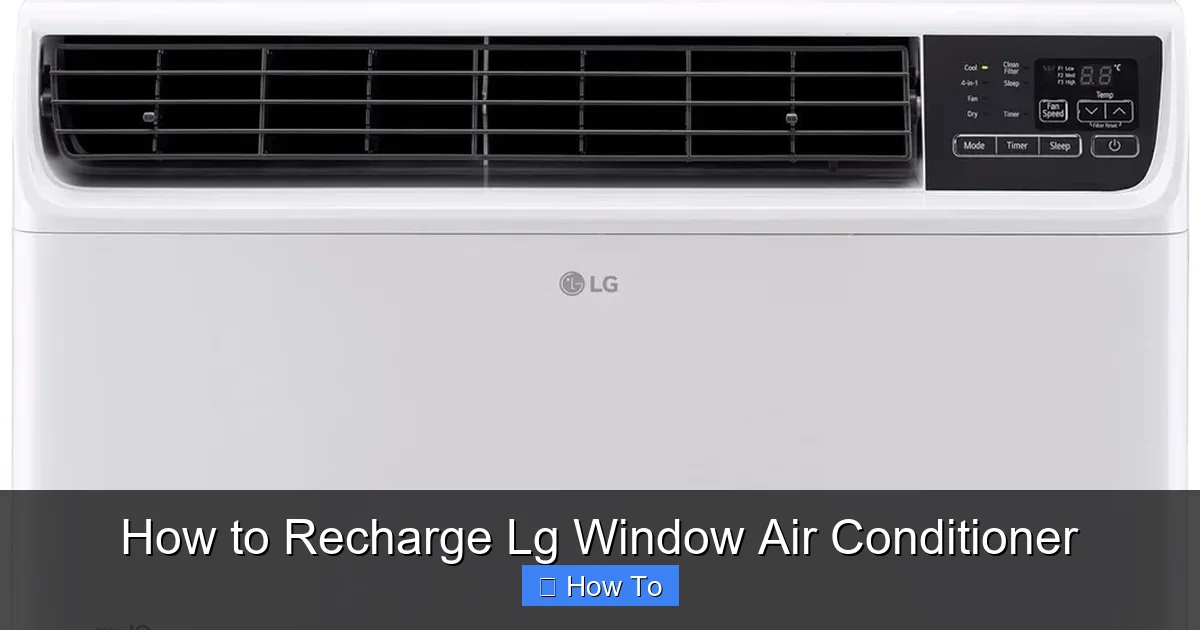
Visual guide about How to Recharge Lg Window Air Conditioner
Image source: 5.imimg.com
Before you even think about recharging, it’s important to understand how your LG window air conditioner works. These units are self-contained systems that cool your room by removing heat and humidity from indoor air and releasing it outside. They use a refrigerant—a special chemical that absorbs and releases heat as it cycles through the system—to make this happen.
LG window ACs typically use R-32 or R-410A refrigerant, both of which are more environmentally friendly than older types like R-22 (which has been phased out). These refrigerants are sealed inside the system during manufacturing and are not meant to be “topped off” like engine coolant.
That’s a key point: air conditioners are closed-loop systems. Under normal operation, refrigerant shouldn’t leak or deplete. If your unit is low on refrigerant, it usually means there’s a leak—somewhere in the coils, seals, or connections. Simply adding more refrigerant without fixing the leak is like putting a bandage on a broken pipe. It might work temporarily, but the problem will return—and possibly worsen.
Signs You Might Need a Recharge
So how do you know if your LG window AC needs a recharge? Here are the most common symptoms:
- Warm or lukewarm air blowing from the vents: If the air isn’t cold, even after running for a while, refrigerant could be low.
- Longer cooling cycles: The unit runs longer than usual but doesn’t reach the set temperature.
- Ice buildup on the evaporator coils: Low refrigerant can cause coils to get too cold and freeze.
- Hissing or bubbling sounds: These may indicate a refrigerant leak.
- Higher-than-normal energy bills: An inefficient system works harder, using more electricity.
But—and this is a big but—these symptoms can also be caused by other issues. A dirty air filter, blocked condenser coils, a faulty thermostat, or a malfunctioning fan can all mimic low refrigerant. That’s why diagnosis is critical.
Can You Recharge an LG Window AC Yourself?
Now for the million-dollar question: Can you recharge your LG window air conditioner yourself?
The answer depends on where you live and your level of expertise.
In the United States, under the Clean Air Act (enforced by the EPA), it is illegal for uncertified individuals to handle refrigerants. Only EPA Section 608-certified technicians are allowed to purchase, handle, or recharge refrigerants like R-32 or R-410A. This law applies even if you’re just “topping off” your home AC unit.
Why? Because refrigerants are potent greenhouse gases. Releasing them into the atmosphere contributes to climate change. Improper handling can also damage your system or create safety hazards.
So, if you’re not certified, you can’t legally buy refrigerant or recharge your unit. That means no DIY recharge kits from Amazon or hardware stores—unless you’re just using them to detect leaks (more on that later).
In other countries, regulations vary. In some places, homeowners can purchase small refrigerant cans and recharge kits. But even then, LG window units are not designed for easy access. They’re sealed systems, and opening them voids the warranty and risks contamination.
When to Call a Professional
Given the legal and technical challenges, the best course of action for most homeowners is to call a licensed HVAC technician. Here’s why:
- Proper diagnosis: A technician can use gauges and leak detectors to confirm if low refrigerant is the real issue.
- Leak detection and repair: If there’s a leak, it must be found and fixed before recharging. Otherwise, the new refrigerant will just leak out.
- Safe handling: Certified techs have the tools and training to recover, recycle, and recharge refrigerant safely.
- Warranty protection: DIY repairs can void your LG warranty. Professional service keeps it intact.
In 2026, many HVAC companies offer smart diagnostics, using apps and sensors to pinpoint problems quickly. Some even provide remote monitoring for LG smart AC models, alerting you to performance issues before they become serious.
Tools and Equipment Needed (For Professionals or Certified DIYers)
If you are EPA-certified or working with a technician, here’s what’s needed to recharge an LG window AC:
Essential Tools
- Manifold gauge set: Measures pressure in the low- and high-side lines. This helps determine if refrigerant is low and how much to add.
- Refrigerant recovery machine: Safely removes old refrigerant before recharging.
- Vacuum pump: Removes air and moisture from the system after repair.
- Refrigerant scale: Ensures the correct amount of refrigerant is added by weight.
- Leak detection kit: Includes electronic sniffers, UV dye, or soap solution to find leaks.
- Safety gear: Gloves, goggles, and a respirator to protect against refrigerant exposure.
Optional but Helpful
- Digital thermometer: Checks air temperature at the intake and output vents.
- Multimeter: Tests electrical components like capacitors and motors.
- Coil cleaner: Removes dirt and debris from evaporator and condenser coils.
Note: These tools can cost hundreds to thousands of dollars. For most homeowners, renting or buying them isn’t practical. That’s another reason to hire a pro.
Step-by-Step Guide to Recharging (For Certified Technicians)
If you’re a certified technician or working with one, here’s how the recharge process works on an LG window air conditioner.
Step 1: Turn Off Power and Prepare the Unit
Before doing anything, unplug the AC from the wall or turn off the circuit breaker. Safety first! Let the unit sit for 10–15 minutes to allow pressure to equalize.
Remove the front panel and air filter. Inspect the evaporator coils for dirt, ice, or damage. Clean them if needed using a soft brush or coil cleaner.
Step 2: Locate the Service Valves
Most LG window units have service valves on the back or side, near the compressor. These are small brass fittings with caps. One is for the low-pressure side (suction), and one for the high-pressure side (discharge).
The low-side valve is where refrigerant is added. It’s usually marked with an “L” or has a larger diameter.
Step 3: Connect the Manifold Gauge Set
Attach the blue hose from the manifold gauge to the low-side service valve. The red hose connects to the high-side valve (for reading only—don’t add refrigerant here). The yellow hose connects to the refrigerant canister or recovery machine.
Open the valve on the manifold gauge slowly to purge air from the hoses. Then close it.
Step 4: Check System Pressure
Turn the AC back on and set it to the coldest setting. Let it run for 10–15 minutes.
Read the pressure on the low-side gauge. Compare it to the manufacturer’s specifications (found in the user manual or on a label inside the unit). Normal low-side pressure for R-410A is typically 110–130 psi at room temperature.
If pressure is low, refrigerant may be needed.
Step 5: Recover Existing Refrigerant (If Required)
If the system has been opened or there’s a leak, the existing refrigerant must be recovered using a recovery machine. This prevents release into the atmosphere and ensures accurate recharging.
Step 6: Evacuate the System
Use a vacuum pump to remove air and moisture from the system. This is critical—moisture can freeze and damage the compressor. Run the pump for at least 30 minutes, then check for leaks with a micron gauge.
Step 7: Add Refrigerant
Weigh the refrigerant canister on a scale. Connect it to the yellow hose and open the valve slowly.
Open the low-side valve on the manifold gauge to allow refrigerant to flow into the system. Monitor the pressure and weight until the correct charge is reached (as specified by LG).
Never overcharge! Too much refrigerant can damage the compressor.
Step 8: Disconnect and Test
Close all valves and disconnect the hoses. Replace the service valve caps.
Turn the AC back on and monitor performance. Check that cold air is blowing, ice isn’t forming, and the unit cycles properly.
Step 9: Seal and Document
If a leak was repaired, seal the access point. Document the work, including refrigerant type, amount added, and pressure readings. This is required for compliance.
Safety Tips and Best Practices
Working with refrigerants is dangerous if done incorrectly. Follow these safety guidelines:
- Never work on a live unit: Always disconnect power before servicing.
- Wear protective gear: Gloves and goggles prevent skin and eye contact with refrigerant.
- Work in a well-ventilated area: Refrigerant vapors can displace oxygen in confined spaces.
- Never mix refrigerants: Use only the type specified by LG (usually R-32 or R-410A).
- Dispose of old refrigerant properly: Only certified technicians can legally recover and recycle it.
- Don’t force connections: Use the correct fittings to avoid leaks or damage.
Troubleshooting Common Issues
Even after a recharge, your LG window AC might not work perfectly. Here’s how to troubleshoot:
Unit Still Not Cooling
- Check the air filter—replace if dirty.
- Ensure vents aren’t blocked by furniture or curtains.
- Verify the thermostat is set correctly.
- Listen for unusual noises—could indicate a failing compressor.
Ice on the Coils
- Turn off the AC and let it thaw.
- Clean the evaporator coils and replace the filter.
- Check for low airflow or refrigerant issues.
Water Leaking Inside
- Clear the drain hole at the back of the unit.
- Ensure the AC is level—tilting can cause water to pool.
- Check for clogged condensate lines.
Strange Odors
- Mold or mildew may be growing in the drip pan or coils.
- Clean with a mixture of water and vinegar or a commercial coil cleaner.
Preventive Maintenance Tips
The best way to avoid needing a recharge is to maintain your LG window AC regularly.
Monthly
- Clean or replace the air filter.
- Wipe down the exterior with a damp cloth.
- Check for obstructions around the unit.
Seasonally (Before Summer)
- Clean the evaporator and condenser coils.
- Inspect the drain line for clogs.
- Check the seal around the window to prevent air leaks.
- Test the thermostat and remote control.
Annually
- Have a professional inspect the unit.
- Check refrigerant levels and look for leaks.
- Lubricate moving parts if applicable.
When to Replace Instead of Recharge
In 2026, energy efficiency standards are higher than ever. If your LG window AC is over 10 years old, a recharge might not be worth it. Consider replacement if:
- The unit requires frequent repairs.
- Refrigerant leaks keep recurring.
- Energy bills are consistently high.
- The unit uses R-22 refrigerant (no longer produced).
Newer LG models come with inverter technology, smart controls, and higher SEER ratings—meaning better cooling with less energy. Some even integrate with home automation systems like Google Home or Alexa.
Conclusion
Recharging your LG window air conditioner isn’t a simple DIY task—especially in 2026. Due to environmental regulations, sealed system design, and safety concerns, it’s best left to certified professionals. While low refrigerant can cause cooling problems, it’s often a sign of a leak that needs repair, not just a top-off.
Before considering a recharge, rule out simpler issues like dirty filters or blocked vents. If you suspect a refrigerant problem, call a licensed HVAC technician. They have the tools, training, and certification to diagnose and fix the issue safely and legally.
Regular maintenance is your best defense against cooling loss. Clean filters, clear coils, and annual inspections can keep your LG window AC running efficiently for years.
And if your unit is aging or inefficient, upgrading to a newer model may save you money and hassle in the long run. With today’s smart, energy-efficient options, staying cool has never been easier—or more eco-friendly.
Stay cool, stay safe, and let the pros handle the refrigerant.