
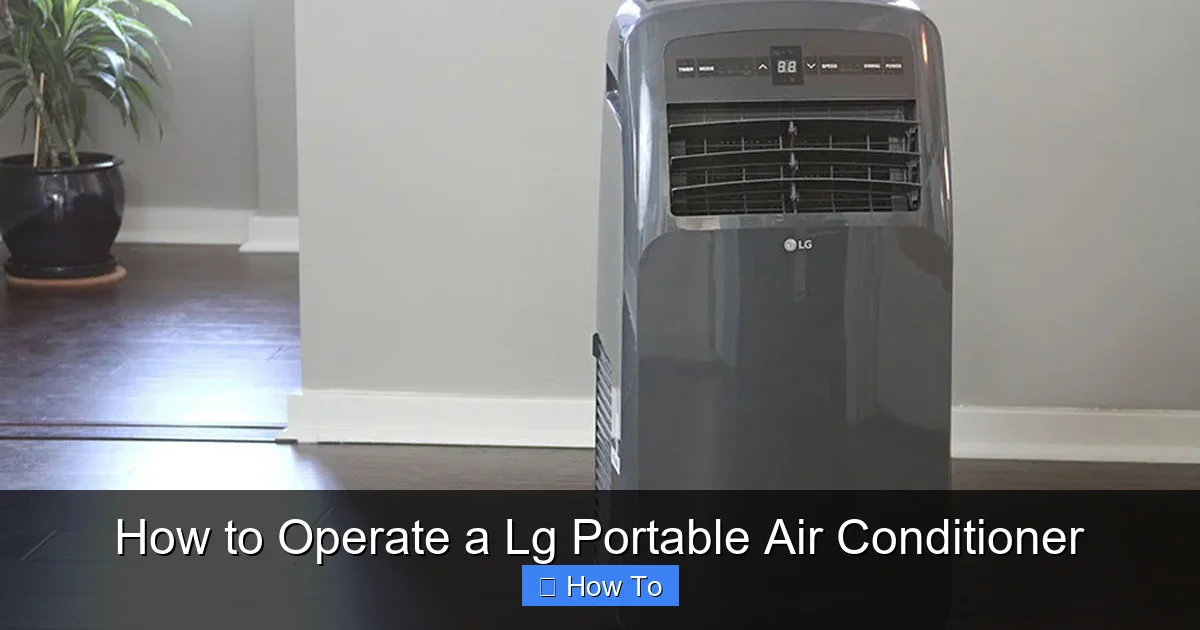
This guide walks you through how to operate a LG portable air conditioner efficiently, from setup to daily use and maintenance. Whether you’re a first-time user or upgrading your unit, you’ll find clear, practical steps to keep your space cool and comfortable all year long.
Key Takeaways
- Proper setup is crucial: Correct installation of the exhaust hose and window kit ensures maximum cooling efficiency and prevents air leaks.
- Use the right mode for your needs: LG portable ACs offer cooling, fan, dehumidify, and sleep modes—choose based on weather and comfort preferences.
- Regular maintenance extends lifespan: Clean filters monthly and check for blockages to maintain airflow and energy efficiency.
- Smart features enhance convenience: Use the LG ThinQ app to control your unit remotely, set schedules, and receive maintenance alerts.
- Proper ventilation prevents overheating: Always vent the hot air outside using the included window kit to avoid reducing performance.
- Troubleshoot common issues quickly: No cooling, water leaks, or error codes can often be resolved with simple checks and resets.
- Energy-saving tips reduce costs: Use timers, close doors and windows, and set the thermostat wisely to lower electricity usage.
How to Operate a LG Portable Air Conditioner: A Complete 2026 Guide
Welcome to your ultimate guide on how to operate a LG portable air conditioner in 2026. Whether you’re escaping summer heat, managing humidity, or just improving indoor air quality, LG’s portable AC units are designed for convenience, efficiency, and smart home integration. These sleek, mobile units don’t require permanent installation and can cool rooms up to 500 square feet, making them ideal for apartments, offices, bedrooms, and living areas.
In this comprehensive guide, you’ll learn everything from unboxing and setup to daily operation, smart features, maintenance, and troubleshooting. By the end, you’ll be confident using your LG portable air conditioner like a pro—keeping your space cool, comfortable, and energy-efficient.
Let’s dive in!
Step 1: Unboxing and Initial Setup
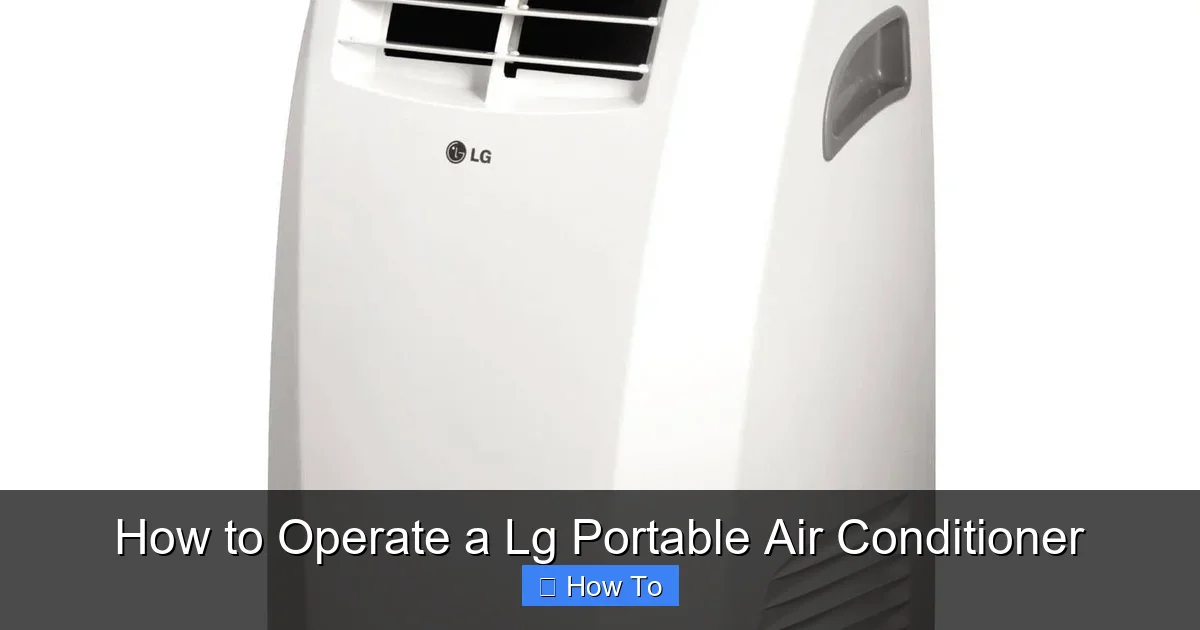
Visual guide about How to Operate a Lg Portable Air Conditioner
Image source: i5.walmartimages.com
Before you power on your LG portable air conditioner, it’s important to unbox and set it up correctly. A proper setup ensures optimal performance and prevents common issues like poor cooling or water leaks.
Unbox Carefully
When you open the box, you’ll find:
– The LG portable air conditioner unit
– Exhaust hose (usually 5–6 feet long)
– Window installation kit (sliding panel or adjustable bracket)
– Hose connectors and adapters
– Remote control (with batteries)
– User manual and warranty card
– Drain hose (on some models with auto-evaporation)
Remove all packaging materials, including foam inserts and plastic wraps. Keep the box and packaging for at least 30 days in case you need to return or move the unit.
Choose the Right Location
Place your LG portable AC in a spot that allows for proper airflow and ventilation. Ideal locations include:
– Near a window for easy exhaust hose routing
– Away from direct sunlight and heat sources (like ovens or radiators)
– On a flat, stable surface to prevent tipping
– At least 12–18 inches away from walls or furniture for airflow
Avoid placing the unit in tight closets or behind curtains, as this restricts airflow and reduces efficiency.
Install the Window Kit
The window kit is essential for venting hot air outside. Here’s how to install it:
- Open your window slightly (usually 3–6 inches).
- Insert the adjustable window bracket or sliding panel into the opening.
- Secure it tightly so it doesn’t fall or let air leak in.
- Attach one end of the exhaust hose to the back of the AC unit and the other to the window kit.
- Use duct tape or the included seals to close any gaps around the window.
Pro tip: If you have a double-hung window, use the vertical sliding panel. For sliding windows, use the horizontal bracket. Make sure the hose isn’t kinked or bent sharply—this restricts airflow.
Step 2: Powering On and Basic Controls
Once your unit is set up, it’s time to power it on and explore the controls.
Plug In and Power Up
– Plug the AC into a dedicated 120V outlet. Avoid using extension cords, as they can overheat.
– Press the Power button on the unit or remote control.
– The display will light up, and the fan will start running.
Most LG portable ACs have a digital display showing temperature, mode, and timer settings.
Understand the Control Panel
The front panel or remote control includes these key buttons:
– Mode: Switch between Cool, Fan, Dry (Dehumidify), and Sleep modes.
– Temperature: Adjust from 60°F to 86°F (15°C to 30°C).
– Fan Speed: Choose Low, Medium, High, or Auto.
– Timer: Set the unit to turn on or off after a set time (1–24 hours).
– Swing: Adjust airflow direction (if supported).
– Eco Mode: Reduces energy use by adjusting fan and compressor.
Use the Remote Control
The remote lets you adjust settings from across the room. Make sure the remote has fresh batteries and is pointed at the unit’s sensor (usually on the front).
Tip: If the remote isn’t working, check the battery compartment and ensure nothing is blocking the sensor.
Step 3: Choosing the Right Operating Mode
LG portable air conditioners offer multiple modes to suit different needs. Understanding each mode helps you use your unit more effectively.
Cool Mode
This is the primary mode for lowering room temperature. The compressor and fan work together to cool the air. Use this during hot days or when you need rapid cooling.
How to use:
– Press Mode until “Cool” appears on the display.
– Set your desired temperature (e.g., 72°F).
– Choose fan speed (Auto is recommended for balanced performance).
Fan Mode
In this mode, only the fan runs—no cooling. It’s great for circulating air on mild days or when you just need a breeze.
How to use:
– Press Mode until “Fan” appears.
– Select fan speed (Low, Medium, High).
Dry (Dehumidify) Mode
This mode removes moisture from the air without significant cooling. Ideal for humid climates or rainy seasons.
How to use:
– Press Mode until “Dry” appears.
– The fan runs slowly, and the compressor cycles on and off to remove humidity.
– Ideal for reducing mold and mildew.
Sleep Mode
Sleep Mode gradually adjusts the temperature and fan speed to keep you comfortable while you sleep. It also reduces noise.
How to use:
– Press Sleep on the remote or panel.
– The unit will increase temperature by 1–2°F after 1 hour and maintain it.
Auto Mode (on select models)
Auto Mode senses room temperature and adjusts cooling and fan speed automatically for optimal comfort.
Step 4: Using Smart Features with LG ThinQ
In 2026, LG portable air conditioners come with advanced smart features via the LG ThinQ app. This allows you to control your AC remotely, set schedules, and monitor energy use.
Download and Set Up the LG ThinQ App
– Download the free LG ThinQ app from the Apple App Store or Google Play.
– Create an account or log in.
– Tap “Add Product” and follow the on-screen instructions.
Connect Your AC to Wi-Fi
– Make sure your phone and AC are on the same Wi-Fi network.
– On the AC, press and hold the Wi-Fi button (usually on the panel or remote) until the light blinks.
– In the app, select your AC model and follow the pairing steps.
– Once connected, you’ll see your unit in the app.
Use Smart Controls
With the app, you can:
– Turn the AC on/off from anywhere
– Adjust temperature and mode
– Set daily or weekly schedules (e.g., cool the room before you get home)
– Receive filter change and maintenance alerts
– Monitor energy consumption
Example: Set a schedule to cool your bedroom to 70°F at 9 PM every night. The app will automatically start the AC 30 minutes before to reach the target temperature.
Voice Control with Google Assistant and Alexa
Link your LG ThinQ account to Google Assistant or Amazon Alexa to control your AC with voice commands.
Try saying:
– “Hey Google, set the living room AC to 72 degrees.”
– “Alexa, turn on the portable air conditioner.”
Step 5: Daily Operation and Best Practices
To get the most out of your LG portable air conditioner, follow these daily tips.
Set the Right Temperature
For comfort and energy savings, set your thermostat between 72°F and 76°F. Each degree lower can increase energy use by 3–5%.
Tip: Use a fan to circulate cool air—this lets you raise the thermostat by 4°F without sacrificing comfort.
Close Doors and Windows
Keep doors and windows closed while the AC is running. Open windows let hot air in and reduce efficiency.
Use the Timer Function
Set the timer to turn off the AC after you fall asleep or when you leave the house. This saves energy and prevents overcooling.
Example: Set the timer for 2 hours if you only need cooling during a nap.
Avoid Overloading the Circuit
Don’t plug high-wattage appliances (like microwaves or space heaters) into the same circuit as your AC. This can trip the breaker.
Monitor the Water Tank (if applicable)
Some LG models use auto-evaporation, which recycles condensation. However, in high-humidity areas, the internal tank may fill up.
Check the tank indicator light. If it’s on, turn off the unit, unplug it, and drain the water using the drain hose or by tilting the unit slightly.
Step 6: Maintenance and Cleaning
Regular maintenance keeps your LG portable air conditioner running smoothly and extends its lifespan.
Clean the Air Filter Monthly
A dirty filter blocks airflow and reduces cooling efficiency.
How to clean:
– Turn off and unplug the unit.
– Remove the front panel (usually snaps off).
– Take out the filter (it’s washable).
– Rinse it under lukewarm water. Do not use soap.
– Let it air dry completely before reinserting.
Tip: Clean the filter every 2–4 weeks during heavy use.
Wipe Down the Exterior
Use a soft, damp cloth to clean the outside of the unit. Avoid harsh chemicals or abrasive sponges.
Inspect the Exhaust Hose
Check the hose monthly for cracks, kinks, or blockages. Replace if damaged.
Check the Drain System
If your model has a drain port, ensure it’s not clogged. Use a pipe cleaner or compressed air to clear debris.
Schedule Professional Service
Have a technician inspect your unit every 2–3 years to check refrigerant levels, electrical connections, and overall performance.
Step 7: Troubleshooting Common Issues
Even the best units can have issues. Here’s how to fix common problems with your LG portable air conditioner.
Unit Won’t Turn On
– Check if it’s plugged in and the outlet has power.
– Try a different outlet.
– Reset the circuit breaker.
– Replace remote batteries.
Not Cooling Enough
– Make sure the exhaust hose is properly installed and not kinked.
– Check if the air filter is dirty.
– Ensure doors and windows are closed.
– Verify the temperature setting is lower than room temperature.
Water Leaking
– Check if the drain tank is full—empty it.
– Ensure the unit is level (use a spirit level).
– Inspect the drain hose for clogs.
Strange Noises
– Rattling: Check for loose parts or debris in the fan.
– Humming: Normal for compressor startup.
– Gurgling: Air in the refrigerant line—contact support.
Error Codes on Display
LG units show error codes like “E1” or “PF.” Refer to the user manual:
– E1: Sensor error—reset the unit.
– PF: Power failure—wait and restart.
– CL: Child lock is on—press and hold the Lock button to disable.
If problems persist, contact LG customer support or visit their website for live chat.
Energy-Saving Tips for 2026
With rising energy costs, it’s important to use your LG portable air conditioner efficiently.
Use Eco Mode
Eco Mode reduces compressor speed and fan power when the room reaches the set temperature. This saves energy without sacrificing comfort.
Seal Air Leaks
Use weatherstripping around windows and doors to prevent cool air from escaping.
Upgrade to a Smart Thermostat (Compatible Models)
Some LG portable ACs work with smart thermostats for better temperature control.
Use Ceiling Fans
Ceiling fans help distribute cool air, allowing you to set the AC higher.
Avoid Heat Sources
Turn off lamps, TVs, and computers when not in use—they generate heat.
Conclusion
Operating a LG portable air conditioner in 2026 is easier than ever, thanks to smart features, intuitive controls, and energy-efficient designs. By following this guide, you’ve learned how to set up your unit, choose the right mode, use the LG ThinQ app, maintain it properly, and troubleshoot common issues.
Remember: Proper setup, regular maintenance, and smart usage are the keys to long-term performance and comfort. Whether you’re cooling a small bedroom or a large living area, your LG portable AC can keep you refreshed all season long.
Stay cool, save energy, and enjoy the convenience of modern cooling technology!