
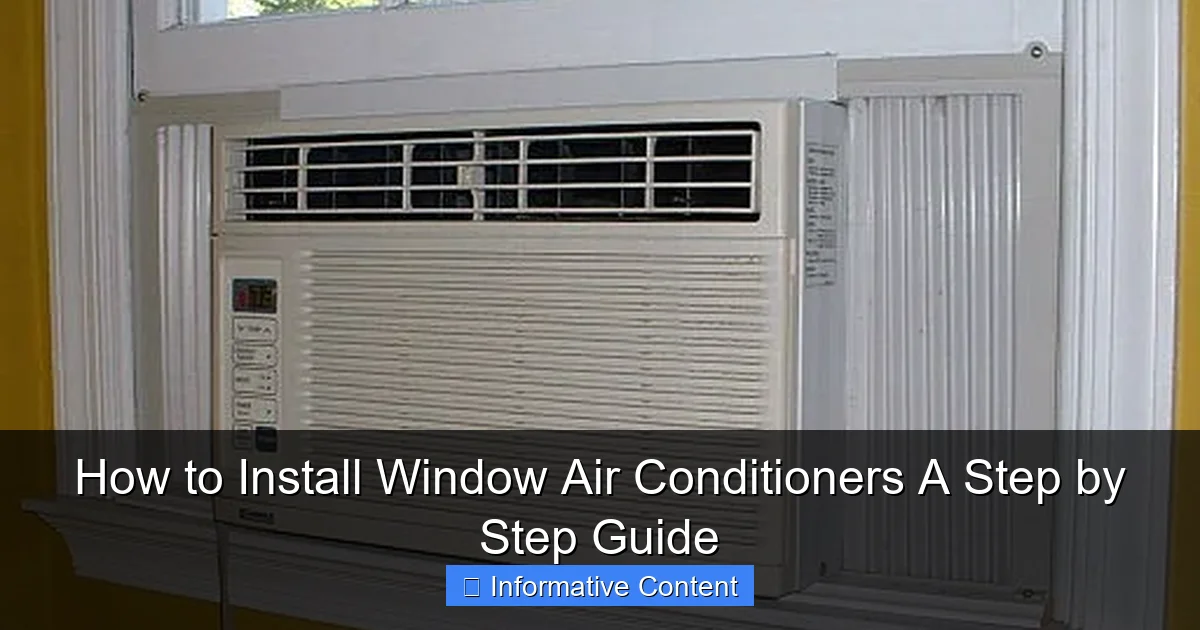
Featured image for how to install window air conditioners
Image source: hvacbeginners.com
Properly installing a window air conditioner ensures maximum cooling efficiency and safety. This guide walks you through measuring your window, securing the unit with support brackets, and sealing gaps to prevent air leaks—critical steps that avoid energy waste and water damage. With the right tools and precautions, you can complete the installation in under an hour.
Key Takeaways
- Measure your window first: Ensure a proper fit before purchasing or installing.
- Secure the unit tightly: Prevent accidents with sturdy brackets and support.
- Seal gaps completely: Use foam strips to block hot air leaks.
- Check electrical safety: Plug into grounded outlets; avoid extension cords.
- Test before finalizing: Run the AC to confirm stable operation.
- Follow manufacturer instructions: Always adhere to model-specific guidelines.
📑 Table of Contents
- Why Installing a Window Air Conditioner Is Worth the Effort
- Step 1: Choose the Right Window Air Conditioner
- Step 2: Gather Tools and Prepare the Area
- Step 3: Install the Support Bracket (If Needed)
- Step 4: Secure the Air Conditioner in the Window
- Step 5: Test and Optimize Performance
- Common Mistakes and Troubleshooting
- Final Thoughts: Enjoy Your Cool Space
Why Installing a Window Air Conditioner Is Worth the Effort
Let’s be honest: summer heat can be brutal. You’re sweating before you even step outside, and your apartment feels more like a sauna than a sanctuary. I remember my first summer in a city apartment without central air. I tried fans, ice packs, and even sleeping on the floor—nothing worked. Then I bought a window air conditioner, and everything changed. Not only did it cool my space, but it also gave me peace of mind knowing I could control my environment. But here’s the catch: getting it installed properly made all the difference.
Installing a window air conditioner isn’t rocket science, but it’s not exactly plug-and-play either. A poorly installed unit can leak, rattle, or even fall out of the window—yikes! The good news? With the right tools, a little patience, and this step-by-step guide, you can do it yourself in under an hour. Whether you’re a renter trying to survive the heat or a homeowner looking to cool a single room, this guide will walk you through every detail, from choosing the right unit to securing it safely. And yes, I’ll share some hard-earned tips from my own (slightly messy) first attempt.
Step 1: Choose the Right Window Air Conditioner
Before you even think about installation, you need to pick the right window air conditioner for your space. This step is critical because the wrong unit can lead to inefficiency, high energy bills, or even a safety hazard. Let’s break it down.
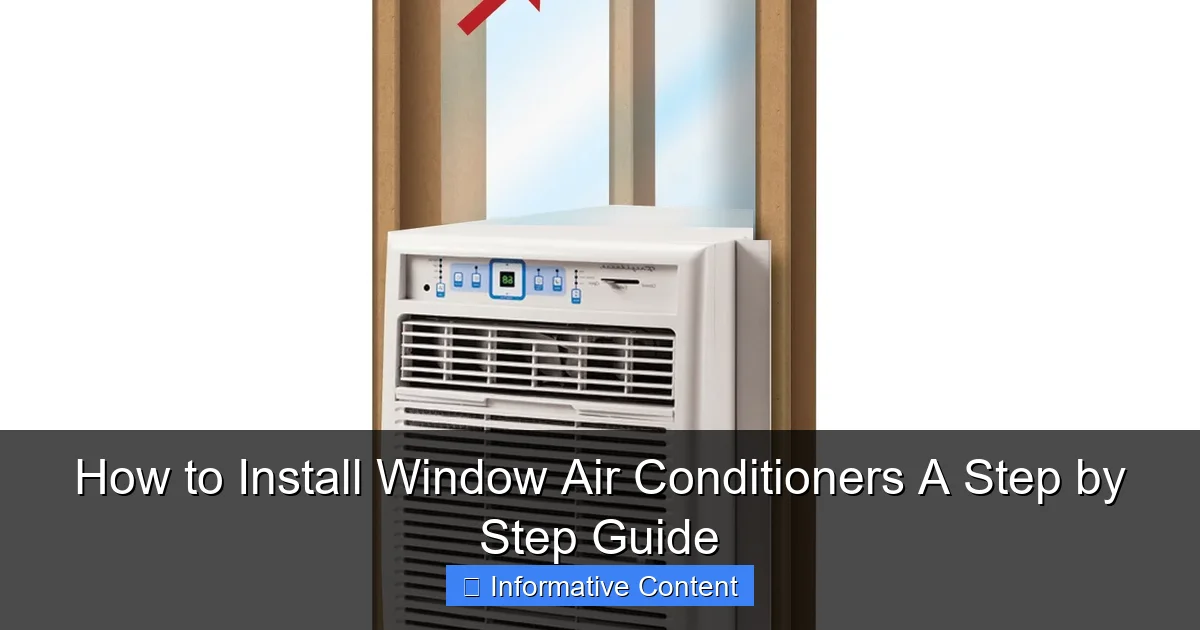
Visual guide about how to install window air conditioners
Image source: assets.ajmadison.com
Measure Your Room and Window
Start by measuring the room you want to cool. The size of your room determines the BTU (British Thermal Unit) rating you need. As a general rule:
- 100–150 sq. ft.: 5,000–6,000 BTUs
- 150–250 sq. ft.: 7,000–8,000 BTUs
- 250–350 sq. ft.: 9,000–10,000 BTUs
- 350–450 sq. ft.: 12,000 BTUs
For example, my 200 sq. ft. bedroom needed an 8,000 BTU unit. I went a bit higher (9,000 BTU) for faster cooling, and it worked great—no regrets. But don’t go too high, or you’ll waste energy and overcool the space.
Next, measure your window. Most window AC units fit standard double-hung windows (the kind that slide up and down). Measure the width (inside frame) and the height. Most units need at least 13–14 inches of vertical clearance and a width of 23–36 inches. Pro tip: Take a photo of your window with a tape measure visible—this helps when shopping online.
Consider Window Type and Installation Compatibility
Not all windows are created equal. If you have a casement (crank-out) window, a sliding window, or a fixed pane, a standard window AC might not work. Some models come with side panels or flexible mounting kits for non-standard windows. For example, I once tried to install a standard unit in a sliding window—it was a disaster. The unit kept sliding forward. I ended up returning it and getting a model with a sliding window adapter. Lesson learned: always check compatibility.
Also, look for units with adjustable side panels or accordion-style extensions. These help seal the gap between the unit and the window frame, which improves efficiency and reduces noise.
Look for Energy Efficiency and Features
Check the Energy Efficiency Ratio (EER). A higher EER (10+ is good, 12+ is excellent) means lower energy bills. I once bought a cheap 8,000 BTU unit with an EER of 8.5. It worked, but my electricity bill jumped. My next unit had an EER of 11.3, and the difference was clear—both in cooling and cost.
Other features to consider:
- Remote control: Handy for adjusting settings from bed.
- Timer: Lets you schedule cooling (great for turning on before you get home).
- Sleep mode: Gradually adjusts temperature for nighttime comfort.
- Dehumidifier mode: Reduces moisture in humid climates.
One thing I wish I’d known earlier: some units have a “dry mode” that’s quieter than full cooling—perfect for humid summer nights.
Step 2: Gather Tools and Prepare the Area
Now that you’ve got your unit, it’s time to get ready. This step is all about prep—because a smooth installation starts with having everything you need at hand.
Tools and Supplies Checklist
Here’s what you’ll likely need:
- Measuring tape: For double-checking window and unit dimensions.
- Screwdriver (Phillips and flathead): For securing brackets and panels.
- Drill with small bits: Optional, but helpful for pre-drilling holes.
- Level: To ensure the unit is perfectly horizontal (critical for drainage).
- Weather stripping or foam tape: For sealing gaps.
- Support brackets or L-brackets: For added stability (especially for heavier units).
- Work gloves: Window ACs can be heavy and awkward.
- Helper (optional but recommended): Most units weigh 50–80 lbs. Don’t strain your back!
I once tried to install a 70-lb unit solo. I ended up with a bruised shin and a crooked AC. My second time, I asked a friend to help, and it took half the time—and zero injuries.
Clear the Area and Protect Your Space
Clear the floor near the window. Remove furniture, rugs, or anything that might get in the way. Lay down a drop cloth or old towels—this catches dust, debris, or condensation during installation.
Also, protect your window sill. Some units can scratch or dent wood or vinyl. I use a piece of cardboard or a folded towel as a barrier. It’s a small step, but it saved my sill from marks.
Pro tip: Open the window and clean the tracks. Dust or debris can prevent a tight seal. A quick wipe with a damp cloth makes a big difference.
Unpack and Inspect the Unit
Carefully unbox your window air conditioner. Check for:
- All included parts (side panels, screws, brackets, manuals).
- No visible damage (dents, scratches, bent fins).
- Power cord length (make sure it reaches the outlet without stretching).
I once found a missing screw in the package. I had to make a late-night trip to the hardware store—not fun. Now, I lay out all parts on the floor and cross-check with the manual.
Step 3: Install the Support Bracket (If Needed)
Many modern window ACs come with built-in support or slide-out brackets. But if yours is heavy (over 60 lbs) or your window sill is weak, adding an external support bracket is a smart move. It prevents sagging, reduces vibration, and adds safety.
Types of Support Brackets
- L-brackets: Simple metal brackets that attach to the sill and support the unit’s front. Great for wood or concrete sills.
- Sliding window supports: For horizontal sliding windows. These sit under the unit and brace against the window frame.
- Adjustable legs: Some units have fold-out legs that rest on the sill.
I used L-brackets for my 75-lb unit. They cost $15 at the hardware store and gave me peace of mind. No wobbling, no stress.
How to Install an L-Bracket
- Measure the width of your window sill.
- Position the L-bracket so the long arm supports the front of the AC unit.
- Mark the screw holes on the sill. Use a level to ensure the bracket is straight.
- Pre-drill holes (especially in wood) to prevent splitting.
- Secure the bracket with screws. Tighten firmly, but don’t over-torque.
Note: If your sill is vinyl or aluminum, check for manufacturer guidelines. Some brackets can damage soft materials. I use rubber padding under the bracket to protect my vinyl sill.
For sliding windows: Place a support under the unit and brace it against the window frame. Tighten the adjustment screw until it’s snug. Test by gently pushing down on the unit—it shouldn’t move.
When to Skip the Bracket
If your unit is lightweight (<50 lbs), has built-in support, and your sill is strong, you might not need an extra bracket. But when in doubt, add one. It’s better to be safe than sorry—especially if you live in a high-rise.
Step 4: Secure the Air Conditioner in the Window
This is the main event. With your tools ready and support in place, it’s time to install the unit. Safety first: always lift with your legs, not your back.
Position the Unit
With help (or alone, if it’s light), carefully lift the AC and place it on the sill. Slide it into the window so:
- The front is flush with the inside wall.
- The back extends outside (usually 6–12 inches).
- The unit is level. Use your level to check front-to-back and side-to-side.
I learned this the hard way. My first unit tilted forward, and water pooled inside. The level fixed it—no more leaks.
Attach the Side Panels
Most units come with accordion-style side panels. Extend them to fill the gap between the AC and window frame. Secure them with the provided screws or clips. Make sure they’re snug—gaps let in hot air and pests.
Pro tip: If the panels are too long, trim them with scissors (for foam) or a utility knife (for vinyl). But don’t cut too much—you want a tight fit.
Secure the Window
Lower the window sash onto the unit. Some units have a top rail or bracket that attaches to the window frame. Secure it with screws. This prevents the window from opening and adds stability.
If your window doesn’t have a locking mechanism, use a wooden block or window lock to prevent accidental opening. I use a simple wooden wedge—cheap, effective, and removable.
Seal the Gaps
Use weather stripping or foam tape to seal any gaps around the unit. This:
- Improves efficiency (no air leaks).
- Reduces noise.
- Keeps bugs and dust out.
I use adhesive foam tape (3M brand) around the sides and top. It’s easy to apply and removes cleanly when I take the unit out in winter.
For extra sealing, some people use caulk (silicone) around the exterior. But I avoid this—it can make removal difficult and damage the window. Stick to removable tape or foam.
Step 5: Test and Optimize Performance
You’re almost done! But before you relax, test the unit to ensure it’s working safely and efficiently.
Plug It In and Turn It On
Plug the unit into a grounded outlet. Never use an extension cord—it’s a fire hazard. If the cord is short, consider a heavy-duty extension cord rated for AC units (look for “14-gauge” or “12-gauge”).
Turn it on. Listen for:
- Smooth startup (no loud bangs or clicks).
- Consistent fan and compressor noise (no rattling or grinding).
- Cool air within 5–10 minutes.
If it’s noisy or vibrates, check for loose screws or an unlevel unit. Tighten and adjust as needed.
Check for Leaks and Drainage
Run the unit for 15–20 minutes. Go outside and check the back:
- Is water dripping? That’s normal (condensation).
- Is water pooling or leaking inside? That’s a problem.
If water leaks inside, the unit might not be level (tilt it slightly forward) or the drain pan is clogged. I once had a clogged drain—a quick rinse with vinegar fixed it.
Optimize Settings
Set the thermostat to your comfort level (usually 72–78°F). Use the timer to avoid running it all day. In humid climates, use “dry” or “dehumidify” mode to reduce moisture.
For best airflow, keep the front grill unobstructed. Don’t block it with curtains or furniture. I use a small fan to circulate cool air into the hallway—it cools my whole apartment faster.
Maintenance Tips
- Clean the filter monthly: Rinse it with water and let it dry. A dirty filter reduces efficiency.
- Wipe the exterior: Use a damp cloth to remove dust.
- Check the seals: Replace foam tape if it’s worn or loose.
I set a phone reminder for filter cleaning. It takes 5 minutes and keeps the unit running smoothly.
Common Mistakes and Troubleshooting
Even with the best prep, things can go wrong. Here’s how to fix the most common issues—and avoid them in the first place.
Mistake 1: Not Leveling the Unit
A tilted unit causes water leaks and poor drainage. Always use a level. If your sill is uneven, shim the unit with small wood or plastic pieces.
Mistake 2: Poor Sealing
Gaps let in hot air, pests, and noise. Use foam tape or weather stripping. For large gaps, consider a custom-cut foam board.
Mistake 3: Ignoring Support
Heavy units can sag or fall. Use brackets for units over 60 lbs. I once saw a unit fall out of a third-story window—luckily, no one was hurt. Don’t take the risk.
Mistake 4: Using an Extension Cord
Extension cords can overheat. Use a direct outlet or a heavy-duty cord rated for ACs (14-gauge or higher).
Troubleshooting Table
| Issue | Possible Cause | Solution |
|---|---|---|
| Unit won’t turn on | Tripped circuit breaker or loose plug | Check the outlet with another device. Reset the breaker. |
| Water leaks inside | Unit not level or clogged drain | Level the unit. Clean the drain pan. |
| Weak cooling | Dirty filter or blocked airflow | Clean the filter. Remove obstructions. |
| Loud noise | Loose parts or vibration | Tighten screws. Add padding under the unit. |
Final Thoughts: Enjoy Your Cool Space
Installing a window air conditioner might seem daunting, but it’s one of those DIY projects that pays off immediately. You’ll save money on cooling, reduce your carbon footprint (compared to running central AC all summer), and gain control over your comfort. Plus, there’s a quiet pride in knowing you did it yourself.
Remember: take your time, double-check measurements, and don’t skip the support or sealing steps. A well-installed unit runs quieter, lasts longer, and keeps your space cool all summer. And if you run into trouble? Don’t stress. Most issues have simple fixes—like a loose screw or a dirty filter.
Now, go enjoy that cool breeze. You’ve earned it. And when your neighbors ask how you survived the heat wave, you can say, “Easy. I installed my own AC.”
Frequently Asked Questions
How do I install a window air conditioner safely?
To install a window air conditioner safely, ensure the unit is properly supported and the window is locked in place. Always follow the manufacturer’s instructions and use support brackets or braces to prevent the unit from falling.
What tools do I need to install a window air conditioner?
You’ll typically need a screwdriver, level, measuring tape, and support brackets. Some installations may also require foam insulation panels or side panels to seal gaps and improve efficiency.
Can I install a window air conditioner by myself?
Yes, most people can install a window air conditioner solo, but it’s easier and safer with a helper. Larger or heavier units may require two people to lift and secure properly.
How to install window air conditioners in a double-hung window?
For double-hung windows, open the lower sash and place the air conditioner on the sill, ensuring it’s level. Secure the upper sash with a brace or lock, then seal gaps with foam or accordion panels.
Do I need to insulate around my window air conditioner?
Yes, insulating around your window air conditioner prevents hot air from entering and improves cooling efficiency. Use foam or side panels to fill gaps between the unit and window frame.
How to install window air conditioners without damaging the window frame?
Use soft padding or wood shims between the unit and window frame to avoid scratches or pressure damage. Secure the unit with brackets or braces instead of over-tightening screws into the frame.