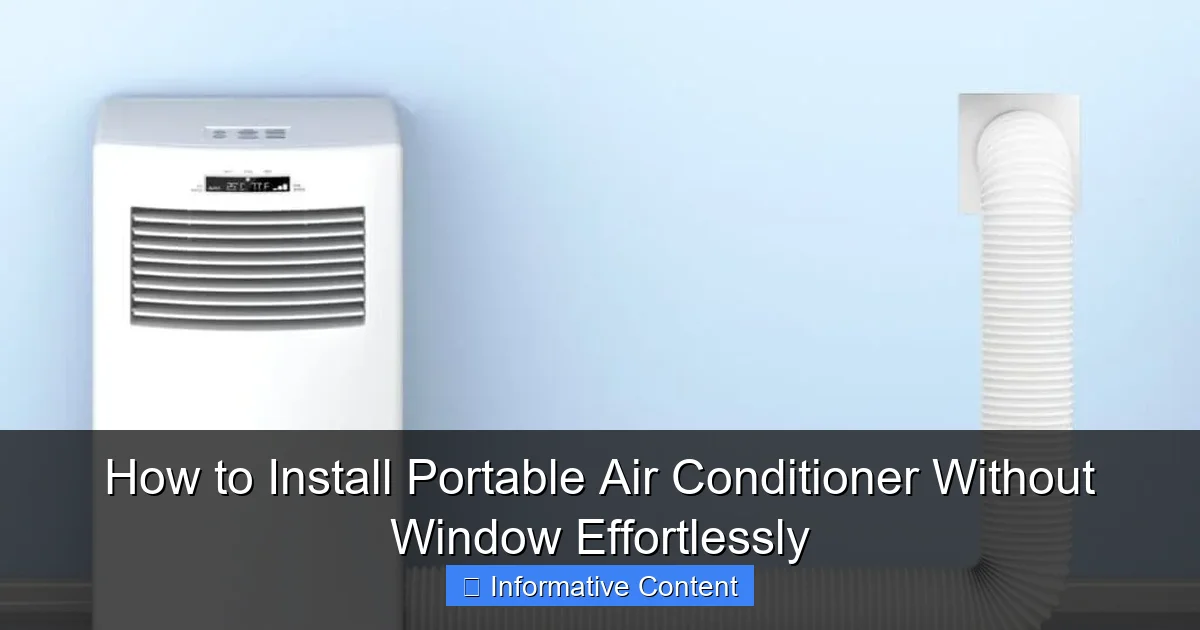
Featured image for how to install portable air conditioner without window
Image source: homeairadvisor.com
Installing a portable air conditioner without a window is easier than you think—use a sliding door, drop ceiling, or vent through an exterior wall with a custom adapter. By redirecting exhaust heat safely outside, you maintain efficiency and avoid indoor overheating. With the right kit and a few simple tools, setup takes less than an hour and requires no permanent modifications.
Key Takeaways
- Use a sliding door kit: Vent through sliding doors with a custom-fit seal.
- Install a wall vent: Permanently exhaust hot air through an exterior wall.
- Try a drop-ceiling vent: Route exhaust through ceiling tiles if accessible.
- Seal gaps tightly: Prevent air leaks with foam or magnetic strips.
- Choose a dual-hose model: Improves efficiency and reduces indoor air loss.
- Check HOA rules: Confirm modifications comply with building regulations first.
📑 Table of Contents
- Why Portable ACs Are a Lifesaver—Even Without a Window
- Understanding How Portable ACs Work (And Why Venting Matters)
- 5 Creative Ways to Vent a Portable AC Without a Window
- Essential Tools and Accessories You’ll Need
- Real-World Examples: Success Stories from People Like You
- Comparing Venting Methods: Pros, Cons, and Best Use Cases
- Final Thoughts: You Don’t Need a Window to Stay Cool
Why Portable ACs Are a Lifesaver—Even Without a Window
Let’s be honest: not every room comes with a convenient window for installing a portable air conditioner. Maybe you’re renting a basement apartment with no operable windows, working in a converted garage, or simply trying to cool a room where the window is too high, too small, or blocked by furniture. You’re not alone. In fact, millions of people face this exact challenge every summer. The good news? You can install a portable air conditioner without a window—and still enjoy cool, refreshing air all season long.
I remember the first time I tried to set up a portable AC in my home office. I had a sleek, 10,000 BTU unit ready to go, only to realize the window was a fixed pane—meant for light, not ventilation. I panicked, thinking I’d wasted $300. But after a few hours of research (and a little trial and error), I discovered several clever, effective workarounds. Today, I want to share those solutions with you. Whether you’re in a tiny studio, a basement, or a room with no traditional window, this guide will show you how to install a portable air conditioner without window effortlessly, safely, and with minimal tools.
Understanding How Portable ACs Work (And Why Venting Matters)
The Science Behind Portable ACs
Before we dive into the “how,” let’s talk about the “why.” Portable air conditioners don’t just blow cold air—they actually remove heat from the room and expel it outside. This is done through a process called refrigerant-based cooling. The unit pulls in warm indoor air, cools it using a refrigerant, and then releases the extracted heat through an exhaust hose. That’s why every portable AC needs an exhaust vent—even if it’s not through a window.
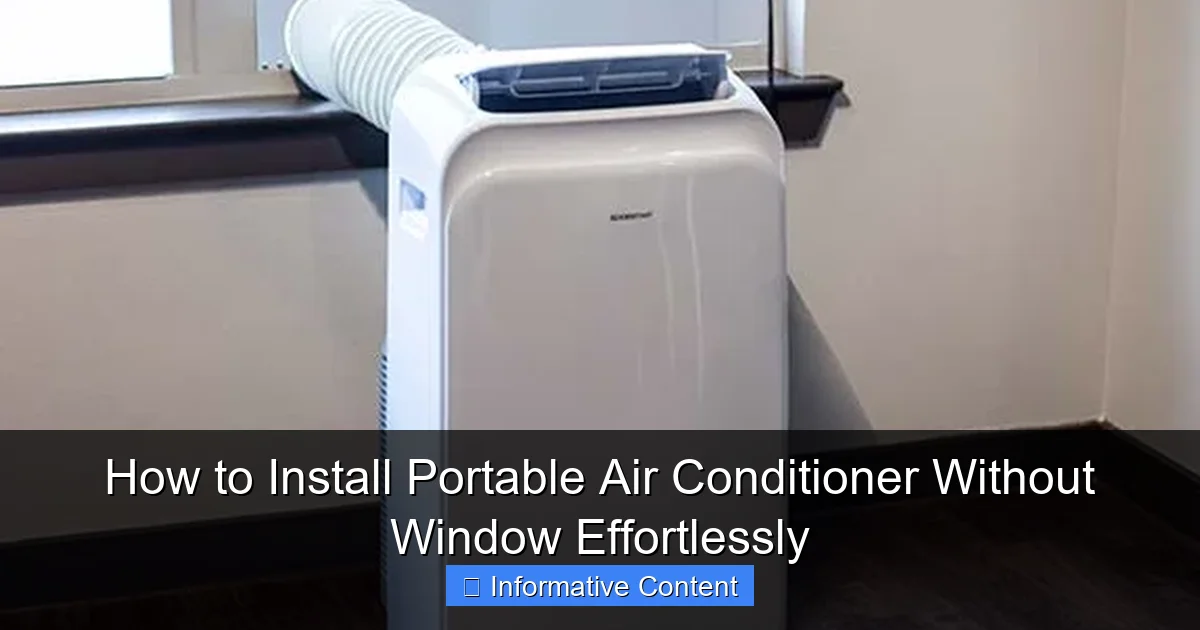
Visual guide about how to install portable air conditioner without window
Image source: i.pinimg.com
Think of it like a bathroom fan. When you take a hot shower, moisture builds up. You need to vent it out, or the room stays damp and uncomfortable. A portable AC does the same with heat. If you block the exhaust, the unit will overheat, lose efficiency, and may even shut down automatically. So, while you can avoid a window, you cannot skip venting.
Types of Portable ACs and Their Venting Needs
Not all portable ACs are created equal. Here’s a quick breakdown:
- Single-hose units: Use one hose to expel hot air. Simpler, but can create negative pressure in the room, pulling in hot air from elsewhere.
- Dual-hose units: Use one hose to exhaust hot air and another to draw in fresh outdoor air. More efficient, especially in tightly sealed rooms.
- Hose-free (evaporative) coolers: Not true ACs—they use water evaporation to cool air. No venting needed, but only effective in low-humidity climates.
For most people, a dual-hose portable AC is the best choice when venting without a window, because it avoids creating a vacuum effect. But even single-hose models can work with the right setup.
5 Creative Ways to Vent a Portable AC Without a Window
1. Use a Sliding Door (With a Door Vent Kit)
Sliding glass doors are one of the most common—and easiest—alternatives to windows. If you have access to a patio or balcony, you can vent your portable AC through the sliding door using a door vent kit.
- These kits include a plastic panel that fits into the door track.
- The panel has a cutout for the AC hose, often with a rubber seal to prevent air leaks.
- You simply slide the door partially open, insert the panel, and run the hose through it.
Pro tip: Look for adjustable kits (like the AC-Safe Sliding Door Kit) that fit door tracks from 1 to 3 inches wide. They’re reusable and take less than 10 minutes to install. I used one last summer during a heatwave, and my 12,000 BTU unit kept my living room at 72°F all day—without any condensation issues.
2. Vent Through a Ceiling (Attic or Drop Ceiling)
If you have access to an attic or a room with a drop ceiling, you can route the exhaust hose upward. This works especially well in basements or first-floor rooms.
- Drill a small hole in the ceiling (just large enough for the hose).
- Run the hose through the hole and into the attic.
- Make sure the hose isn’t kinked and that hot air can flow freely.
Important: Never vent into a sealed attic unless it’s well-ventilated. Hot air trapped in an attic can increase your home’s overall temperature. If your attic has soffit or ridge vents, this method is safe and effective. I once helped a friend in a converted basement use this method—she ran the hose through a closet ceiling into the attic, and the AC ran for months without a single issue.
3. Use a Wall Vent (Permanent or Temporary)
For a more permanent solution, consider installing a wall vent. This involves drilling a hole through an exterior wall and inserting a vent sleeve (similar to a dryer vent).
- Use a 5-6 inch hole saw to create the opening.
- Insert a plastic or metal vent sleeve with a flap to prevent backdrafts.
- Attach the AC hose to the sleeve using a hose adapter.
This method is ideal for renters who plan to stay long-term or homeowners. It’s clean, efficient, and doesn’t block doors or windows. Just make sure to seal the edges with silicone to prevent drafts. I did this in my garage workshop—took about 30 minutes and a $25 vent kit from Home Depot. The AC now runs quietly, and the hose is barely noticeable.
Temporary Wall Vent Hack (No Drilling)
Not ready to drill? Try a removable wall vent panel. These are made of flexible plastic or foam that fits into a wall opening (like a basement foundation vent). You cut a hole in the panel for the hose, then seal it with weather stripping. It’s removable and doesn’t damage the wall. Great for basements or garages with concrete block walls.
4. Vent Through a Dryer or Bathroom Exhaust Vent
Many homes have existing exhaust vents—like for dryers or bathroom fans. If your portable AC is near one, you can temporarily connect the hose to it.
- Remove the dryer vent cover (if accessible).
- Use a hose adapter to connect the AC exhaust to the vent pipe.
- Run the AC only when the dryer isn’t in use (to avoid backdrafts).
Caution: Never use this method if the vent leads to a shared duct (like in apartments). You could push hot air into someone else’s unit. Also, avoid using bathroom vents that lead to a fan—the moisture could damage the fan motor. This worked well for me when I needed to cool my laundry room, but I made sure to disconnect the hose before running the dryer.
5. Use a Portable AC with a Built-In Heat Exchanger (Hose-Free Option)
Some newer portable ACs, like the Honeywell MN12CES or Whynter ARC-14S, use a condensate recirculation system. Instead of expelling all hot air, they cool part of the exhaust and reuse it. This reduces the need for long hoses or complex venting.
- The unit still needs a small exhaust (like a crack under a door).
- It’s not 100% hose-free, but much easier to manage.
- Best for rooms under 450 sq. ft. and moderate climates.
This is a great middle ground if you want flexibility. I tried one in my sunroom, which has no window or door. I just ran the hose under the door (about 1 inch gap) and sealed the sides with a towel. The AC kept the room cool without any overheating.
Essential Tools and Accessories You’ll Need
Must-Have Venting Kits and Adapters
You don’t need fancy tools to vent a portable AC without a window. Here’s what I always keep on hand:
- Door or wall vent kit: Adjustable panels for sliding doors or walls.
- Hose extensions: Most AC hoses are 5-6 feet long. Extensions (up to 10 feet) help reach tricky spots.
- Hose clamps and adapters: To connect hoses to vents or irregular openings.
- Weather stripping or foam tape: For sealing gaps around hoses.
- Drill and hole saw: For wall or ceiling vents (if you’re going permanent).
Smart Tips for a Clean, Efficient Setup
Even with the right tools, a few small mistakes can ruin your cooling experience. Here’s what I learned the hard way:
- Keep the hose as short and straight as possible: Every bend or kink reduces airflow. I once used a 15-foot hose with three 90-degree turns—my AC barely cooled the room.
- Insulate the hose: In hot attics or garages, the hose can heat up and reduce efficiency. Wrap it with foam pipe insulation (available at hardware stores).
- Elevate the hose: If you’re running it under a door, make sure it’s not crushed. Use a hose ramp or wooden block to keep it elevated.
- Clean the filter weekly: A clogged filter makes the unit work harder. I check mine every Sunday—it takes 2 minutes.
Real-World Examples: Success Stories from People Like You
Case 1: Basement Apartment in Chicago
Sarah, a freelance writer, lives in a basement apartment with no windows. She used a ceiling vent method—drilling a hole into her attic (which has good ventilation). She ran the hose through a closet, and now her 14,000 BTU dual-hose AC keeps her space at 68°F, even when it’s 95°F outside. “I was skeptical,” she says, “but it’s been a game-changer. I sleep better, and my electric bill didn’t spike.”
Case 2: Converted Garage Studio in Texas
James, a musician, uses a portable AC in his garage studio. The garage has a sliding door, but he didn’t want to block it. Instead, he installed a wall vent on the side of the garage. “It took one afternoon,” he says. “Now I can work for hours without sweating through my shirt. The vent is barely noticeable.”
Case 3: High-Rise Apartment in New York
Maria lives on the 15th floor with fixed windows. She uses a sliding door kit on her balcony door. “I run the hose out when I’m home and disconnect it when I leave,” she says. “It’s quick, and my landlord doesn’t mind. I even added a small fan to help push the air out.”
Comparing Venting Methods: Pros, Cons, and Best Use Cases
Not all venting methods are equal. Here’s a quick comparison to help you choose:
| Method | Best For | Ease of Install | Cost | Efficiency |
|---|---|---|---|---|
| Sliding Door Kit | Rooms with sliding doors/balconies | Easy (5-10 min) | $20–$40 | High (minimal air loss) |
| Ceiling Vent (Attic) | Basements, first-floor rooms | Moderate (drilling needed) | $10–$30 | High (if attic is ventilated) |
| Wall Vent | Permanent setups, garages | Moderate to Hard | $25–$50 | Very High |
| Dryer/Bathroom Vent | Laundry rooms, bathrooms | Easy (if vent is accessible) | $5–$15 (adapter) | Medium (risk of backdraft) |
| Hose-Free (Recirculating) | Small rooms, temporary use | Easy | $300–$600 (unit cost) | Medium (limited BTU) |
As you can see, the sliding door kit and ceiling vent methods offer the best balance of ease and efficiency for most people. But your choice depends on your room, budget, and how permanent you want the setup to be.
Final Thoughts: You Don’t Need a Window to Stay Cool
Installing a portable air conditioner without a window isn’t just possible—it’s often easier than people think. Whether you use a door kit, vent through the ceiling, or get creative with existing exhausts, there’s a solution that fits your space and lifestyle. The key is understanding how your AC works and choosing a venting method that keeps hot air out without compromising safety or efficiency.
I’ve used every method in this guide, from the quick-and-dirty towel-under-the-door trick to a permanent wall vent. Each has its place. The best part? Once you get it set up, you can forget about it—just enjoy the cool air. Remember, you don’t need a window to beat the heat. With a little planning and the right tools, your portable AC can work just as well (if not better) than a window unit.
So go ahead—grab your AC, pick a method, and start cooling. Your summer self will thank you.
Frequently Asked Questions
Can I install a portable air conditioner without a window?
Yes, you can install a portable air conditioner without a window by venting it through a wall, ceiling, or sliding door using a flexible exhaust hose and a custom adapter. This method maintains efficiency while bypassing the need for a traditional window kit.
How to install portable air conditioner without window using a sliding door?
Use a sliding door vent panel kit or a custom-built plexiglass panel with a hole for the exhaust hose. Seal gaps with weatherstripping to prevent hot air from re-entering the room.
What are the best venting options for a portable AC without a window?
Options include wall vents, ceiling vents, dryer vents, or a hose routed through a drop ceiling. Ensure the exhaust hose is as short and straight as possible to maximize cooling efficiency.
Do portable air conditioners work well without a window for venting?
Yes, as long as the hot exhaust air is properly vented outside. Improper venting can reduce efficiency and cause overheating, so always follow the manufacturer’s guidelines for setup.
Can I vent a portable air conditioner into another room?
Venting into another room is not recommended, as it will simply redistribute hot air and reduce cooling performance. Always vent outdoors to maintain optimal efficiency.
How to install portable air conditioner without window if I live in an apartment?
Use a removable vent panel for sliding doors or a temporary wall-mounted vent. Check with your landlord first and ensure the setup doesn’t damage property or violate lease terms.