
This guide walks you through how to install an LG split system air conditioner with clear, beginner-friendly steps. You’ll learn everything from planning and mounting to wiring and testing, ensuring a safe and effective setup.
Key Takeaways
- Proper planning is essential: Measure your space, check electrical capacity, and choose the right location before starting.
- Use the right tools: A drill, level, vacuum pump, and manifold gauge set are critical for a professional-grade installation.
- Follow LG’s installation manual: Always refer to the model-specific guide included with your unit for precise instructions.
- Safety first: Turn off power, wear protective gear, and never work on refrigerant lines without proper certification.
- Seal and insulate properly: Prevent energy loss and moisture buildup by sealing wall holes and insulating refrigerant lines.
- Test before finishing: Run a full system check to ensure cooling, airflow, and drainage work correctly.
- Consider professional help: If you’re unsure about electrical or refrigerant work, hire a licensed HVAC technician.
How to Install LG Split System Air Conditioner: A Complete 2026 Guide
Installing an LG split system air conditioner might seem like a daunting task, but with the right tools, preparation, and guidance, it’s entirely doable—even for DIY enthusiasts. In this comprehensive guide, we’ll walk you through every step of the process, from choosing the perfect location to testing your newly installed unit. Whether you’re upgrading your home cooling system or installing your first split AC, this 2026 edition covers everything you need to know to get it right the first time.
LG split systems are known for their energy efficiency, quiet operation, and smart features like Wi-Fi connectivity and AI-powered climate control. But to enjoy these benefits, proper installation is key. A poorly installed unit can lead to reduced efficiency, higher energy bills, refrigerant leaks, and even safety hazards. That’s why following a structured, step-by-step approach is so important.
In this guide, you’ll learn how to safely and effectively install your LG split system air conditioner. We’ll cover planning, tool preparation, indoor and outdoor unit mounting, electrical connections, refrigerant line handling, vacuuming, and final testing. We’ll also include practical tips, common mistakes to avoid, and troubleshooting advice to help you succeed.
By the end of this article, you’ll have the confidence and knowledge to install your LG split system like a pro—or at least know when it’s time to call in a licensed technician.
Step 1: Planning and Preparation
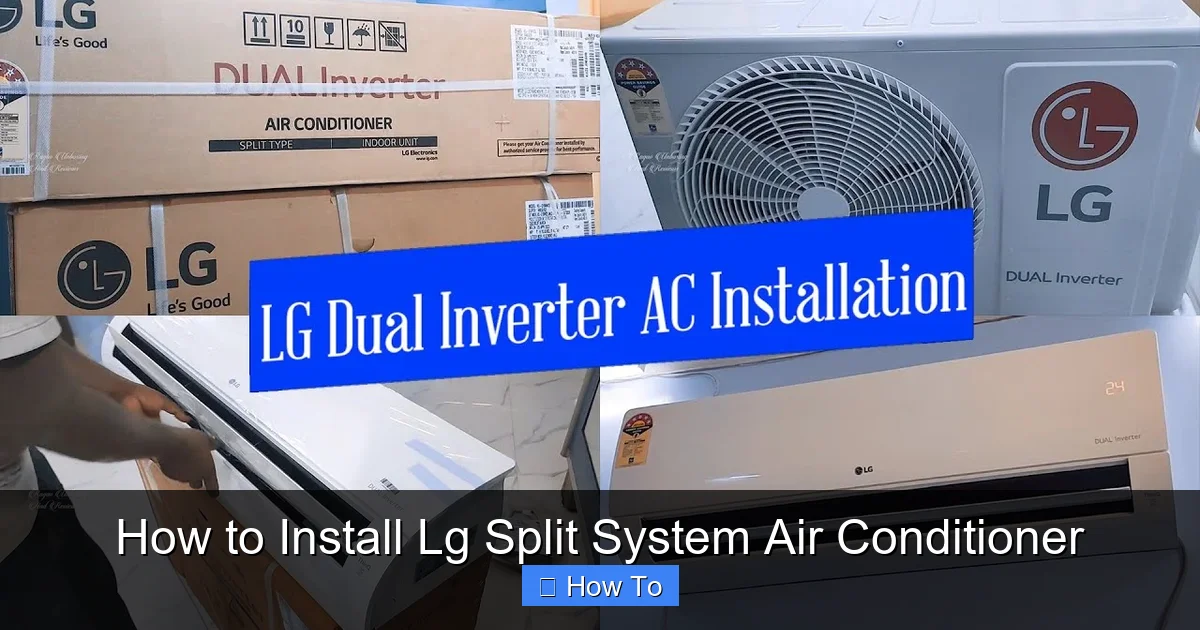
Visual guide about How to Install Lg Split System Air Conditioner
Image source: i.ytimg.com
Before you even unbox your LG split system, take time to plan. A successful installation starts with smart decisions about location, power supply, and access.
Choose the Right Location
The placement of both the indoor and outdoor units is critical. For the indoor unit, select a spot on an interior wall that’s:
– At least 7 feet above the floor
– Away from direct sunlight, heat sources, and moisture
– Centered in the room for even airflow
– Free of obstructions (like curtains or furniture) that could block airflow
Avoid installing near kitchens, bathrooms, or laundry rooms where humidity and grease can affect performance.
For the outdoor unit, choose a location that’s:
– On a stable, level surface (like a concrete pad or wall bracket)
– At least 12 inches away from walls or fences for proper airflow
– Shaded if possible to improve efficiency
– Accessible for future maintenance
Check Electrical Requirements
LG split systems require a dedicated electrical circuit. Most models need a 220–240V power supply, though some smaller units may work on 110–120V. Check your unit’s specifications in the manual.
Before installation, verify that your home’s electrical panel can support the additional load. If you’re unsure, consult an electrician. Never attempt to wire the unit yourself unless you’re qualified.
Gather Tools and Materials
Having the right tools on hand will save time and prevent frustration. Here’s a checklist:
– Drill and drill bits (for concrete or wood)
– Level
– Measuring tape
– Screwdrivers (Phillips and flathead)
– Adjustable wrench
– Vacuum pump (essential for removing moisture from refrigerant lines)
– Manifold gauge set (to check pressure)
– Flaring tool (for copper tubing)
– Pipe cutter
– Insulation tape and foam
– Wall sleeve or conduit (for routing lines)
– Mounting brackets and anchors
– Safety gear (gloves, goggles, hard hat)
You’ll also need refrigerant line sets (usually 1/4″ and 3/8″ copper tubing), drain hose, and communication cables. LG typically includes these with the unit, but double-check the package.
Read the Manual
Every LG split system comes with a detailed installation manual. Read it thoroughly before starting. It contains model-specific instructions, wiring diagrams, and safety warnings. Skipping this step is a common mistake that leads to installation errors.
Step 2: Mount the Indoor Unit
The indoor unit is the face of your air conditioner, so mounting it correctly ensures both performance and aesthetics.
Mark the Mounting Position
Use the mounting template provided in the manual to mark the drill points on the wall. Hold the template against the wall and use a level to ensure it’s straight. Mark the spots where you’ll drill holes for the anchors.
Drill Holes and Install Anchors
Drill holes into the wall at the marked points. Use wall anchors suitable for your wall type (concrete, drywall, etc.). Insert the anchors and secure the mounting bracket with screws. Make sure the bracket is level and firmly attached.
Route the Pipes and Cables
Before hanging the unit, route the refrigerant lines, drain hose, and communication cable through the wall. Use a wall sleeve to protect the lines and prevent moisture from entering.
Connect the lines to the indoor unit’s ports. Use a flaring tool to create clean, leak-free connections. Wrap the connections with insulation tape to prevent condensation.
Hang the Indoor Unit
Carefully lift the indoor unit and hang it on the mounting bracket. Ensure it’s secure and level. Double-check that all connections are tight and insulated.
Step 3: Install the Outdoor Unit
The outdoor unit houses the compressor and condenser, so it needs a stable, well-ventilated location.
Prepare the Base
Place the outdoor unit on a concrete pad or wall-mounted bracket. If using a pad, ensure it’s level and extends at least 6 inches beyond the unit on all sides. For wall mounting, use heavy-duty brackets and lag bolts.
Secure the Unit
Bolt the outdoor unit to the base or bracket. This prevents movement during operation and reduces vibration noise.
Connect the Refrigerant Lines
Connect the copper lines from the indoor unit to the outdoor unit. Match the sizes (liquid and gas lines) and tighten the flare nuts with a wrench. Avoid over-tightening, which can crack the fittings.
Connect the Drain Hose
Attach the drain hose to the outdoor unit’s drain port. Route it downward to a suitable drainage point, like a floor drain or outside. Ensure there are no kinks or uphill sections that could trap water.
Step 4: Electrical Wiring
Electrical work should only be done by a qualified person. If you’re not certified, hire a licensed electrician.
Turn Off Power
Before touching any wires, turn off the main power supply at the breaker panel. Use a voltage tester to confirm the circuit is dead.
Connect the Wires
Run a dedicated power cable from the breaker panel to the outdoor unit. Follow the wiring diagram in the manual. Typically, you’ll connect:
– Live (L)
– Neutral (N)
– Ground (G)
Also, connect the communication cable between the indoor and outdoor units. This cable allows the units to communicate and control each other.
Secure and Insulate Connections
Use wire nuts or terminal blocks to secure connections. Wrap them with electrical tape and place them in a junction box if required. Ensure no bare wires are exposed.
Step 5: Vacuum the Refrigerant Lines
This step removes air and moisture from the refrigerant lines, which is essential for system performance and longevity.
Attach the Manifold Gauge
Connect the manifold gauge set to the service ports on the outdoor unit. Attach the vacuum pump to the center hose of the gauge.
Evacuate the System
Open the valves on the manifold gauge and turn on the vacuum pump. Let it run for at least 30 minutes to achieve a vacuum of 500 microns or lower. This ensures all moisture and non-condensable gases are removed.
Close Valves and Disconnect
Once the vacuum is achieved, close the valves and turn off the pump. Wait a few minutes to ensure the vacuum holds. If it drops, there may be a leak.
Step 6: Charge the System (If Required)
Most LG split systems come pre-charged with refrigerant. However, if the line length exceeds the standard (usually 25 feet), you may need to add refrigerant.
Check the Manual
Refer to the installation manual for the correct refrigerant type (usually R-410A) and charge amount. Use a digital scale to measure the refrigerant accurately.
Add Refrigerant
Connect the refrigerant cylinder to the manifold gauge. Open the valve slowly and add the required amount. Monitor the pressure and stop when the correct charge is reached.
Step 7: Test the System
Now it’s time to fire up your LG split system and make sure everything works.
Turn On Power
Restore power at the breaker panel. Turn on the indoor unit using the remote control.
Check Cooling and Airflow
Set the unit to cooling mode and feel the air coming from the vents. It should be cool and consistent. Check that the fan speed adjusts properly.
Inspect for Leaks
Use a leak detector or soapy water to check all refrigerant connections. Bubbles indicate a leak that needs repair.
Test Drainage
Pour a small amount of water into the drain pan to ensure it flows freely through the hose. Standing water can lead to mold and damage.
Monitor Performance
Let the system run for 30 minutes. Check that it reaches the set temperature and shuts off correctly. Listen for unusual noises or vibrations.
Troubleshooting Common Issues
Even with careful installation, problems can arise. Here’s how to fix common issues:
Unit Won’t Turn On
– Check the power supply and breaker.
– Ensure the remote control has batteries and is pointed at the unit.
– Verify the emergency switch (if present) is turned on.
Poor Cooling
– Check for blocked air filters or vents.
– Ensure the refrigerant charge is correct.
– Verify the outdoor unit isn’t obstructed.
Water Leaking Indoors
– Inspect the drain hose for clogs or kinks.
– Make sure the indoor unit is level.
– Check for ice buildup on the evaporator coil.
Strange Noises
– Rattling: Tighten loose screws or brackets.
– Hissing: Could indicate a refrigerant leak.
– Buzzing: Check electrical connections.
When to Call a Professional
While DIY installation is possible, some tasks require expertise. Call a licensed HVAC technician if:
– You’re not comfortable with electrical work.
– You lack the tools for vacuuming or refrigerant handling.
– The installation involves complex routing or structural changes.
– You detect a refrigerant leak.
Professional installation also ensures your warranty remains valid. LG typically requires certified technicians for warranty coverage.
Conclusion
Installing an LG split system air conditioner is a rewarding project that can save money and improve home comfort. By following this step-by-step guide, you’ve learned how to plan, mount, wire, and test your unit safely and effectively. Remember, attention to detail—like proper sealing, vacuuming, and leveling—makes all the difference in performance and longevity.
While DIY installation is feasible for many homeowners, don’t hesitate to seek professional help when needed. Safety and compliance with local codes should always come first.
With your LG split system up and running, you’ll enjoy cool, quiet, and energy-efficient air for years to come. Stay cool in 2026 and beyond!