
This detailed guide walks you through the complete installation process of the LG Split Air Conditioner S246CH, from planning and tools to final testing. Whether you’re a DIY enthusiast or working with a professional, you’ll gain the knowledge to ensure a safe, efficient, and long-lasting AC setup.
Key Takeaways
- Proper site selection is critical: Choose a stable, shaded wall location for the indoor unit and ensure adequate airflow around the outdoor unit.
- Use the right tools and safety gear: A voltage tester, drill, level, and insulated gloves are essential for safe installation.
- Follow refrigerant handling guidelines: Only certified technicians should handle refrigerant lines—DIYers should avoid opening sealed systems.
- Ensure correct electrical wiring: The S246CH requires a dedicated circuit; consult an electrician if unsure about your home’s wiring capacity.
- Seal and insulate all connections: Prevent energy loss and moisture buildup by properly insulating copper pipes and sealing wall penetrations.
- Test system performance after installation: Run a full cooling cycle and check for leaks, unusual noises, or error codes.
- Schedule professional maintenance annually: Keep your LG S246CH running efficiently with regular filter cleaning and system checks.
How to Install LG Split Air Conditioner S246CH: A Complete 2026 Guide
Installing an air conditioner might seem intimidating, but with the right preparation, tools, and step-by-step guidance, you can successfully set up your LG Split Air Conditioner S246CH in 2026. This model is a popular choice for homes and offices due to its energy efficiency, quiet operation, and advanced cooling technology. Whether you’re replacing an old unit or installing a new one, this comprehensive guide will walk you through every phase—from planning and preparation to final testing and troubleshooting.
By the end of this guide, you’ll understand how to safely mount both the indoor and outdoor units, connect refrigerant lines, wire the system correctly, and ensure optimal performance. While some steps are suitable for DIYers, we’ll also highlight when it’s best to call in a certified HVAC technician—especially for electrical and refrigerant work. Safety, precision, and adherence to local codes are paramount, so let’s get started.
What You’ll Need Before Starting
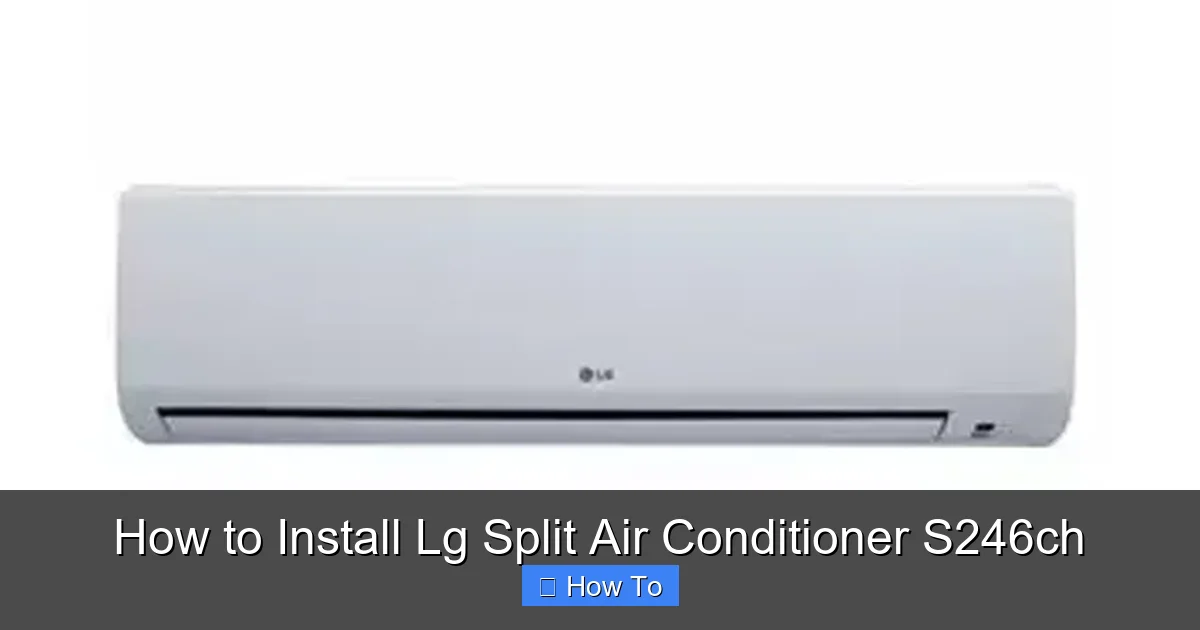
Visual guide about How to Install Lg Split Air Conditioner S246ch
Image source: yasirelectronics.com
Before you begin, gather all the necessary tools, materials, and safety equipment. Rushing into installation without proper preparation can lead to mistakes, damage, or even injury.
Essential Tools
- Power drill with masonry and wood bits
- Spirit level (preferably 24-inch)
- Measuring tape
- Adjustable wrench set
- Pipe cutter or hacksaw
- Flaring tool (for copper pipes)
- Vacuum pump (for refrigerant lines)
- Insulation tape and foam sleeves
- Electrical multimeter
- Screwdrivers (Phillips and flathead)
- Wire strippers and crimping tool
Safety Gear
- Insulated gloves
- Safety goggles
- Hard hat (if working at height)
- Non-slip shoes
- Fall protection harness (for elevated installations)
Materials Included with the LG S246CH
- Indoor unit (evaporator)
- Outdoor unit (condenser)
- Remote control and batteries
- Mounting bracket for indoor unit
- User manual and installation guide
- Drain hose
- Sealing putty or foam
- Copper refrigerant pipes (pre-charged, typically 3–5 meters)
- Electrical wiring kit (if included)
Additional Materials You May Need
- Wall sleeve or conduit for pipes and wires
- Concrete anchors or expansion bolts (for outdoor unit)
- Electrical conduit and junction box
- Dedicated circuit breaker (20–30 amp, depending on local codes)
- Insulation tape and foam for pipes
- Leak detection spray or soap solution
Step 1: Planning and Site Selection
Proper planning is the foundation of a successful installation. Rushing this step can lead to poor performance, noise issues, or even structural damage.
Choosing the Indoor Unit Location
The indoor unit should be mounted on an interior wall, ideally in the center of the room for even air distribution. Avoid placing it:
- Near heat sources (ovens, heaters, direct sunlight)
- Above beds or seating areas (to prevent cold drafts)
- In corners with poor airflow
- Where it might be blocked by furniture
The ideal height is between 6 to 8 feet from the floor. Ensure the wall can support the unit’s weight (the S246CH indoor unit weighs approximately 12–15 kg). Use a stud finder to locate wall studs or use heavy-duty anchors if mounting on drywall.
Selecting the Outdoor Unit Location
The outdoor unit should be placed on a stable, level surface—such as a concrete pad or wall-mounted bracket—outside your home. Key considerations:
- At least 12 inches of clearance on all sides for airflow
- Shaded area to improve efficiency (avoid direct afternoon sun)
- Accessible for maintenance and repairs
- Protected from rain, snow, and debris (use a canopy if needed)
- Quiet location away from bedrooms or neighbors’ windows
Avoid placing the outdoor unit near windows, air intakes, or vents to prevent recirculation of hot air.
Measuring the Distance Between Units
The LG S246CH supports a maximum pipe length of 15 meters and a height difference of up to 7 meters. Measure the distance between the indoor and outdoor units to ensure it’s within these limits. Longer distances may require additional refrigerant or a booster pump.
Step 2: Mounting the Indoor Unit
Now that you’ve chosen the location, it’s time to mount the indoor unit securely.
Installing the Mounting Bracket
1. Hold the mounting bracket against the wall at the desired height.
2. Use a spirit level to ensure it’s perfectly horizontal.
3. Mark the screw holes with a pencil.
4. Drill pilot holes using a masonry bit (for concrete) or wood bit (for studs).
5. Secure the bracket with expansion bolts or lag screws. Tighten firmly—this bracket must support the full weight of the unit.
Drilling the Wall Hole for Pipes and Wires
1. From the indoor side, mark a spot just below the mounting bracket.
2. Drill a 3-inch diameter hole through the wall at a slight downward angle (toward the outside) to allow condensation to drain.
3. Insert a wall sleeve or rubber grommet to protect pipes and wires from sharp edges.
Connecting the Drain Hose
1. Attach the drain hose to the outlet on the indoor unit’s back panel.
2. Route the hose through the wall hole, ensuring it has a continuous downward slope.
3. On the outside, direct the hose into a drain or away from the foundation to prevent water damage.
Hanging the Indoor Unit
1. Carefully lift the indoor unit and hang it on the mounting bracket.
2. Ensure it locks securely in place.
3. Double-check that the unit is level and stable.
Step 3: Installing the Outdoor Unit
The outdoor unit houses the compressor and condenser, so it must be installed on a solid, vibration-free base.
Preparing the Base
1. Lay a concrete pad (at least 6 inches thick) or use a pre-fabricated AC stand.
2. Ensure the surface is level and can support the unit’s weight (S246CH outdoor unit weighs ~40 kg).
3. Place rubber vibration pads under the feet to reduce noise and prevent corrosion.
Mounting the Outdoor Unit
1. Position the unit on the base, aligning it with the wall hole.
2. Secure it using mounting bolts or brackets.
3. Ensure there’s at least 12 inches of clearance on all sides.
Connecting Refrigerant Lines
The LG S246CH comes with pre-charged refrigerant lines, but they must be connected properly.
1. Remove the caps from the copper pipes on both units.
2. Carefully bend the pipes to avoid kinking.
3. Connect the liquid line (smaller pipe) and suction line (larger pipe) to the corresponding ports on the outdoor unit.
4. Use a flaring tool to create a secure flare on the pipe ends if not pre-flared.
5. Tighten the flare nuts with a torque wrench (refer to the manual for exact torque specs—typically 12–18 Nm).
Connecting the Drain Hose (if applicable)
Some models include a secondary drain from the outdoor unit. If so, connect it and route it to a safe drainage area.
Step 4: Electrical Wiring
Electrical work must be done carefully and in compliance with local codes. If you’re not confident, hire a licensed electrician.
Power Requirements
The LG S246CH operates on 220–240V, 50Hz, and requires a dedicated circuit. Check your electrical panel to ensure there’s space for a new 20–30 amp breaker.
Wiring the Indoor Unit
1. Remove the electrical cover on the indoor unit.
2. Connect the power cable from the outdoor unit to the terminal block (usually labeled L, N, and Ground).
3. Ensure wires are securely tightened and insulated.
Wiring the Outdoor Unit
1. Open the outdoor unit’s electrical panel.
2. Connect the power supply from your home’s breaker to the terminal block.
3. Connect the communication wire from the indoor unit to the corresponding terminals.
4. Double-check all connections and close the panel.
Safety Checks
– Use a multimeter to verify voltage and continuity.
– Ensure the grounding wire is properly connected.
– Install a surge protector to protect against power spikes.
Step 5: Vacuuming and Charging the System
This step removes air and moisture from the refrigerant lines, which is critical for efficiency and longevity.
Evacuating the Lines
1. Connect a vacuum pump to the service port on the outdoor unit.
2. Open the valve slowly and run the pump for at least 30 minutes.
3. Use a micron gauge to confirm the system has reached 500 microns or lower.
4. Close the valve and disconnect the pump.
Opening the Refrigerant Valves
1. Remove the valve caps from the outdoor unit.
2. Use a wrench to slowly open the liquid line valve first, then the suction line valve.
3. Listen for a hissing sound—this indicates refrigerant is flowing into the system.
Step 6: Final Connections and Insulation
Proper insulation prevents energy loss and condensation.
Insulating the Refrigerant Lines
1. Wrap the copper pipes with foam insulation sleeves.
2. Seal all joints with insulation tape.
3. Ensure no gaps or exposed areas.
Sealing the Wall Hole
1. Fill the gap around the pipes and wires with expanding foam or sealing putty.
2. Smooth the surface and allow it to dry completely.
Securing Loose Wires and Hoses
Use zip ties or clips to secure any loose wiring or hoses along the wall or base.
Step 7: System Testing and Commissioning
Now it’s time to power up and test your LG S246CH.
Powering On
1. Turn on the dedicated circuit breaker.
2. Press the power button on the remote or indoor unit.
3. Set the mode to cooling and adjust the temperature.
Checking for Leaks
1. Apply leak detection spray or soapy water to all pipe connections.
2. Look for bubbles—if present, tighten the connection or call a technician.
Monitoring Performance
– Listen for unusual noises (banging, hissing, or grinding).
– Check that cool air is blowing within 5–10 minutes.
– Verify the drain hose is expelling condensation.
Using the Remote Control
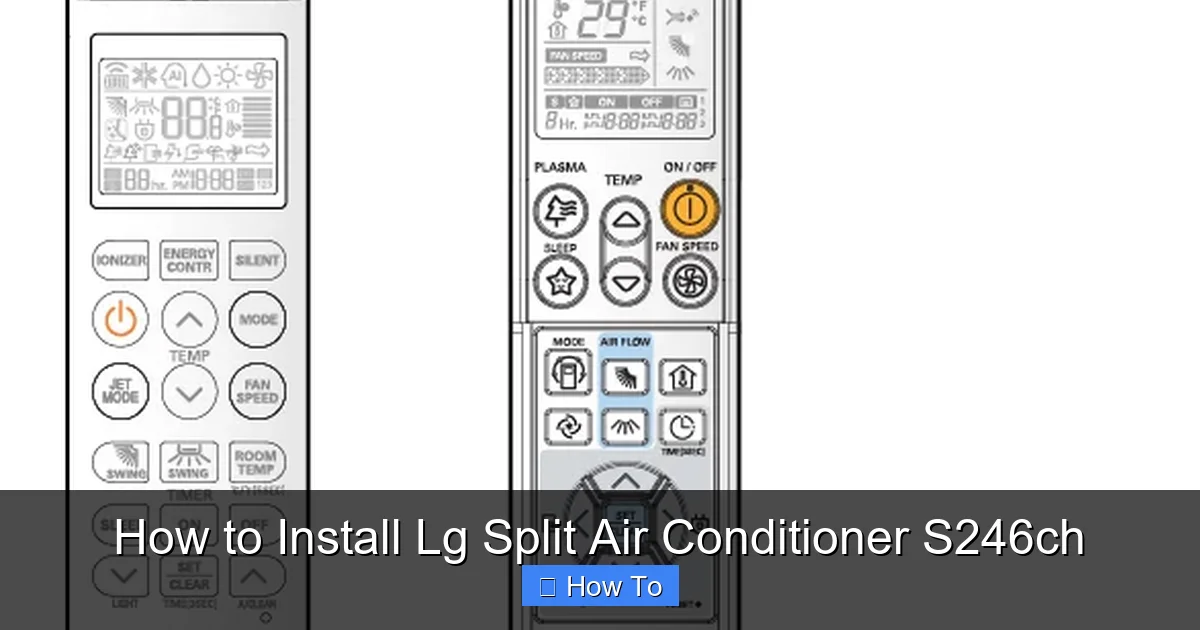
Pair the remote by inserting batteries and pressing the reset button. Test all functions: cooling, fan speed, timer, and sleep mode.
Troubleshooting Common Installation Issues
Even with careful installation, problems can arise. Here’s how to address them.
Unit Won’t Turn On
– Check the circuit breaker—reset if tripped.
– Verify remote batteries and signal.
– Ensure the emergency switch (if present) is on.
Insufficient Cooling
– Check air filters—clean or replace if dirty.
– Ensure vents are unobstructed.
– Verify refrigerant levels (requires technician).
Water Leaking Indoors
– Check drain hose for clogs or kinks.
– Ensure the hose has a proper downward slope.
– Clean the drain pan if clogged.
Unusual Noises
– Rattling: Tighten loose panels or mounting bolts.
– Hissing: Possible refrigerant leak—call a technician.
– Buzzing: Electrical issue—check wiring.
Error Codes on Display
Refer to the user manual for specific error codes. Common ones include:
– E1: Sensor fault
– E6: Communication error
– E9: Drain pump issue
Maintenance Tips for Long-Term Performance
To keep your LG S246CH running efficiently in 2026 and beyond:
- Clean or replace air filters every 1–2 months.
- Wipe down the indoor and outdoor units with a damp cloth.
- Clear debris from around the outdoor unit monthly.
- Schedule professional maintenance annually, including coil cleaning and refrigerant checks.
- Use the “Auto Clean” function (if available) to prevent mold buildup.
Conclusion
Installing the LG Split Air Conditioner S246CH is a manageable project when approached methodically and safely. By following this guide, you’ve learned how to select the right location, mount the units, connect refrigerant and electrical lines, and test the system for optimal performance. While some steps are DIY-friendly, always prioritize safety and consult professionals for electrical and refrigerant work.
With proper installation and regular maintenance, your LG S246CH will deliver reliable, energy-efficient cooling for years to come. Stay cool, stay safe, and enjoy the comfort of your newly installed air conditioner in 2026 and beyond.