

Featured image for how to install freon in home air conditioner
Image source: indoorclime.com
Never attempt to install Freon in your home air conditioner without proper certification and tools—handling refrigerant is illegal and dangerous if done incorrectly. This guide outlines the essential safety steps, required equipment, and EPA-compliant procedures to ensure a safe, efficient recharge, but always consult a licensed HVAC technician to avoid system damage, environmental harm, or legal consequences.
Key Takeaways
- Turn off power: Always disconnect AC power before starting Freon installation.
- Use protective gear: Wear gloves and goggles to prevent Freon exposure.
- Check refrigerant type: Confirm your AC’s required Freon type before refilling.
- Monitor pressure levels: Use a gauge to avoid overcharging the system.
- Seal connections tightly: Prevent leaks by securing all valves and hoses properly.
- Dispose of old refrigerant safely: Follow EPA guidelines for Freon disposal.
- Call a pro if unsure: Complex issues require licensed HVAC technician help.
📑 Table of Contents
- Why Your AC Might Be Running Low on Freon (And What It Means)
- Understanding Freon and Refrigerant: What You Need to Know
- Tools and Supplies You’ll Need (Plus Safety Gear)
- Step-by-Step Guide: How to Install Freon in Home Air Conditioner
- Common Mistakes (And How to Avoid Them)
- When to Call a Professional (And Why It’s Worth It)
- Final Thoughts: Stay Cool, Stay Safe
Why Your AC Might Be Running Low on Freon (And What It Means)
It’s the middle of summer, and your air conditioner is running non-stop, but the air blowing from the vents feels more like a warm sigh than a refreshing blast. You check the thermostat—set to 72°F—but the room temperature just won’t budge. Sound familiar? If you’ve ever experienced this, you’re not alone. One of the most common culprits behind weak cooling is low refrigerant, often referred to as “freon.” But before you grab a can and start tinkering, there’s a lot to consider—and a few things you should never skip.
I remember the first time I thought my AC was low on freon. I was sweating through a heatwave, convinced my unit was broken. I watched a few YouTube videos, bought a refrigerant kit, and nearly ended up calling an HVAC pro anyway—because I didn’t realize freon isn’t something you just “top off” like oil in your car. Refrigerant systems are sealed for a reason. Leaks are common, but adding freon without fixing the leak is like patching a tire without checking the hole. It might work for a week, but then you’re back to square one. That’s why knowing how to install freon in a home air conditioner isn’t just about the mechanics—it’s about safety, diagnosis, and long-term solutions.
Understanding Freon and Refrigerant: What You Need to Know
What Is Freon, Really?
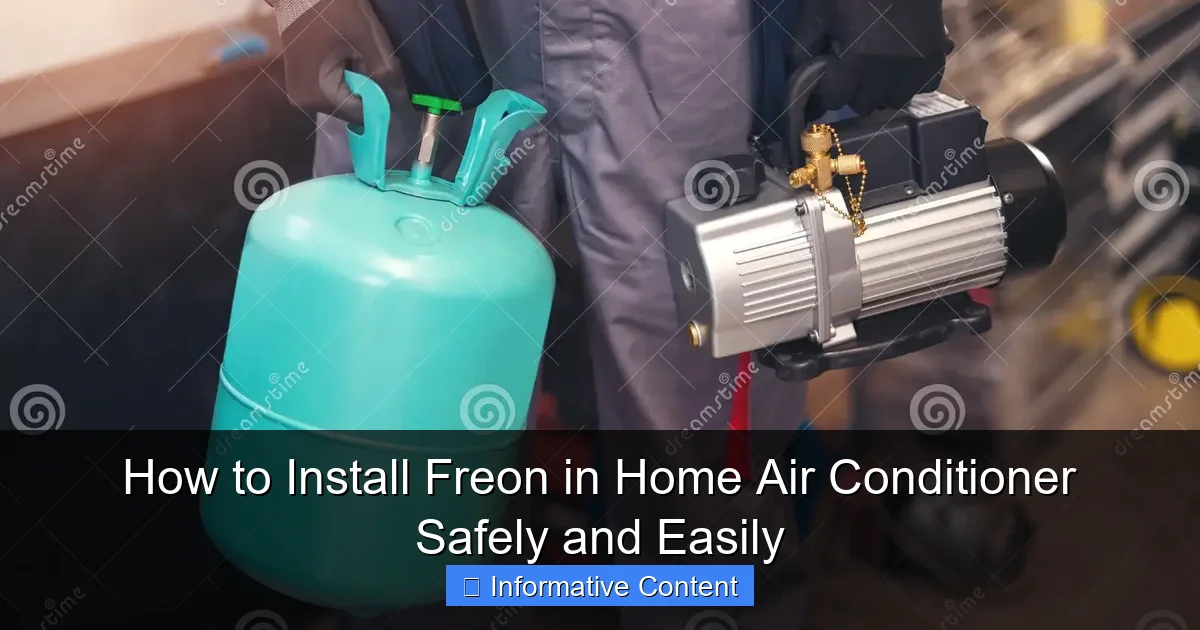
First off, let’s clear up a common misconception: “freon” is actually a brand name, like “Kleenex” for tissues. The generic term is refrigerant, and it’s the substance that absorbs heat from your home and releases it outside. Older AC units often used R-22 (the original “freon”), but due to environmental concerns, it’s been phased out. Most modern systems use R-410A, a more eco-friendly alternative. Some newer models even use R-32 or Puron, which have lower global warming potential.
Visual guide about how to install freon in home air conditioner
Image source: thumbs.dreamstime.com
Why does this matter? Because you can’t mix refrigerants. Using the wrong type can damage your compressor, void your warranty, or even create dangerous pressure imbalances. So before you even think about how to install freon in home air conditioner, confirm your unit’s refrigerant type. Check the label on the outdoor condenser unit—it should clearly state the type and amount required.
Signs Your AC Is Low on Refrigerant
Before jumping to conclusions, make sure low refrigerant is actually the problem. Other issues—like clogged filters, dirty coils, or fan problems—can mimic refrigerant loss. Here are the telltale signs your AC is low on freon:
- Warm air from vents: Even when the fan is on high, the air doesn’t feel cold.
- Longer cooling cycles: The AC runs longer than usual but doesn’t reach the set temperature.
- Frost on refrigerant lines: Ice buildup on the copper lines connecting the indoor and outdoor units.
- Hissing or bubbling sounds: Could indicate a refrigerant leak.
- Higher energy bills: An overworking AC uses more electricity.
I once ignored frost on the lines, assuming it was just humidity. Turns out, it was a slow leak in the evaporator coil. The unit kept running, but the efficiency dropped by nearly 40%. That’s why early detection is key.
Why You Should Never “Just Add Freon” Without Diagnosing First
Here’s the hard truth: adding refrigerant without fixing the leak is a temporary fix at best. Refrigerant isn’t consumed—it’s a closed-loop system. If levels are low, there’s almost always a leak. Topping it off without addressing the root cause is like refilling a leaking gas tank. Worse, it can mask serious issues like a failing compressor or damaged coils.
Plus, overcharging your system—adding too much refrigerant—is just as bad as undercharging. It can cause high pressure, compressor strain, and even system failure. I’ve seen homeowners add 2 pounds when only 0.5 was needed, only to blow a seal a month later. Always diagnose before you dose.
Tools and Supplies You’ll Need (Plus Safety Gear)
Essential Tools for Installing Freon
Before you begin, gather the right tools. Skimping here can lead to mistakes, wasted refrigerant, or even injury. Here’s what you’ll need:
- Refrigerant gauge manifold set (with hoses): This is the heart of the operation. It connects to your AC’s service ports and shows pressure readings. Look for a dual-gauge set (high and low side) with color-coded hoses (blue for low, red for high).
- Refrigerant (correct type for your unit): Buy from a trusted HVAC supplier. Don’t use off-brand or “universal” refrigerant. For R-410A, you’ll need a 25-foot hose with a core depressor to prevent backflow.
- Refrigerant scale (optional but recommended): Measures the exact amount of refrigerant added. Prevents overcharging.
- Vacuum pump and micron gauge (for deep repairs): If you’ve opened the system or replaced components, you’ll need to evacuate moisture and air before charging.
- Wrench set (adjustable or flare): For opening and closing service valves.
- Digital thermometer or infrared thermometer: To check temperature drop across the evaporator coil.
- Leak detection kit (UV dye or electronic sniffer): To confirm leaks before and after repairs.
Must-Have Safety Equipment
Safety first, always. Refrigerant under pressure can cause frostbite if it contacts skin, and some types are flammable. Here’s what to wear:
- Chemical-resistant gloves: Nitrile or neoprene to protect hands.
- Protective eyewear: Full goggles—not just sunglasses. Refrigerant can splash.
- Long sleeves and closed-toe shoes: Prevents skin exposure.
- Ventilation: Work outdoors or in a well-ventilated area. R-410A is heavier than air and can displace oxygen in confined spaces.
Pro tip: Keep a bucket of water nearby. If refrigerant spills, it can create a mist. Wetting the area helps disperse it safely.
Where to Buy Supplies (And What to Avoid)
Buy from HVAC supply stores, not big-box retailers. Why? Because HVAC pros get better-quality gauges, hoses, and refrigerant. Avoid “do-it-yourself” freon kits from auto parts stores—they often lack the precision tools needed for accurate charging. Also, never buy refrigerant online from unverified sellers. Counterfeit or contaminated refrigerant can ruin your system.
Step-by-Step Guide: How to Install Freon in Home Air Conditioner
Step 1: Turn Off Power and Prepare the System
Start by turning off the power to your AC at the breaker panel. This isn’t just about safety—it ensures the compressor isn’t running, which is critical for accurate pressure readings. Wait at least 15 minutes for the system to stabilize.
Next, locate the service ports on your outdoor unit. There are usually two: the low-pressure port (larger, with a blue cap) and the high-pressure port (smaller, with a red cap). Remove the caps and clean around them with a cloth. Dirt can clog the valves.
Step 2: Connect the Gauge Manifold
Attach the blue hose to the low-pressure port and the red hose to the high-pressure port. Tighten with a wrench, but don’t over-torque. Open the gauge valves slowly. You should see the needle rise on the low side. If it doesn’t, the port valve may be stuck—gently tap it with a wrench to free it.
Here’s a real-world tip: I once spent 20 minutes troubleshooting a “no pressure” reading, only to realize I’d connected the hoses backward. Always double-check colors: blue = low, red = high.
Step 3: Check Current Refrigerant Levels
With the system off, check the pressure readings. Compare them to the manufacturer’s specs (usually listed on the unit’s data plate). For R-410A at 75°F ambient, low-side pressure should be around 120–135 psi. If it’s significantly lower, you’re undercharged.
But don’t charge yet! First, run the AC for 15 minutes to see if pressures change. A low reading that rises during operation suggests a clog or airflow issue—not a refrigerant leak.
Step 4: Add Refrigerant (The Right Way)
Now it’s time to install freon. But here’s the key: always charge refrigerant as a liquid, never as a gas. Why? Liquid charging is faster and more precise. Here’s how:
- Turn the refrigerant can upside down (for liquid charging).
- Open the low-side gauge valve slowly. You’ll hear a hiss—that’s the refrigerant entering.
- Monitor the gauge. Add in short bursts (10–15 seconds), then close the valve and let the system equalize.
- Use a refrigerant scale to track how much you’ve added. Never exceed the manufacturer’s charge amount.
- Check temperature drop across the evaporator coil. A 15–20°F drop is ideal.
Example: My 3-ton unit needed 6 pounds of R-410A. I added 1 pound at a time, waited 5 minutes, then checked the gauge. After 4 pounds, the pressure stabilized. I stopped there—no need to push it.
Step 5: Test and Monitor
Once you’ve added refrigerant, run the AC for 30 minutes. Check:
- Pressure readings (should stabilize within range).
- Temperature drop (use an infrared thermometer on the air handler).
- Frost (none should be present).
- Energy use (compare to past bills).
If everything looks good, close the gauge valves, disconnect the hoses, and replace the service port caps. Restore power and enjoy cooler air!
Common Mistakes (And How to Avoid Them)
Overcharging the System
Adding too much refrigerant is one of the biggest mistakes. It causes high head pressure, which strains the compressor and can lead to premature failure. Symptoms include:
- Compressor running hot.
- High pressure readings (above 400 psi on R-410A).
- Water leaks from the indoor unit (from excessive condensation).
Solution: Use a refrigerant scale and follow the manufacturer’s charge amount to the ounce. If you overcharge, you’ll need to recover the excess with a recovery machine—something most homeowners don’t have. That’s why precision matters.
Charging on the Wrong Side
Never charge on the high-pressure side unless the system is off and you’re using a recovery machine. Charging on the high side while the compressor is running can cause liquid slugging—where liquid refrigerant enters the compressor, causing catastrophic damage.
Always charge on the low side, and only when the compressor is running (for gas charging) or when the system is off (for liquid charging, if the manufacturer allows it).
Ignoring Leaks
I’ve seen homeowners add freon every summer for years, never realizing they had a slow leak. Eventually, the compressor failed—$1,500 repair. Use a leak detection kit before charging. If you find a leak:
- Small leaks in accessible areas (like flare fittings) can be tightened.
- Coil or solder joint leaks usually require a pro.
- Never ignore leaks—they’re illegal to release into the atmosphere (EPA regulations).
Using the Wrong Refrigerant Type
Mixing R-22 and R-410A? Don’t. It creates chemical reactions, damages seals, and voids warranties. Always verify the refrigerant type before opening the can. If your unit uses R-22 and it’s low, consider upgrading to a newer system—R-22 is expensive and scarce.
When to Call a Professional (And Why It’s Worth It)
Complex Repairs Beyond Refrigerant
Some issues look like low refrigerant but aren’t. For example:
- Compressor failure: If the compressor won’t start, adding freon won’t help.
- Dirty coils: A layer of grime insulates the coils, reducing heat transfer.
- Airflow problems: Clogged filters, closed vents, or failing blower motors.
These require professional diagnosis. I once thought my AC was low on freon, but it was just a clogged filter. After replacing it, the airflow improved instantly—no refrigerant needed.
Legal and Environmental Considerations
Handling refrigerant isn’t just a DIY risk—it’s regulated. The EPA requires technicians to be certified (Section 608) to work with refrigerants. If you release refrigerant into the air, you could face fines. Professionals use recovery machines to capture and recycle refrigerant safely.
Also, some states require permits or inspections for refrigerant work. When in doubt, call a pro. It’s not just about skill—it’s about compliance.
Cost vs. Value: DIY vs. Professional
Here’s a data table to help decide:
| Factor | DIY | Professional |
|---|---|---|
| Cost | $100–$300 (tools + refrigerant) | $200–$500 (diagnosis + repair) |
| Time | 4–8 hours (learning + work) | 1–2 hours |
| Risk | High (overcharge, leaks, safety) | Low (warranty-backed) |
| Long-term value | Short-term fix if leak exists | Comprehensive repair + warranty |
For most homeowners, the peace of mind and warranty protection make hiring a pro worth it—especially for older systems or complex leaks.
Final Thoughts: Stay Cool, Stay Safe
Learning how to install freon in home air conditioner is empowering, but it’s not a one-size-fits-all solution. Refrigerant issues are often symptoms of deeper problems. Whether you DIY or call a pro, the key is diagnosis first, action second. Use the right tools, wear safety gear, and never skip leak detection.
I’ve been through the sweaty, frustrating process of AC troubleshooting more times than I’d like to admit. But each time, I’ve learned something new—like the importance of patience, precision, and knowing when to ask for help. Your home’s comfort is worth the effort, but your safety is priceless.
So next time your AC feels weak, don’t grab the freon can right away. Check the filters, listen for leaks, and consider the bigger picture. And if you do decide to charge the system yourself, do it right—safely, slowly, and with respect for the science behind the cool air you love. Stay cool, friends.
Frequently Asked Questions
How do I know if my home air conditioner needs Freon?
If your AC is blowing warm air or taking longer to cool your home, it may be low on Freon. Check for ice buildup on refrigerant lines or hissing sounds, which often indicate a refrigerant leak.
Can I install Freon in my home air conditioner myself?
While it’s possible to install Freon yourself, it’s recommended to hire a licensed technician to ensure safety and compliance with EPA regulations. Handling refrigerants incorrectly can damage your system or harm the environment.
What tools do I need to install Freon in a home AC unit?
You’ll need a refrigerant recharge kit, pressure gauge (manifold gauge set), safety gloves, and goggles. Some kits include a Freon can with a hose, but always verify your system’s refrigerant type (e.g., R-22 or R-410A) first.
How much Freon does my home air conditioner need?
The exact amount depends on your AC model and size, listed on the unit’s data plate. Overfilling can damage the compressor, so use a gauge to measure pressure and avoid adding too much.
Is it safe to install Freon without checking for leaks?
No—adding Freon without fixing leaks is unsafe and wasteful. Low refrigerant is often due to a leak, which requires professional repair to prevent recurring issues and environmental harm.
What are the signs of overcharged AC after installing Freon?
Symptoms include loud compressor noises, poor cooling, or frost on the refrigerant lines. If you notice these, turn off the AC and contact a technician to adjust the refrigerant levels.