
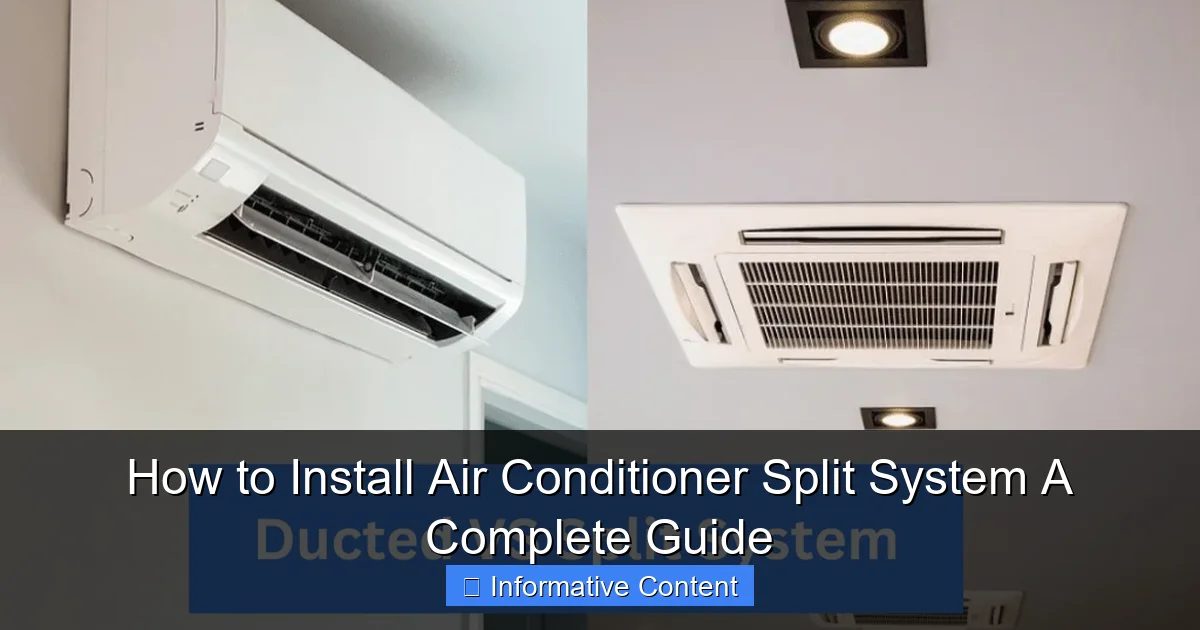
Featured image for how to install air conditioner split system
Image source: airconditionerrepairservice.com.au
Installing a split-system air conditioner requires precise planning, proper tools, and strict adherence to safety protocols to ensure optimal performance and efficiency. This guide walks you through every critical step—from selecting the ideal indoor and outdoor unit locations to connecting refrigerant lines, wiring, and vacuuming the system for leak-free operation. Professional HVAC expertise is highly recommended for electrical and refrigerant handling, but DIYers with technical skills can tackle the mounting and setup with confidence using this comprehensive guide.
Key Takeaways
- Turn off power: Always disconnect electricity before starting installation for safety.
- Mount the indoor unit: Secure it high on an exterior wall for optimal airflow.
- Drill a precise hole: Ensure a 2-3 inch angled hole for drainage and refrigerant lines.
- Use a vacuum pump: Remove moisture and air from lines to prevent system damage.
- Seal all connections: Prevent refrigerant leaks with proper flare nuts and insulation.
- Test system thoroughly: Check for leaks, airflow, and cooling before finalizing.
📑 Table of Contents
- Why Installing a Split System Air Conditioner Is Easier Than You Think
- Understanding Split System Air Conditioners: The Basics You Need to Know
- Pre-Installation Planning: What You Need to Know Before You Start
- Step-by-Step Installation: From Mounting to Refrigerant Charging
- Testing, Commissioning, and Troubleshooting Your New System
- Maintenance Tips to Keep Your Split System Running Smoothly
- Data Table: Common Split System Sizes and Their Coverage
- Final Thoughts: You’ve Got This!
Why Installing a Split System Air Conditioner Is Easier Than You Think
Let’s be honest—when you first look at a split system air conditioner, it feels like staring at a spaceship. There’s an indoor unit, an outdoor unit, copper tubing, a remote control, and a bunch of wires. You might even wonder, “Do I need a degree in HVAC just to get cool air?”
But here’s the good news: installing a split system air conditioner isn’t as intimidating as it looks. In fact, with the right tools, a bit of patience, and a clear step-by-step plan, many homeowners can tackle this project themselves. I remember my first split system install. I was sweating more from nerves than the summer heat. But after a weekend of focused work, I had a perfectly functioning unit—and a serious sense of accomplishment.
Whether you’re upgrading from an old window unit or installing cooling for the first time, this guide walks you through how to install air conditioner split system units safely, efficiently, and without calling in a pro (unless you want to). We’ll cover everything from choosing the right model to mounting, wiring, and testing—all in plain, friendly language. No jargon, no fluff. Just real-world advice from someone who’s been there, drilled that hole, and sealed that connection.
Understanding Split System Air Conditioners: The Basics You Need to Know
Before you grab a drill or unbox your new unit, let’s get on the same page about what a split system actually is. Unlike window ACs or portable units, split systems are permanent, energy-efficient, and offer quiet, even cooling. They’re called “split” because they have two main parts: the indoor unit (evaporator) and the outdoor unit (condenser). These are connected by refrigerant lines, electrical wiring, and a condensate drain line.
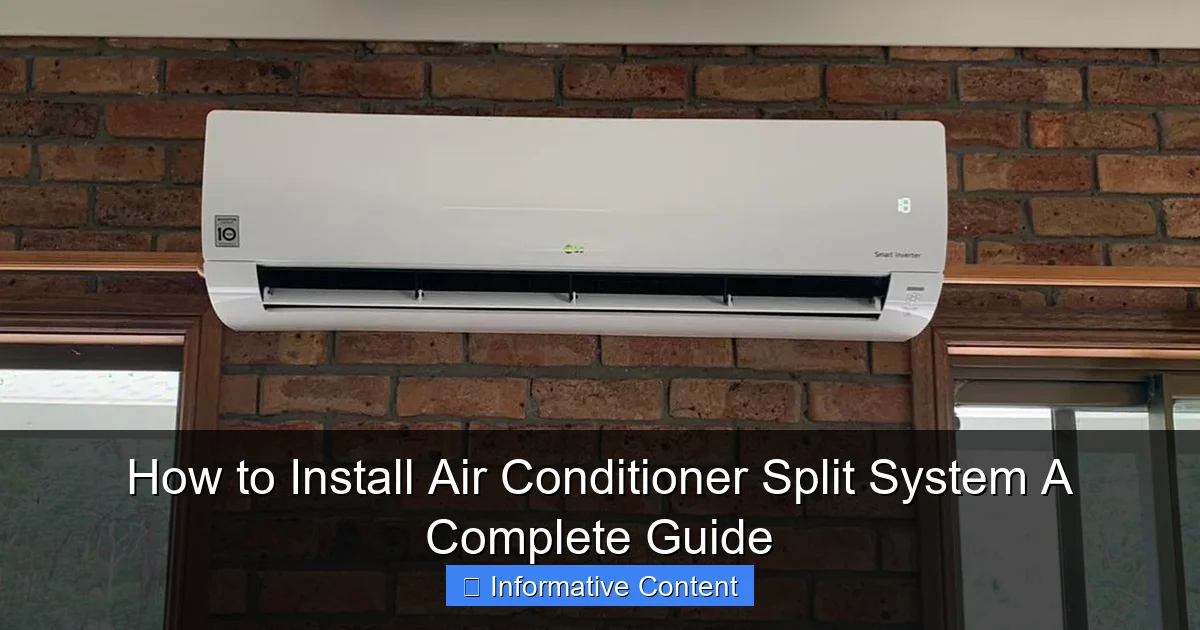
Visual guide about how to install air conditioner split system
Image source: airmakers.com.au
How Split Systems Work
Think of the indoor unit as the “cooling face” and the outdoor unit as the “heat dump.” The indoor unit pulls in warm air from your room, cools it using refrigerant, and blows the chilled air back out. Meanwhile, the outdoor unit releases the heat absorbed from inside. It’s a continuous cycle that keeps your space comfortable without the noise and inefficiency of older AC types.
One of the best things about split systems? They’re ductless. That means no bulky ductwork, no air loss, and no need to renovate your walls. Just a small hole (about 2–3 inches) for the connecting lines. This makes them ideal for older homes, apartments, or room additions where traditional HVAC isn’t practical.
Types of Split Systems
- Single-zone systems: One indoor unit paired with one outdoor unit. Perfect for cooling a single room or open-plan space.
- Multi-zone systems: One outdoor unit powers multiple indoor units. Great for whole-house cooling without ducts.
- Inverter vs. non-inverter: Inverter models adjust compressor speed for better efficiency and quieter operation. They cost more upfront but save money long-term.
For most DIYers, a single-zone inverter system is the sweet spot. It’s efficient, quiet, and easier to install than complex multi-zone setups. Just make sure your chosen model is compatible with your home’s electrical system (typically 230V in North America) and has enough BTUs for your room size.
Why DIY? The Pros and Cons
Installing your own split system can save you $500–$1,500 in labor costs. But it’s not all sunshine. You’ll need basic handyman skills, a few specialized tools, and about 6–10 hours of your time. Plus, if you mess up the refrigerant lines or electrical connections, you could damage the unit or create safety hazards.
That said, manufacturers design many modern split systems with DIYers in mind. They come with pre-charged refrigerant lines, clear instructions, and even smartphone apps for setup. Just remember: if you’re not confident with electrical work or refrigerant handling, call a pro for those parts. Safety first.
Pre-Installation Planning: What You Need to Know Before You Start
Jumping straight into drilling and wiring is tempting—but don’t. A few hours of planning can save you days of frustration. Here’s how to set yourself up for success.
Choose the Right Location
Where you place both units matters. For the indoor unit, pick a spot on an exterior wall with:
- At least 6 inches of clearance above and to the sides
- No direct sunlight or heat sources (like lamps or radiators)
- Easy access for future cleaning and maintenance
For the outdoor unit, look for a level, well-ventilated area with:
- At least 12 inches of clearance on all sides (more if possible)
- Protection from rain, snow, and debris (but not fully enclosed)
- Proximity to the indoor unit to minimize refrigerant line length
Pro tip: Measure the distance between your chosen spots. Most pre-charged line sets are 16–25 feet long. If your units are farther apart, you’ll need to have the lines extended by a licensed technician—something to consider before buying.
Check Electrical Requirements
Split systems need a dedicated 230V circuit. This isn’t something you can just plug into a regular outlet. You’ll need:
- A 20–30 amp double-pole breaker in your main panel
- 12 or 10-gauge wire (check your unit’s manual)
- A disconnect switch within sight of the outdoor unit (usually a fused pull-out switch)
If your home doesn’t have a 230V circuit nearby, you may need an electrician to run one. It’s a $200–$400 job, but it’s non-negotiable for safety and code compliance.
Gather the Right Tools and Materials
You don’t need a full HVAC toolkit, but having these items makes the job smoother:
- Drill with masonry bits (for wall penetration)
- Vacuum pump and micron gauge (for refrigerant evacuation)
- Pipe cutter and flaring tool (for copper lines)
- Level and measuring tape
- Electrical tester and wire strippers
- Insulating tape and UV-resistant cable ties
- Sealant (silicone or foam for the wall hole)
Many DIY-friendly kits include a vacuum pump, flaring tool, and gauges. Renting these from a tool library or HVAC supply store can save money if you’re only doing one install.
Permits and Codes
In some areas, you’ll need a permit for HVAC work—even if it’s DIY. Check with your local building department. They’ll want to see:
- Proof of proper electrical connection
- Compliance with refrigerant handling rules (especially for R-410A systems)
- Final inspection after installation
Getting a permit adds time, but it protects you if you ever sell your home. Plus, it ensures your work meets safety standards.
Step-by-Step Installation: From Mounting to Refrigerant Charging
Now comes the fun part—actually installing the system. Let’s break it down into clear, manageable steps. I’ll share some real lessons from my own install, including the “oops” moments that taught me the most.
1. Mount the Indoor Unit Bracket
Start with the indoor unit. Hold the mounting bracket against the wall where you want the unit. Use a level to make sure it’s perfectly straight. Mark the screw holes with a pencil.
Drill pilot holes and insert wall anchors (use plastic anchors for drywall, masonry screws for concrete). Secure the bracket with screws, but don’t fully tighten yet—you may need to adjust it later.
Real tip: I once installed a unit slightly off-level. It didn’t seem like a big deal… until I noticed the condensate drain wasn’t working. The unit needs a slight tilt (about 1/4 inch) toward the wall to ensure water flows out. Use a level with a slight downward slope toward the back.
2. Drill the Wall Penetration Hole
Measure the diameter of your refrigerant line set (usually 2.5–3 inches). Use a hole saw to drill a hole through the exterior wall, just below the indoor unit. Angle it slightly downward toward the outside to prevent rain from pooling.
Seal around the hole with silicone or expanding foam after the lines are fed through. This prevents insects, water, and air leaks.
3. Mount the Outdoor Unit
Place the outdoor unit on a concrete pad or metal stand. Make sure it’s level and stable. If you’re installing on a wall, use a heavy-duty bracket rated for the unit’s weight (often 100+ lbs).
Leave at least 12 inches of clearance on all sides. Avoid spots near windows or neighbors—the fan noise can be disruptive.
4. Connect the Refrigerant Lines
Feed the pre-charged copper lines through the wall hole. On the indoor side, connect them to the unit’s service valves. Use a flare nut wrench to tighten the connections—don’t over-tighten, or you’ll crack the flare.
On the outdoor side, do the same. Wrap the connections with insulating tape to prevent condensation and improve efficiency.
Critical step: If your line set is longer than the pre-charged length, a technician must add refrigerant. Never open the service valves until the system is properly evacuated (see next step).
5. Evacuate the Refrigerant Lines
This is where many DIYers go wrong. Air and moisture in the lines can ruin your compressor. You must vacuum the lines before opening the valves.
Attach a vacuum pump to the service port on the outdoor unit. Run the pump for at least 30 minutes (longer for longer lines). Use a micron gauge to verify the vacuum reaches 500 microns or below.
Once evacuated, close the pump valve and wait 10 minutes. If the pressure rises, there’s a leak—find and fix it before proceeding.
6. Open the Service Valves
With the vacuum holding, slowly open both service valves (liquid and gas lines). You’ll hear refrigerant flow into the system. This is the “charging” process for pre-charged units.
Don’t skip the vacuum step. I’ve seen units fail within a year because someone rushed this part.
7. Connect the Electrical Wiring
Turn off the power at the main panel. Run the electrical cable from your breaker to the outdoor unit’s disconnect switch, then to the unit itself.
Follow the wiring diagram in your manual. Typically:
- Black (L1) and red (L2) wires connect to the compressor
- White (neutral) and green (ground) go to the terminal block
For the indoor unit, connect the control wiring (usually 4–5 wires) between the indoor and outdoor units. Match the colors or labels—this controls the fan, thermostat, and compressor.
8. Connect the Condensate Drain
The indoor unit produces water as it cools the air. Attach a PVC or vinyl drain line to the unit’s drain pan. Run it down through the wall hole, sloping downward toward a drain, sump, or outside.
Use a condensate pump if the drain line can’t slope naturally (e.g., in a basement). Test the drain by pouring a cup of water into the pan—it should flow freely.
Testing, Commissioning, and Troubleshooting Your New System
You’re almost done! But before you kick back and enjoy the cool air, you need to test everything.
Power Up and Initial Test
Turn on the breaker and disconnect switch. Power up the indoor unit. The display should light up, and the fan should start after a short delay.
Set the remote to “cool” mode, 68°F (20°C). Wait 5–10 minutes. You should feel cold air from the indoor unit and hear the outdoor fan and compressor running.
Check for Common Issues
Here’s what to watch for:
- No power: Check breaker, disconnect switch, and wiring connections
- No cooling: Verify refrigerant valves are open, lines aren’t kinked, and thermostat settings are correct
- Leaking water: Inspect drain line for clogs or improper slope
- Error codes: Refer to your manual—common ones relate to sensor faults or low refrigerant
I once had a unit that ran but didn’t cool. Turned out the refrigerant lines were pinched during installation. A quick unpinch fixed it.
Measure Performance
Use a thermometer to check the temperature difference (delta T) between the return and supply air. It should be 15–20°F (8–11°C) in cooling mode. Less than that suggests low refrigerant or airflow issues.
Also, listen for unusual noises—grinding, hissing, or banging. These can indicate loose parts, refrigerant leaks, or electrical problems.
Final Sealing and Cleanup
Seal the wall penetration hole with silicone or foam. Wrap the refrigerant lines with insulation where they pass through the hole. Use UV-resistant tape to secure wiring and drain lines.
Clean the indoor unit’s filter and wipe down both units. Take before-and-after photos—you’ll want them for future reference or if you sell the home.
Maintenance Tips to Keep Your Split System Running Smoothly
Installing your split system is just the start. To keep it efficient and reliable, regular maintenance is key.
Monthly Tasks
- Clean or replace the indoor unit’s air filter (every 1–3 months)
- Check the condensate drain for clogs
- Inspect outdoor unit for debris (leaves, grass, dirt)
Seasonal Tasks
- Clean the indoor unit’s coils with a soft brush or coil cleaner
- Wash the outdoor unit’s condenser fins with a garden hose (turn off power first)
- Check refrigerant line insulation for damage
Annual Professional Checkup
Even with DIY care, have a technician inspect your system once a year. They’ll:
- Check refrigerant levels
- Test electrical connections
- Inspect the compressor and fan motors
This can catch small issues before they become big problems. A $100 tune-up can prevent a $1,000 repair.
Energy-Saving Tips
- Set your thermostat to 72–75°F (22–24°C) in summer
- Use a programmable or smart thermostat
- Close curtains during the day to block heat
- Keep the outdoor unit shaded but well-ventilated
Data Table: Common Split System Sizes and Their Coverage
| BTU Capacity | Room Size (sq ft) | Recommended Use | Typical Line Set Length |
|---|---|---|---|
| 9,000 | 300–400 | Small bedroom, home office | 16–25 ft |
| 12,000 | 400–500 | Master bedroom, living room | 16–25 ft |
| 18,000 | 600–800 | Large living area, studio apartment | 25–30 ft (may require field extension) |
| 24,000 | 800–1,000 | Whole-house (single zone), open floor plan | 25–30 ft |
| 30,000+ | 1,000+ | Multi-zone systems or commercial use | 30+ ft (professional installation recommended) |
Final Thoughts: You’ve Got This!
Installing a split system air conditioner isn’t just about staying cool—it’s about taking control of your home comfort. I’ll never forget the first time I stood in my living room, feeling that crisp, even airflow I’d installed myself. It wasn’t perfect. There was a moment when I thought I’d over-tightened a flare nut. But I fixed it, learned from it, and ended up with a system that’s run flawlessly for years.
Remember, how to install air conditioner split system isn’t a one-size-fits-all process. Every home, every unit, and every installer is different. But with careful planning, the right tools, and a willingness to learn, you can absolutely do it. Just take your time. Double-check every connection. And don’t hesitate to call in a pro for the parts that make you nervous.
You’re not just installing an AC—you’re building confidence, saving money, and creating a cooler, more comfortable home. So grab your drill, roll up your sleeves, and get started. The cool air is waiting.
Frequently Asked Questions
How to install air conditioner split system for beginners?
Begin by selecting the right outdoor and indoor unit locations, ensuring proper drainage and airflow. Follow the manufacturer’s manual to mount the indoor unit, connect refrigerant lines, and secure the outdoor unit on a stable surface. Always hire a licensed technician for refrigerant charging and electrical connections to ensure safety and compliance.
Can I install a split air conditioner system myself?
While DIY installation is possible for mounting and basic setup, critical steps like refrigerant handling and electrical wiring must be done by a licensed HVAC professional. Improper installation can void warranties and reduce efficiency, so always follow local building codes and manufacturer guidelines.
What tools are needed to install an air conditioner split system?
Common tools include a drill, hole saw, level, vacuum pump, wrenches, tubing cutter, and refrigerant gauges. You’ll also need copper piping, insulation, and electrical supplies. A vacuum pump is essential for removing moisture from refrigerant lines before charging the system.
How long does it take to install a split system air conditioner?
A standard split system installation typically takes 4–8 hours, depending on complexity, wall type, and refrigerant line length. Additional time may be needed for electrical upgrades or custom mounting solutions.
Where should I place the indoor and outdoor units when installing a split system?
Install the indoor unit high on an exterior wall for even airflow, away from direct sunlight or heat sources. The outdoor unit should be placed on a vibration-resistant surface with at least 12 inches of clearance on all sides for proper ventilation.
Do I need a professional to charge the refrigerant after installing a split system?
Yes, refrigerant charging requires specialized equipment and certification to ensure the correct pressure and avoid system damage. Only licensed HVAC technicians should handle this step to comply with environmental regulations and maintain your warranty.