
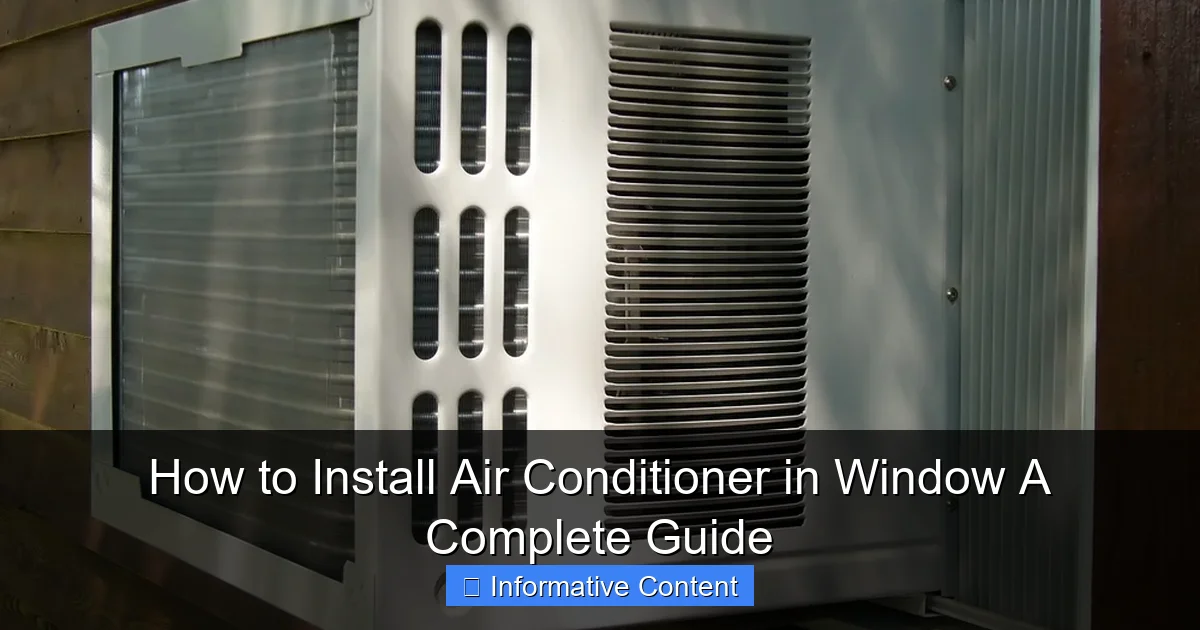
Featured image for how to install air conditioner in window
Image source: cdn.frontdoorhome.com
Installing an air conditioner in a window is a straightforward DIY project that ensures efficient cooling and energy savings when done correctly. Begin by selecting the right unit size, securing the mounting brackets, and carefully placing the AC in the window to prevent leaks or instability. Always follow manufacturer instructions and use weatherproofing materials to seal gaps for optimal performance and safety.
Key Takeaways
- Measure your window first: Ensure AC unit fits securely before purchasing or installing.
- Seal gaps tightly: Use foam strips or weather stripping to prevent air leaks.
- Support the unit properly: Install brackets or support arms to avoid sagging or falls.
- Tilt slightly outward: Angle AC 5° downward to enable proper drainage.
- Check electrical safety: Plug into grounded outlet; avoid extension cords.
- Test run immediately: Verify cooling and drainage after installation completes.
📑 Table of Contents
- Why Installing a Window Air Conditioner Is Easier Than You Think
- Choosing the Right Window Air Conditioner for Your Space
- Preparing Your Window and Workspace
- Step-by-Step Guide to Installing the Air Conditioner
- Common Mistakes and How to Avoid Them
- Maintaining Your Window Air Conditioner for Longevity
- Data Table: Recommended Window AC Models by Room Size
- Final Thoughts: You’ve Got This!
Why Installing a Window Air Conditioner Is Easier Than You Think
Let’s be honest: summer heat can be brutal. You’re sweating through your shirt, your dog is lying flat on the floor, and your ceiling fan feels like it’s just blowing hot air around. That’s when you realize—it’s time to install an air conditioner in your window. But before you call a technician and brace yourself for a big bill, here’s the good news: installing a window air conditioner is something you can totally do yourself, even if you’re not a DIY expert.
I remember the first time I installed my own window AC unit. I was nervous—what if I broke the window? What if it fell out? But after a few deep breaths and a YouTube tutorial, I realized it’s actually pretty straightforward. With the right tools, a little patience, and the right guidance, you can have cool air flowing in less than an hour. This guide walks you through every step of how to install air conditioner in window, from picking the right unit to sealing it properly. Whether you’re a renter, a homeowner, or just trying to survive another heatwave, this is your go-to resource.
Choosing the Right Window Air Conditioner for Your Space
Match the BTU to Your Room Size
Before you even think about installation, you need to choose the right air conditioner. The first thing to consider is BTU (British Thermal Unit), which measures cooling power. Too few BTUs and your AC will struggle to cool the room. Too many, and it’ll cycle on and off too quickly, wasting energy and not dehumidifying well.
Visual guide about how to install air conditioner in window
Image source: i.ytimg.com
Here’s a quick guide based on room size:
- 100–150 sq. ft.: 5,000–6,000 BTU
- 150–250 sq. ft.: 6,000–8,000 BTU
- 250–350 sq. ft.: 8,000–12,000 BTU
- 350–450 sq. ft.: 12,000–14,000 BTU
- 450–550 sq. ft.: 14,000–18,000 BTU
For example, my home office is about 200 sq. ft., so I went with a 7,000 BTU unit. It cools perfectly without running nonstop. If you have high ceilings, lots of windows, or a room that gets direct sunlight, go up one level in BTUs.
Check Window Compatibility
Not every window is AC-friendly. Most window units are designed for double-hung windows (the kind where the bottom sash slides up). If you have casement, sliding, or awning windows, you might need a special mounting kit or a portable unit instead.
Measure your window opening width and height. Most window ACs fit openings between 23 and 36 inches wide. The unit itself should be about 1–2 inches narrower than the window frame to allow for side panels. Also, check the maximum sash height—some units require at least 13–15 inches of vertical space when the window is fully open.
Pro tip: If your window is unusually shaped or too small, don’t force it. A poorly fitted unit is a safety hazard and won’t cool efficiently.
Look for Energy Efficiency and Smart Features
Energy-efficient models save you money in the long run. Look for the Energy Star label, which means the unit meets strict efficiency standards. A higher CEER (Combined Energy Efficiency Ratio) means better performance per watt.
Bonus features like remote control, programmable timers, sleep mode, and Wi-Fi connectivity are great for convenience. I love being able to turn on my AC from my phone before I get home—walking into a cool room after work is a game-changer.
Preparing Your Window and Workspace
Clear the Area and Protect Your Floor
Before you start, clear the area around the window. Move furniture, plants, or anything that could get in the way. Lay down a towel or cardboard on the floor to protect it from scratches, water drips, or dropped tools.
Also, make sure there’s a nearby GFCI (Ground Fault Circuit Interrupter) outlet—this is crucial for safety. Never use an extension cord with a window AC. They draw a lot of power, and an extension cord can overheat or cause a fire. If your outlet is far away, consider hiring an electrician to install one closer.
Inspect the Window Frame and Sash
Open the window and check the condition of the frame and sash. Look for:
- Rot, warping, or cracks in the wood
- Loose hinges or broken locks
- Sticking or stiff sashes
If the window is damaged, repair it first. A weak frame won’t support the weight of the AC (which can be 50–80 lbs). Use wood filler for small cracks or replace damaged sections if needed. A stable window is the foundation of a safe installation.
Gather Your Tools and Supplies
Here’s what you’ll need:
- Tape measure
- Level
- Drill and drill bits (if mounting brackets are included)
- Screwdriver (Phillips and flathead)
- Scissors or utility knife
- Foam insulation tape or weatherstripping
- Support brackets (if required—more on this later)
- Work gloves (to protect your hands)
- Safety goggles (because safety first!)
Most AC units come with a mounting kit that includes side panels, foam seals, and screws. Check the manual to see what’s included. If not, you can buy a universal mounting kit at any hardware store.
Step-by-Step Guide to Installing the Air Conditioner
Step 1: Install the Side Panels
Start by attaching the side panels (also called accordion panels) to the air conditioner. These expand to fill the gap between the unit and the window frame.
Most units have slots or clips on the sides where the panels slide in. Extend them to their full length, then gently slide them into place. Secure with the provided screws or clips. Make sure they’re snug but not bent or warped.
I once rushed this step and ended up with a wobbly panel. It didn’t seal well, and I had a draft all summer. Take your time—this step is worth the extra minute.
Step 2: Position the Air Conditioner in the Window
This is where you’ll need a helper, especially for heavier units. Open the window fully and lift the AC into place. The back of the unit (with the vents) should be outside, and the front (with controls and vents) should face inside.
Rest the bottom edge of the AC on the window sill. Make sure the unit is centered and not touching the sides. Slide the side panels outward until they press against the window frame. They should be flush and tight.
Use a level to check if the unit is sitting straight. If it’s tilted, it can cause water to drip inside or reduce efficiency. Adjust by slightly raising one side of the sill with a wooden shim (a small piece of scrap wood).
Step 3: Secure the Unit with Support Brackets
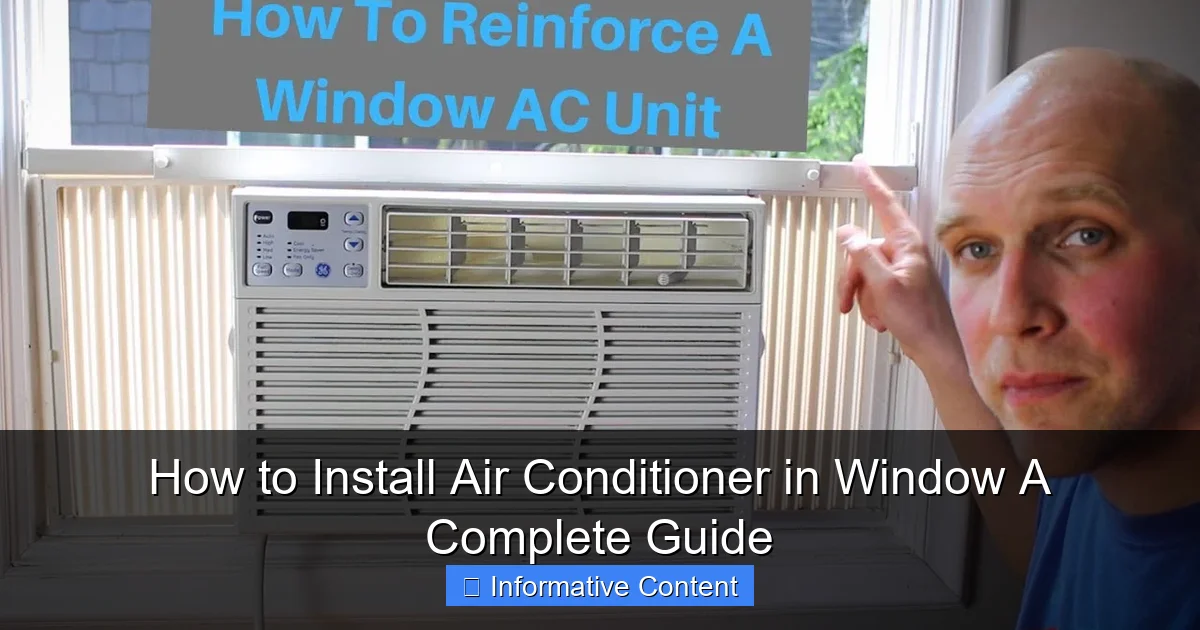
Some units come with support brackets that attach to the window sash and the AC frame. These prevent the unit from tipping forward or shifting. If your model doesn’t include them, I highly recommend buying a universal bracket kit—it’s cheap insurance against a falling AC.
To install:
- Lower the window sash so it sits just above the top of the AC.
- Attach the bracket to the sash using the provided screws.
- Connect the other end to the AC frame (usually with a hook or clamp).
- Tighten everything securely.
My neighbor skipped this step and woke up to a loud crash one morning—his AC had fallen halfway out! Don’t make the same mistake.
Step 4: Close the Window and Seal the Gaps
Once the AC is in place, close the window sash down onto the top of the unit. Most ACs have a built-in lip or rail that the sash rests on. Secure it with the window lock if available.
Now, seal all gaps to keep cool air in and hot air out:
- Use foam insulation tape around the top and sides where the sash meets the AC.
- If there’s a gap at the top, cut a piece of rigid foam board to size and wedge it in place.
- For the bottom, some people use a foam strip or a custom-cut piece of wood.
Sealing is critical. I once forgot to seal the top gap and noticed my electric bill was higher than usual. A quick fix with weatherstripping made a big difference.
Step 5: Plug It In and Test the Unit
Plug the AC into the GFCI outlet. Turn it on and set it to a cool temperature. Listen for any unusual noises—grinding, rattling, or buzzing. These could mean something’s loose or misaligned.
Check for airflow. The inside vents should blow cool air, and the outside should expel hot air. If the unit runs but doesn’t cool, double-check that the exhaust side is fully outside and not blocked.
Also, look for water leaks. A little condensation is normal, but water dripping inside means the unit isn’t tilted properly or the drain pan is clogged.
Common Mistakes and How to Avoid Them
Not Checking the Window Type
One of the biggest mistakes is assuming any window will work. Sliding windows, for example, require a different setup—often a custom bracket or a horizontal support bar. If you force a standard unit into a sliding window, it won’t seal properly and could fall out.
Solution: Read the manufacturer’s instructions carefully. If your window isn’t listed as compatible, look for a sliding window AC kit or consider a portable unit.
Ignoring Proper Tilt and Level
The AC needs a slight outward tilt (about 1/4 inch) so condensation drains outside, not inside. But it also needs to be level side-to-side to function efficiently.
Use a level to check both directions. If it’s off, adjust with shims under the sill or by loosening and repositioning the support brackets.
Skipping the Seal
Air leaks are the #1 reason window ACs underperform. Even a small gap can let hot air in and cool air out, making the unit work harder and your bills higher.
Always seal all edges—top, sides, and bottom. Use high-quality foam tape or weatherstripping. Replace it every season if it gets brittle or cracked.
Forgetting About Safety
Never install an AC in a window that can’t support its weight. Never use an extension cord. Never leave the unit unattended if it’s making strange noises.
Also, if you’re on an upper floor, make sure the outside of the unit is visible from the ground. This helps prevent theft and ensures it’s not blocking a fire escape.
Maintaining Your Window Air Conditioner for Longevity
Clean the Filter Monthly
The air filter collects dust, pet hair, and allergens. If it gets clogged, the AC has to work harder, uses more energy, and cools less effectively.
Most filters are washable. Just remove them, rinse with water, let dry completely, and reinstall. Do this at least once a month during peak season.
Clean the Coils and Exterior
Over time, the evaporator and condenser coils get dirty, reducing efficiency. Once a season, use a soft brush or vacuum attachment to clean the outside vents and coils.
For the inside, turn off the unit and wipe down the front panel and vents with a damp cloth. Avoid harsh chemicals.
Inspect Seals and Brackets
Before each summer, check the foam seals and side panels for wear. Replace them if they’re cracked or compressed. Also, tighten any loose screws in the mounting brackets.
I keep a small toolkit by the window so I can do a quick inspection in the spring. It takes 10 minutes and saves me from mid-summer breakdowns.
Store It Properly Off-Season
If you remove the AC for winter, clean it thoroughly first. Cover the outside with a waterproof cover or plastic to keep debris out. Store it upright in a dry place.
Never store it on its side—this can damage the compressor.
Data Table: Recommended Window AC Models by Room Size
| Room Size (sq. ft.) | BTU Range | Recommended Models (Examples) | Key Features |
|---|---|---|---|
| 100–150 | 5,000–6,000 | LG LW6017R, Midea MAW06R1BWT | Compact, quiet, Energy Star rated |
| 150–250 | 6,000–8,000 | Frigidaire FHWC082AB1, GE AHQ08LZ | Remote control, 24-hour timer |
| 250–350 | 8,000–12,000 | Honeywell HL14CESWK, Toshiba RAC-WK1012ES | Wi-Fi app control, sleep mode |
| 350–450 | 12,000–14,000 | Whynter ARC-14S, LG LW1216HR | Dual-hose (portable), dehumidifier mode |
| 450–550 | 14,000–18,000 | Friedrich Chill Premier CP18G30A | High efficiency, ultra-quiet |
Note: Always check the manufacturer’s window size requirements before purchasing. Some models may require specific sash heights or frame materials.
Final Thoughts: You’ve Got This!
Installing an air conditioner in a window isn’t just about surviving the heat—it’s about taking control of your comfort and saving money. With the right prep, tools, and a little confidence, you can do it yourself in under an hour.
Remember: choose the right size, seal all gaps, secure the unit, and maintain it regularly. These simple steps make all the difference. I’ve helped friends install theirs, and the look on their faces when they realize they did it—no handyman needed—is priceless.
So go ahead, grab your AC, open that window, and get started. The cool air is waiting. And when your friends ask how you installed it, you can say, “Easy. I read a great guide.”
Stay cool, stay safe, and enjoy your summer in comfort.
Frequently Asked Questions
How do I install an air conditioner in a window safely?
To install an air conditioner in a window safely, ensure the unit is level, the window frame is sturdy, and the side panels are properly sealed to prevent air leaks. Always follow the manufacturer’s instructions and use support brackets to secure the unit and avoid accidents.
What tools do I need to install a window air conditioner?
Common tools include a tape measure, screwdriver, level, support brackets, and foam weatherstripping. These help ensure a snug fit and proper alignment during the air conditioner in window installation process.
Can I install a window AC unit by myself?
Yes, most window air conditioners are designed for DIY installation if the window opening is compatible and you follow safety guidelines. For heavier units or double-hung windows, a helper may be needed to lift and stabilize the AC during setup.
How do I seal a window air conditioner to prevent drafts?
Use the included accordion panels or foam weatherstripping to seal gaps between the AC unit and the window frame. Secure the panels with screws or clips, and add insulation foam around the sides for extra draft protection.
What type of window is best for installing an air conditioner?
Double-hung or sliding windows are ideal for window air conditioner installation, as they allow for easy adjustment and secure mounting. Casement or crank-style windows may require special adapters or professional help.
How do I ensure my window AC unit is properly supported?
Install manufacturer-recommended support brackets or L-shaped braces beneath the unit to bear its weight. Check that the window sash locks securely over the AC’s top flange to prevent the unit from shifting or falling.