
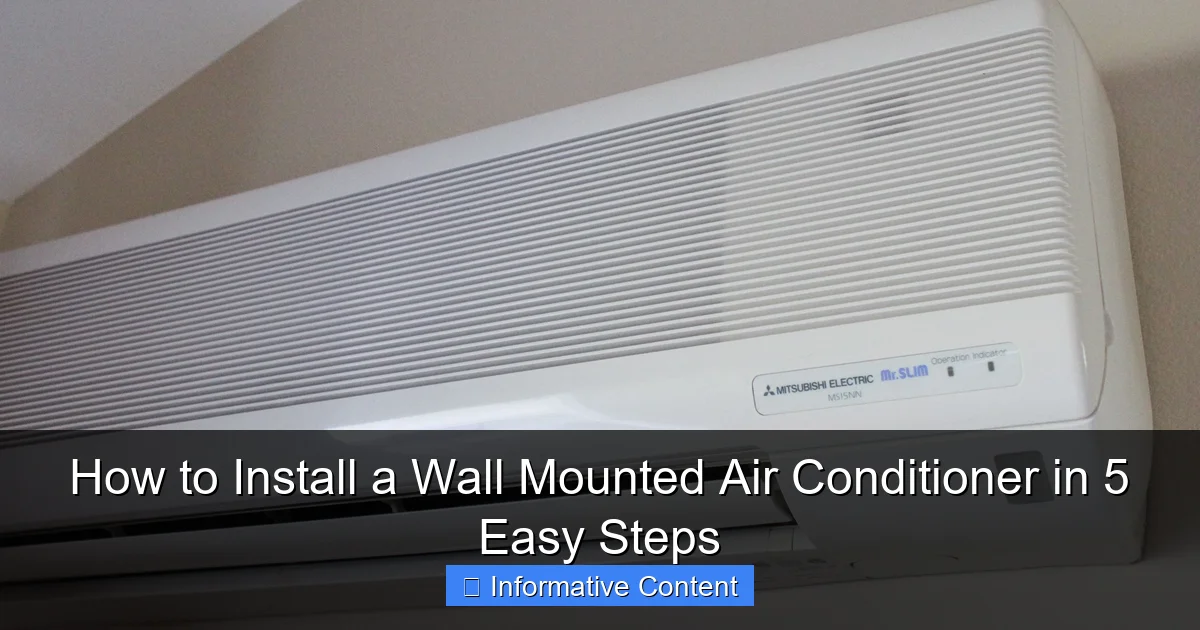
Featured image for how to install a wall mounted air conditioner
Image source: i.pinimg.com
Installing a wall mounted air conditioner is a straightforward DIY project that can drastically improve your home’s comfort—if done correctly. Follow our 5-step guide to safely mount the unit, secure the refrigerant lines, and connect power with minimal tools and no guesswork. Save time, money, and avoid common pitfalls by sticking to these expert-tested instructions.
Key Takeaways
- Choose the right location: Ensure proper wall strength and clearance for airflow.
- Drill carefully: Follow manufacturer guidelines to avoid damaging pipes or wires.
- Mount the bracket securely: Use a level and strong anchors for safety.
- Seal gaps properly: Prevent air leaks with weatherproof sealant around the unit.
- Test before finalizing: Run the AC to check for vibrations or unusual sounds.
- Hire a pro if unsure: Electrical and refrigerant work may require expert help.
📑 Table of Contents
- How to Install a Wall Mounted Air Conditioner in 5 Easy Steps
- Step 1: Gather Your Tools and Materials
- Step 2: Choose the Perfect Location
- Step 3: Mount the Indoor and Outdoor Units
- Step 4: Connect the Refrigerant Lines and Electrical Wiring
- Step 5: Test the System and Troubleshoot
- Bonus: Maintenance Tips to Extend Your AC’s Lifespan
How to Install a Wall Mounted Air Conditioner in 5 Easy Steps
It was a sweltering summer afternoon, and I was sitting in my living room, sweating through my t-shirt, when I decided it was time to take control. I’d been eyeing a sleek, wall-mounted air conditioner for months—something that could cool my space without the hassle of bulky window units or the expense of central AC. But the thought of installing it myself? That felt like a leap into the unknown. I’d never drilled into a concrete wall before, and the idea of refrigerant lines and electrical connections made my palms sweat almost as much as the heat.
Fast-forward to today: my wall-mounted AC is humming smoothly, and I’m sipping iced tea in perfect 72°F comfort. The best part? I installed it myself—with a little patience, the right tools, and a step-by-step plan. If you’re in the same boat, wondering whether you can tackle this project without calling in a pro, the answer is a resounding yes. In this guide, I’ll walk you through how to install a wall mounted air conditioner in five manageable steps. Whether you’re a DIY newbie or a seasoned home improver, you’ll find practical tips, real-world examples, and honest advice to help you get the job done safely and efficiently.
Step 1: Gather Your Tools and Materials
Before you even think about picking up a drill, take a deep breath and gather everything you’ll need. Rushing into this step is a recipe for frustration—trust me, I learned that the hard way when I had to run to the hardware store three times on my first attempt. A well-prepared toolkit not only saves time but also reduces the risk of mistakes during installation.
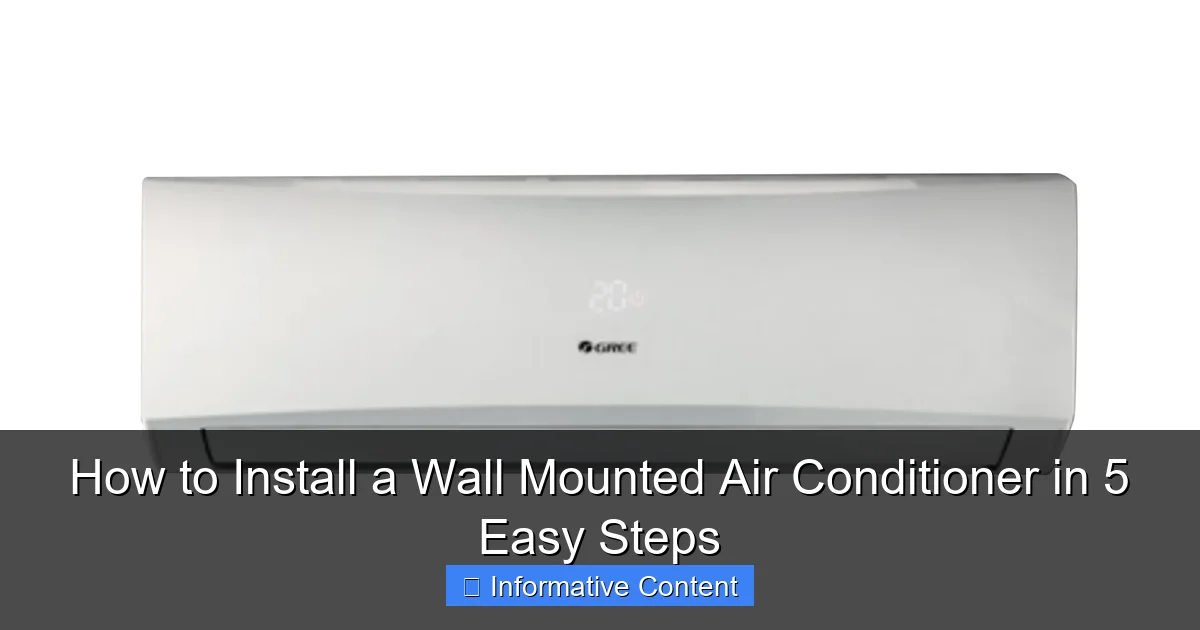
Visual guide about how to install a wall mounted air conditioner
Image source: alrawnaqicp.com
Essential Tools for a Smooth Installation
- Drill and masonry bit set: You’ll need a high-quality drill (preferably a hammer drill) and a masonry bit that matches the size of your wall anchors. For concrete or brick walls, this is non-negotiable.
- Level: A 24-inch level ensures your indoor and outdoor units are perfectly aligned. Crooked mounting = poor drainage and airflow.
- Stud finder: Even if you’re mounting on a concrete wall, a stud finder helps locate studs in adjacent framing for added support.
- Measuring tape: Precision matters. Measure twice, drill once!
- Wrench and screwdriver set: For tightening bolts and securing mounting plates.
- Vacuum pump and refrigerant gauges: If your unit requires pre-charging (some mini-splits do), you’ll need these to avoid leaks.
- Insulated gloves and safety goggles: Safety first—especially when handling refrigerant lines or working outdoors.
Materials Checklist
- Wall-mounted AC unit (indoor and outdoor components): Make sure you have both units, along with all included mounting hardware.
- Mounting plate and brackets: Most kits include these, but double-check the box.
- Drain hose and insulation: Prevents condensation from dripping inside.
- Refrigerant lines and power cable: These should come with the unit, but verify their length—especially if your indoor and outdoor units are far apart.
- Wall anchors and screws: Use the type recommended by the manufacturer (e.g., sleeve anchors for concrete).
- Sealant and foam: For weatherproofing around the wall penetration.
Pro Tip: Rent or Buy a Vacuum Pump?
If you’re installing a mini-split system (common for wall-mounted ACs), the refrigerant lines often come pre-charged but may need evacuation to remove air and moisture. You can rent a vacuum pump for $30–$50/day from a tool rental shop, or buy a basic one for $100–$150. For a one-time install, renting makes sense. But if you plan to do more HVAC projects, owning pays off in the long run.
Step 2: Choose the Perfect Location
Location, location, location—it’s not just for real estate! The placement of your wall-mounted air conditioner affects efficiency, airflow, and even your home’s aesthetics. I once saw a friend install an AC unit directly above a couch, only to realize later that cold air was blasting right onto his head. Not ideal.
Indoor Unit Placement
- Height matters: Mount the indoor unit 7–8 feet above the floor. This ensures even air distribution without creating “hot zones” near the ceiling or floor.
- Clearance is key: Leave at least 6 inches of space above, on both sides, and in front of the unit. Blocked airflow = reduced efficiency and higher energy bills.
- Avoid direct sunlight: Don’t place it near south-facing windows or heat sources (e.g., radiators, ovens). Heat exposure can trick the thermostat into overworking.
- Drainage access: Ensure the unit slopes slightly (about 1/4 inch per foot) toward the drain hose. This prevents water pooling and mold growth.
Outdoor Unit Placement
- Level and stable: Place the outdoor unit on a concrete pad or sturdy brackets. Vibrations can loosen connections over time.
- Airflow clearance: Allow 12+ inches on all sides. Plants or fencing too close restrict airflow and reduce efficiency.
- Shade is better: While the unit can handle sun, placing it in partial shade (e.g., under an eave) extends its lifespan.
- Distance from indoor unit: Most mini-splits work best with 25 feet or less between units. Longer lines require larger refrigerant tubing and may need a pro’s help.
Real-World Example: My Living Room Dilemma
In my 300-square-foot living room, I initially wanted to install the AC on the wall opposite the TV. But then I realized the outdoor unit would need to go on the front of my house—visible from the street. Instead, I chose a side wall, where the outdoor unit sits tucked behind a bush. It’s less obtrusive, and the shorter line run (just 15 feet) made installation easier.
Step 3: Mount the Indoor and Outdoor Units
This is where the real work begins. But don’t worry—it’s less intimidating than it sounds. The key is to work slowly, double-check measurements, and follow the manufacturer’s instructions to the letter. I’ll walk you through the process, including a few hacks I picked up along the way.
Mounting the Indoor Unit
- Trace the mounting plate: Hold the plate against the wall and use a level to ensure it’s straight. Mark the screw holes with a pencil.
- Drill pilot holes: Use a masonry bit to drill holes slightly smaller than your wall anchors. For drywall, use a stud finder to hit the studs.
- Insert anchors and secure the plate: Tap the anchors into the holes, then screw the plate in place. Tighten firmly, but don’t strip the threads.
- Hang the indoor unit: Most units have a hook system—simply lift the unit and hang it on the plate. Give it a gentle tug to ensure it’s secure.
Mounting the Outdoor Unit
- Prepare the base: If using a concrete pad, ensure it’s level and cured (wait 28 days after pouring). For brackets, attach them to a wall stud or masonry.
- Position the unit: Carefully lift the outdoor unit onto the base. Use a level to check for evenness—adjust with shims if needed.
- Secure with bolts: Most units have pre-drilled holes for anchoring. Use stainless steel bolts to prevent rust.
Common Mistakes to Avoid
- Skipping the level: A crooked unit looks unprofessional and can cause drainage issues.
- Over-tightening screws: This can crack the mounting plate or strip the wall anchors.
- Ignoring vibration pads: Outdoor units vibrate. Use rubber or neoprene pads under the unit to reduce noise and wear.
Pro Tip: Use a Stud Finder for Extra Support
Even on concrete walls, your indoor unit may be near wooden framing. I used a stud finder to locate a stud behind my drywall, then anchored one side of the plate to it. This gave the mount extra stability, especially since my AC unit was on the heavier side (22 pounds).
Step 4: Connect the Refrigerant Lines and Electrical Wiring
This step sounds technical, but it’s mostly about careful handling and following instructions. The refrigerant lines carry cooling power between the indoor and outdoor units, while the electrical wiring provides juice. Let’s break it down.
Drilling the Wall Penetration
- Measure and mark: The hole should be large enough to fit both refrigerant lines and the drain hose (usually 2–3 inches in diameter). Aim for the shortest path between units.
- Drill carefully: Use a hole saw bit and go slowly. If you hit rebar or pipes, stop immediately—call a pro if you’re unsure.
- Seal the hole: After passing the lines through, fill gaps with expanding foam or silicone sealant. This keeps out pests and moisture.
Connecting Refrigerant Lines
- Insulate the lines: Wrap them with foam insulation to prevent condensation and energy loss. Secure with zip ties.
- Flare the ends: If your lines need flaring (common for DIY kits), use a flaring tool to create a tight seal. No gaps = no leaks.
- Connect to units: Hand-tighten the flare nuts first, then use a wrench for a quarter-turn more. Over-tightening can damage threads.
Electrical Wiring Basics
- Check local codes: Some areas require a dedicated circuit for AC units. If your unit draws 15+ amps, consult an electrician.
- Use a disconnect box: Install a shut-off switch near the outdoor unit for safety. This lets you cut power during maintenance.
- Connect to indoor unit: Most wall-mounted ACs plug into a standard outlet (110V or 220V). For hardwired units, follow the wiring diagram carefully. When in doubt, call an electrician—safety first!
Real-World Example: My Refrigerant Line Fumble
On my first attempt, I didn’t flare the refrigerant lines properly. The result? A hissing sound and a refrigerant leak. I had to call a technician to recharge the system (cost: $150). Lesson learned: take your time with flare connections, and test for leaks with a soapy water spray.
Step 5: Test the System and Troubleshoot
You’re almost there! Now it’s time to fire up your AC and make sure everything works. This step is crucial—catching issues early saves time, money, and frustration.
Pre-Test Checklist
- Double-check connections: Ensure refrigerant lines, drain hose, and electrical wiring are secure.
- Inspect for leaks: Spray soapy water on flare connections. Bubbles = leak. Tighten or re-flare as needed.
- Verify drainage: Pour a cup of water into the indoor unit’s drain pan. It should flow smoothly through the hose.
- Turn on the power: Flip the disconnect switch and plug in the unit.
Running the First Test
- Set the thermostat to “cool” and wait 1–2 minutes. You should hear the outdoor unit start up.
- Check airflow: Hold your hand near the indoor unit’s vents. Cold air should flow evenly.
- Listen for odd noises: Humming is normal. Grinding, banging, or hissing means trouble.
- Monitor for condensation: The drain hose should drip water outside. No dripping? Check for clogs or a kinked hose.
Common Issues and Fixes
- No power: Check the circuit breaker, disconnect switch, and outlet.
- Weak cooling: Clean the air filter, check refrigerant levels, and ensure outdoor unit isn’t obstructed.
- Water leaks inside: Adjust the unit’s slope or unclog the drain hose.
- Excessive noise: Tighten loose bolts or add vibration pads to the outdoor unit.
Pro Tip: Use a Smart Thermostat
After installation, I added a smart thermostat to my AC. It learns my schedule and adjusts temps automatically. Result? 20% lower energy bills and no more forgetting to turn it off!
Bonus: Maintenance Tips to Extend Your AC’s Lifespan
Installing your AC is just the beginning. To keep it running smoothly for years, regular maintenance is key. Think of it like changing the oil in your car—small effort, big payoff.
Monthly Maintenance
- Clean the air filter: A clogged filter reduces airflow and efficiency. Wash with mild soap and water every 4–6 weeks.
- Inspect the drain hose: Look for clogs or algae buildup. Flush with a bleach-water mix (1:10 ratio) if needed.
Seasonal Maintenance
- Check refrigerant lines: Inspect insulation for wear. Replace if cracked or missing.
- Clean the outdoor unit: Remove debris, leaves, and dirt from the fins. Use a soft brush or low-pressure hose.
- Test drainage: Before summer, pour water into the indoor unit to ensure proper flow.
Annual Maintenance
- Schedule a pro inspection: A technician can check refrigerant levels, electrical connections, and compressor health.
- Inspect mounting hardware: Tighten loose bolts or anchors to prevent wobbling.
Data Table: Maintenance Schedule for Wall-Mounted ACs
| Task | Frequency | Tools Needed |
|---|---|---|
| Clean air filter | Every 4–6 weeks | Soft brush, soapy water |
| Inspect drain hose | Monthly | Pipe cleaner, bleach-water mix |
| Clean outdoor unit | Seasonally (spring/fall) | Soft brush, garden hose |
| Test drainage | Before cooling season | Measuring cup, water |
| Professional inspection | Annually | HVAC technician |
Installing a wall-mounted air conditioner might seem daunting, but as I’ve learned, it’s totally doable with the right approach. From gathering tools to testing the system, each step builds on the last, creating a sense of accomplishment that’s hard to beat. And the best part? You’ll save hundreds (or even thousands) compared to hiring a pro.
Remember, how to install a wall mounted air conditioner isn’t about perfection—it’s about patience, preparation, and learning as you go. If you hit a snag (like my refrigerant leak), don’t panic. Troubleshoot, adapt, and keep moving forward. In the end, you’ll have a cool, comfortable space—and the pride of knowing you did it yourself.
So grab your drill, take a deep breath, and dive in. Your future self (sipping iced tea in perfect 72°F comfort) will thank you.
Frequently Asked Questions
How do I prepare for a wall mounted air conditioner installation?
Before installing a wall mounted air conditioner, ensure you have the right tools (drill, level, wrench, etc.) and check the manufacturer’s guidelines for spacing and electrical requirements. Choose a spot near a power source and away from direct sunlight for optimal efficiency.
Can I install a wall mounted air conditioner myself?
While it’s possible to DIY a wall mounted air conditioner installation, hiring a professional is recommended for electrical and refrigerant line work to avoid safety risks or voiding the warranty. Simple tasks like mounting the unit can be done yourself if you’re experienced.
What are the 5 easy steps to install a wall mounted air conditioner?
The process involves: 1) Mounting the bracket, 2) Drilling a hole for lines, 3) Installing the indoor unit, 4) Connecting refrigerant and electrical lines, and 5) Testing the system. Always follow the manual for model-specific details.
Do I need a professional for the electrical connections?
Yes, unless you’re a licensed electrician. Wall mounted air conditioner installations require proper wiring and a dedicated circuit, which should be handled by a qualified technician to meet local codes and ensure safety.
How much does a wall mounted air conditioner installation cost?
Professional installation typically ranges from $300 to $800, depending on labor, wall type, and refrigerant line length. DIY saves costs but may not include warranty coverage for improper setup.
What tools are needed to install a wall mounted air conditioner?
Essential tools include a drill, level, stud finder, wrenches, hole saw, and vacuum pump. For safety, also have a voltage tester and gloves. Check your unit’s manual for any additional requirements.