
Featured image for how to install a air conditioner
Image source: thumbs.dreamstime.com
Installing an air conditioner yourself is achievable and cost-effective with the right tools and preparation. Begin by selecting the correct unit size, gathering essential equipment like a drill, level, and wrench, and carefully following the manufacturer’s instructions for secure mounting and proper drainage. Always turn off power and test connections before use to ensure safety and peak performance.
Key Takeaways
- Choose the right unit: Match AC size to room dimensions for optimal efficiency.
- Turn off power: Always disconnect electricity before installation to prevent accidents.
- Seal gaps tightly: Use foam tape to block air leaks and boost cooling performance.
- Level the indoor unit: Ensure proper tilt for condensation drainage and system longevity.
- Test after installation: Run a trial cycle to verify cooling and drainage function.
- Follow local codes: Comply with regulations for electrical and refrigerant line requirements.
📑 Table of Contents
- Introduction: Why Installing an Air Conditioner Is Worth the Effort
- 1. Choosing the Right Air Conditioner for Your Space
- 2. Gathering Tools and Materials
- 3. Preparing the Installation Site
- 4. Installing the Air Conditioner
- 5. Testing, Maintenance, and Safety Tips
- 6. Troubleshooting Common Installation Issues
- Conclusion: You’ve Got This!
Introduction: Why Installing an Air Conditioner Is Worth the Effort
Let’s face it—summer heat can be brutal. I remember the first time I tried to sleep in a room that felt like a sauna. Sweating through the night, tossing and turning, only to wake up feeling worse than before. That’s when I decided: enough is enough. I needed air conditioning. But instead of calling a technician right away, I thought, “Hey, how hard can it be to install one myself?” Turns out, not as hard as I feared—especially with the right guidance.
Installing an air conditioner isn’t just about cooling your space. It’s about comfort, energy efficiency, and even long-term savings. Whether you’re replacing an old unit or setting up a new one in a room that’s never had AC, doing it yourself can save you hundreds of dollars. But it’s not just about saving money. It’s about understanding your home’s systems and gaining a sense of accomplishment. This guide walks you through how to install an air conditioner step by step, even if you’ve never picked up a power tool before. We’ll cover everything from choosing the right type to sealing the unit properly—so you can enjoy cool air without the headache.
1. Choosing the Right Air Conditioner for Your Space
Before you even think about drilling holes or handling refrigerant lines, you need to pick the right air conditioner. This decision sets the tone for the entire installation. The wrong choice could mean poor cooling, high energy bills, or constant repairs. So let’s break it down.
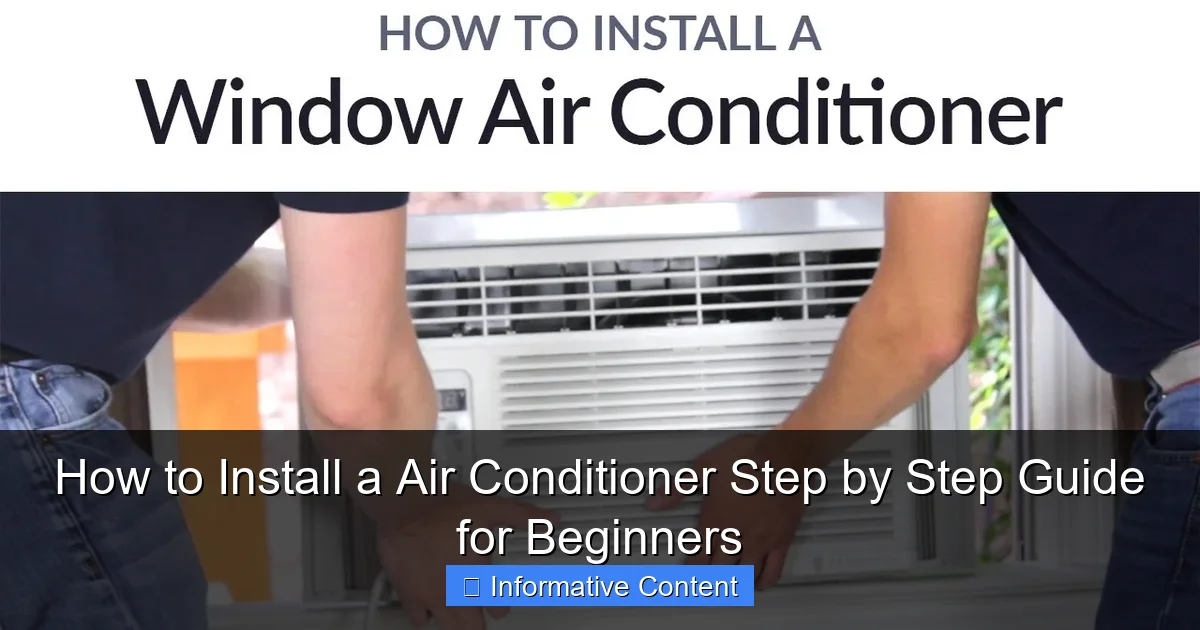
Visual guide about how to install a air conditioner
Image source: i.ytimg.com
Types of Air Conditioners
- Window Units: Ideal for single rooms. Affordable and easy to install, but limited in cooling power. Great for apartments or small bedrooms.
- Portable Air Conditioners: Wheels for mobility. No permanent installation, but they require a window kit to vent hot air. Less efficient than window units.
- Split (Mini-Split) Systems: Two parts—indoor and outdoor units—connected by a refrigerant line. More efficient and quieter. Best for larger rooms or whole-house cooling.
- Central Air Conditioning: Requires ductwork and professional installation. Not DIY-friendly for beginners.
For this guide, we’ll focus on window units and mini-split systems, as they’re the most common for DIY installations. Portable units are plug-and-play (just connect the exhaust hose), so they’re not covered in depth here.
Calculate the Right Size (BTUs)
Size matters—literally. An undersized unit will run constantly and never cool the room. An oversized one will cool too fast, causing humidity issues and short-cycling. The key is matching the British Thermal Units (BTUs) to your room’s square footage.
| Room Size (sq. ft.) | Recommended BTU Capacity |
|---|---|
| 100–150 | 5,000–6,000 BTU |
| 150–250 | 7,000–8,000 BTU |
| 250–350 | 9,000–10,000 BTU |
| 350–450 | 12,000–14,000 BTU |
| 450–550 | 15,000–18,000 BTU |
Pro Tip: Add 10% more BTUs if the room gets direct sunlight, has high ceilings, or houses multiple people or heat-generating electronics (like a gaming PC).
Check Window and Electrical Compatibility
For window units, measure your window opening. Most units fit windows 22–36 inches wide and 13–20 inches tall. Also, check the electrical requirements. Most window ACs need a standard 115-volt outlet, but higher-capacity models (15,000+ BTU) may require a 230-volt circuit. If your outlet doesn’t match, you’ll need an electrician—don’t risk using adapters or extension cords.
Mini-split systems are more flexible. They use a dedicated 230-volt circuit, but the indoor unit connects to the outdoor one via pre-charged lines. No refrigerant handling needed (unless you’re extending the line set).
2. Gathering Tools and Materials
You wouldn’t build a shelf without a hammer, right? Same goes for how to install an air conditioner. Having the right tools on hand saves time, prevents mistakes, and keeps you safe.
Essential Tools for Window AC Installation
- Measuring tape – For window and unit dimensions.
- Level – Ensures the unit slopes slightly outward for drainage.
- Power drill – For securing brackets and screws.
- Socket wrench or adjustable wrench – For tightening nuts.
- Utility knife – For cutting foam seals or plastic.
- Safety gloves and goggles – Protects from sharp edges and dust.
- Step ladder – For reaching upper windows.
Materials Needed
- Window AC unit (with mounting kit)
- Sash lock or window bracket (often included)
- Foam weatherstripping or foam tape
- Aluminum or vinyl support bracket (for larger units)
- Silicone caulk or exterior-grade sealant
- Insulating foam panels (optional, for sealing gaps)
For Mini-Split Systems
- Mini-split kit (includes indoor unit, outdoor unit, line set, drain hose, remote)
- Drill with masonry bits (for outdoor wall penetration)
- Stud finder (for indoor unit mounting)
- Vacuum pump (if extending refrigerant lines)
- Refrigerant scale (if adding refrigerant)
- Electrical wire and conduit (for power to outdoor unit)
- Wall sleeve or rubber grommet (to protect line set)
Personal Tip: I once skipped buying a support bracket for a heavy 12,000 BTU unit. Big mistake. After a few days, the window frame started sagging. Always use a bracket for units over 60 lbs. Your windows (and landlord) will thank you.
3. Preparing the Installation Site
Now that you have your unit and tools, it’s time to prep the site. This step is often overlooked, but it’s critical for a smooth, leak-free installation.
For Window Units: Clean and Measure
- Open the window and remove any screens or obstructions.
- Wipe the window sill, tracks, and frame with a damp cloth. Remove dust, debris, or old caulk.
- Measure the window width at the top, middle, and bottom. Use the narrowest measurement to ensure the unit fits.
- Check for level. Use shims if the sill is uneven.
Example: My bedroom window had a slight tilt inward. I used thin wooden shims under the unit’s front edge to create a 1/4-inch outward slope. This kept condensation from dripping inside.
Secure the Support Bracket (If Needed)
For heavy units, install the support bracket first:
- Position the bracket under the window sill, extending outward.
- Mark screw holes with a pencil.
- Drill pilot holes and secure with provided screws.
- Test stability by gently pushing down—there should be no wobble.
For Mini-Split Systems: Plan the Layout
- Indoor Unit: Mount on an interior wall, at least 7 feet above the floor. Avoid direct sunlight, vents, or heat sources. Leave 6+ inches of clearance on all sides.
- Outdoor Unit: Place on a level, vibration-free surface (concrete pad or wall bracket). Keep it 12+ inches from walls or shrubs for airflow.
- Line Set Route: Plan the shortest path between units. Drill a 2–3 inch hole in the wall for the refrigerant, drain, and power lines. Seal it later with silicone.
- Drain Line: Ensure the indoor unit can drain outside or into a nearby sink. Gravity is your friend—keep the hose sloped downward.
Pro Tip: Before drilling, check for electrical wires, plumbing, or studs behind the wall. Use a stud finder or knock test. I learned this the hard way when I drilled into a water pipe—lesson: always double-check!
4. Installing the Air Conditioner
Time to get your hands dirty. Let’s walk through the actual installation, step by step.
Installing a Window Unit
- Open the window fully. Most units slide out from the front. Remove the accordion panels if they’re in the way.
- Position the unit on the sill. Slide it in until the front edge is flush with the window frame. The unit should slope slightly outward (use a level to confirm).
- Secure the side panels. Extend the accordion panels to fit the window width. Screw them to the window frame using the provided brackets.
- Lock the window. Close the window until it rests on the AC’s top rail. Install a sash lock to prevent it from opening.
- Seal gaps. Apply foam tape around the sides and top. Use silicone caulk on the exterior where the unit meets the frame. This prevents air leaks and water intrusion.
- Plug it in. Use the built-in power cord. Never use an extension cord—it’s a fire hazard.
Common Mistake: Forgetting to seal the bottom gap. I did this once, and hot air kept sneaking in. A simple foam strip fixed it, but it taught me: seal all gaps, even the ones you can’t see.
Installing a Mini-Split System
- Mount the indoor bracket. Use a level and drill into studs. Attach the bracket securely.
- Hang the indoor unit. Slide it onto the bracket and lock it in place.
- Drill the wall hole. Use a 2.5-inch drill bit. Angle it slightly downward toward the outside.
- Feed the line set, drain hose, and power cable. Bundle them together and thread through the hole. Use a rubber grommet to protect the lines.
- Mount the outdoor unit. Secure it to a concrete pad or wall bracket. Level it perfectly.
- Connect the lines. Attach refrigerant lines to the outdoor unit’s service valves. Tighten with a wrench—don’t overdo it, or you’ll strip the threads.
- Connect the drain hose. Attach it to the outdoor unit’s drain port and route it to a safe discharge point.
- Seal the wall hole. Fill with silicone caulk or foam. This keeps pests and weather out.
- Power up. Connect the outdoor unit to a dedicated 230-volt circuit. Follow local electrical codes.
Critical Note: Mini-splits come pre-charged with refrigerant. If the line set is longer than the factory length, you’ll need to add refrigerant using a vacuum pump and scale. This step is best left to a pro unless you’re trained.
5. Testing, Maintenance, and Safety Tips
You’ve installed it—now make sure it works safely and efficiently.
Test the Unit
- Turn it on. Set the thermostat to a cool temperature. Listen for unusual noises.
- Check airflow. Feel for cool air from the indoor unit. For window units, ensure no hot air leaks in.
- Inspect for leaks. Look for water dripping inside or outside. A little condensation is normal, but pooling water is a problem.
- Test the remote (for mini-splits). Ensure it communicates with the unit.
Initial Maintenance
- Clean the filter. Wash or vacuum the air filter every 2–4 weeks. A dirty filter reduces efficiency and airflow.
- Check the drain line. For mini-splits, ensure it’s not clogged. Flush with vinegar if needed.
- Inspect seals. Reapply caulk or foam if gaps appear.
- Trim vegetation. Keep the outdoor unit clear of leaves and debris.
Safety Must-Dos
- Turn off power before touching electrical components.
- Use a GFCI outlet for window units near sinks or bathrooms.
- Never modify refrigerant lines without proper certification.
- Check local codes. Some areas require permits for mini-splits or electrical work.
My Story: I once ignored a buzzing noise from my mini-split. Turns out, a loose wire was arcing. A quick fix, but it could’ve started a fire. Now, I listen to my unit like a doctor listens to a heartbeat—any change means investigation.
6. Troubleshooting Common Installation Issues
Even the best plans go sideways. Here’s how to handle common problems.
Unit Doesn’t Cool
- Check thermostat settings. Is it set to “cool” and below room temperature?
- Inspect the filter. A clogged filter restricts airflow.
- Look for ice buildup. This means the unit is low on refrigerant or airflow is blocked.
- Verify power. Is the outlet working? Test with another device.
Water Leaks Inside
- Window unit: Check slope. It should tilt outward. Re-level if needed.
- Mini-split: Clear the drain line. Use a wet/dry vacuum to suck out clogs.
Excessive Vibration or Noise
- Window unit: Tighten all screws. Add rubber padding under the unit.
- Mini-split: Ensure the outdoor unit is level and mounted securely. Loose brackets cause noise.
Remote Control Not Working
- Replace batteries.
- Check for obstructions between remote and unit.
- Reset the system by turning off power for 5 minutes.
Final Tip: Keep the manual. I once threw mine out and spent an hour online trying to reset my mini-split. Manuals have troubleshooting guides, wiring diagrams, and model-specific fixes. Save it!
Conclusion: You’ve Got This!
Installing an air conditioner isn’t magic—it’s a series of logical steps. From choosing the right unit to sealing the last gap, every decision impacts your comfort and energy bills. I’ve made mistakes (like that water pipe incident), but each one taught me something valuable. And now, you don’t have to repeat them.
Remember, how to install an air conditioner isn’t just about following instructions. It’s about understanding your home, respecting safety, and taking pride in a job well done. Whether you’re cooling a tiny bedroom or a spacious living room, the principles are the same: measure, prep, install, test, and maintain.
So take a deep breath, gather your tools, and get started. When you feel that cool air for the first time, you’ll know it was worth the effort. And hey—if you run into a snag? Take a break, reassess, and keep going. You’ve got this. Stay cool!
Frequently Asked Questions
How do I choose the right location to install an air conditioner?
Select a spot on an exterior wall with proper ventilation, away from direct sunlight and heat sources. Ensure the location allows easy access to drainage and electrical connections for efficient air conditioner installation.
What tools do I need to install an air conditioner?
Basic tools include a drill, level, measuring tape, wrench, screwdriver, and a vacuum pump for refrigerant lines. Some kits may include mounting hardware, so check your unit’s manual before starting.
Can I install a window air conditioner by myself?
Yes, window units are beginner-friendly and typically require only a few steps: securing the unit, sealing gaps, and connecting power. Always follow the manufacturer’s instructions to ensure safe air conditioner installation.
How do I prepare the wall for a split AC installation?
Drill a hole for refrigerant lines, drain pipes, and wiring, then mount the brackets securely. Use a level to ensure the indoor and outdoor units are aligned for optimal performance.
Is it necessary to vacuum the refrigerant lines during installation?
Yes, vacuuming removes air and moisture from the refrigerant lines to prevent system damage. Use a gauge manifold and vacuum pump to achieve a deep vacuum before charging the system.
What safety precautions should I take during air conditioner installation?
Turn off the power supply, wear protective gear, and avoid overloading electrical circuits. For split systems, hire a licensed technician to handle refrigerant charging and high-voltage connections.