
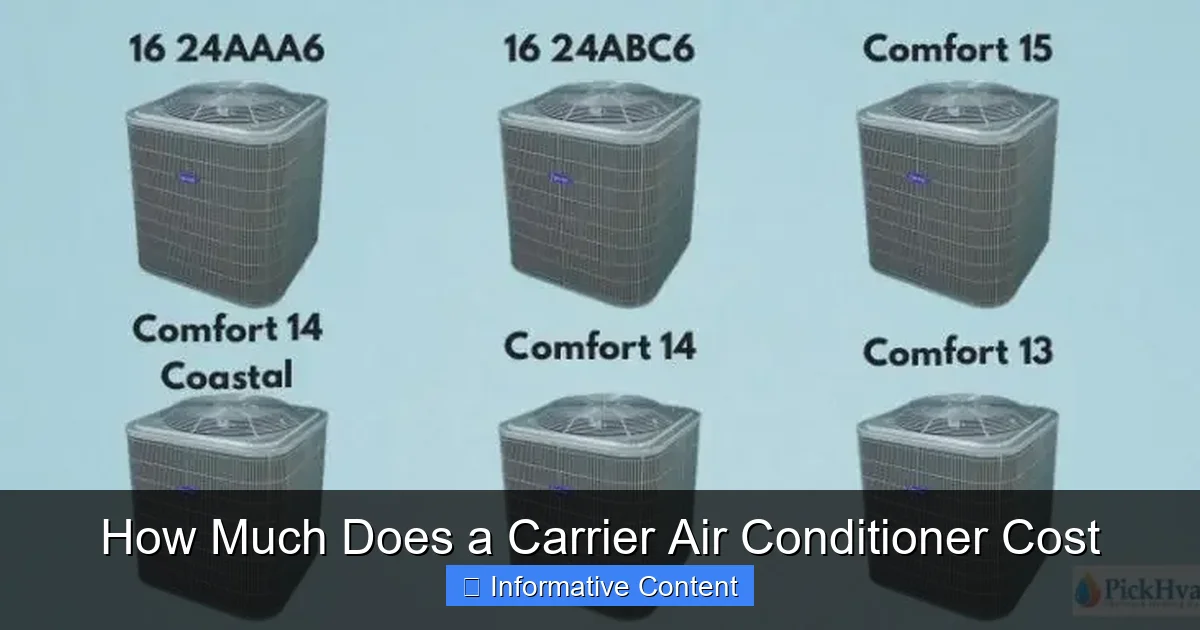
Carrier air conditioner costs vary widely based on model, size, efficiency, and installation complexity. On average, homeowners can expect to pay between $3,500 and $7,500 for a complete system, including professional installation. Higher-end models with advanced features may cost even more, but offer long-term energy savings and improved comfort.
Key Takeaways
- Unit prices range from $1,500 to $4,500: Basic Carrier models start around $1,500, while premium units with high SEER ratings and smart features can exceed $4,500.
- Installation adds $1,500 to $3,500: Labor, ductwork modifications, and electrical upgrades significantly impact the total cost.
- SEER rating affects price and savings: Higher SEER (Seasonal Energy Efficiency Ratio) units cost more upfront but reduce energy bills over time.
- Home size and climate matter: Larger homes or hotter regions require more powerful systems, increasing both unit and installation costs.
- Rebates and tax credits can offset costs: Federal, state, and utility incentives may reduce your out-of-pocket expense by hundreds of dollars.
- Maintenance and warranty influence long-term value: Extended warranties and regular servicing protect your investment and improve efficiency.
- Financing options are available: Many HVAC dealers offer payment plans to make Carrier systems more affordable.
📑 Table of Contents
- How Much Does a Carrier Air Conditioner Cost? A Complete Guide
- Understanding Carrier Air Conditioner Pricing
- Installation Costs: What to Expect
- Total Cost Breakdown: Real-World Examples
- Energy Efficiency and Long-Term Savings
- Rebates, Incentives, and Financing Options
- Choosing the Right Carrier Model for Your Home
- Maintenance and Long-Term Value
- Conclusion
How Much Does a Carrier Air Conditioner Cost? A Complete Guide
When it comes to keeping your home cool and comfortable during the sweltering summer months, few brands are as trusted as Carrier. Known for their reliability, innovation, and energy efficiency, Carrier air conditioners are a top choice for homeowners across the U.S. But with so many models, features, and pricing tiers, it’s natural to wonder: how much does a Carrier air conditioner really cost?
The truth is, there’s no one-size-fits-all answer. The total cost of a Carrier air conditioner depends on several factors—from the size and efficiency of the unit to the complexity of installation and your geographic location. While a basic model might start around $1,500 for the unit alone, a full system replacement with professional installation can easily reach $7,500 or more. In this guide, we’ll break down every cost component, explain what influences pricing, and help you make an informed decision that fits both your budget and your cooling needs.
Whether you’re replacing an old system or installing central air for the first time, understanding the full scope of expenses will help you avoid surprises and get the best value. We’ll cover everything from unit pricing and installation fees to energy savings and financing options. By the end, you’ll have a clear picture of what to expect when investing in a Carrier air conditioner.
Understanding Carrier Air Conditioner Pricing
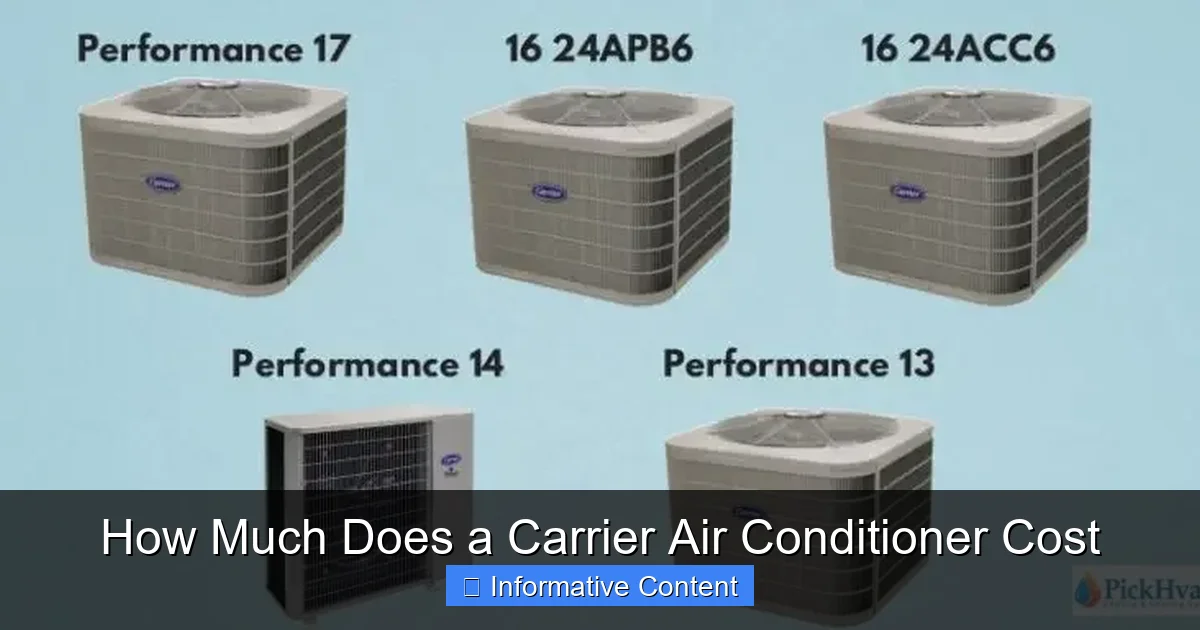
Visual guide about How Much Does a Carrier Air Conditioner Cost
Image source: pickhvac.com
Carrier offers a wide range of air conditioning systems, each designed to meet different needs, budgets, and performance expectations. Their product lineup includes single-stage, two-stage, and variable-speed models, with SEER ratings ranging from 13 to over 26. This variety means prices can vary significantly depending on the model you choose.
At the lower end of the spectrum, Carrier’s base models—like the Comfort Series—offer reliable cooling at an affordable price. These units typically have a SEER rating of 13 to 16 and use single-stage compressors, meaning they run at full capacity whenever they’re on. While they’re less energy-efficient than higher-end models, they’re a solid choice for budget-conscious homeowners or those in milder climates.
Mid-range models, such as the Performance Series, offer improved efficiency and comfort. With SEER ratings between 16 and 20, these units often feature two-stage compressors that adjust cooling output based on demand. This means they run at a lower setting most of the time, using less energy and providing more consistent temperatures. These models usually cost between $2,500 and $3,500 for the unit alone.
At the top of the line are Carrier’s Infinity Series air conditioners. These premium units boast SEER ratings of 20 and above, variable-speed compressors, and advanced features like smart thermostats, Wi-Fi connectivity, and noise-reduction technology. They’re designed for maximum comfort and energy savings, making them ideal for larger homes or hot climates. However, this performance comes at a price—Infinity models can cost $4,000 to $4,500 or more for the unit.
Factors That Influence Unit Cost
Several key factors determine how much you’ll pay for a Carrier air conditioner unit:
SEER Rating: The Seasonal Energy Efficiency Ratio (SEER) measures how efficiently a unit uses electricity over a cooling season. Higher SEER ratings mean better efficiency and lower energy bills, but also higher upfront costs. For example, a 16 SEER unit might cost $2,800, while a 24 SEER model could be $4,200.
Compressor Type: Single-stage compressors are the most affordable but run at full power every time they turn on. Two-stage compressors offer better efficiency and comfort by running at low or high settings. Variable-speed compressors are the most advanced, adjusting output in small increments for precise temperature control and maximum efficiency.
Size (Tonnage): Air conditioners are sized in tons, with one ton equaling 12,000 BTUs of cooling power. A typical home needs between 1.5 and 5 tons, depending on square footage, insulation, and climate. Larger units cost more—adding a ton can increase the price by $500 to $1,000.
Smart Features: Models with Wi-Fi connectivity, voice control compatibility, and advanced diagnostics tend to be more expensive. These features allow you to monitor and control your system remotely, receive maintenance alerts, and optimize performance.
Warranty: Carrier offers standard warranties, but extended coverage is available for an additional cost. Longer warranties often come with higher-end models and can add $200 to $500 to the price.
Installation Costs: What to Expect
While the unit price is a major part of the equation, installation is where many homeowners are surprised by the total cost. Professional installation is essential for safety, efficiency, and warranty validity, and it can add $1,500 to $3,500—or more—to your overall expense.
The cost of installation depends on several variables, including the complexity of the job, your home’s existing infrastructure, and local labor rates. A straightforward replacement of an old system with minimal ductwork changes might cost on the lower end, while a full retrofit or new construction installation can be significantly more expensive.
Labor and Permits
HVAC technicians charge by the hour, typically ranging from $75 to $150 per hour. A standard installation usually takes 6 to 10 hours, depending on the system size and complexity. This means labor alone can cost $600 to $1,500. In addition, most cities require permits for HVAC installations, which can add $100 to $300 to your bill.
Ductwork and Electrical Work
If your home has existing ductwork in good condition, the installer may only need to make minor modifications, keeping costs down. However, if ducts are damaged, undersized, or missing, repairs or replacements can add $500 to $2,000. Similarly, older homes may need electrical upgrades—such as a new circuit breaker or upgraded wiring—to support a modern air conditioner. These upgrades can cost $300 to $1,000.
Refrigerant Lines and Condenser Pad
New refrigerant lines, insulation, and a concrete or composite condenser pad are often required. These materials typically cost $200 to $500, depending on the length of the lines and the type of pad used.
Additional Components
Some installations require extra components like a new thermostat, disconnect switch, or line set covers. A smart thermostat, for example, can add $200 to $400 to the total cost but offers long-term convenience and energy savings.
Geographic Location
Labor and material costs vary by region. Installing a Carrier air conditioner in a high-cost city like San Francisco or New York may cost 20% to 30% more than in a rural area. Always get multiple quotes from local, licensed HVAC contractors to compare pricing.
Total Cost Breakdown: Real-World Examples
To give you a clearer picture, let’s look at a few real-world scenarios based on average costs across the U.S.
Example 1: Basic Replacement in a 1,500-Square-Foot Home
– Home size: 1,500 sq. ft.
– Climate: Moderate (e.g., Midwest)
– Existing ductwork: Good condition
– Unit: Carrier Comfort 16 SEER, 2.5 tons
– Unit cost: $2,200
– Installation: $1,800 (labor, permits, minor ductwork)
– Total cost: $4,000
This is a typical scenario for a mid-sized home with an aging system. The homeowner gets reliable cooling with moderate efficiency and pays a reasonable price.
Example 2: High-Efficiency Upgrade in a 2,500-Square-Foot Home
– Home size: 2,500 sq. ft.
– Climate: Hot and humid (e.g., Florida)
– Existing ductwork: Needs sealing and insulation
– Unit: Carrier Infinity 20 SEER, 4 tons
– Unit cost: $4,300
– Installation: $3,200 (labor, duct sealing, electrical upgrade, smart thermostat)
– Total cost: $7,500
Here, the homeowner invests in a high-efficiency system to reduce energy bills and improve comfort in a larger, hotter home. The upfront cost is higher, but the long-term savings are significant.
Example 3: New Construction Installation
– Home size: 3,000 sq. ft.
– Climate: Hot (e.g., Arizona)
– Ductwork: None (new build)
– Unit: Carrier Performance 18 SEER, 5 tons
– Unit cost: $3,800
– Installation: $4,000 (full ductwork, electrical, permits, thermostat)
– Total cost: $7,800
In new construction, the lack of existing infrastructure increases installation costs. However, the system is designed specifically for the home, ensuring optimal performance and efficiency.
Energy Efficiency and Long-Term Savings
While Carrier air conditioners may have a higher upfront cost than some competitors, their energy efficiency can lead to substantial savings over time. The U.S. Department of Energy estimates that upgrading from a 10 SEER to a 16 SEER unit can reduce cooling costs by up to 30%.
Let’s say your current system uses $600 per year in electricity. Upgrading to a 16 SEER Carrier unit could save you $180 annually. Over 10 years, that’s $1,800 in savings—enough to offset a significant portion of the initial investment.
Higher SEER models offer even greater savings. A 20 SEER unit could cut your cooling costs by 40% or more, especially in hot climates where the AC runs frequently. Additionally, many utility companies offer rebates for high-efficiency systems. For example, a $500 rebate on a $7,000 system reduces your net cost to $6,500.
Calculating Your Payback Period
To determine how long it will take to recoup your investment, use this simple formula:
Payback Period = (Upgrade Cost) ÷ (Annual Energy Savings)
For example:
– Upgrade cost: $2,000 (difference between old and new system)
– Annual savings: $200
– Payback period: 10 years
If the payback period is less than the expected lifespan of the unit (typically 15–20 years), the upgrade is financially sound.
Environmental Benefits
Higher efficiency also means lower carbon emissions. By reducing energy consumption, you’re not only saving money—you’re helping the environment. Carrier’s most efficient models use eco-friendly refrigerants and are designed to minimize environmental impact.
Rebates, Incentives, and Financing Options
The good news is that there are several ways to reduce the cost of a Carrier air conditioner, from government incentives to dealer financing.
Federal and State Tax Credits
The Inflation Reduction Act of 2022 includes tax credits for energy-efficient home improvements. As of 2023, you may be eligible for a tax credit of up to 30% of the cost of a qualifying air conditioner, with a maximum credit of $600. To qualify, the unit must meet specific efficiency standards (typically 16 SEER or higher).
Utility Company Rebates
Many electric and gas utilities offer rebates for installing high-efficiency HVAC systems. These can range from $100 to $500 or more, depending on your location and the unit’s SEER rating. Check with your local utility provider or visit their website for current programs.
Manufacturer and Dealer Promotions
Carrier and its authorized dealers often run seasonal promotions, especially in the spring and fall. These may include discounts, free smart thermostats, or extended warranties. Signing up for dealer newsletters or following Carrier on social media can help you stay informed.
Financing Plans
If you can’t pay the full amount upfront, many HVAC companies offer financing options with low or no interest for qualified buyers. For example, a $6,000 system might be financed over 36 months at 0% APR, resulting in monthly payments of $167. Always read the fine print and compare offers to avoid high interest rates.
Choosing the Right Carrier Model for Your Home
With so many options available, selecting the right Carrier air conditioner can feel overwhelming. Here are some tips to help you make the best choice:
1. Get a Professional Load Calculation: Don’t rely on square footage alone. A certified HVAC technician should perform a Manual J load calculation to determine the correct size based on your home’s insulation, windows, orientation, and local climate.
2. Match Efficiency to Your Climate: If you live in a hot, humid area, invest in a higher SEER model for maximum savings. In milder climates, a mid-range unit may be sufficient.
3. Consider Your Budget: Balance upfront cost with long-term savings. A more efficient system may cost more now but pay for itself in energy savings.
4. Think About Comfort Features: Variable-speed models offer quieter operation, better humidity control, and more consistent temperatures. If comfort is a priority, consider upgrading.
5. Check Warranty Coverage: Carrier offers a 10-year compressor warranty on most models. Extended warranties are available and can provide peace of mind.
6. Read Reviews and Ask for Recommendations: Talk to friends, family, or online reviewers who own Carrier systems. Real-world feedback can help you avoid common pitfalls.
Maintenance and Long-Term Value
Investing in a Carrier air conditioner is just the first step. To protect your investment and ensure optimal performance, regular maintenance is essential.
Annual Tune-Ups
Schedule professional maintenance at least once a year, ideally before the cooling season begins. A technician will clean coils, check refrigerant levels, inspect electrical connections, and test system performance. This service typically costs $100 to $200 and can prevent costly repairs.
DIY Maintenance
You can also do some maintenance yourself:
– Replace air filters every 1–3 months
– Keep the outdoor unit clear of debris
– Clean the condenser coils with a garden hose (when the unit is off)
– Check thermostat settings and batteries
Extended Warranties
Carrier offers extended warranty plans that cover parts and labor beyond the standard warranty. These plans can cost $300 to $600 but provide protection against unexpected breakdowns.
Lifespan and Resale Value
A well-maintained Carrier air conditioner can last 15 to 20 years. Additionally, a high-efficiency HVAC system can increase your home’s resale value, making it a smart long-term investment.
Conclusion
So, how much does a Carrier air conditioner cost? The answer depends on your specific needs, but most homeowners can expect to pay between $3,500 and $7,500 for a complete system, including installation. While the upfront cost may seem high, the long-term benefits—lower energy bills, improved comfort, and increased home value—make it a worthwhile investment.
By understanding the factors that influence pricing, exploring rebates and financing, and choosing the right model for your home, you can make a smart, informed decision. Carrier’s reputation for quality and innovation ensures that your investment will deliver reliable cooling for years to come.
Remember, the cheapest option isn’t always the best. Focus on value, efficiency, and long-term savings. With proper maintenance and care, your Carrier air conditioner will keep you cool, comfortable, and confident through every summer.
Frequently Asked Questions
What is the average cost of a Carrier air conditioner?
The average cost of a Carrier air conditioner, including installation, ranges from $3,500 to $7,500. This includes the unit price ($1,500–$4,500) and professional installation ($1,500–$3,500).
Are Carrier air conditioners worth the price?
Yes, Carrier air conditioners are known for their reliability, energy efficiency, and advanced features. While they may cost more upfront, the long-term savings on energy bills and reduced repair frequency make them a solid investment.
Can I install a Carrier air conditioner myself?
No, air conditioner installation should always be done by a licensed HVAC professional. Improper installation can void the warranty, reduce efficiency, and pose safety risks.
Do Carrier air conditioners qualify for tax credits?
Yes, many Carrier models with a SEER rating of 16 or higher qualify for federal tax credits under the Inflation Reduction Act, offering up to 30% of the cost back, with a maximum of $600.
How long do Carrier air conditioners last?
With proper maintenance, a Carrier air conditioner can last 15 to 20 years. Regular tune-ups and filter changes are key to maximizing lifespan.
What size Carrier air conditioner do I need?
The correct size depends on your home’s square footage, insulation, windows, and climate. A professional load calculation (Manual J) is required to determine the right tonnage, typically ranging from 1.5 to 5 tons.