
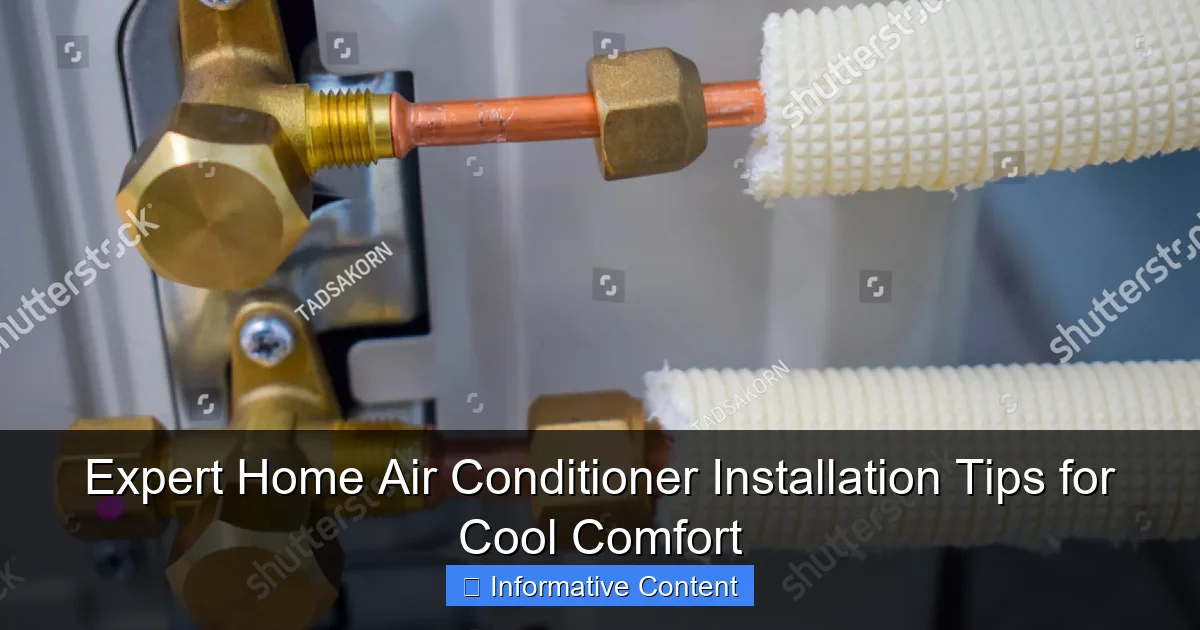
Featured image for home air conditioner installation
Image source: shutterstock.com
Proper home air conditioner installation is critical for peak efficiency, energy savings, and long-term comfort. Ensure correct sizing, optimal placement, and professional refrigerant handling to avoid costly repairs and poor performance. Following expert guidelines—like sealing ductwork and verifying electrical compatibility—guarantees a cooler, more reliable system from day one.
Key Takeaways
- Choose the right size: Proper BTU capacity ensures efficient cooling and energy savings.
- Prioritize professional installation: Experts ensure safety, compliance, and optimal system performance.
- Seal ducts tightly: Prevent air leaks to maximize efficiency and indoor comfort.
- Install near shaded areas: Reduces strain on the unit and improves cooling efficiency.
- Schedule annual maintenance: Extend lifespan and maintain peak AC performance yearly.
- Use a smart thermostat: Enhances control, comfort, and long-term energy savings.
📑 Table of Contents
- Why Proper Home Air Conditioner Installation Matters
- Understanding Your Air Conditioning System Before Installation
- Preparing for Installation: Tools, Permits, and Safety
- Step-by-Step Installation Process for Different AC Types
- Common Installation Mistakes and How to Avoid Them
- Post-Installation Tips: Maintenance and Troubleshooting
- Data Table: Average AC Installation Costs and Savings
- Final Thoughts: Enjoy Cool Comfort for Years to Come
Why Proper Home Air Conditioner Installation Matters
Imagine this: It’s the middle of July, the sun is blazing, and you’ve just spent the day outside. You rush inside, sweat dripping, only to find your air conditioner struggling to cool the house. It’s not blowing cold air, it’s making odd noises, and your energy bill is through the roof. Sound familiar? Chances are, the problem isn’t the AC unit itself—it’s the home air conditioner installation.
Getting your AC installed correctly isn’t just about flipping a switch and calling it a day. It’s about comfort, efficiency, and long-term savings. A poorly installed system can lead to higher energy bills, frequent breakdowns, and even a shorter lifespan for your unit. But with the right knowledge and preparation, you can ensure your AC delivers cool, consistent comfort for years to come. Whether you’re tackling a DIY project or hiring a pro, these expert tips will help you get it right the first time.
Understanding Your Air Conditioning System Before Installation
Know the Different Types of AC Units
Before you even think about installation, it’s crucial to understand what type of air conditioner you’re working with. Not all systems are created equal, and the installation process varies depending on the model. Here’s a quick breakdown:
Visual guide about home air conditioner installation
Image source: publicdomainpictures.net
- Central Air Conditioners: These are the most common in homes with ductwork. They use an outdoor compressor and an indoor air handler to cool the entire house.
- Mini-Split Ductless Systems: Great for homes without ducts or for cooling specific rooms. They have an outdoor compressor and one or more indoor air handlers mounted on walls or ceilings.
- Window Units: Ideal for single-room cooling. They’re self-contained and installed directly in a window or a wall opening.
- Portable ACs: These are temporary solutions that vent hot air through a window or wall. Not ideal for whole-home cooling but handy for renters or small spaces.
For example, if you live in an older home without ductwork, a mini-split system might be the best choice. But if you’re building a new home, central AC is likely the way to go. Knowing your system helps you plan the installation correctly.
Check Your Home’s Electrical and Ductwork Requirements
Air conditioners are power-hungry appliances. Before installing, make sure your electrical system can handle the load. A central AC unit, for instance, typically needs a dedicated 240-volt circuit. If your home has older wiring or a low-capacity electrical panel, you may need an upgrade—something a licensed electrician can help with.
Similarly, if you’re installing a central AC, your ductwork must be in good condition. Leaky or poorly sized ducts can waste up to 30% of your cooling energy. Before installation, inspect the ducts for gaps, kinks, or blockages. Seal leaks with mastic tape (not duct tape—it doesn’t hold up over time) and insulate ducts in unconditioned spaces like attics.
Pro tip: If you’re unsure about your home’s electrical or ductwork capacity, hire a professional to assess it. It’s better to spend a little extra upfront than face costly repairs later.
Calculate the Right AC Size for Your Home
One of the biggest mistakes homeowners make is choosing an AC unit that’s too big or too small for their space. A system that’s too large will cool your home too quickly, causing short cycling (frequent on/off cycles), which reduces efficiency and wears out the compressor. A system that’s too small will struggle to keep up, leading to high energy bills and constant running.
To find the right size, use the Manual J Load Calculation, which considers your home’s square footage, insulation, windows, and local climate. For example, a 1,500-square-foot home in a hot, humid climate like Florida will need a larger unit than the same-sized home in a milder area like Seattle.
As a rough guide, you’ll need about 20 BTUs (British Thermal Units) per square foot. But don’t rely on this rule alone—always get a professional load calculation for accuracy.
Preparing for Installation: Tools, Permits, and Safety
Gather the Right Tools and Materials
Whether you’re hiring a pro or doing it yourself, knowing what tools and materials you’ll need helps the process go smoothly. Here’s a checklist:
- Basic Tools: Wrenches, screwdrivers, pliers, level, tape measure, and a drill.
- Refrigeration Tools: Manifold gauge set, vacuum pump, and refrigerant scale (for handling refrigerant, which requires certification).
- Electrical Tools
- Safety Gear: Gloves, safety glasses, and a dust mask (especially if working with insulation or ductwork).
- Installation Materials: Mounting brackets, refrigerant lines, insulation, condensate drain line, and sealant.
If you’re hiring a pro, they’ll bring their own tools. But it’s still helpful to know what’s needed so you can verify they’re prepared. For DIYers, renting specialty tools like a vacuum pump can save money if you don’t already own them.
Obtain Necessary Permits and Inspections
Many areas require permits for HVAC installations, especially if you’re modifying ductwork or electrical systems. Skipping permits can lead to fines or issues when selling your home. Check with your local building department to see what’s required.
For example, in California, you’ll need a permit for central AC installations, and the system must pass an inspection to meet energy efficiency standards. In Texas, permits are often required for electrical and structural changes.
Pro tip: Keep copies of all permits and inspection reports. They’re proof of compliance and can be useful for warranty claims or future upgrades.
Prioritize Safety During Installation
Safety should always come first. Air conditioner installation involves electricity, refrigerants (which can be hazardous if mishandled), and working at heights (for outdoor units). Here are some key safety tips:
- Turn Off Power: Always shut off the circuit breaker before working on electrical connections. Use a voltage tester to confirm power is off.
- Handle Refrigerants Carefully: Refrigerants like R-410A are under high pressure and require EPA certification to handle. Never vent them into the air—it’s illegal and harmful to the environment.
- Use Proper Lifting Techniques: AC units are heavy. Use a dolly or ask for help to avoid back injuries.
- Wear Protective Gear: Safety glasses protect your eyes from debris, and gloves prevent cuts or burns.
Remember: If you’re unsure about any step, stop and call a professional. It’s not worth risking injury or damage to your home.
Step-by-Step Installation Process for Different AC Types
Installing a Central Air Conditioner
Central AC installation is a multi-step process that involves both indoor and outdoor components. Here’s how it works:
- Prepare the Outdoor Pad: Place a concrete or plastic pad on a level surface near your home. The pad should be at least 2-3 feet away from walls for airflow and service access.
- Install the Indoor Air Handler: This is usually in your attic, basement, or utility closet. Mount it securely, connect the refrigerant lines, and attach the condensate drain line (with a P-trap to prevent sewer gas from entering your home).
- Connect Ductwork: Attach the air handler to your home’s ductwork using flexible duct connectors. Seal all joints with mastic tape.
- Run Refrigerant Lines: Connect the indoor and outdoor units with copper refrigerant lines. Insulate the lines to prevent condensation and energy loss.
- Electrical Wiring: Connect the outdoor unit to a dedicated 240-volt circuit. Follow the manufacturer’s wiring diagram carefully.
- Charge the System: Use a manifold gauge set to add the correct amount of refrigerant. This step requires EPA certification.
Pro tip: After installation, run a “dry test” (without refrigerant) to check for leaks and electrical connections. Then, evacuate the system with a vacuum pump before charging it with refrigerant.
Installing a Mini-Split Ductless System
Mini-splits are easier to install than central ACs, but they still require precision. Here’s the process:
- Mount the Outdoor Unit: Place it on a stable, level surface with proper clearance (usually 12 inches on all sides).
- Drill a Hole for the Line Set: Run the refrigerant lines, drain line, and electrical cable through a 3-inch hole in the wall. Seal the hole with caulk or foam.
- Mount Indoor Air Handlers: Position them high on the wall (usually 6-8 feet up) for even air distribution. Use a level to ensure they’re straight.
- Connect Line Sets: Flare and connect the refrigerant lines, then insulate them. Connect the drain line to a nearby drain or use a condensate pump.
- Electrical Wiring: Connect the indoor and outdoor units with the provided wiring harness.
Example: A homeowner in Phoenix installed a 3-zone mini-split to cool their living room, kitchen, and master bedroom. By placing the indoor units strategically, they avoided hot spots and saved on energy costs.
Installing a Window Unit
Window ACs are the simplest to install, but they still require attention to detail:
- Choose the Right Window: The unit should fit snugly in a double-hung or slider window. Measure the window opening and compare it to the unit’s dimensions.
- Support the Unit: Use a support bracket (often included) to bear the unit’s weight. Never rely on the window sash alone.
- Seal Gaps: Use foam weatherstripping or the included side panels to seal gaps around the unit. This prevents hot air from leaking in.
- Drain Condensate: Ensure the unit’s drain pan is level so water flows outside. If the unit has a drain hose, direct it to a nearby drain.
Pro tip: Clean the unit’s filter monthly to maintain efficiency. A clogged filter can reduce airflow and strain the compressor.
Common Installation Mistakes and How to Avoid Them
Incorrect Refrigerant Charge
Adding too much or too little refrigerant is one of the most common mistakes. Overcharging can cause the compressor to overheat, while undercharging leads to poor cooling and higher energy bills. Always follow the manufacturer’s charge specifications and use a refrigerant scale for accuracy.
For example, a technician once added 30% more refrigerant than needed to a central AC, thinking it would improve cooling. Instead, the unit froze up and stopped working. After evacuating and recharging it correctly, the system worked perfectly.
Improper Drain Line Installation
The condensate drain line carries water away from your AC. If it’s clogged, sloped incorrectly, or not trapped, water can back up into your home, causing mold and damage. Always:
- Use a P-trap to prevent sewer gas from entering.
- Ensure a 1/4-inch per foot slope for proper drainage.
- Clean the drain line annually with a vinegar solution.
Ignoring Airflow and Clearance
AC units need proper airflow to function efficiently. Outdoor units should have at least 12 inches of clearance on all sides, and indoor units should be mounted away from furniture or curtains. Blocked airflow forces the system to work harder, reducing efficiency and lifespan.
Example: A homeowner placed their outdoor unit in a narrow side yard with shrubs blocking airflow. After trimming the shrubs and moving the unit slightly, their energy bills dropped by 15%.
Post-Installation Tips: Maintenance and Troubleshooting
Schedule Regular Maintenance
Just like a car, your AC needs regular tune-ups to stay in top shape. Here’s what to do:
- Change Filters Monthly: Dirty filters restrict airflow and reduce efficiency.
- Clean the Condenser Coil Annually: Use a garden hose to gently rinse off debris (don’t use a pressure washer—it can damage the fins).
- Check Refrigerant Levels Every 2-3 Years: Low levels indicate a leak that needs fixing.
- Inspect Ductwork for Leaks: Seal any gaps with mastic tape.
Troubleshoot Common Issues
Even with proper installation, AC problems can arise. Here’s how to handle common issues:
- Unit Won’t Turn On: Check the thermostat settings and circuit breaker.
- Blowing Warm Air: Could be a refrigerant leak, dirty coil, or frozen evaporator. Call a pro if it doesn’t improve after cleaning the filter.
- Strange Noises: Rattling may mean loose parts; grinding could signal a failing motor.
Track Energy Usage
After installation, monitor your energy bills. A well-installed AC should lower your cooling costs. If bills spike, check for issues like duct leaks or a malfunctioning thermostat.
Data Table: Average AC Installation Costs and Savings
| AC Type | Average Installation Cost | Annual Energy Savings vs. Old Unit | Typical Lifespan |
|---|---|---|---|
| Central AC | $3,500 – $7,500 | $150 – $300 | 12-15 years |
| Mini-Split Ductless | $2,000 – $5,000 per zone | $100 – $250 | 15-20 years |
| Window Unit | $150 – $500 (DIY) | $50 – $100 | 8-10 years |
Note: Costs vary by region, unit size, and labor rates. Energy savings depend on local electricity prices and climate.
Final Thoughts: Enjoy Cool Comfort for Years to Come
Installing a home air conditioner isn’t just about beating the heat—it’s about creating a comfortable, healthy living space. By understanding your system, preparing properly, and avoiding common mistakes, you’ll get the most out of your investment. Whether you’re a DIYer or hiring a pro, these tips will help you achieve reliable, efficient cooling.
Remember, a well-installed AC doesn’t just cool your home. It saves you money, reduces your carbon footprint, and gives you peace of mind. So take the time to get it right. Your future self—and your energy bill—will thank you.
Frequently Asked Questions
What should I look for in a professional home air conditioner installation service?
Choose a licensed, insured contractor with experience in home air conditioner installation and good customer reviews. Verify they perform load calculations to ensure proper sizing for your space.
How long does a typical home air conditioner installation take?
Most installations take 4-8 hours for a single-day completion, depending on system complexity and ductwork needs. Larger or multi-zone systems may require additional time.
Can I install a home air conditioner myself to save money?
DIY installation voids warranties and risks improper refrigerant handling, code violations, and safety hazards. Always hire a certified HVAC technician for reliable home air conditioner installation.
What factors affect the cost of home air conditioner installation?
Key cost drivers include unit size (tonnage), SEER rating, ductwork modifications, electrical upgrades, and regional labor rates. Energy-efficient models may have higher upfront costs but lower long-term bills.
Do I need permits for air conditioner installation in my home?
Most municipalities require permits for HVAC installations to ensure code compliance. Reputable installers handle permit applications and inspections as part of their service.
How do I prepare my home for air conditioner installation day?
Clear access to the indoor/outdoor units, remove furniture or debris blocking work areas, and confirm power to the site. Discuss noise expectations and parking logistics with your installer beforehand.