
GE wall air conditioner filters are essential for maintaining clean, efficient cooling and improving indoor air quality. Designed to trap dust, allergens, and debris, these filters ensure optimal airflow and extend your unit’s lifespan—regular replacement is key to peak performance. Upgrade to genuine GE filters for a healthier, more comfortable home.
Key Takeaways
- Replace filters regularly to maintain optimal airflow and cooling efficiency.
- Check filter size using your GE model number for a perfect fit.
- Clean reusable filters monthly with mild soap and water.
- Upgrade to HEPA filters for superior allergen and particle removal.
- Inspect filters monthly for dust buildup and damage.
- Use genuine GE filters to ensure compatibility and performance.
📑 Table of Contents
- Why Your GE Wall Air Conditioner Filter Matters More Than You Think
- How GE Wall Air Conditioner Filters Work (And Why They’re Essential)
- Types of GE Wall Air Conditioner Filters: Which One Is Right for You?
- How to Find the Right Filter for Your GE Wall Air Conditioner
- Step-by-Step Guide to Replacing Your GE Wall Air Conditioner Filter
- Maintenance Tips to Keep Your GE Wall AC Running Smoothly
- Common Mistakes to Avoid with GE Wall Air Conditioner Filters
- Final Thoughts: Breathe Easy with a Clean Filter
Why Your GE Wall Air Conditioner Filter Matters More Than You Think
Picture this: It’s the middle of July, the sun is blazing, and you’ve just cranked up your GE wall air conditioner to escape the heat. The cool air starts flowing—but wait. Is it really clean air? Or is it just chilled dust, pollen, and who-knows-what-else circulating through your living room?
Most of us treat air conditioner filters like an afterthought—something to change “maybe once in a while.” But here’s the truth: your GE wall air conditioner filter is the unsung hero of indoor air quality. It’s not just about keeping your AC running smoothly (though that’s important too). It’s about breathing easier, reducing allergies, and even saving money on energy bills. A clean filter means your unit doesn’t have to work as hard, which translates to lower electricity usage and fewer repair calls. And let’s be honest—nobody wants to spend their summer waiting for a technician because their AC choked on a clogged filter.
In this ultimate guide, we’ll walk you through everything you need to know about GE wall air conditioner filters—from how they work and why they matter, to how to choose, install, and maintain them like a pro. Whether you’re a first-time homeowner or a seasoned DIYer, this guide will help you keep your cool—and your air—crisp, clean, and comfortable all season long.
How GE Wall Air Conditioner Filters Work (And Why They’re Essential)
At first glance, your GE wall air conditioner filter might seem like a simple mesh screen tucked behind a plastic cover. But don’t let its humble appearance fool you. This small component plays a massive role in both your comfort and your health.
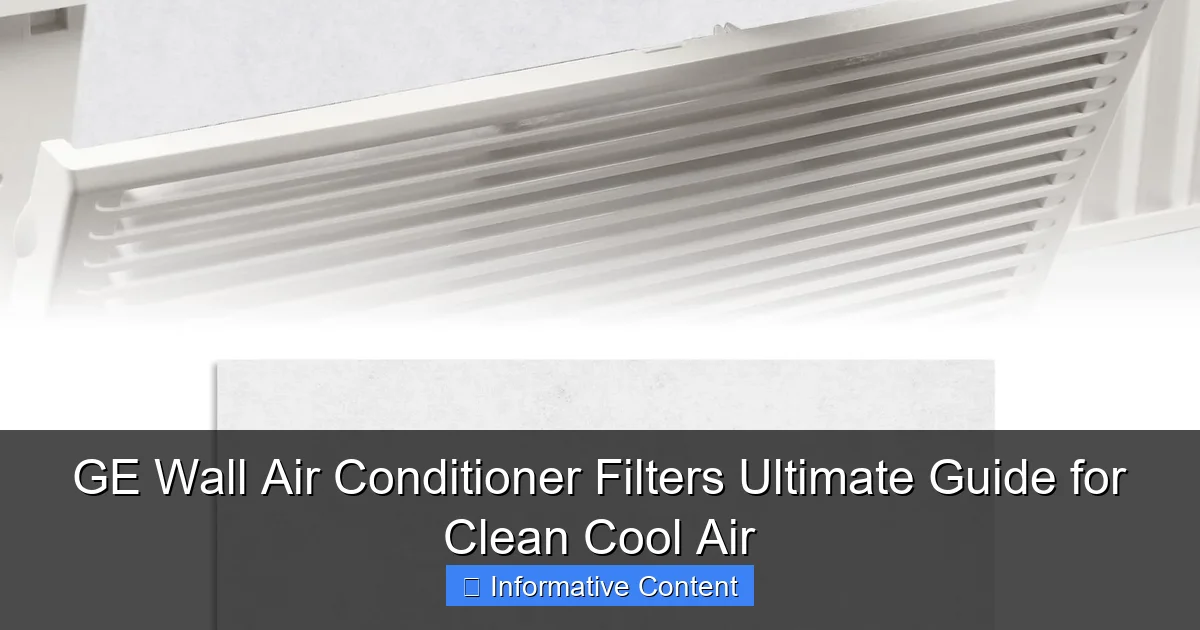
Visual guide about ge wall air conditioner filters
Image source: m.media-amazon.com
The Science Behind the Filter
Your GE wall AC unit pulls warm air from your room through the front grille. Before that air gets cooled and sent back into your space, it passes through the filter. The filter traps airborne particles like dust, pet dander, pollen, mold spores, and even some bacteria. Think of it as a bouncer at a club—only the clean air gets through, while the unwanted guests get stopped at the door.
Over time, these trapped particles build up, forming a layer that restricts airflow. When airflow drops, your AC has to work harder to pull air through, which increases energy consumption and can lead to overheating or system failure. In fact, the U.S. Department of Energy estimates that a dirty filter can increase your energy usage by up to 15%. That’s like paying extra just because you forgot to clean a piece of plastic!
Health Benefits You Can’t Ignore
If you or someone in your household suffers from allergies, asthma, or respiratory issues, a clean filter isn’t just a nice-to-have—it’s a necessity. According to the EPA, indoor air can be 2 to 5 times more polluted than outdoor air, especially in tightly sealed homes. A high-quality GE wall air conditioner filter can significantly reduce airborne irritants, helping you breathe easier and sleep better.
For example, Sarah from Austin, Texas, noticed her son’s nighttime coughing improved dramatically after she started changing her GE wall AC filter every month. “I didn’t realize how much dust was building up,” she said. “Now I set a phone reminder—no excuses!”
Protecting Your Investment
Your GE wall air conditioner is a significant investment. Regular filter maintenance helps protect that investment by preventing dust and debris from accumulating on internal components like the evaporator coil and fan motor. A clean system runs more efficiently, lasts longer, and avoids costly repairs. In short: a little effort now saves a lot of hassle later.
Types of GE Wall Air Conditioner Filters: Which One Is Right for You?
Not all filters are created equal. GE offers several types of filters designed for different needs, environments, and budgets. Understanding the differences will help you choose the best option for your home.
Standard Fiberglass Filters
These are the most basic and affordable filters. Made from layered fiberglass fibers, they’re designed to capture large particles like dust and lint. They’re great for general use in low-pollen environments or homes without pets or allergy sufferers.
Pros: Inexpensive, widely available, easy to replace.
- Cost: $2–$5 per filter
- Lifespan: 1 month
- Best for: Occasional use, minimal allergens
Cons: They don’t capture smaller particles like pollen or pet dander effectively. If you’re looking for real air purification, these won’t cut it.
Pleated Filters
Pleated filters are a step up in performance and durability. Made from polyester or cotton paper, they have a larger surface area due to their folded design, which allows them to trap more particles without restricting airflow as much.
Pros: Better filtration, longer lifespan, improved airflow.
- Cost: $8–$15 per filter
- Lifespan: 2–3 months
- Best for: Homes with pets, moderate allergy concerns
Cons: Slightly more expensive, may need to check compatibility with your specific GE model.
High-Efficiency Particulate Air (HEPA) Filters
HEPA filters are the gold standard in air filtration. They can capture 99.97% of particles as small as 0.3 microns—including mold spores, smoke, and even some viruses. However, not all GE wall air conditioners are compatible with true HEPA filters due to airflow restrictions.
Pros: Exceptional air cleaning, ideal for severe allergies or asthma.
- Cost: $20–$40 per filter
- Lifespan: 3–6 months
- Best for: High-risk households, urban areas with pollution
Cons: Higher cost, may require a compatible adapter or modified unit. Always check your owner’s manual before purchasing.
Washable and Reusable Filters
These eco-friendly filters are made from durable mesh or electrostatic materials that can be rinsed and reused multiple times. They’re a great option if you’re looking to reduce waste and save money over time.
Pros: Cost-effective long-term, environmentally friendly, low maintenance.
- Cost: $15–$30 (one-time purchase)
- Lifespan: 2–5 years with proper care
- Best for: Budget-conscious, eco-friendly households
Cons: Require regular cleaning (every 2–4 weeks), may not filter as finely as disposable options.
Electrostatic Filters
These filters use static electricity to attract and trap particles. They’re often washable and come in both disposable and reusable forms. They’re especially effective at capturing pet hair and dander.
Pros: Great for pet owners, low resistance to airflow.
- Cost: $10–$25
- Lifespan: 1–3 months (disposable), 2+ years (reusable)
- Best for: Homes with pets, moderate to high dust levels
Cons: Can lose effectiveness if not cleaned properly, may produce small amounts of ozone (check for certified low-ozone models).
How to Find the Right Filter for Your GE Wall Air Conditioner
Choosing the right filter isn’t just about picking the most expensive one. It’s about matching the filter to your specific GE model, your home environment, and your personal needs. Here’s how to get it right.
Check Your Owner’s Manual
The first step is always to consult your GE wall air conditioner’s owner’s manual. It will list the exact filter size and type recommended for your model. Common sizes include 14” x 14”, 16” x 20”, and 20” x 25”, but sizes vary widely.
For example, the GE AHY08LZ model uses a 14” x 14” x 1” pleated filter, while the GE AHY12LZ requires a 16” x 20” x 1” filter. Using the wrong size can lead to gaps that allow unfiltered air to bypass the filter entirely.
Use GE’s Online Filter Finder
GE offers a handy online tool on their website where you can enter your model number and get a list of compatible filters. This is especially useful if you’ve lost your manual or bought a used unit.
Simply go to the GE Appliances website, navigate to the “Parts & Accessories” section, and use the filter finder. You’ll get recommendations for both GE-branded and third-party compatible filters.
Consider Your Home Environment
Think about what’s in your air. Do you have pets? Live near a busy road? Suffer from seasonal allergies? These factors should influence your choice.
- Pet owners: Choose pleated or electrostatic filters to capture hair and dander.
- Allergy sufferers: Opt for high-MERV pleated or HEPA-compatible filters.
- Urban dwellers: Consider filters with activated carbon layers to reduce odors and pollutants.
- Low-maintenance seekers: Washable filters can save time and money.
MERV Ratings Explained
MERV (Minimum Efficiency Reporting Value) is a scale from 1 to 16 that measures a filter’s ability to capture particles. Higher MERV ratings mean better filtration.
| MERV Rating | Particle Size Captured | Best For |
|---|---|---|
| 1–4 | > 10 microns (dust, lint) | Basic protection, minimal allergens |
| 5–8 | 3–10 microns (pollen, mold spores) | Homes with pets, moderate allergies |
| 9–12 | 1–3 microns (dust mites, pet dander) | Severe allergies, urban areas |
| 13–16 | < 1 micron (bacteria, smoke) | Hospitals, high-risk environments |
For most homes, a MERV 8–11 filter offers the best balance of performance and airflow. Avoid going too high (MERV 13+) unless your unit is designed for it, as it can restrict airflow and strain the motor.
Step-by-Step Guide to Replacing Your GE Wall Air Conditioner Filter
Replacing your GE wall air conditioner filter is one of the easiest maintenance tasks you can do—yet so many people skip it. With just a few minutes of effort, you can dramatically improve your air quality and system performance. Here’s how to do it right.
Step 1: Turn Off the Power
Safety first! Before you touch anything, turn off the power to your air conditioner. You can do this by switching off the unit at the thermostat or flipping the corresponding circuit breaker. This prevents accidental startup while you’re working.
Step 2: Locate the Filter
Most GE wall air conditioners have the filter behind the front panel. Look for a latch or screws on the top or side of the unit. Gently pull or unscrew the panel to reveal the filter slot.
Some models, like the GE AHY series, have a slide-out filter tray. Others require you to remove the entire front grille. Refer to your manual if you’re unsure.
Step 3: Remove the Old Filter
Carefully slide out the old filter. Take note of how it’s positioned—most filters have an arrow indicating airflow direction. This ensures you install the new one correctly.
If the filter is washable, rinse it under cool water until the water runs clear. Let it air dry completely before reinserting. Never reinstall a wet filter—it can promote mold growth.
Step 4: Insert the New Filter
Slide the new filter into the slot, making sure the airflow arrow points toward the unit (usually inward). Push it in until it sits snugly. There should be no gaps around the edges.
If the filter doesn’t fit perfectly, double-check the size. A loose filter allows unfiltered air to bypass the system, reducing efficiency.
Step 5: Reattach the Front Panel
Secure the front panel or grille back in place. Make sure all latches or screws are tight to prevent rattling or air leaks.
Step 6: Restore Power and Test
Turn the power back on and set your thermostat to cool. Listen for normal operation and feel the air coming out—it should be cool and clean.
Pro Tips for Success
- Set a reminder: Use your phone calendar to remind you to check the filter every month.
- Keep spares: Buy a pack of filters so you always have one on hand.
- Inspect monthly: Even if you don’t replace it every month, check it regularly. In dusty environments, you may need to change it more often.
- Don’t force it: If the filter doesn’t slide in easily, it’s probably the wrong size.
Maintenance Tips to Keep Your GE Wall AC Running Smoothly
Replacing the filter is just one part of keeping your GE wall air conditioner in top shape. Regular maintenance ensures long-term performance, energy efficiency, and cleaner air.
Clean the Exterior and Vents
Dust and debris can accumulate on the exterior grille and vents, reducing airflow. Use a soft brush or vacuum attachment to gently clean these areas every few months.
Check the Condensate Drain
Your AC removes moisture from the air, which drains out through a small tube. If this drain gets clogged, water can back up and cause damage. Inspect it periodically and flush it with a mixture of water and vinegar to prevent mold.
Inspect the Coils
The evaporator and condenser coils can collect dust over time, reducing efficiency. If you’re comfortable doing so, use a coil cleaner spray and a soft brush to clean them. Otherwise, hire a professional once a year.
Schedule Professional Maintenance
Even with regular DIY care, it’s wise to have a technician inspect your unit annually. They can check refrigerant levels, test electrical connections, and ensure everything is running safely and efficiently.
Upgrade to a Smart Thermostat
Pair your GE wall AC with a smart thermostat to monitor usage, set schedules, and receive filter change reminders. Some models even track indoor air quality and suggest when to replace the filter.
Common Mistakes to Avoid with GE Wall Air Conditioner Filters
Even the best intentions can go wrong if you’re not careful. Here are some common pitfalls to avoid when dealing with your GE wall air conditioner filter.
Using the Wrong Size
A filter that’s too small leaves gaps. One that’s too big won’t fit. Always double-check the dimensions before buying.
Ignoring the Airflow Arrow
Installing the filter backward reduces efficiency and can damage the unit. Always follow the arrow direction.
Waiting Too Long to Replace
A clogged filter forces your AC to work harder, increasing wear and energy bills. Stick to a regular schedule—monthly for basic filters, every 2–3 months for pleated.
Buying Cheap Knockoffs
While third-party filters can save money, low-quality ones may not fit properly or filter effectively. Stick to reputable brands or GE-certified replacements.
Forgetting to Turn Off Power
Always shut off power before replacing the filter to avoid electrical shock or accidental startup.
Final Thoughts: Breathe Easy with a Clean Filter
Your GE wall air conditioner filter might be small, but its impact is huge. From improving indoor air quality and reducing allergies to lowering energy bills and extending the life of your unit, a clean filter is one of the simplest and most effective ways to keep your home comfortable.
By understanding the different types of filters, knowing how to choose and install the right one, and sticking to a regular maintenance routine, you’ll enjoy cleaner, cooler air all season long. Whether you’re a pet parent, an allergy sufferer, or just someone who values a well-running home, taking care of your filter is a small step with big rewards.
So the next time you feel that cool breeze from your GE wall AC, take a deep breath—and know that it’s not just refreshing. It’s clean.
Frequently Asked Questions
How often should I replace my GE wall air conditioner filter?
For optimal performance, replace your GE wall air conditioner filter every 30-60 days, especially during peak usage seasons. Homes with pets or allergy sufferers may need more frequent changes to maintain clean air quality.
What type of filter fits my GE wall air conditioner model?
Most GE wall AC units use standard 1-inch thick filters, but exact dimensions vary by model. Check your owner’s manual or measure your current filter to ensure you buy the correct GE wall air conditioner filters replacement size.
Can I wash and reuse my GE wall air conditioner filter?
Only reusable/washable filters (typically made of foam or aluminum mesh) can be cleaned with mild soap and water. Disposable fiberglass or pleated filters should always be replaced, not washed, to avoid mold and efficiency issues.
Why is my GE wall AC unit not cooling efficiently?
A dirty or clogged filter is a common cause of reduced cooling performance. Regularly replacing your GE wall air conditioner filters ensures proper airflow and prevents strain on the system.
Are HEPA filters compatible with GE wall air conditioners?
Most GE wall AC units aren’t designed for true HEPA filters due to airflow restrictions, but high-efficiency pleated filters with MERV 8-13 ratings offer excellent allergen capture while maintaining compatibility.
Where can I buy genuine GE wall air conditioner filters?
GE wall air conditioner filters are available through appliance parts retailers, Amazon, Home Depot, and directly from GE Appliance Parts. Always verify filter compatibility with your specific AC model number.