
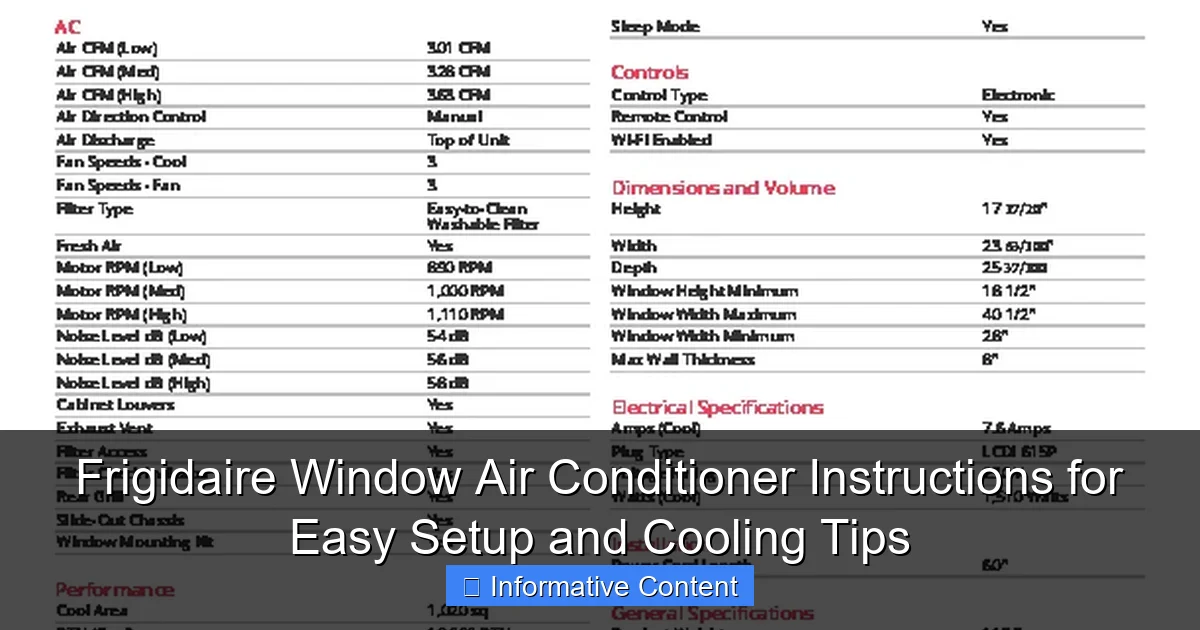
Featured image for frigidaire window air conditioner instructions
Image source: device.report
Follow the included Frigidaire window air conditioner instructions for a quick, secure installation to ensure optimal performance and energy efficiency. Key steps include properly sealing the unit, leveling it to prevent leaks, and using the correct electrical outlet—critical for both safety and cooling effectiveness. These simple guidelines help you stay cool all summer with minimal hassle.
Key Takeaways
- Read the manual first: Always review Frigidaire’s instructions before setup to avoid installation errors.
- Secure the unit properly: Use side panels and brackets to prevent air leaks and ensure stability.
- Clean the filter monthly: Maintain airflow and efficiency by washing the reusable filter regularly.
- Optimize thermostat settings: Set 72–78°F for comfort and energy savings during peak hours.
- Seal gaps with foam tape: Block hot air entry by sealing window frame edges tightly.
- Use “Eco Mode” wisely: Activate energy-saving mode when room reaches desired temperature.
📑 Table of Contents
- Why a Frigidaire Window Air Conditioner Might Be Your Summer Hero
- Unboxing and Initial Setup: Getting Your Frigidaire Ready for Action
- Installation: Securing the AC and Ensuring Safety
- Operating Your Frigidaire: Controls, Modes, and Daily Use
- Maintenance and Cleaning: Keeping Your Frigidaire Running Smoothly
- Energy Efficiency and Cooling Tips: Save Money and Stay Comfortable
- When to Call a Pro vs. DIY: Knowing Your Limits
Why a Frigidaire Window Air Conditioner Might Be Your Summer Hero
Picture this: It’s the middle of July. The sun is blazing, the humidity is thick enough to chew, and your apartment feels like a sauna. You’re sweating through your shirt, your dog is panting on the floor, and even the ice cubes in your glass are giving up the fight. That’s when a reliable window air conditioner becomes more than just an appliance—it becomes your personal climate savior. And if you’ve landed here, chances are you’ve either just bought a Frigidaire window air conditioner or are seriously considering one. Either way, you’re in the right place.
Frigidaire has been a trusted name in home cooling for decades. Their window units are known for being user-friendly, energy-efficient, and surprisingly quiet—especially for the price. But like any appliance, getting the most out of your Frigidaire window air conditioner starts with understanding how to set it up properly and use it wisely. Whether you’re a first-time AC owner or a seasoned pro looking for a refresher, this guide is packed with Frigidaire window air conditioner instructions that are clear, practical, and designed to keep you cool without the headaches. No confusing manuals, no jargon—just real talk from someone who’s been there, done that, and still remembers the relief of that first blast of cold air.
Unboxing and Initial Setup: Getting Your Frigidaire Ready for Action
So you’ve got your Frigidaire window AC home. The box is heavy, the excitement is real. Before you rip it open and start plugging things in, let’s take a beat. A little prep now saves a lot of frustration later. Trust me—I learned this the hard way when I once installed an AC with a bent mounting rail because I rushed the unboxing. Oops.
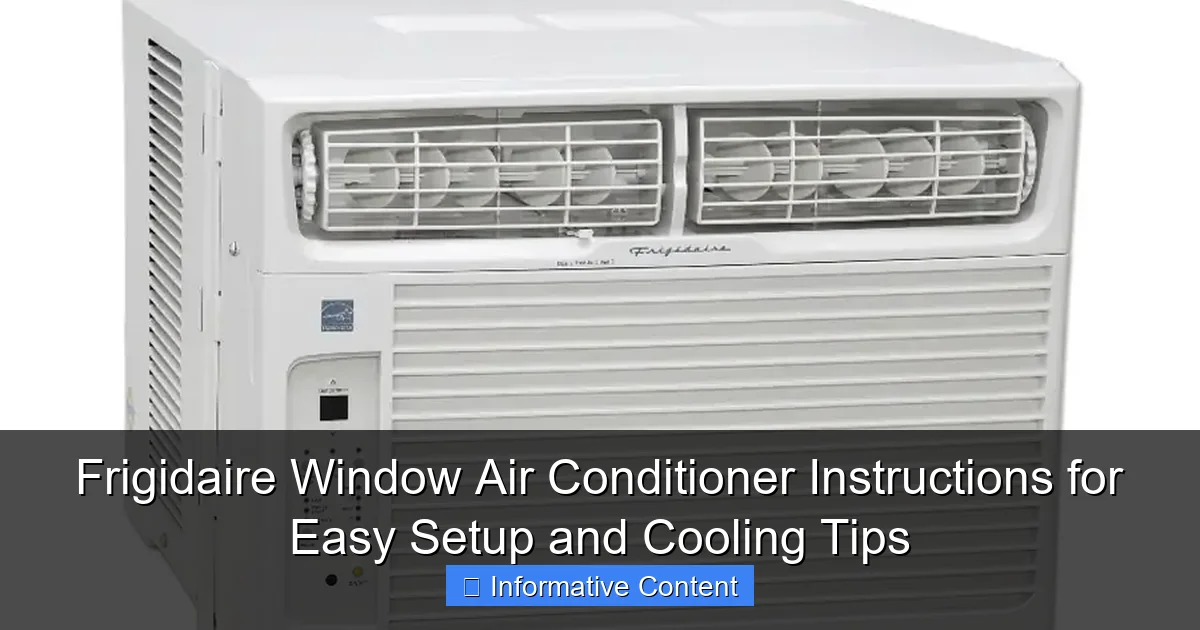
Visual guide about frigidaire window air conditioner instructions
Image source: mobileimages.lowes.com
Step 1: Choose the Right Window (Yes, It Matters)
Not all windows are created equal. Frigidaire window units work best with double-hung windows (the kind that slide up and down). Make sure your window opens at least 16 inches vertically—this is a common requirement across models. Measure the width, too. The unit should fit snugly between the window frame with room for the side panels (more on those in a sec).
Pro tip: If your window is unusually wide or has a deep sill, check your model’s manual for minimum and maximum window dimensions. Some Frigidaire models (like the FFRA0511R1) are designed for smaller windows, while others (like the FFRE123WAE) need more space.
Step 2: Unbox with Care
Open the box from the top and lay it on a soft surface (like a towel or blanket) to avoid scratching the unit. Remove all packaging materials—styrofoam, plastic wrap, cardboard inserts. Don’t toss the side panels or mounting hardware just yet! These are essential for a secure fit.
- Check the contents: You should find the AC unit, two accordion-style side panels, mounting rails, screws, a foam seal, and the user manual. If anything’s missing, contact Frigidaire support before proceeding.
- Inspect the unit: Look for dents, loose parts, or damaged cords. Even a small dent on the condenser fins can reduce efficiency.
Step 3: Install the Side Panels and Rails
This is where many people go wrong. The side panels aren’t just for looks—they seal the gap between the AC and the window, keeping hot air out and cold air in. Here’s how to do it right:
- Attach the mounting rails to the bottom of the AC using the provided screws. These help distribute weight and prevent sagging.
- Insert the side panels into the grooves on the sides of the unit. Most Frigidaire models use a “slide-in” design. You might need to gently bend them to fit.
- Extend the panels to match your window width. Secure them with screws at the top and bottom.
Real talk: I once skipped the foam seal because “it looked fine without it.” Big mistake. My energy bill jumped, and the room never got as cool as it should have. Don’t be like me. Use the foam seal between the window sash and the unit to block air leaks.
Installation: Securing the AC and Ensuring Safety
Now comes the big moment: installing the unit. This isn’t just about sliding it into the window—it’s about making sure it’s safe, stable, and won’t fall out during a summer storm (yes, that’s a real concern).
Step 1: Open the Window and Clean the Area
Wipe down the window sill and frame. Remove any dust, debris, or old caulk. A clean surface ensures a tight seal and prevents the unit from shifting.
Step 2: Position the Unit
With a helper (seriously, don’t try this alone), carefully lift the AC and slide it into the window. The unit should rest on the sill, with the side panels flush against the frame. The front of the AC should be slightly lower than the back to allow condensation to drain outside.
Critical: Most Frigidaire models have a built-in tilt. If yours doesn’t, use a level to check. A 1/4-inch tilt toward the outside is ideal.
Step 3: Secure the Window and Unit
Close the window sash down onto the AC’s top rail. Use the included screws to attach the window frame to the rail. This prevents the window from being forced open and keeps the unit from wobbling.
- For extra security: Install a window lock or safety bracket (sold separately). I keep one on my unit—it’s a small price to pay for peace of mind.
- Check the fit: The unit should be snug but not forced. If you’re struggling, recheck the side panels or consider a different window.
Step 4: Plug It In and Test
Use a dedicated outlet if possible. Window ACs draw a lot of power, and overloading a circuit can trip a breaker (or worse, start a fire). Plug it in, press the power button, and listen for the compressor to kick on. You should feel cool air within a minute.
Pro tip: If the unit vibrates or makes a loud rattling noise, double-check that all screws are tight and the unit is level. A little vibration is normal, but excessive shaking means something’s off.
Operating Your Frigidaire: Controls, Modes, and Daily Use
You’ve installed it—congrats! Now let’s talk about using it. Frigidaire’s control panels are pretty intuitive, but there are a few features that are easy to overlook (and that can make a big difference in comfort and efficiency).
Understanding the Control Panel
Most Frigidaire models use a simple digital display with buttons for power, temperature, fan speed, and mode. Here’s what each button does:
- Power: Turns the unit on/off. Hold it for 3 seconds to activate/deactivate the child lock (handy if you have curious kids or pets).
- Temperature: Adjust from 61°F to 86°F. Use the arrow buttons to set your desired temp.
- Fan Speed: Choose from low, medium, high, or auto. Auto mode adjusts fan speed based on the room’s temperature—great for saving energy.
- Mode: Options vary by model but typically include:
- Cool: Standard air conditioning.
- Energy Saver: Runs the fan intermittently to maintain temp with less energy.
- Fan Only: Circulates air without cooling (good for mild days).
- Dehumidify: Reduces humidity without overcooling (perfect for muggy climates).
Using the Remote (If Included)
Many newer Frigidaire models (like the FFRE123WAE) come with a remote. It’s not just a convenience—it’s a game-changer for lazy summer evenings. You can adjust the temp, switch modes, or set a timer without getting up from the couch.
Pro tip: Point the remote at the sensor on the unit’s front panel. If the signal isn’t working, check the batteries (they often die after a season of inactivity).
Daily Use Tips for Maximum Comfort
- Set it and forget it: Once you find your ideal temp (usually 72–75°F), leave it there. Constantly adjusting the thermostat makes the unit work harder and wastes energy.
- Use the timer: Set the AC to turn on 30 minutes before you get home. That way, your place is cool the second you walk in.
- Close doors and blinds: Cool air escapes fast. Keep doors to unused rooms shut and close blinds during the day to block solar heat.
- Run the fan on low at night: A gentle breeze helps you sleep without overcooling the room.
Real-life example: My neighbor runs her AC at 65°F all day “to cool the house down faster.” Spoiler: it doesn’t work. The unit just runs longer, and her bill is sky-high. I set mine to 74°F and use a ceiling fan—same comfort, half the cost.
Maintenance and Cleaning: Keeping Your Frigidaire Running Smoothly
Here’s the truth: a dirty AC is a lazy AC. Dust, pollen, and mold can clog the filters, reduce airflow, and even damage the unit over time. But with a little TLC, your Frigidaire can last 8–10 years (or more).
Cleaning the Air Filter (Monthly)
The air filter is the first line of defense. A clogged filter forces the AC to work harder, increasing energy use and wear on the compressor.
- Turn off and unplug the unit.
- Open the front panel (usually by pressing a tab or sliding a latch).
- Remove the filter—it’s usually a thin mesh panel.
- Rinse it under warm water. Use a mild soap if needed. Never use bleach or harsh chemicals.
- Let it air-dry completely (24 hours is safe). A wet filter can grow mold.
- Reinsert it and close the panel.
Pro tip: I keep a spare filter on hand. That way, I can swap them while one dries—no downtime!
Deep Cleaning (Twice a Season)
Every 3–4 months, give your AC a deeper clean. Here’s what to do:
- Vacuum the condenser coils: Use a soft brush attachment to remove dust from the fins at the back of the unit. Be gentle—bent fins reduce efficiency.
- Wipe the exterior: Use a damp cloth and mild cleaner. Avoid getting water near the controls.
- Check the drain pan: Look for standing water or mold. If you see any, use a wet/dry vac to clean it.
End-of-Season Storage
When summer ends, don’t just leave the unit in the window. Moisture and debris can cause rust and damage. Here’s my routine:
- Unplug and remove the AC.
- Clean the filter and interior (as above).
- Cover the unit with a breathable cloth (not plastic—it traps moisture).
- Store it upright in a dry, cool place (like a closet or garage).
Note: If you live in a mild climate, you can leave the unit in the window but cover the outside with a waterproof AC cover. Just make sure the cover is ventilated to prevent mold.
Energy Efficiency and Cooling Tips: Save Money and Stay Comfortable
Let’s talk about the elephant in the room: energy bills. A window AC isn’t cheap to run, but smart use can cut costs by 20–30%. Here’s how.
Choose the Right Size
An oversized AC cools too fast, then shuts off before removing humidity. An undersized one runs constantly. Frigidaire’s sizing guide (based on room area) is a good starting point:
| Room Size (sq ft) | Recommended BTU | Frigidaire Model Example |
|---|---|---|
| 150–250 | 5,000–6,000 | FFRA0511R1 (5,000 BTU) |
| 250–350 | 7,000–8,000 | FFRE083WAE (8,000 BTU) |
| 350–450 | 9,000–10,000 | FFRE103WAE (10,000 BTU) |
| 450–550 | 12,000–14,000 | FFRE123WAE (12,000 BTU) |
Pro tip: If your room is sunny, has high ceilings, or is on the top floor, add 1,000 BTU to the recommendation.
Smart Cooling Habits
- Use a programmable timer: Set it to turn off when you’re at work and on before you get home.
- Close curtains/blinds during the day: Blocks up to 30% of heat gain.
- Run ceiling fans: Fans make you feel 4°F cooler, so you can set the AC higher.
- Seal gaps: Use weatherstripping around the window to block air leaks.
- Upgrade to an Energy Star model: Newer Frigidaire units (like the FFRE123WAE) have higher CEER ratings (up to 12.1), meaning they use less energy for the same cooling power.
Troubleshooting Common Issues
Even the best ACs have hiccups. Here’s how to fix the most common problems:
- AC won’t turn on: Check the outlet (plug in a lamp to test it). Reset the circuit breaker if needed.
- Not cooling enough: Clean the filter. Make sure the unit isn’t in direct sunlight or near a heat source (like a lamp).
- Water leaking inside: Check the tilt—the unit should slope slightly outward. Clean the drain pan if clogged.
- Loud noises: Tighten loose screws. Make sure the unit is level and not vibrating against the window frame.
When to Call a Pro vs. DIY: Knowing Your Limits
Most Frigidaire window air conditioner instructions cover basic setup and maintenance—and that’s where DIY shines. But some issues need a technician. Here’s how to tell the difference.
DIY-Friendly Fixes
- Filter cleaning
- Replacing a blown fuse (if your model has one)
- Adjusting the thermostat or fan settings
- Securing loose panels or screws
Call a Technician If:
- No power after checking outlets and breakers: Could be a faulty compressor or control board.
- Refrigerant leak: Look for oily residue on the unit or hissing sounds. This requires specialized tools and EPA certification.
- Electrical issues: Flickering lights, burning smells, or sparks. Safety first!
- Compressor failure: If the unit hums but doesn’t cool, the compressor might be dead. Replacement is expensive—sometimes it’s cheaper to buy a new unit.
Real talk: I once tried to fix a refrigerant leak with YouTube tutorials. Spoiler: I made it worse, and the pro bill was triple what it would’ve been. Learn from my mistakes.
At the end of the day, your Frigidaire window air conditioner is more than just a box that blows cold air—it’s a tool for comfort, energy savings, and peace of mind. By following these Frigidaire window air conditioner instructions, you’re not just setting up an appliance; you’re setting yourself up for a cooler, cheaper, and more enjoyable summer. Remember: a little maintenance goes a long way. Clean the filter, check the tilt, and use those smart settings. And if something feels off, don’t panic—most issues are fixable with a little know-how (or a quick call to support).
So go ahead, fire up that AC, grab a cold drink, and enjoy the chill. You’ve earned it. And hey, if your dog starts napping in front of the unit like mine does, you’ll know you’ve done it right.
Frequently Asked Questions
How do I properly install my Frigidaire window air conditioner?
Follow the included Frigidaire window air conditioner instructions to secure the unit in your window, ensuring the side panels are extended and the unit is tilted slightly backward for proper drainage. Always use the mounting brackets and screws provided to prevent accidents.
Why is my Frigidaire AC not cooling efficiently?
Check for dirty filters, blocked vents, or incorrect thermostat settings per the Frigidaire window air conditioner instructions. Clean or replace the filter monthly and ensure the unit is set to “Cool” mode with an appropriate temperature.
Can I leave my Frigidaire window AC installed during winter?
It’s not recommended. Remove and store the unit indoors to protect it from snow, ice, and extreme temperatures. Refer to your manual for winterizing tips, including cleaning and covering the outdoor side.
How do I clean the filter on my Frigidaire window air conditioner?
Slide out the filter from the front grille, rinse it under lukewarm water, and let it dry completely before reinserting. Regular cleaning (every 2-4 weeks) ensures optimal airflow and cooling performance.
What does the “E1” error code mean on my Frigidaire AC?
The “E1” code typically indicates a refrigerant leak or sensor issue. Turn off the unit, wait 10 minutes, and restart; if the error persists, contact Frigidaire customer support for assistance.
How can I reduce noise from my window air conditioner?
Ensure the unit is level and tightly secured in the window frame to minimize vibrations. Also, check that the fan isn’t obstructed and the compressor isn’t contacting the housing, as outlined in the setup guide.