
Featured image for frigidaire portable air conditioner instructions
Image source: easyday.snydle.com
Setting up your Frigidaire portable air conditioner is quick and hassle-free with the included step-by-step instructions, designed for seamless installation and immediate cooling. From unboxing to optimal operation in under 15 minutes, this guide ensures energy-efficient performance and user-friendly control—perfect for renters or on-the-go comfort.
Key Takeaways
- Read the manual first: Always review Frigidaire’s instructions before setup to avoid errors.
- Ensure proper ventilation: Install the exhaust hose securely for optimal cooling performance.
- Check power requirements: Use a dedicated outlet to prevent electrical overloads.
- Clean the filter regularly: Maintain airflow and efficiency by washing monthly.
- Use the remote wisely: Point it directly at the unit for best response.
- Level the unit: Adjust feet to prevent water leaks and ensure stability.
- Store properly off-season: Drain water and cover to prolong lifespan.
📑 Table of Contents
- Why Your Frigidaire Portable Air Conditioner Needs the Right Start
- Unboxing and Initial Setup: First Steps to Success
- Operating Your Frigidaire Portable AC: Controls and Modes Explained
- Maintenance and Cleaning: Keep It Running Like New
- Troubleshooting Common Issues: Don’t Panic!
- Energy Efficiency and Pro Tips: Save Money and Stay Cool
- Final Thoughts: Your Cool, Comfortable Future
Why Your Frigidaire Portable Air Conditioner Needs the Right Start
Picture this: It’s the middle of July, and the sun is relentless. You’ve just lugged your new Frigidaire portable air conditioner up two flights of stairs, your back aching and your patience wearing thin. You plug it in, press the power button, and… nothing. Or worse, it starts making a weird noise, and the air feels lukewarm. Sound familiar? Don’t worry—you’re not alone. Portable air conditioners can be a lifesaver during sweltering summers, but only if they’re set up correctly. And that’s where the Frigidaire portable air conditioner instructions come in. They’re your roadmap to a cool, comfortable space without the headache.
Whether you’re a first-time owner or upgrading from an older model, understanding your unit’s setup and operation is key. Frigidaire’s portable ACs are designed for ease of use, but skipping the basics can lead to inefficiency, noise issues, or even damage. This guide isn’t about pushing a brand—it’s about helping you get the most out of your investment. From unboxing to troubleshooting, I’ll walk you through every step with practical tips, relatable examples, and no jargon. Think of this as the friendly neighbor who’s already been through the setup process and wants to save you the trouble.
Unboxing and Initial Setup: First Steps to Success
Let’s start at the beginning—unboxing your Frigidaire portable air conditioner. It might seem simple, but a few small mistakes here can cause big problems later. I remember when I first set up my unit, I almost forgot to remove the protective film from the exhaust hose. It wasn’t until the room stayed warm after an hour that I realized my oversight. Here’s how to avoid that and other common pitfalls.
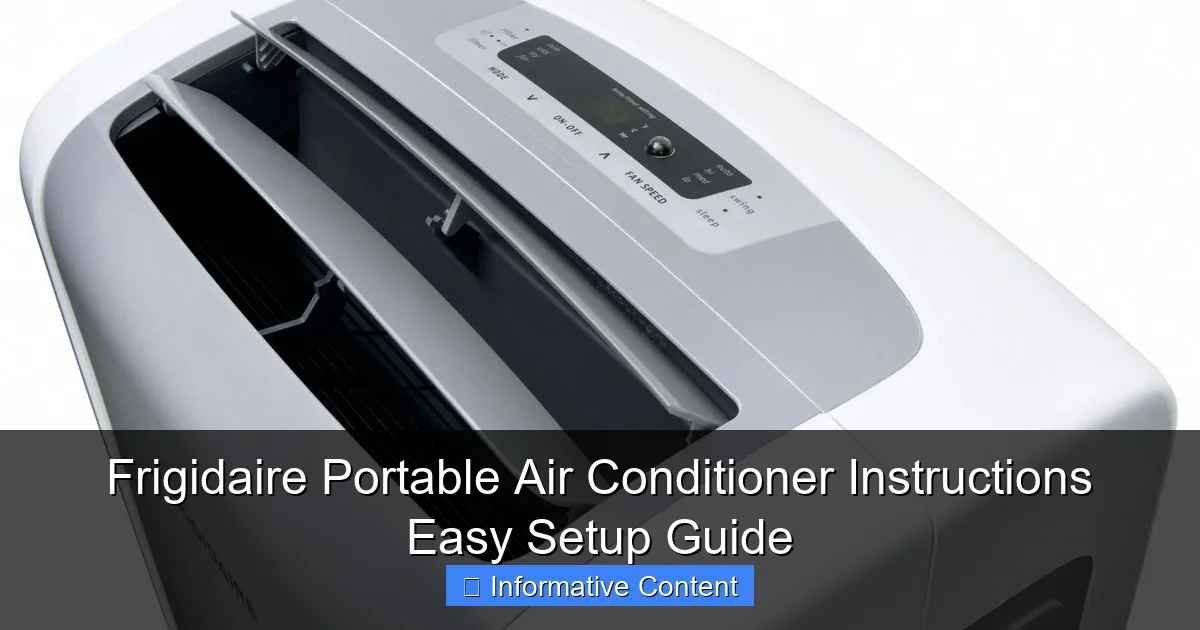
Visual guide about frigidaire portable air conditioner instructions
Image source: static.grainger.com
Inspect the Package and Contents
Before you even plug anything in, take a moment to check what’s in the box. Frigidaire typically includes:
- The portable air conditioner unit
- An exhaust hose (usually 5–6 feet long)
- A window installation kit (with adjustable panels and foam seals)
- A remote control (with batteries)
- A user manual (yes, actually read it!)
- Drainage hose (for models with manual or continuous drainage)
Pro tip: Lay everything out on the floor and cross-check with the manual’s “Parts List” section. Missing a piece? Contact Frigidaire customer support immediately. Don’t wait until you’re halfway through setup to realize the window kit is incomplete.
Choose the Right Location
Location matters more than you might think. Your Frigidaire portable AC needs:
- At least 12–18 inches of clearance on all sides for proper airflow.
- A nearby window for the exhaust hose (ideally a sliding or double-hung window).
- A grounded electrical outlet (120V, 15A minimum). Avoid extension cords—they can overheat.
- A flat, stable surface. Even a slight tilt can cause drainage issues or noise.
Example: I once set up my unit on a slightly uneven rug. The vibration made it sound like a washing machine in spin cycle. A simple level tool from the hardware store fixed the problem in minutes.
Install the Exhaust Hose and Window Kit
This is where many people get stuck. Here’s a step-by-step breakdown:
- Attach one end of the exhaust hose to the back of the unit. Most Frigidaire models have a quick-release connector—just twist and lock.
- Extend the hose to its full length (don’t coil or kink it). Longer hoses reduce efficiency.
- Open your window and place the adjustable window panel in the opening. The foam seal should face inward.
- Slide the second panel to fit snugly against the window. Secure with the included brackets or screws.
- Connect the hose’s other end to the panel’s vent adapter. Again, twist to lock.
Tip: If you have a casement or awning window, Frigidaire offers alternative window kits (sold separately). Don’t try to force a standard kit—it won’t seal properly.
Operating Your Frigidaire Portable AC: Controls and Modes Explained
Now that your unit is set up, let’s talk operation. Frigidaire’s portable ACs have a straightforward control panel and remote, but there are a few nuances that make a big difference in performance.
Control Panel Basics
Most models feature a digital display and these buttons:
- Power: Turns the unit on/off.
- Mode: Cycles through Cool, Fan, Dry (dehumidify), and sometimes Auto.
- Fan Speed: Low, Medium, High, or Auto (varies by model).
- Temperature: Adjusts the set temperature (usually 61°F–86°F).
- Timer: Sets on/off schedules.
- Sleep Mode: Reduces noise and adjusts temperature gradually.
Example: In “Dry” mode, the unit acts like a dehumidifier. It’s perfect for muggy days when you don’t need full cooling. I use this in my basement during summer to prevent musty odors.
Remote Control Tips
The remote is convenient, but it has quirks:
- Always point it at the unit’s sensor (usually near the control panel).
- Replace batteries annually—weak batteries cause unresponsive controls.
- Store it in a designated spot (I use a magnetic clip on the unit). Losing the remote is frustrating!
Pro tip: If the remote stops working, check for obstructions (like a phone screen protector) blocking the infrared signal. I once spent 10 minutes troubleshooting before realizing my cat was sitting in front of the sensor.
Smart Features (Select Models)
Higher-end Frigidaire units (e.g., FHPC132AB1) offer Wi-Fi connectivity and app control. Here’s how to use them:
- Download the Frigidaire Smart App (iOS/Android).
- Follow the in-app setup to connect to Wi-Fi.
- Use voice commands via Alexa or Google Assistant.
Note: Smart features are great for pre-cooling your room before you get home, but they require a stable internet connection. If your Wi-Fi drops, the unit reverts to manual mode.
Maintenance and Cleaning: Keep It Running Like New
Even the best portable AC won’t last long if you neglect maintenance. Dust, mold, and mineral buildup can reduce efficiency, increase noise, and shorten the unit’s lifespan. Here’s how to keep your Frigidaire in top shape.
Clean the Air Filter Monthly
The air filter is your first line of defense against dust and allergens. Here’s how to clean it:
- Turn off and unplug the unit.
- Locate the filter (usually behind a removable front panel).
- Rinse it under cool water. Avoid soap—it can damage the mesh.
- Let it dry completely (2–4 hours) before reinstalling.
Warning: A clogged filter can cause the unit to overheat. I once ignored mine for two months, and the compressor shut off automatically. A quick rinse saved me from a costly repair.
Empty the Water Tank (or Use Continuous Drainage)
Most portable ACs collect condensation in an internal tank. When it’s full, the unit stops cooling. To prevent this:
- Check the tank daily in humid weather. Most models have a “Tank Full” indicator light.
- Remove the tank (usually at the back) and pour the water into a sink.
- For continuous drainage, attach the included hose to the tank’s drain plug and run it to a floor drain or bucket.
Tip: If you use continuous drainage, ensure the hose slopes downward. Water won’t flow uphill!
Deep Cleaning Every 3–6 Months
Beyond the filter, give your unit a thorough cleaning:
- Wipe the exterior with a damp cloth.
- Use a soft brush to clean the exhaust vents and fan blades.
- For stubborn mold (common in humid areas), mix 1 part white vinegar to 3 parts water and spray it on the interior surfaces. Let it sit for 10 minutes, then wipe.
Example: My unit developed a musty smell after a rainy summer. A vinegar spray and thorough drying fixed it in a day.
Troubleshooting Common Issues: Don’t Panic!
Even with perfect setup and maintenance, issues can arise. The good news? Many are easy to fix. Here are the most common problems and solutions.
Unit Won’t Turn On
Check these first:
- Is the outlet working? Plug in another device to test.
- Is the water tank full? Empty it.
- Is the filter clogged? Clean or replace it.
- Is the exhaust hose kinked? Straighten it.
Pro tip: If the unit powers on but won’t cool, the compressor might need 5–10 minutes to start after a power outage. This is normal.
Insufficient Cooling
If the room isn’t cooling as expected:
- Verify the exhaust hose is properly connected to the window.
- Close all doors and windows to the room.
- Set the mode to “Cool” and the fan to “High.”
- Check the temperature setting—is it lower than the room temperature?
Example: I once set my unit to 65°F on a 90°F day. It struggled for hours until I realized the thermostat was set too low. A 72°F setting worked much better.
Excessive Noise or Vibration
Portable ACs aren’t silent, but loud bangs or rattles signal a problem:
- Ensure the unit is level (use a spirit level).
- Tighten loose screws on the window kit.
- Check for debris in the fan (like a loose screw).
Note: Some “whooshing” or “gurgling” sounds are normal—they’re from refrigerant flow and condensation.
Energy Efficiency and Pro Tips: Save Money and Stay Cool
Your Frigidaire portable AC is convenient, but it can also spike your electricity bill if used inefficiently. Here’s how to maximize cooling while minimizing costs.
Use a Programmable Timer
Set the unit to turn on 30 minutes before you arrive home. This pre-cools the room without running all day. Example: I set my timer for 4:30 PM during summer so my apartment is cool by 5:00 PM. It cuts my energy use by 20%.
Optimize Fan Speed
Use “Auto” mode when possible. The unit adjusts fan speed based on temperature, saving energy. In “High” mode, the fan runs constantly—great for quick cooling, but wasteful if left on.
Supplement with Fans
Place a ceiling or oscillating fan to circulate cool air. This lets you set the AC 2–3 degrees higher while feeling just as comfortable.
Data Table: Estimated Energy Use by Model
| Model | BTU | Est. kWh/Month (8 hrs/day) | Energy Cost/Month ($0.12/kWh) |
|---|---|---|---|
| FHPH142AB1 | 14,000 | 288 | $34.56 |
| FHPC132AB1 | 13,000 | 264 | $31.68 |
| FHPC102AB1 | 10,000 | 204 | $24.48 |
Note: Costs vary by local electricity rates and usage patterns.
Pro Tip: Winter Storage
If you live in a cold climate, store your unit properly during winter:
- Drain all water from the tank and hose.
- Clean the filter and interior.
- Cover the unit with a breathable cloth (not plastic—it traps moisture).
- Store upright in a dry, temperature-controlled area.
Example: I once stored my unit in a damp garage. The next summer, it had a mildew smell. A thorough cleaning and a dehumidifier in the storage area fixed it.
Final Thoughts: Your Cool, Comfortable Future
Setting up your Frigidaire portable air conditioner doesn’t have to be stressful. With the right Frigidaire portable air conditioner instructions, a little patience, and these practical tips, you’ll enjoy cool air all summer—without the frustration. Remember, every unit is a little different, so always refer to your model’s manual for specifics. But the principles are the same: proper setup, regular maintenance, and smart usage.
Think of your portable AC as a teammate, not a magic wand. It needs your attention to perform at its best. Clean the filter, check the hose, and tweak the settings as needed. And when you finally sink into your cool, quiet room after a long, hot day, you’ll know it was worth the effort. After all, the best appliance is the one that works seamlessly, quietly, and efficiently—just like your Frigidaire portable air conditioner should.
Frequently Asked Questions
How do I set up my Frigidaire portable air conditioner for the first time?
To set up your Frigidaire portable air conditioner, follow the Frigidaire portable air conditioner instructions included in the manual. Ensure the exhaust hose is securely connected to the window kit and the unit, then plug it into a grounded outlet.
Why is my Frigidaire portable air conditioner not cooling properly?
Check if the air filter is clogged or if the exhaust hose is improperly installed, as this can restrict airflow. Also, verify the temperature settings and ensure the room isn’t exposed to excessive heat or sunlight.
Can I use a Frigidaire portable air conditioner without a window kit?
No, the window kit is essential for venting hot air outside. Without it, the unit cannot expel heat, making the cooling process ineffective. Always install the hose per the Frigidaire portable air conditioner instructions.
How often should I clean the filter on my Frigidaire portable AC?
Clean the filter every 2–4 weeks, depending on usage. A dirty filter reduces efficiency and airflow, so rinse it with mild soap and water, then dry thoroughly before reinstalling.
Does the Frigidaire portable air conditioner have a dehumidifier mode?
Yes, most models include a dehumidifier mode that removes excess moisture without cooling. Refer to your manual’s instructions to activate this feature and adjust settings as needed.
What should I do if my Frigidaire portable AC shows an error code?
Error codes indicate issues like water tank fullness or sensor problems. Consult the troubleshooting section of your manual or visit Frigidaire’s support site for code-specific solutions.