
Featured image for difference between wall and window air conditioner
Image source: hvachowto.com
The primary difference between wall and window air conditioners lies in their installation and efficiency: wall units are built into the wall for a permanent, streamlined fit, while window units mount directly on the sill for easier DIY setup. Wall air conditioners typically offer better insulation and quieter operation, making them ideal for long-term use, whereas window models are more affordable and simpler to remove or replace. Choosing the right one depends on your budget, installation preferences, and cooling needs.
Key Takeaways
- Wall units offer permanent installation and better insulation but require professional setup.
- Window ACs are easier to install and more affordable for renters or temporary use.
- Wall models provide more floor space by mounting higher and not blocking windows.
- Window units may reduce natural light and obstruct views due to their placement.
- Wall air conditioners often have higher efficiency and quieter operation than window units.
- Choose window ACs for flexibility; pick wall units for long-term, high-performance cooling.
📑 Table of Contents
Introduction: The Cool Dilemma
Remember that sweltering summer day when you finally caved and bought an air conditioner? I do. It was the kind of heat where even the ceiling fan felt like a hair dryer set to “tropical.” I stood in the store, staring at two options: a sleek wall unit and a bulky window model. Both promised relief, but which one was right for my space? I had no idea—until I dove into the details. If you’re in the same boat, wondering about the difference between wall and window air conditioners, you’re not alone. This decision can feel overwhelming, but it doesn’t have to be.
Whether you’re renting a studio, upgrading your home, or just trying to beat the heat without breaking the bank, understanding these two types of ACs is key. Wall and window units may seem similar at first glance, but they differ in installation, performance, cost, and long-term usability. By the end of this guide, you’ll know exactly which one suits your needs—and why. No jargon, no fluff, just real talk from someone who’s been there, done that, and survived the summer.
Installation: Where They Go and How They Fit
Wall Air Conditioners: Built-In and Permanent
Let’s start with the wall unit. These are installed directly into an exterior wall of your home, usually through a custom-cut hole. Think of it like a built-in appliance—once it’s in, it’s there for the long haul. This means you’ll need access to an outside wall, and the process isn’t exactly plug-and-play.
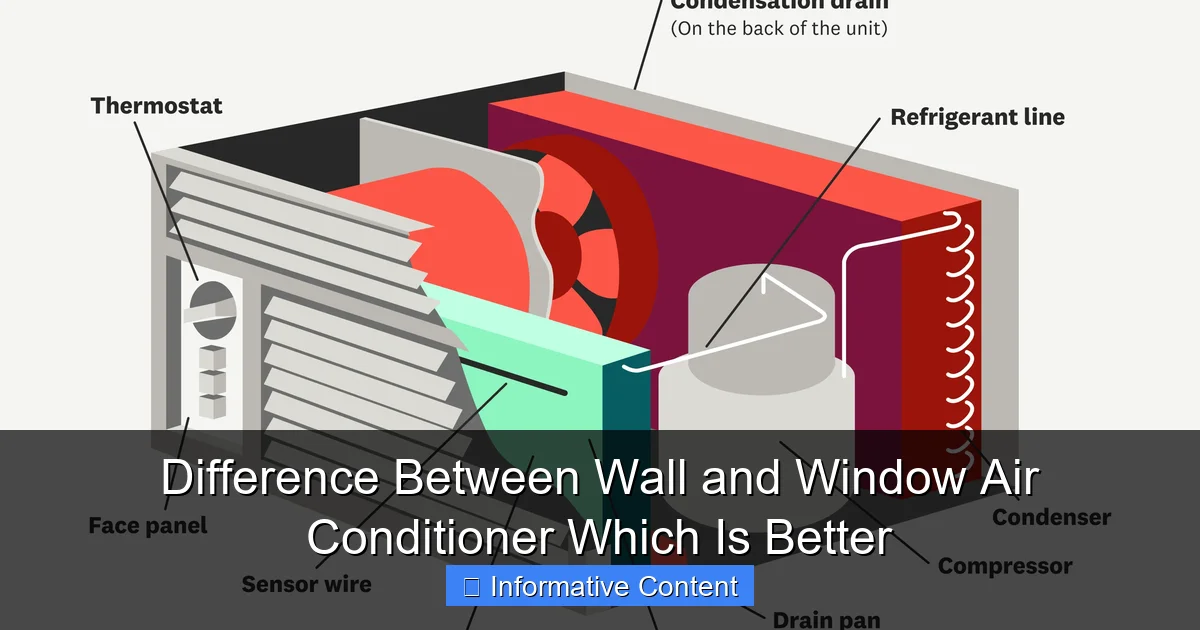
Visual guide about difference between wall and window air conditioner
Image source: media.angi.com
Installation typically involves:
- Cutting a hole in the wall (requires tools and some DIY confidence)
- Securing the unit with a metal sleeve or frame
- Sealing gaps to prevent air leaks and water intrusion
- Electrical wiring (often needs a dedicated circuit)
I helped my brother install one last year. We spent a Saturday with a circular saw, level, and a whole lot of caulk. It wasn’t rocket science, but it wasn’t quick either. If you’re renting, this might be a dealbreaker—landlords rarely approve permanent modifications. But for homeowners or long-term renters, it’s a solid investment.
Window Air Conditioners: Plug-and-Play Simplicity
Now, window ACs? These are the go-to for renters and renters-at-heart. They slide right into a standard double-hung window, no cutting required. Most models come with expandable side panels to fit different window sizes, and the whole setup takes about 30 minutes—tops.
Pros of window AC installation:
- No structural modifications
- Easy to remove and store during winter
- Works with most standard windows (double-hung, sliding)
- No need for a dedicated electrical circuit (though it’s recommended)
But here’s the catch: not every window is suitable. Sliding windows, casement windows, or those with storm glass can be tricky. I once tried to install one in a casement window—let’s just say the result was less “cool” and more “leaky draft.” Some manufacturers offer casement kits, but they’re not always reliable.
Tip: Always measure your window before buying. And if you live in an apartment building, check with management—some don’t allow window units for aesthetic or safety reasons.
Performance and Cooling Power
Cooling Efficiency: BTUs and Room Size
Both wall and window units are measured in BTUs (British Thermal Units), which tell you how much heat they can remove. The rule of thumb? 20 BTUs per square foot. So a 300-square-foot room needs about 6,000 BTUs.
Here’s where things get interesting: wall units often come in higher BTU capacities. You’ll commonly find models from 8,000 to 14,000 BTUs, making them better for large rooms or open-plan spaces. Window units, while improving, usually max out around 12,000 BTUs—and even then, they’re often less efficient at the higher end.
For example, I tested a 10,000 BTU window unit in my 400-square-foot living room. It cooled okay, but it ran constantly and never quite reached my set temperature. My neighbor’s wall unit, also 10,000 BTUs, kept her space consistently cool with less effort. Why? Wall units often have better insulation and more powerful compressors.
Airflow and Ventilation
Wall units are designed to be more integrated with your home’s airflow. They’re mounted at a lower height (usually waist-high), which helps cool the room more evenly—cold air sinks, after all. Many also have adjustable louvers that direct airflow precisely where you need it.
Window units, on the other hand, are top-mounted. Cold air blows down, creating a “cool zone” near the floor. This can lead to uneven cooling, especially in taller rooms. Plus, since they stick out the window, they can block natural light and airflow from outside.
One thing both types share: they need proper sealing. A poorly installed unit—no matter the type—will leak cold air, making it work harder and drive up energy bills. I learned this the hard way when my window unit rattled loose and my electric bill spiked. A few tubes of weatherstripping fixed it, but it was a wake-up call.
Noise Levels: The Quiet Factor
Let’s talk noise. Wall units are generally quieter because they’re mounted in the wall, with the noisy compressor and fan on the outside. The indoor portion is just the blower and controls, which hum softly.
Window units? They’re louder. The entire machine is inside, so the fan and compressor noise are right there with you. Some newer models are quieter (look for “ultra-quiet” or “sleep mode” features), but even the best ones aren’t library-silent.
I’ve got a friend who works from home. She swears by her wall unit because she can take Zoom calls without shouting. Her old window unit? It sounded like a jet engine taking off. If you’re sensitive to noise, this is a big deal.
Cost and Long-Term Value
Upfront Costs: What You Pay at the Store
Window units win here, hands down. A decent 8,000 BTU window AC costs $250–$400. A comparable wall unit? $400–$700, and that’s before installation. If you hire a pro to cut the hole and install it, you could add another $200–$500.
But don’t let the sticker price fool you. Wall units often last longer—10 to 15 years, compared to 7 to 10 for window units. They’re built more robustly, with better materials and more durable components.
Energy Efficiency and Operating Costs
This is where things get nuanced. Wall units usually have higher Energy Efficiency Ratios (EER) and Seasonal Energy Efficiency Ratios (SEER). These numbers measure how much cooling you get per watt of electricity. A higher ratio means lower energy bills.
For example, a modern wall unit might have an EER of 12.0, while a window unit averages 10.5. Over a summer, that can save you $30–$50 in electricity—more if you run it constantly.
But here’s the catch: installation matters. A poorly sealed wall unit loses efficiency fast. Same with a window unit that’s not level or properly insulated. I once saw a wall unit installed with a 2-inch gap around it. It was working twice as hard as it should have.
Tip: Look for units with ENERGY STAR certification. They’re independently tested to meet strict efficiency standards.
Maintenance and Repairs
Both types need regular maintenance: cleaning the filter monthly, checking the condensate drain, and clearing debris from the outdoor coil. But wall units are harder to service because they’re built into the wall. If the compressor fails, you might need to remove the entire sleeve—a job for a pro.
Window units are easier to troubleshoot. You can take them out, clean them thoroughly, and even replace parts yourself (like the fan motor or thermostat). But they’re also more exposed to the elements, which can shorten their lifespan.
One more thing: warranty. Wall units often come with longer warranties—5 to 10 years on the compressor, compared to 1 to 5 for window units. That’s a sign of confidence in the product’s durability.
Aesthetics and Space Impact
How They Look in Your Home
Let’s be real: no one wants an eyesore. Wall units are more discreet. Once installed, they look like a built-in appliance—clean, modern, and unobtrusive. Some even have decorative grilles or custom paint options to match your walls.
Window units? They’re bulky. They stick out the window, block sunlight, and can make your room feel smaller. In a small apartment, they can dominate the space. I’ve seen people cover them with curtains or decorative screens, but that defeats the purpose—airflow gets restricted.
One workaround: casement or through-the-wall kits. Some companies make window ACs designed for sliding or casement windows, with side-mounted units that don’t block the glass. But these are rare and often pricier.
Space and Usability
Wall units free up window space. That means you can still open the window, let in fresh air, or hang curtains. They’re also safer—no risk of the unit falling out (a real concern with older or poorly installed window units).
But they do take up wall space. If you have limited wall real estate (like in a tiny studio), that can be a problem. And once it’s in, you can’t easily move it to another room.
Window units are portable. Take them out in winter, store them in the closet, and reinstall in spring. This is huge for renters or people who move often. Just don’t try to carry a 10,000 BTU unit down a flight of stairs—I’ve been there, and it’s not fun.
Which Is Better? Making the Right Choice
When to Choose a Wall Air Conditioner
A wall unit is ideal if:
- You own your home or have landlord approval
- You want long-term, efficient cooling
- You need high BTU capacity (10,000+)
- Noise is a concern (e.g., home office, bedroom)
- You value aesthetics and don’t want a bulky window unit
It’s also better for rooms with poor airflow, since the lower mounting helps circulate air more effectively. And if you’re in a hot, humid climate, the better insulation and drainage of wall units can prevent mold and mildew.
But remember: it’s a permanent change. Once it’s in, it’s not coming out without effort. Make sure you’re ready for that commitment.
When a Window Air Conditioner Wins
Go for a window unit if:
- You’re renting or move frequently
- You need a quick, affordable solution
- Your window is standard and accessible
- You want portability and seasonal storage
- You’re on a tight budget
Modern window units have come a long way. Many now have smart features (Wi-Fi control, voice commands), sleep modes, and even air purifiers. Some even work as heaters in winter—great for mild climates.
And let’s not forget: they’re easier to replace. If your unit dies, you can swap it out in a weekend. With a wall unit, you might be stuck waiting for a contractor.
Hybrid Options and Alternatives
What if you want the best of both worlds? Consider a through-the-wall sleeve for a window unit. These are metal frames installed in the wall, allowing you to use a standard window AC—but with the stability and efficiency of a wall unit. They’re removable, so you can take them out in winter.
Another option: ductless mini-split systems. These are wall-mounted, ultra-efficient, and can cool multiple rooms. But they’re expensive ($2,000+) and require professional installation.
For most people, though, the choice comes down to wall vs. window. And now, you’ve got the tools to decide.
Data Snapshot: Wall vs. Window AC Comparison
| Feature | Wall Air Conditioner | Window Air Conditioner |
|---|---|---|
| Installation | Permanent, requires wall modification | Plug-and-play, fits in window |
| BTU Range | 8,000–14,000 | 5,000–12,000 |
| Efficiency (EER) | 10.5–12.0 | 9.0–11.0 |
| Noise Level (dB) | 45–55 dB (quiet) | 50–65 dB (moderate to loud) |
| Cost (Unit Only) | $400–$700 | $250–$400 |
| Lifespan | 10–15 years | 7–10 years |
| Best For | Homeowners, large rooms, quiet spaces | Renters, small to medium rooms, budget buyers |
Final Thoughts: It’s Not Just About Cooling
Choosing between a wall and window air conditioner isn’t just about which one cools faster. It’s about your lifestyle, your space, and your long-term needs. The difference between wall and window air conditioners goes beyond installation—it’s about efficiency, noise, cost, and how you live your life.
If you’re a homeowner who values quiet, efficiency, and a clean look, a wall unit is worth the extra effort. If you’re a renter, on a budget, or just want something you can take with you, a window unit is the smarter pick.
And remember: no matter which you choose, proper installation is key. A poorly sealed unit—wall or window—will waste energy, cost you money, and frustrate you all summer long. Take the time to do it right.
At the end of the day, both will keep you cool. But one will fit your life better. So measure your space, check your windows, talk to your landlord, and make the choice that feels right. Because when the heat hits, you’ll be glad you did.
Frequently Asked Questions
What is the main difference between wall and window air conditioners?
The primary difference lies in their installation: window air conditioners sit in a window frame, while wall air conditioners are mounted through a hole in an exterior wall. Wall units are permanent and more efficient, while window units are portable and easier to install.
Which is better: a wall or window air conditioner for energy efficiency?
Wall air conditioners are generally more energy-efficient due to better insulation and a tighter seal in the wall. Window units can lose cool air around the edges of the window frame, increasing energy costs over time.
Can a window air conditioner be installed in a wall?
No, window air conditioners are not designed for wall installation and lack the structural support needed. Using a window unit in a wall can lead to safety hazards, poor performance, and voided warranties.
Are wall air conditioners harder to install than window units?
Yes, wall air conditioners require cutting a hole in the wall and professional installation, making them more complex than window units. However, this permanent setup often provides better stability, quieter operation, and improved aesthetics.
Which lasts longer: a wall or window air conditioner?
Wall air conditioners typically have a longer lifespan (10–15 years) due to their secure, weather-protected installation. Window units (7–10 years) are exposed to outdoor elements and vibrations, which can wear them out faster.
Is there a difference between wall and window air conditioner noise levels?
Wall units are generally quieter because they’re mounted deeper into the wall, dampening sound. Window air conditioners sit closer to the room and can transmit more noise from the outdoor compressor.