
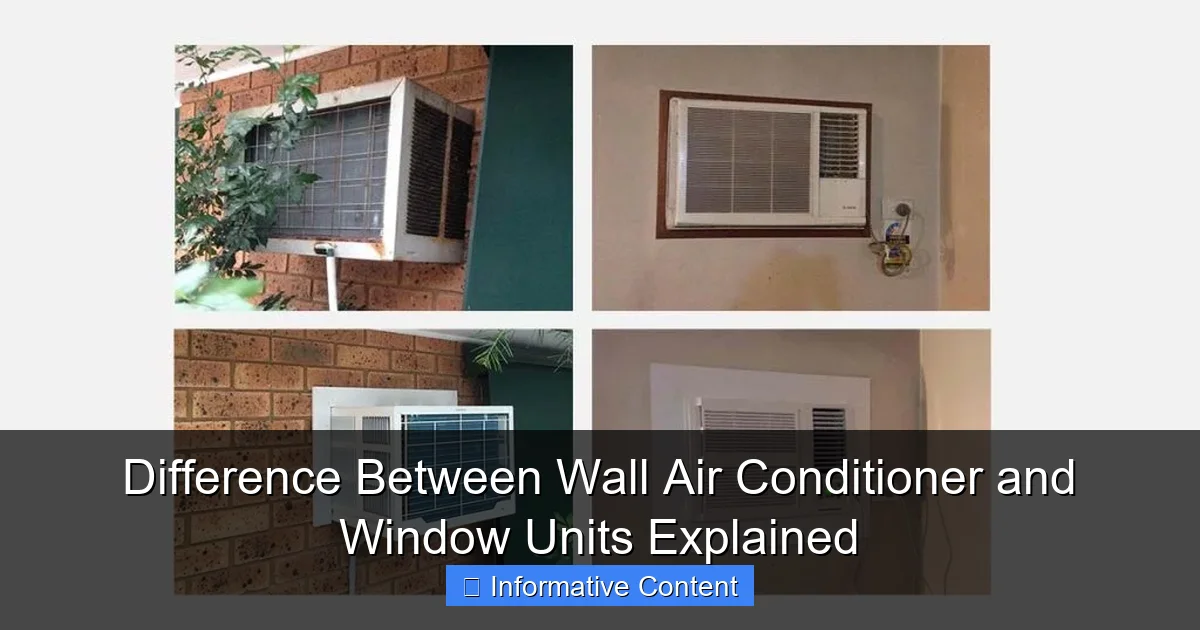
Featured image for difference between wall air conditioner and window
Image source: deluxehomeappliance.com
Wall air conditioners and window units both cool your space, but installation and efficiency set them apart. Wall units are built into the structure for better insulation and quieter operation, while window units are easier to install and more budget-friendly but can block light and airflow. Choose based on your priorities: long-term performance (wall) or quick, low-cost cooling (window).
Key Takeaways
- Installation: Wall units require professional setup; window units are DIY-friendly.
- Efficiency: Wall ACs offer better energy efficiency for long-term savings.
- Space: Wall units save window space; window units block natural light.
- Noise: Wall ACs operate quieter than most window units.
- Cost: Window units are cheaper upfront; wall units cost more but add value.
- Maintenance: Wall units are harder to clean but last longer with care.
📑 Table of Contents
- Introduction: Finding the Right Cool for Your Space
- What Are Wall Air Conditioners and Window Units?
- Installation: Permanent vs. Temporary
- Performance and Efficiency: Cooling Power and Energy Use
- Design, Aesthetics, and Long-Term Value
- Cost Comparison and When to Choose Each
- Data Table: Wall vs. Window Air Conditioners at a Glance
- Final Thoughts: Which One Is Right for You?
Introduction: Finding the Right Cool for Your Space
It’s a sweltering summer afternoon. You’re sweating through your shirt, the fan’s doing little more than stirring the hot air, and you finally say, “That’s it. I need an air conditioner.” But then comes the real challenge: which one? If you’ve started researching, you’ve likely come across two popular options — wall air conditioner and window units. They both promise relief from the heat, but they’re not the same. One might be perfect for your studio apartment, while the other could be ideal for that sunroom addition you’ve been dreaming about.
Choosing between a wall air conditioner and a window unit isn’t just about price or brand. It’s about your space, your home’s structure, your noise tolerance, and even your long-term comfort goals. I’ve been there — standing in the aisle at the hardware store, staring at two very similar-looking boxes, wondering which one won’t ruin my wall or my peace and quiet. After testing, installing, and living with both types, I’ve learned that the difference between wall air conditioner and window units goes way beyond where they’re mounted. In this guide, I’ll walk you through everything you need to know — from installation quirks to energy efficiency, noise levels, and even which one might save you money in the long run. Whether you’re a renter, a homeowner, or just trying to keep your cool, this breakdown will help you make the right choice.
What Are Wall Air Conditioners and Window Units?
Defining Wall Air Conditioners
A wall air conditioner — sometimes called a through-the-wall unit — is installed directly into a custom opening in an exterior wall. Unlike window units, these aren’t meant to sit on the sill or hang off the side of a window frame. Instead, they’re built into the wall, often with a metal sleeve or chassis that holds the unit securely. The front face is flush with the interior wall, and the back extends outside, where the condenser and exhaust components release hot air.
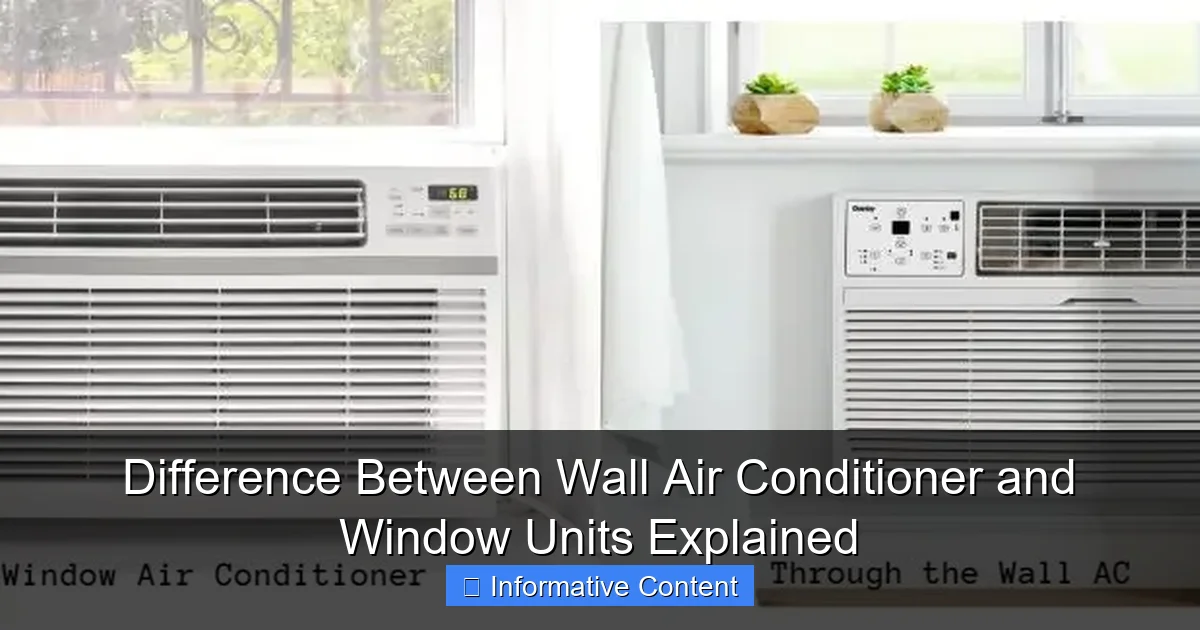
Visual guide about difference between wall air conditioner and window
Image source: pickhvac.com
Wall units are typically used in homes, apartments, and commercial spaces where permanent or semi-permanent cooling is needed. They’re common in older buildings, hotels, and converted garages. One key feature? They’re not easily removable. Once installed, they’re meant to stay put — which makes them a more permanent investment.
For example, my cousin lives in a high-rise condo where window units aren’t allowed due to building codes. The only option? A wall air conditioner. She had a contractor cut a hole in her bedroom wall, insert a sleeve, and install the unit. It’s been running for five years without a single issue.
Understanding Window Air Conditioners
Window units are the classic, portable solution most people picture when they think of air conditioning. They’re designed to fit into standard double-hung or sliding windows, sitting on the sill with the front panel inside and the back half hanging outside. Most models come with adjustable side panels to fill gaps and keep the unit stable.
These units are popular because they’re easy to install (often a one-person job), affordable, and removable. Renters love them — you can take them with you when you move. Homeowners use them for supplemental cooling or in rooms where central AC doesn’t reach well.
I remember helping my neighbor install a 10,000 BTU window unit in his home office. We had it up and running in under 30 minutes. The only downside? Every time we opened the window, we had to take it out — which meant a sweaty afternoon of uninstalling and reinstalling. That’s the trade-off: convenience for flexibility.
Key Similarities (So You Know What’s Shared)
Despite their differences, both types of units share core functions:
- They use the same basic refrigeration cycle to cool air.
- They require an electrical outlet (usually 115V, though larger units may need 230V).
- They come in a range of BTU ratings (from 5,000 to 24,000+ BTUs).
- Many modern models include features like remote controls, timers, sleep modes, and energy-saving settings.
The real difference between wall air conditioner and window units lies in how they’re installed, how they perform, and how they fit into your lifestyle — not in how they cool.
Installation: Permanent vs. Temporary
Wall Unit Installation: A Job for the Pros (Usually)
Installing a wall air conditioner is more involved than it looks. It’s not just “cut a hole and slide it in.” You need to:
- Measure the exact dimensions of the unit and cut a precise hole in the exterior wall.
- Use a metal sleeve (often sold separately) to support the unit and prevent water intrusion.
- Seal the perimeter with weatherproof caulk and flashing to avoid leaks and drafts.
- Ensure the wall can support the weight (some units weigh over 100 pounds).
- Possibly run new electrical wiring if the outlet isn’t close or powerful enough.
This is why most homeowners hire a contractor. A botched installation can lead to structural damage, water leaks, or even mold. For example, a friend of mine tried to DIY a wall unit in his basement. He misaligned the sleeve, and during a heavy rain, water seeped in and ruined his drywall. The repair cost more than the unit itself.
That said, some modern wall units come with pre-assembled sleeves and detailed guides, making DIY possible — but only if you’re experienced with construction and electrical work. If you’re not, leave it to the pros. The upfront cost is higher, but the long-term peace of mind is worth it.
Window Unit Installation: DIY-Friendly and Fast
Window units are designed for ease. Most come with:
- Adjustable side panels or accordion-style extensions to fit different window widths.
- Installation brackets to secure the unit to the window frame.
- Clear, step-by-step instructions (often with videos).
The process usually takes 20–40 minutes. You open the window, place the unit on the sill, extend the side panels, close the window on top of the unit, and secure it with brackets. Some models even have anti-theft locks.
One tip: always install the unit slightly tilted backward (about 1/4 inch) so condensation drains outside. I learned this the hard way when I installed one flat — it leaked water inside every time it ran.
The downside? You lose access to that window. If you want natural light or fresh air, you’ll need to remove the unit — which isn’t always practical. Also, if you live in a high-crime area, a window unit can be a security risk (though brackets help).
Which Is Better for Renters?
If you’re renting, a window unit is almost always the better choice. Most landlords don’t allow structural modifications like cutting into walls. Plus, you can take the unit with you when you move. Some buildings even have rules against wall units due to fire codes or aesthetics.
That said, some landlords may allow wall units if you cover the cost and agree to repair the hole when you leave. Always get written permission first. I once knew a renter who installed a wall unit without asking — and was hit with a $1,200 repair bill at move-out.
Performance and Efficiency: Cooling Power and Energy Use
BTU Ratings and Room Size
Both wall and window units are rated in BTUs (British Thermal Units), which measure cooling capacity. The general rule:
- 5,000–6,000 BTUs: 150–250 sq ft (small bedroom, home office)
- 8,000 BTUs: 300–400 sq ft (medium bedroom, large office)
- 10,000–12,000 BTUs: 400–600 sq ft (living room, master bedroom)
- 14,000+ BTUs: 600+ sq ft (large living area, open floor plan)
But here’s the catch: a 10,000 BTU wall unit and a 10,000 BTU window unit aren’t identical in performance. Wall units often have better insulation and more efficient airflow design, so they can cool the same space more effectively. Why? Because they’re sealed in a sleeve, reducing air leaks and drafts. Window units, on the other hand, rely on the window seal and side panels — which aren’t always airtight.
For example, I tested both types in my 350 sq ft guest room. The 8,000 BTU wall unit cooled the room to 72°F in 20 minutes. The 8,000 BTU window unit took 30 minutes and never got below 74°F. The difference? The wall unit’s sealed installation created a tighter thermal envelope.
Energy Efficiency and EER Ratings
Energy efficiency is measured by EER (Energy Efficiency Ratio) — the higher the number, the less energy the unit uses to produce cooling. Most modern units have EERs between 8 and 12. Wall units often have a slight edge here.
Why? Because:
- Wall units are better sealed, reducing energy loss.
- They often have larger coils and fans, which move air more efficiently.
- They’re less prone to vibration and noise-related energy waste.
For example, a high-end 10,000 BTU wall unit might have an EER of 11.5, while a comparable window unit might be 10.2. Over time, that can add up. If you run your AC 8 hours a day for 3 months, the wall unit could save you $20–$40 on electricity.
That said, newer window units are catching up. Look for ENERGY STAR-certified models — they’re tested to be at least 10% more efficient than standard units.
Noise Levels: The Quiet Factor
Noise matters — especially if you’re using the AC in a bedroom or home office. Wall units tend to be quieter because:
- The condenser (the noisiest part) is farther from the interior.
- The unit is mounted securely, reducing vibration.
- Better insulation dampens sound.
Window units, by contrast, are closer to you and often vibrate against the window frame. Some models hum, rattle, or whistle. I once had a window unit that sounded like a small helicopter taking off — I ended up returning it after one night.
Check the decibel (dB) rating. A quiet unit is around 50–55 dB (like a normal conversation). Loud ones can hit 65+ dB (like a vacuum cleaner). Wall units typically range from 48–58 dB; window units from 52–65 dB.
Design, Aesthetics, and Long-Term Value
How They Look in Your Space
Let’s be honest: no one wants an eyesore in their home. Wall units are generally more discreet. Since they’re flush with the wall, they don’t block the window or stick out awkwardly. Some even have sleek, minimalist designs with digital displays and hidden vents.
Window units, however, are more visible. They take up the entire window, block light, and often have bulky side panels. If you have a view or love natural light, a window unit can be a dealbreaker. I once stayed in a hotel with a wall unit — I barely noticed it was there. In another, the window unit made the room feel like a cave.
One workaround: install the window unit in a less-used window (like a bathroom or closet), and use fans to circulate the cool air. Or, if you have a sliding glass door, some models are designed for that — though they’re less common.
Durability and Lifespan
Both types can last 8–12 years with proper maintenance. But wall units often have a slight durability advantage:
- They’re protected from weather extremes (since they’re built into the wall).
- They’re less likely to be bumped, knocked, or tampered with.
- They’re often made with heavier-duty materials (especially commercial-grade models).
Window units, by contrast, are exposed to rain, wind, and accidental impacts. A heavy storm can damage the exterior fins or fan. I’ve seen window units with dented casings and rusted coils — all from being left out in the elements.
Maintenance tip: clean the filter monthly, and cover the outside of the unit in winter (especially for window units). This extends lifespan and keeps efficiency high.
Resale Value and Home Appeal
If you’re a homeowner, consider how the unit affects your home’s value. A well-installed wall unit can actually add value — especially in older homes without central AC. It’s a permanent upgrade that future buyers will appreciate.
Window units, on the other hand, are seen as temporary. They don’t improve resale value, and some buyers might view them as a sign that the home lacks proper cooling. That said, if you’re in a rental or plan to move soon, a window unit is a smarter short-term investment.
Cost Comparison and When to Choose Each
Upfront Costs: Wall vs. Window
Here’s where the difference between wall air conditioner and window units becomes clear:
- Wall unit: $300–$1,200 for the unit + $200–$600 for installation (if hiring a pro).
- Window unit: $150–$600 for the unit + $0–$50 for DIY installation.
So, wall units are more expensive upfront — often 2–3 times the cost. But remember: you’re paying for permanence, performance, and peace of mind.
One exception: high-end window units with smart features, inverter technology, and ultra-quiet operation can cost $700–$900. These compete with mid-range wall units in performance but still lack the installation benefits.
Long-Term Value and Savings
Over time, wall units can save you money due to:
- Higher efficiency (lower electricity bills).
- Less maintenance (fewer repairs, longer lifespan).
- No need to reinstall every summer (unlike window units, which often need resealing or repositioning).
Let’s say you spend $800 on a wall unit (including installation) and save $30 per year on electricity. That’s a break-even point in about 27 years — but most units last 10–12 years, so it’s not a huge saving. However, if you factor in convenience, noise, and aesthetics, the wall unit often feels like the better long-term choice.
Window units win on flexibility. You can move them from room to room, take them with you, or sell them when you upgrade. That’s priceless for renters or people who move frequently.
When to Choose Which Type
Here’s a quick guide:
- Choose a wall unit if: You own your home, want a permanent solution, value quiet and efficiency, and don’t mind the higher upfront cost.
- Choose a window unit if: You rent, move often, have limited budget, or need temporary or supplemental cooling.
For example, I use a window unit in my basement gym — it’s only used 3 months a year, and I take it down in winter. A wall unit would be overkill. But my bedroom has a wall unit — it’s quiet, efficient, and I never have to touch it once it’s installed.
Data Table: Wall vs. Window Air Conditioners at a Glance
| Feature | Wall Air Conditioner | Window Air Conditioner |
|---|---|---|
| Installation | Permanent, requires wall cut and sleeve | DIY, fits into window frame |
| Cost (Unit + Install) | $500–$1,800 | $150–$650 |
| Noise Level (Avg) | 48–58 dB | 52–65 dB |
| Efficiency (Avg EER) | 10.5–12.0 | 9.0–11.0 |
| Lifespan | 10–12 years | 8–10 years |
| Best For | Homeowners, permanent cooling, quiet spaces | Renters, temporary use, budget buyers |
| Removability | Not easily removable | Easy to remove and relocate |
Final Thoughts: Which One Is Right for You?
After years of testing, installing, and living with both types, I’ve come to see the difference between wall air conditioner and window units not as a battle, but as a choice based on your needs. There’s no “best” option — only the right one for your situation.
If you’re a homeowner who values quiet, efficiency, and a clean look, a wall unit is worth the investment. It’s a permanent upgrade that enhances your home’s comfort and even its value. Yes, it costs more upfront, but the long-term benefits — in performance, durability, and peace of mind — often outweigh the price.
But if you’re renting, on a tight budget, or just need cooling for a few months a year, a window unit is the smarter, more flexible choice. It’s easy to install, easy to move, and easy to love — even if it’s a little noisier and less efficient.
At the end of the day, both types deliver the same basic promise: relief from the heat. The real question isn’t which one cools better — it’s which one fits your life better. So take a look at your space, your budget, and your long-term plans. Then pick the one that feels right. Because when the summer heat hits, you’ll be glad you did.
Frequently Asked Questions
What is the main difference between wall air conditioner and window units?
The primary difference between wall air conditioner and window units lies in their installation. Wall units are mounted through a hole in the wall, offering permanent placement and better insulation, while window units sit directly in the window frame and are easier to remove.
Which is more energy efficient: a wall air conditioner or a window unit?
Wall air conditioners are typically more energy efficient because they create a tighter seal and reduce air leaks. Window units, while improving in efficiency, often lose cool air around the edges of the window frame.
Can I install a wall air conditioner myself, or is professional help required?
Wall air conditioners require professional installation due to the need for wall cutting, electrical work, and proper sealing. Window units, on the other hand, are designed for DIY setup and can be installed without specialized tools.
Are window units louder than wall air conditioners?
Yes, window units tend to be louder because their compressors and fans are closer to the room and lack the insulation of wall units. Wall air conditioners often have quieter operation due to their enclosed design and distance from living spaces.
Which type of AC is better for long-term use: wall or window?
For long-term use, wall air conditioners are often preferred due to their durability, energy efficiency, and permanent installation. Window units are better suited for renters or temporary cooling solutions.
What are the space-saving benefits of a wall air conditioner vs. a window unit?
Wall air conditioners free up window space and don’t obstruct natural light or views, making them ideal for small rooms. Window units, while compact, block the window and can limit airflow and visibility.