
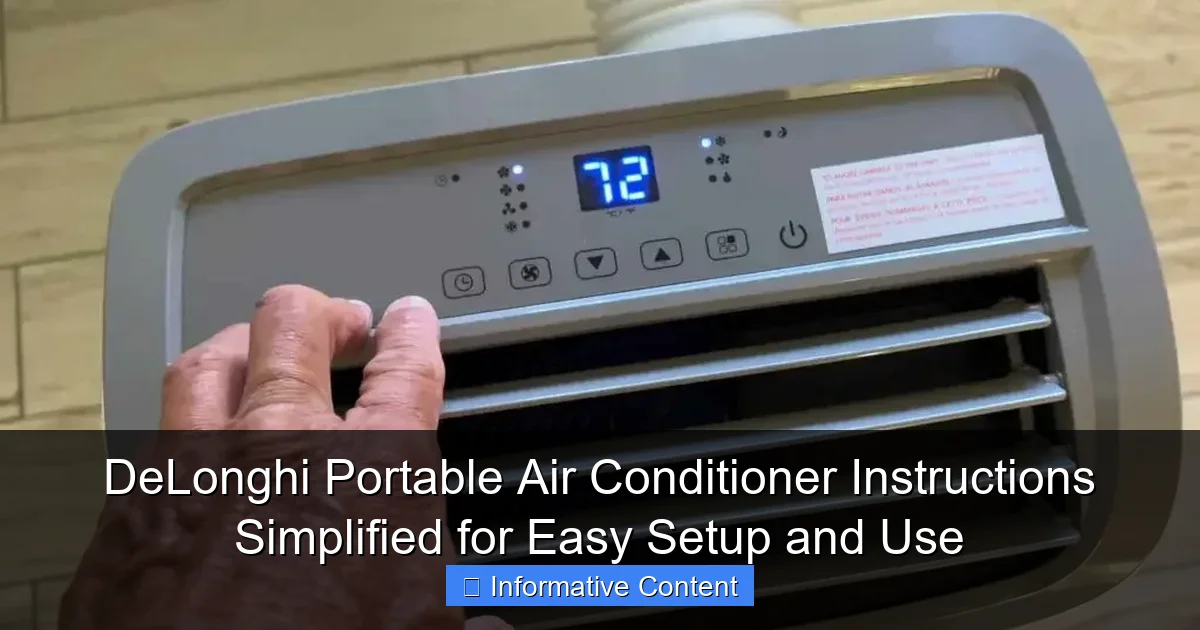
Featured image for delonghi portable air conditioner instructions
Image source: smartacsolutions.com
Master your DeLonghi portable air conditioner in minutes with our simplified, step-by-step guide to hassle-free setup and daily use. Clear instructions and smart tips ensure optimal cooling performance, energy efficiency, and long-term reliability—no manual confusion or guesswork needed.
Key Takeaways
- Read the manual first: Always review DeLonghi’s instructions before setup to avoid errors.
- Position properly: Place the unit near a window and outlet for optimal airflow.
- Secure exhaust hose: Ensure it’s tightly connected and vents outside to prevent leaks.
- Clean filters regularly: Maintain efficiency by washing filters every two weeks.
- Use programmable settings: Set timers and modes to save energy and customize cooling.
- Check drainage: Empty the water tank when full to avoid shutdowns or spills.
📑 Table of Contents
- Why a Portable Air Conditioner Can Be a Lifesaver (Especially in Summer)
- Getting to Know Your DeLonghi Portable Air Conditioner
- Step-by-Step Setup: How to Install Your DeLonghi AC
- Daily Use: Operating Your DeLonghi AC Like a Pro
- Maintenance and Care: Keeping Your AC in Top Shape
- Advanced Features and Pro Hacks
- Final Thoughts: Making the Most of Your DeLonghi AC
Why a Portable Air Conditioner Can Be a Lifesaver (Especially in Summer)
Let’s be honest: summer heat can be brutal. One minute you’re sipping iced tea, and the next, you’re a sweaty, cranky mess. I remember one particularly sweltering July when my apartment felt more like a sauna than a home. My ceiling fan was spinning like a tornado, but the air was so thick it barely moved. That’s when I decided to try a DeLonghi portable air conditioner—and honestly, it was a game-changer.
Unlike central air systems or window units, a portable air conditioner gives you flexibility. You can move it from room to room, set it up quickly, and avoid the hassle of permanent installations. But here’s the catch: if you don’t know how to use it properly, you might end up with a noisy, inefficient machine that doesn’t cool a thing. That’s why I’ve put together this DeLonghi portable air conditioner instructions guide—to help you get the most out of your unit without the frustration.
Getting to Know Your DeLonghi Portable Air Conditioner
Before you plug it in and press every button, take a moment to get familiar with your machine. DeLonghi offers several models—like the Pinguino PAC EX130, PAC N82, and PAC AN98—but most share the same core features. Knowing what each part does will save you time and headaches later.
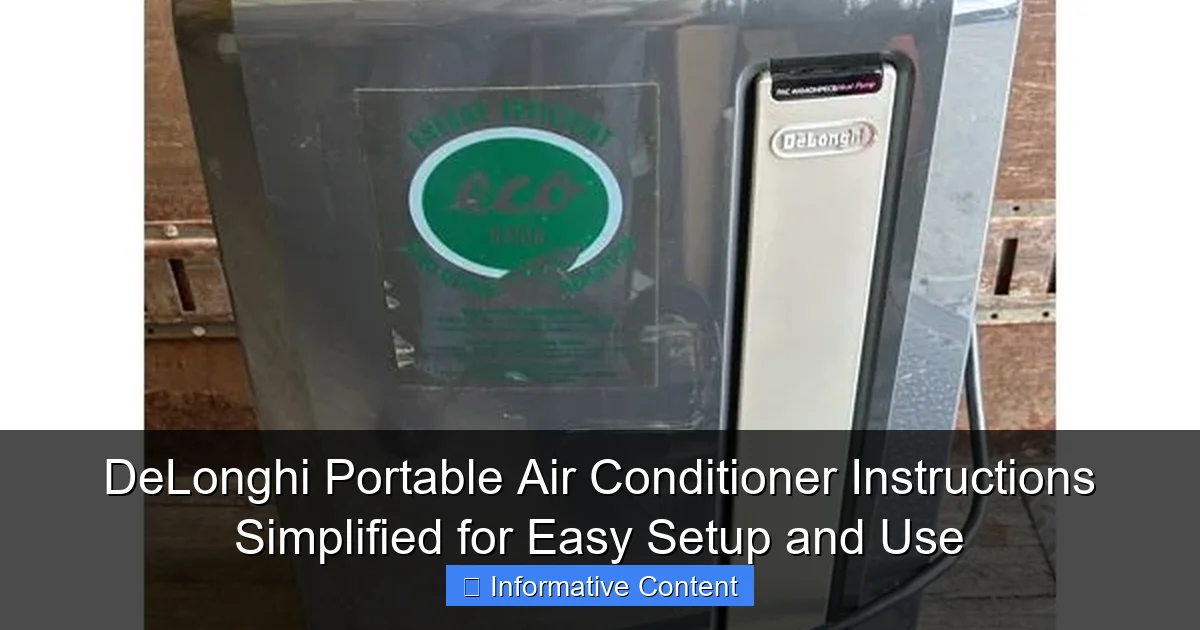
Visual guide about delonghi portable air conditioner instructions
Image source: dygtyjqp7pi0m.cloudfront.net
Key Components and What They Do
Here’s a quick rundown of the main parts you’ll interact with:
- Exhaust Hose: This is the long, flexible tube that vents hot air outside. It connects to a window kit (usually included) and should never be kinked or blocked.
- Air Filter: Located at the back or side, this catches dust and allergens. Clean it monthly to keep airflow strong.
- Control Panel: The brain of the unit. You’ll use it to set temperature, fan speed, and modes.
- Condensate Tank: Collects water pulled from the air. Most models have a “tank full” indicator light.
- Remote Control: Handy for adjusting settings from your couch (or bed, let’s be real).
Pro tip: Keep the user manual nearby. It’s not just for emergencies—it has diagrams and troubleshooting tips you’ll use often. I keep mine taped to the inside of a kitchen cabinet so I don’t lose it.
Understanding the Different Modes
DeLonghi units usually come with multiple modes, and knowing when to use each one makes a big difference:
- Cool Mode: The default setting. Cools the room to your desired temperature. Great for hot afternoons.
- Fan Mode: Circulates air without cooling. Use it when it’s warm but not sweltering—or if you just want a breeze.
- Dehumidify Mode: Removes moisture from the air. Ideal for humid climates or muggy basements. Doesn’t cool much, but makes the room feel more comfortable.
- Auto Mode (on select models): Automatically switches between cool and fan based on room temperature. Saves energy if you forget to adjust settings.
For example, I use dehumidify mode in my basement during rainy season. The air feels less sticky, and my books don’t get musty. But if it’s 90°F outside? Cool mode all the way.
Step-by-Step Setup: How to Install Your DeLonghi AC
Setting up your portable AC isn’t rocket science, but skipping steps can lead to poor performance. I learned this the hard way when I tried to “eyeball” the exhaust hose length and ended up with hot air blowing right back into my room. Not cool.
Pre-Installation Checklist
Before you start, make sure you have:
- A window kit (usually included) that fits your window type (sliding, casement, etc.).
- A flat, stable surface for the unit. Avoid placing it on uneven floors or near furniture that blocks airflow.
- A dedicated electrical outlet. Portable ACs draw a lot of power—don’t plug them into extension cords or power strips. Use the wall outlet directly.
- Clear space around the unit. Leave at least 18 inches on all sides for proper ventilation.
Bonus tip: Measure your window opening first. If the kit doesn’t fit, DeLonghi sells universal adapters or you can DIY with a piece of plexiglass (more on that later).
Installing the Exhaust Hose and Window Kit
This is the most critical step. Here’s how to do it right:
- Attach the exhaust hose to the back of the unit. Twist it clockwise until it clicks into place.
- Extend the hose to its full length (usually 5–6 feet). Avoid sharp bends—they reduce airflow and strain the motor.
- Connect the hose to the window kit. Most kits have a sliding panel that you adjust to fit your window width.
- Open your window and place the kit in the opening. Slide the panel to seal the gap. If there’s a small gap, use foam tape (included) to block drafts.
- Close the window to secure the kit. The hose should hang vertically outside—never at an angle, as this can cause water to back up.
Real-life example: My sliding window is 36 inches wide. The DeLonghi kit expanded to 40 inches, so I used the included foam inserts to fill the gap. It’s been leak-free for two summers now.
First-Time Startup Tips
Once everything’s connected:
- Plug in the unit and let it sit for 30 minutes if it’s been tilted during transport. This gives the compressor oil time to settle.
- Turn it on and set the temperature to 72°F (22°C). Lower isn’t always better—the unit works harder, uses more energy, and might freeze up.
- Run it for 15 minutes to check for unusual noises or vibrations. A low hum is normal; loud grinding or rattling means something’s loose.
My first startup was smooth, but I noticed a faint chemical smell. That’s normal for new units—it’s from the factory lubricants. It faded after a few days.
Daily Use: Operating Your DeLonghi AC Like a Pro
You’ve set it up—now what? Using your portable AC efficiently keeps your home comfortable and your energy bill in check.
Navigating the Control Panel and Remote
The control panel is intuitive, but here’s what each button does:
- Power: Turns the unit on/off.
- Mode: Cycles through cool, fan, dehumidify, and auto.
- Temperature: Adjusts in 1°F increments (usually 64–86°F). I keep mine at 74°F during the day and 72°F at night.
- Fan Speed: Low, medium, or high. Use low for quiet operation (great for bedrooms) and high for fast cooling.
- Timer: Sets automatic on/off times. I use it to turn the AC on 30 minutes before I get home from work.
- Sleep Mode (on select models): Gradually increases temperature over time to save energy. Perfect for overnight use.
The remote control mirrors these functions. I keep mine on my nightstand so I don’t have to get up to adjust the temperature at 2 a.m.
Energy-Saving Tips and Best Practices
Portable ACs can be energy hogs, but these tips help:
- Close doors and curtains: Keep the cooled air in. I close the bedroom door and use blackout curtains to block sunlight.
- Set it and forget it: Once the room is cool, switch to fan mode or use the timer. Constantly lowering the temperature doesn’t cool faster—it just runs longer.
- Use a ceiling fan: It circulates cool air, making you feel 4–5°F cooler without lowering the AC’s temperature.
- Keep the filter clean: A clogged filter forces the motor to work harder. I clean mine with a vacuum every two weeks.
One summer, I saved $20 on my electric bill by using the timer to run the AC only during peak heat (11 a.m.–7 p.m.) and relying on fans at night.
Troubleshooting Common Issues
Even the best units have hiccups. Here’s how to fix common problems:
- Unit won’t turn on: Check the outlet with another device. If it works, the unit’s fuse might be blown.
- Not cooling: Clean the filter, check for obstructions in the exhaust hose, and ensure the window seal is tight.
- Leaking water: Empty the condensate tank. If it keeps filling, the unit might be on an uneven surface or the hose is tilted upward.
- Loud noises: Tighten loose panels, check for debris in the fan, or level the unit.
My unit once started beeping and flashing “FULL.” I’d forgotten to empty the tank after a humid week. Lesson learned: check the tank every 3–4 days in summer.
Maintenance and Care: Keeping Your AC in Top Shape
Regular maintenance extends your AC’s life and keeps it running efficiently. Think of it like changing the oil in your car—skip it, and you’ll pay later.
Monthly Cleaning Routine
Here’s what to do every month:
- Wash the filter: Remove it, rinse with mild soap and water, and let it dry completely. Never put a wet filter back in—it can grow mold.
- Wipe the exterior: Use a damp cloth to clean dust and fingerprints.
- Check the exhaust hose: Inspect for cracks or kinks. Replace it if it’s damaged (DeLonghi sells replacements).
- Empty the condensate tank: Even if it’s not full, empty it to prevent mold.
I do this on the first Sunday of each month. It takes 10 minutes and saves me from breakdowns.
Seasonal Storage Tips
When summer ends, don’t just stash the AC in the closet. Follow these steps:
- Run the unit in fan mode for 30 minutes to dry internal parts.
- Empty the condensate tank and wipe it dry.
- Remove and clean the filter, then store it separately.
- Coil the exhaust hose loosely (don’t kink it) and store it with the window kit.
- Cover the unit with a breathable cloth to keep dust out.
Last fall, I skipped the drying step. The next summer, the unit smelled musty. Now I always air it out before storage.
Advanced Features and Pro Hacks
Once you’ve mastered the basics, try these advanced tricks to get even more out of your DeLonghi AC.
Using the Timer and Sleep Mode Effectively
The timer isn’t just for convenience—it saves energy. For example:
- Set it to turn on 30 minutes before you wake up so your room is cool in the morning.
- Program it to shut off after 8 hours overnight. I use this to avoid waking up too cold.
Sleep mode is a hidden gem. On my PAC EX130, it raises the temperature by 1°F every hour. By morning, it’s 76°F—still comfortable, but much more efficient.
DIY Solutions for Common Problems
Not every issue requires a call to customer service. Try these fixes:
- Window kit doesn’t fit: Cut a piece of plexiglass to size and attach it to the kit with screws. Seal gaps with foam tape.
- Noisy operation: Place a rubber mat under the unit to reduce vibration. I used a yoga mat—it works!
- Weak airflow: Clean the filter and check the fan for debris. A cotton swab can remove dust from the fan blades.
My sliding window is too narrow for the kit. I cut a 6-inch plexiglass strip and attached it with Velcro. It’s held up for two years with no leaks.
Comparing DeLonghi Models: Which One Fits Your Needs?
Not all DeLonghi units are the same. Here’s a quick comparison of popular models:
| Model | BTUs | Room Size | Special Features | Best For |
|---|---|---|---|---|
| PAC EX130 | 13,000 | Up to 500 sq ft | Sleep mode, 24-hour timer, remote | Large bedrooms, living rooms |
| PAC N82 | 8,000 | Up to 300 sq ft | Dehumidify mode, quiet operation | Small apartments, home offices |
| PAC AN98 | 11,000 | Up to 400 sq ft | Auto mode, self-evaporating | Humid climates, basements |
I chose the PAC EX130 for my 450 sq ft apartment. It cools the whole space, but the PAC N82 would’ve been better for my 200 sq ft home office—it’s quieter and more energy-efficient for smaller rooms.
Final Thoughts: Making the Most of Your DeLonghi AC
Your DeLonghi portable air conditioner isn’t just a summer gadget—it’s an investment in comfort. By following these DeLonghi portable air conditioner instructions, you’ll avoid common pitfalls and keep your unit running smoothly for years.
Remember: setup matters. A poorly installed exhaust hose can cut cooling efficiency by 50%. Regular maintenance is non-negotiable. And don’t be afraid to experiment with settings—find what works for your space and lifestyle.
I’ve had my unit for three summers now, and it’s still going strong. The key? Treating it like the hardworking appliance it is. So go ahead—set it up, tweak the settings, and enjoy that sweet, cool air. Your sweaty, cranky self will thank you.
Frequently Asked Questions
How do I set up my DeLonghi portable air conditioner for the first time?
Follow the DeLonghi portable air conditioner instructions to assemble the exhaust hose, attach the window vent kit, and plug in the unit. Ensure the exhaust hose is as straight as possible to maximize airflow and efficiency.
Why is my DeLonghi portable AC not cooling properly?
Check if the air filter is clogged, the exhaust hose is kinked, or the room size exceeds the unit’s capacity. Refer to your model’s DeLonghi portable air conditioner instructions for troubleshooting steps like resetting the unit or adjusting the thermostat.
Can I use my DeLonghi portable AC without the window kit?
No, the window kit is essential for venting hot air outside. Running the unit without it can cause overheating and reduced performance. Always follow the instructions to secure the vent panel in your window.
How often should I clean the air filter in my DeLonghi portable air conditioner?
Clean the filter every 2–4 weeks, depending on usage. A dirty filter restricts airflow and strains the unit. Refer to your manual for filter removal and cleaning steps.
What does the “E1” error code mean on my DeLonghi portable AC?
The “E1” code typically indicates a full water tank or drainage issue. Empty the internal tank or check the drain hose for clogs, as outlined in your model’s instructions.
How do I switch between cooling, dehumidifying, and fan modes?
Press the “Mode” button on the control panel or remote to cycle through settings. The display will show your selected mode. For detailed guidance, consult your DeLonghi portable air conditioner manual.